Two Senate Republicans said Tuesday that providing antitrust exemptions to artificial intelligence companies to facilitate discussions on how to make AI safer should be taken off the table — as lawmakers discuss ways to respond to industry warnings about the need for guardrails on the rapidly evolving technology.
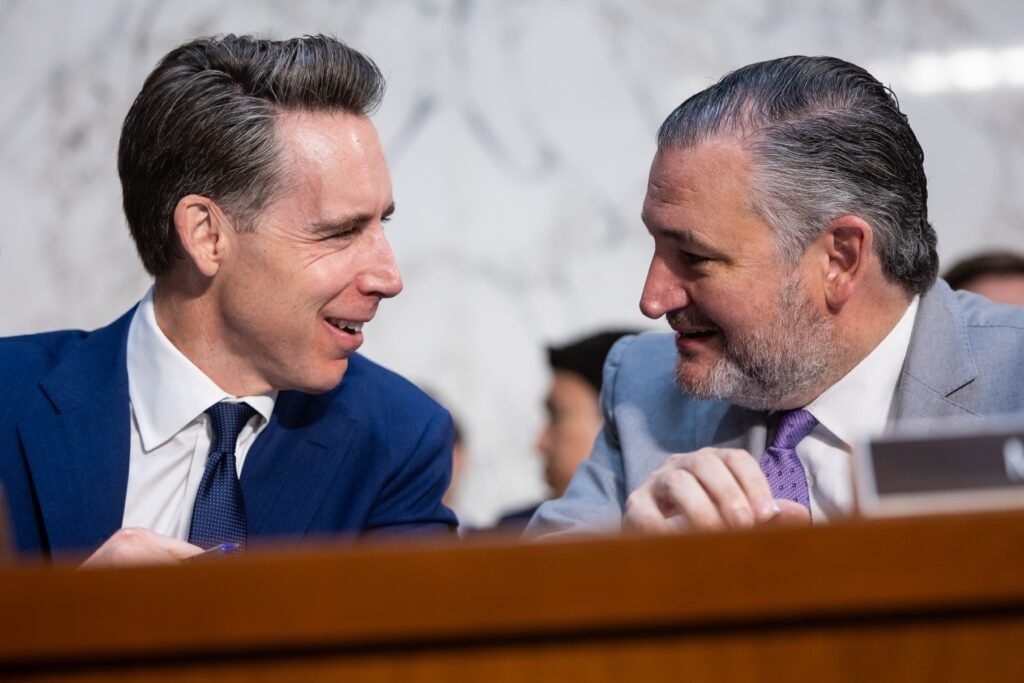
“To watch AI CEOs saying, ‘We’re about to destroy the world so give us control of the government so we can lock in our monopoly status and prevent any innovators from challenging us,’ is just lunacy,” Senate Commerce Chair Ted Cruz (R-Texas) said during a Senate Judiciary Committee hearing with FBI Director Kash Patel. “And, by the way, if you’re about to destroy the world, how about, don’t. How about, stop.”
Sen. Josh Hawley (R-Mo.) also piled on.
“Absolutely not,” Hawley said. “There is no world in which I will consent to giving the most powerful companies in the history of the world — a small group of three or four of them — antitrust exemptions from our laws so that they can, what, collude together?”
Their comments come amid rising fears that AI models could soon become advanced enough to evade human control if left unchecked. The chief executives of leading AI labs are sounding the alarm over the need to slow down progress, and one possibility could be for Congress to provide an antitrust carveout to allow competing companies to enter into agreements to stem the tide.
Patel didn’t directly address the antitrust comments at the hearing Tuesday but did provide insight into how the FBI is thinking about the emerging technology.
The department, Patel said, uses AI models under test case scenarios to make sure they are cooperating with federal law, adding that it’s important to pursue those who create AI models with criminal intent.
“We need to go after the people who created these models that are going rogue with the specific purpose and intention to commit a criminal act,” Patel said, noting that the FBI “can’t be punishing people if they created something lawfully” and then a criminal used it for nefarious acts.
Patel also said the FBI doesn’t need to create a new division to take on the issue — the existing cyber division is sufficient — but could use additional resources.
“We need federal funding to go out there and buy the creations of these companies and use them for law enforcement purposes,” Patel said.
At a separate news conference Tuesday afternoon, Attorney General Todd Blanche was noncommittal on whether AI companies need an antitrust waiver to self-regulate in the first place.
“Whether entities need an antitrust waiver is not something I can answer from the podium of the White House,” he said. “There’s dozens of factors that go into that, and there’s an application process, and there’s a kind of a process that DOJ and others use to determine what side.
He added, “I can say that, to the extent that those companies are looking to regulate themselves or fix problems that they have, that should do that.”
Cheyenne Haslett contributed to this report.