VENICE — If you’re Eurocentric by disposition, confident that the West is the single source of high art and ideas of progress, then don’t visit Koyo Kouoh’s exhibition In Minor Keys at the 2026 Venice Biennale.
If you bristle at the mention of White colonizers, this show is not for you, though it might be partly about you.
Moreover, if you’re convinced that what’s happened in Gaza over the last three years looks nothing like a genocide, you’re in for boatloads of protest signs and solidarity statements that tell you just how dead wrong you are.
This posthumous exhibition, the crown jewel of a historic biennale, is a triumph of the historically dispossessed and overlooked, the proud and beautiful “wretched of the earth.”
It’s a solid hymn to the billions who carry melancholy and riotous joy in the same heart. Those with a generational short fuse but endless endurance. Those who swim in grief, but throw the best parties.
Call them the Global South, or Global Majority. Call them Black and Brown people. Call them the “developing world.” Call them whatever you want.
If you count yourself among them, you’ll get what this exhibition tries to achieve with a snap of the fingers. But you don’t have to be one of the historically disenfranchised to let your heart fill up with its soulful hums.
In Minor Keys boasts work by 111 international artists with a strong, perhaps unprecedented, representation of artists from Africa, the Caribbean, and their diasporas.
Ever so tenderly, the show strums the chords of the heart, leaving a gentle, lasting resonance. It’s an exhibition informed by poetry, ritual, mourning, struggle, and beauty. It sets rage and retribution aside, relaxing the oppressed’s clenched fist for a moment of calm, centeredness, and self-forgiveness.
“Take a deep breath, exhale, drop your shoulders, close your eyes,” instructs Kouoh in a curatorial statement she wrote before her sudden death last year, just weeks after she was named the curator of the international exhibition.
The charismatic Cameroonian-Swiss curator died of liver cancer at age 57 while she was still in the early stages of putting together this show. She left behind a heartbroken artistic team of close friends and colleagues — Rasha Salti, Marie Hélène Pereira, Gabe Beckhurst Feijoo, Siddhartha Mitter, and Rory Tsapayi — who were required to pull themselves together and get the job done. Salti is a veteran curator who lives between Beirut and Berlin; Pereira is senior curator at Berlin’s Haus der Kulturen der Welt; Feijoo is a film curator and scholar based in London; Mitter, who edited the exhibition’s catalog, is a prominent art writer; and Tsapayi is a researcher who specializes in Black histories. Together with the Biennale’s leadership and Kouoh’s family, they decided to continue with the exhibition according to the deceased curator’s vision and outlines. The conceptual framework of the show had already revealed itself to them. The list of artists was pretty much set. Though she’s no longer among us, it’s still very much Kouoh’s show. Her spirit is everywhere.
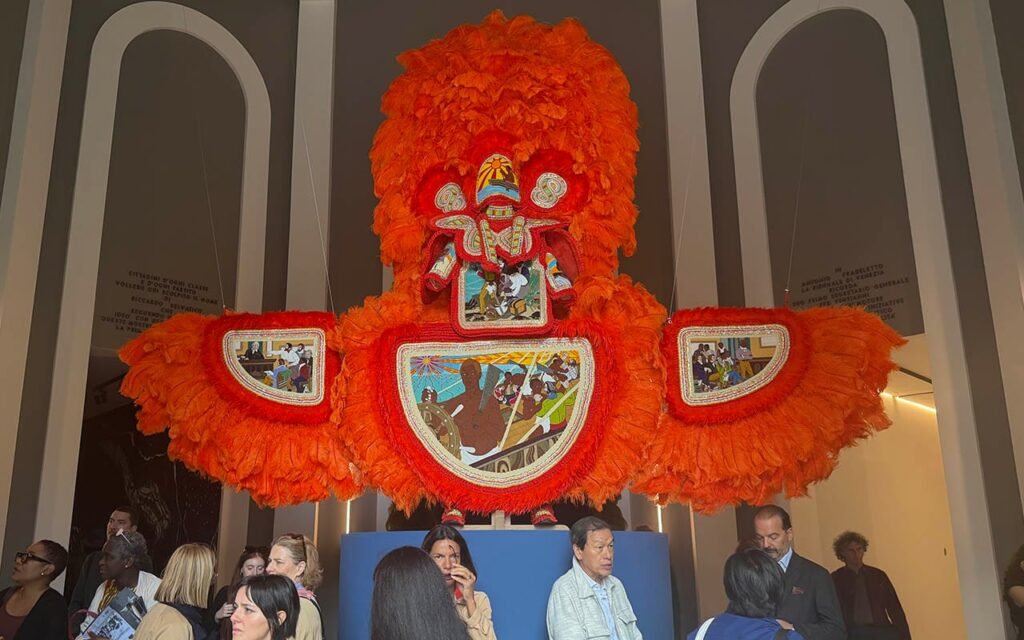
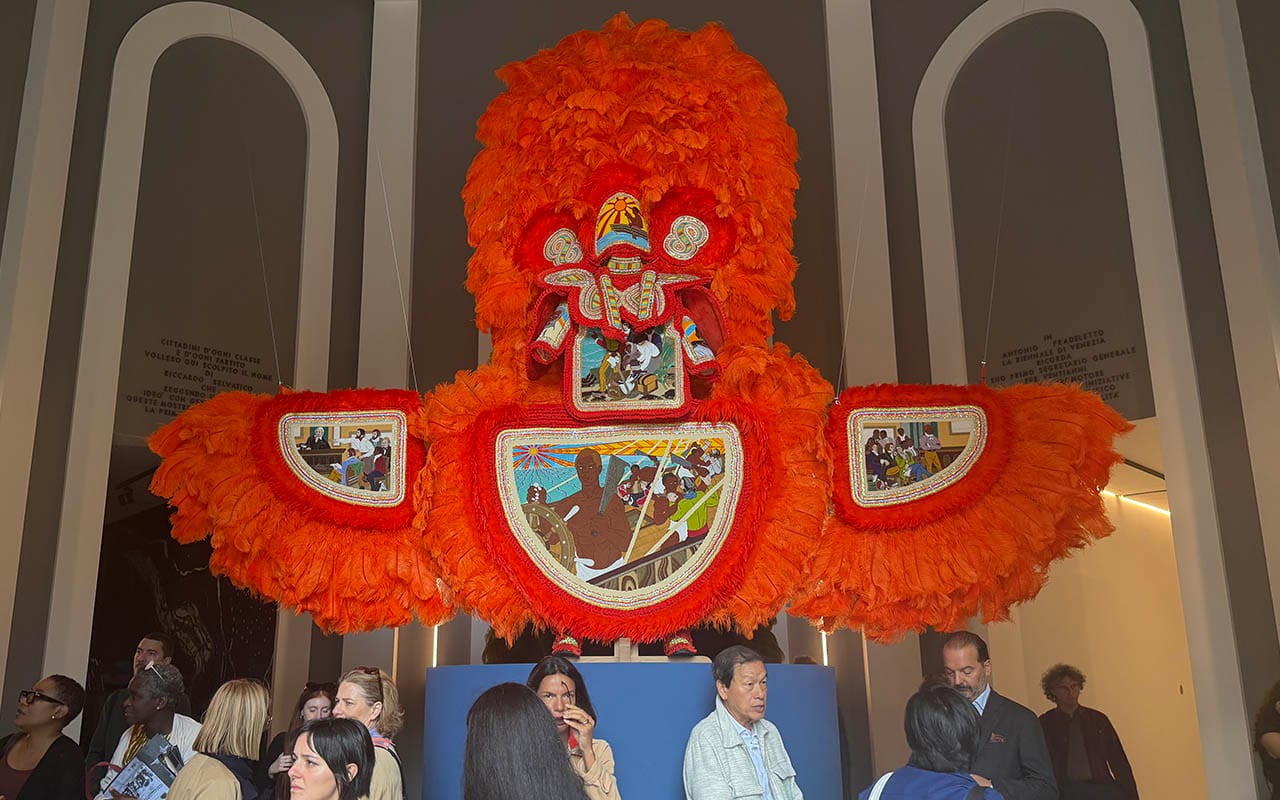
It’s particularly present at the main pavilion in the Giardini, where you’re welcomed by a plumed and beaded Mardi Gras costume by Young Seminole Hunter tribe Big Chief Demond Melancon, a leading figure in New Orleans’s Black Masking tradition. It’s glorious, and it sets the tone for dedicated “shrines” to Issa Samb (Senegal) and Beverly Buchanan (US), two artists whom Kouoh admired. Samb, who died in 2017, was also a poet, thinker, and pillar of Dakar’s art community. The show juxtaposes him with Marcel Duchamp, adorning the walls with his paintings, objects, tools, and charms. Buchanan, who passed away in 2015, also looms large with her depictions of the shacks and shotgun houses of the American South, architectures haunted by the lingering ghost of chattel slavery.
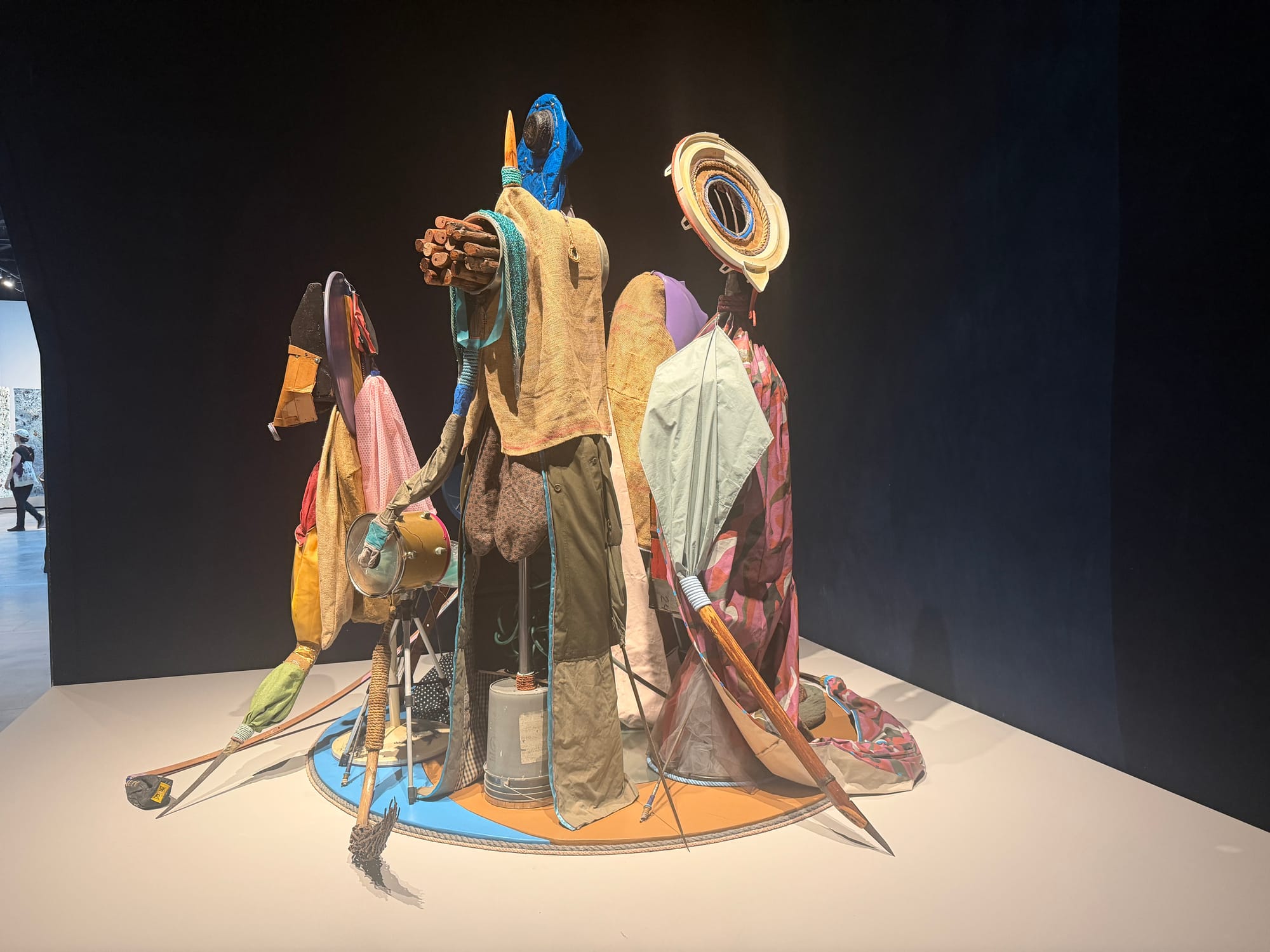
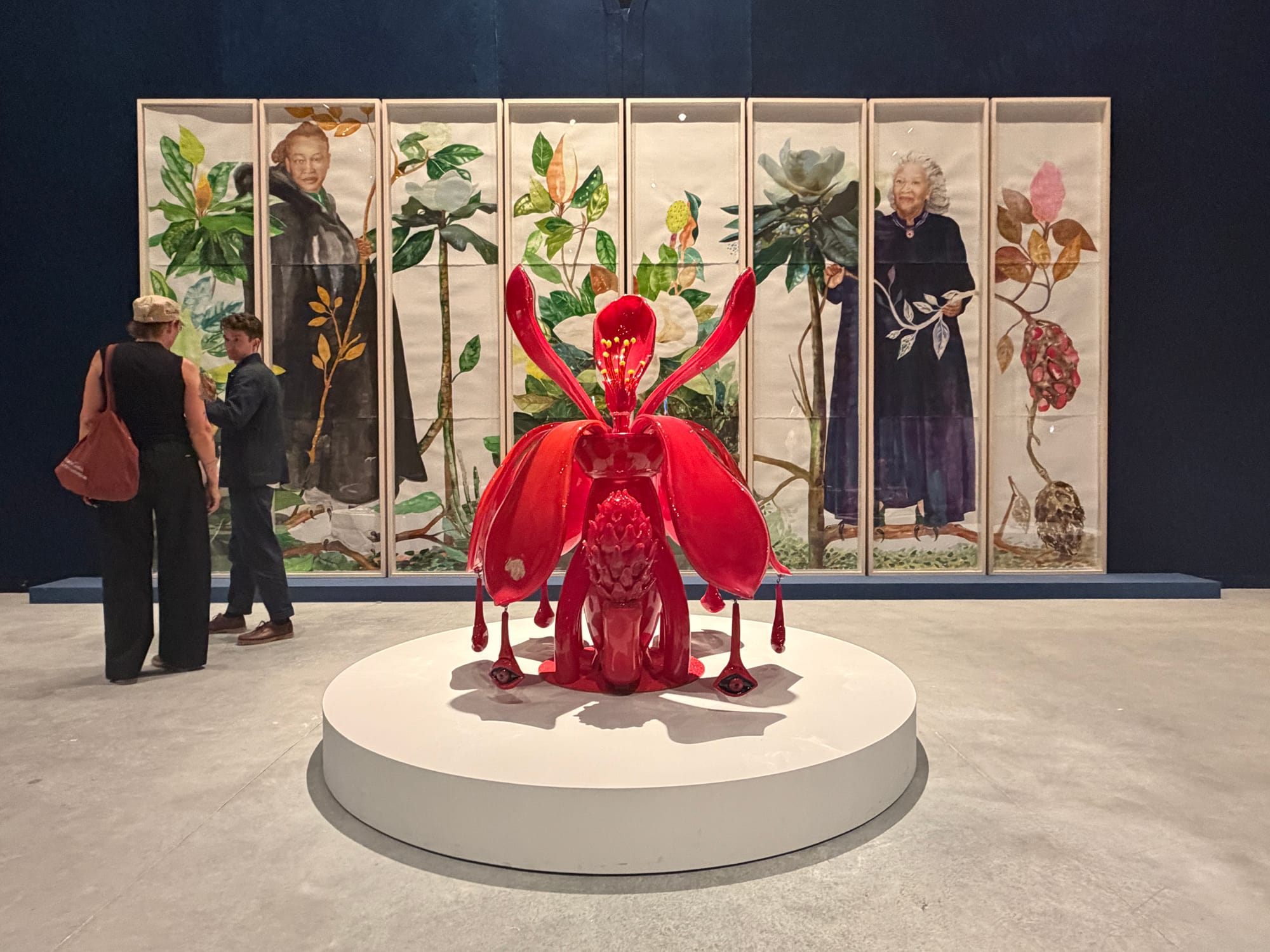
María Magdalena Campos-Pons (Cuba-US) provides a bigger spectacle in her tribute to Kouho, in a colossal painting that depicts her standing alongside Black American novelist Toni Morrison, surrounded by sculpted flowers on the floor. That, too, can be called a shrine. (Campos-Pons also led a moving procession in the Giardini in memory of the late curator). Also unforgettable are Daniel Lind Ramos’s (Puerto Rico) anthropomorphic bricolage sculptures, assembled with found objects — fabrics, pieces of tarp, trash can lids, drums — and emoted by history.
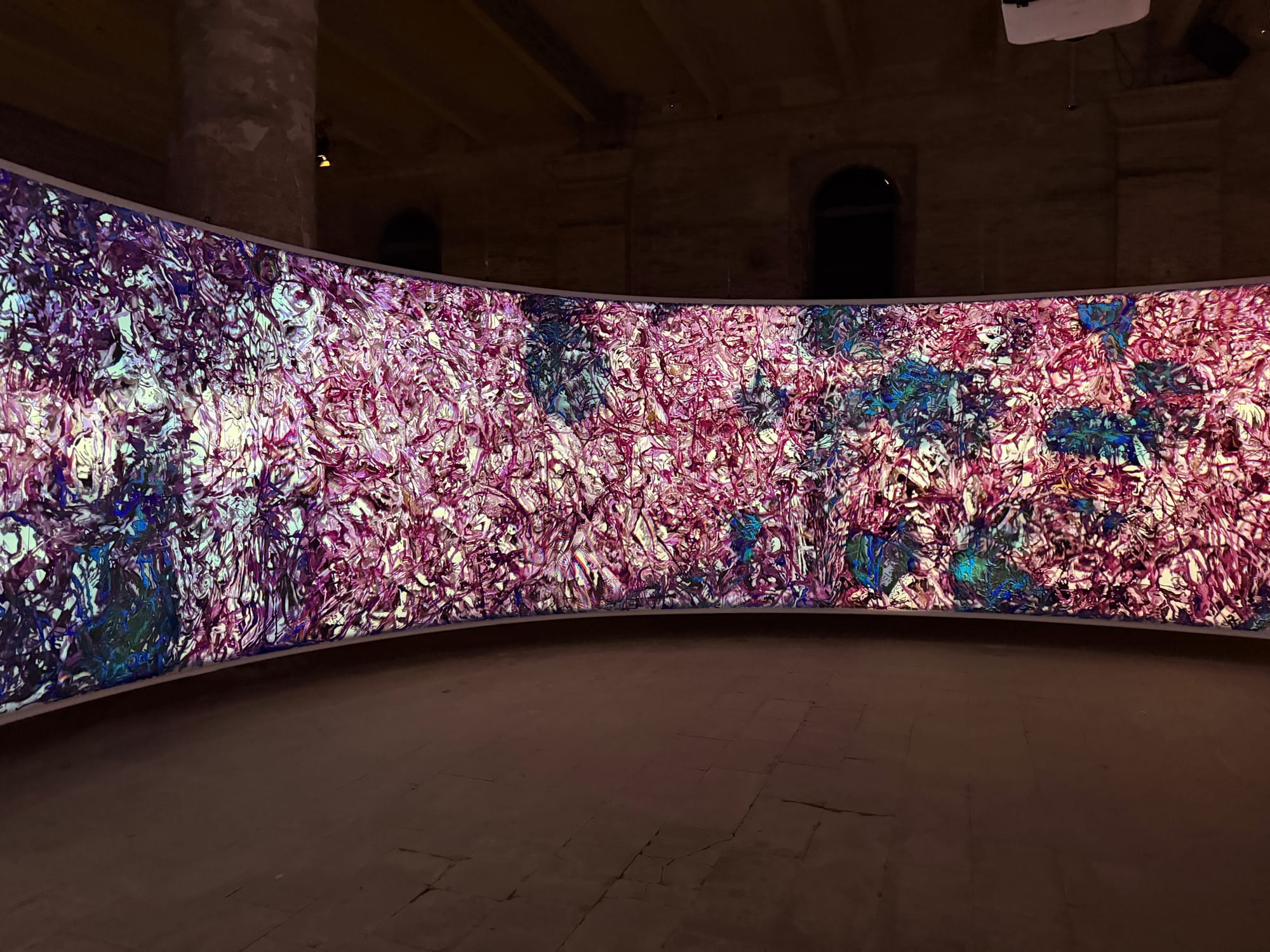
In the Arsenale, which hosts the lion’s share of the exhibition, Australian-Lebanese artist Khaled Sabsabi, who was hounded by an aggressive Israel lobby after he was picked to represent the country at the Biennale, wraps you up in a beguiling digital installation with phantoms moving behind a large, round canvas that made me feel like I’d walked into Plato’s cave. Kader Attia (France-Algeria), a remixer of colonial legacies, walks you through a labyrinth of dangling robes and shattered mirrors as videos of shamans play on the wall. Kaloki Nyamai’s (Kenya) suspended, monumental canvases drip with ancestral memory. Guadalupe Maravilla’s (El Salvador-US) sculptural thrones — consisting of lufa, cotton, and straw among other materials — appear both protective and menacing. Thania Petersen’s (South Africa) stunning tapestry maps the migration of Sufi music through Afro-Asia, drawing from her Cape Malay heritage.
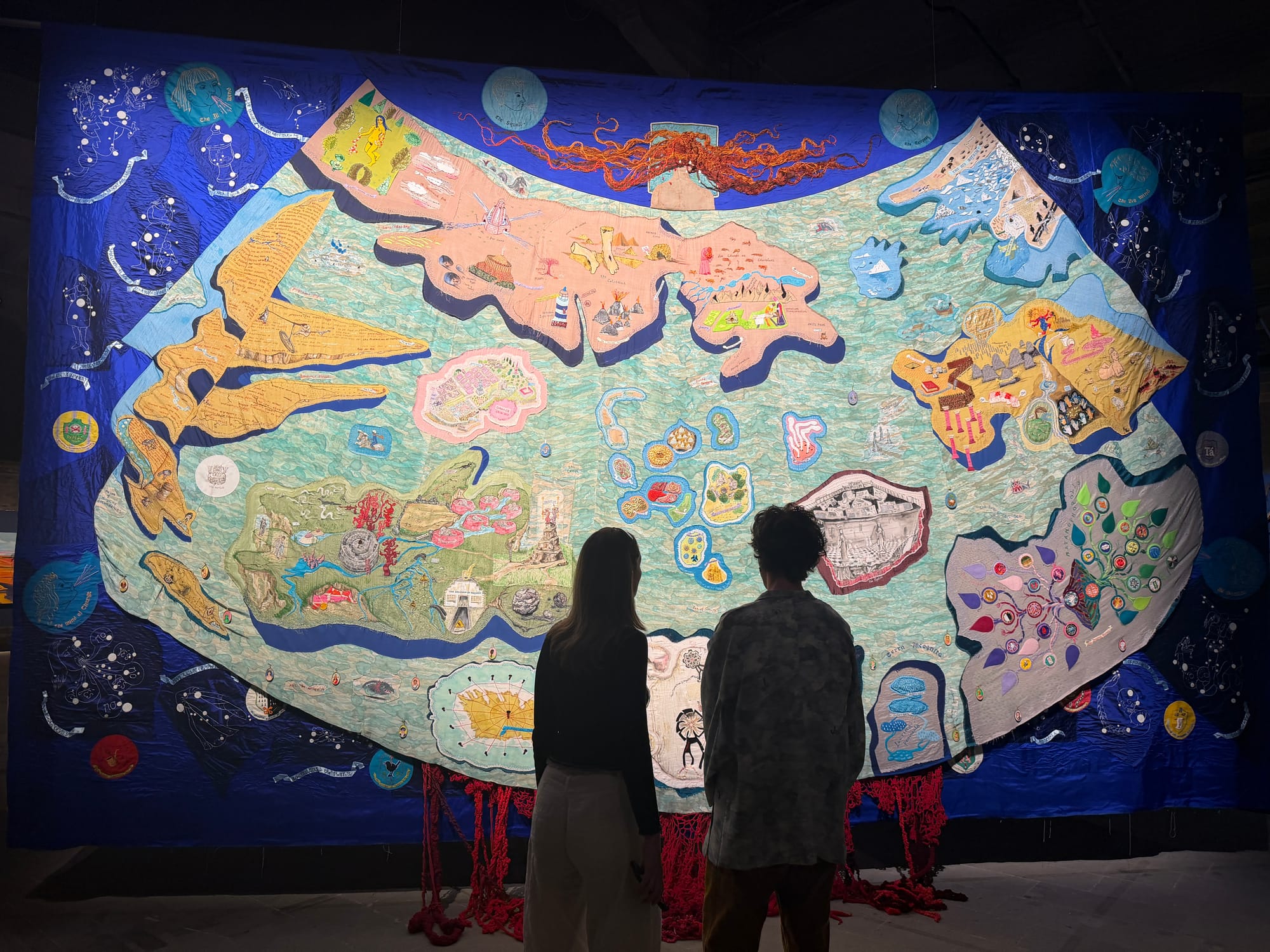
Another cartographic tapestry by Alice Maher and Rachel Fallon reimagines the map of their homeland, Ireland, by highlighting sites of harm to women, such as Magdalene Laundries, punitive colonies for unmarried, ”promiscuous,” and sexually abused women. Walid Raad (Lebanon-US) creates a memorial to the surprising paths of history through palettes used for weapons shipments after Lebanon’s Civil War, which had been painted with copies of famous Arab and Turkish paintings. Annalee Davis (Barbados) presents a living herbarium sourced from the former plantation where her family has lived for generations.
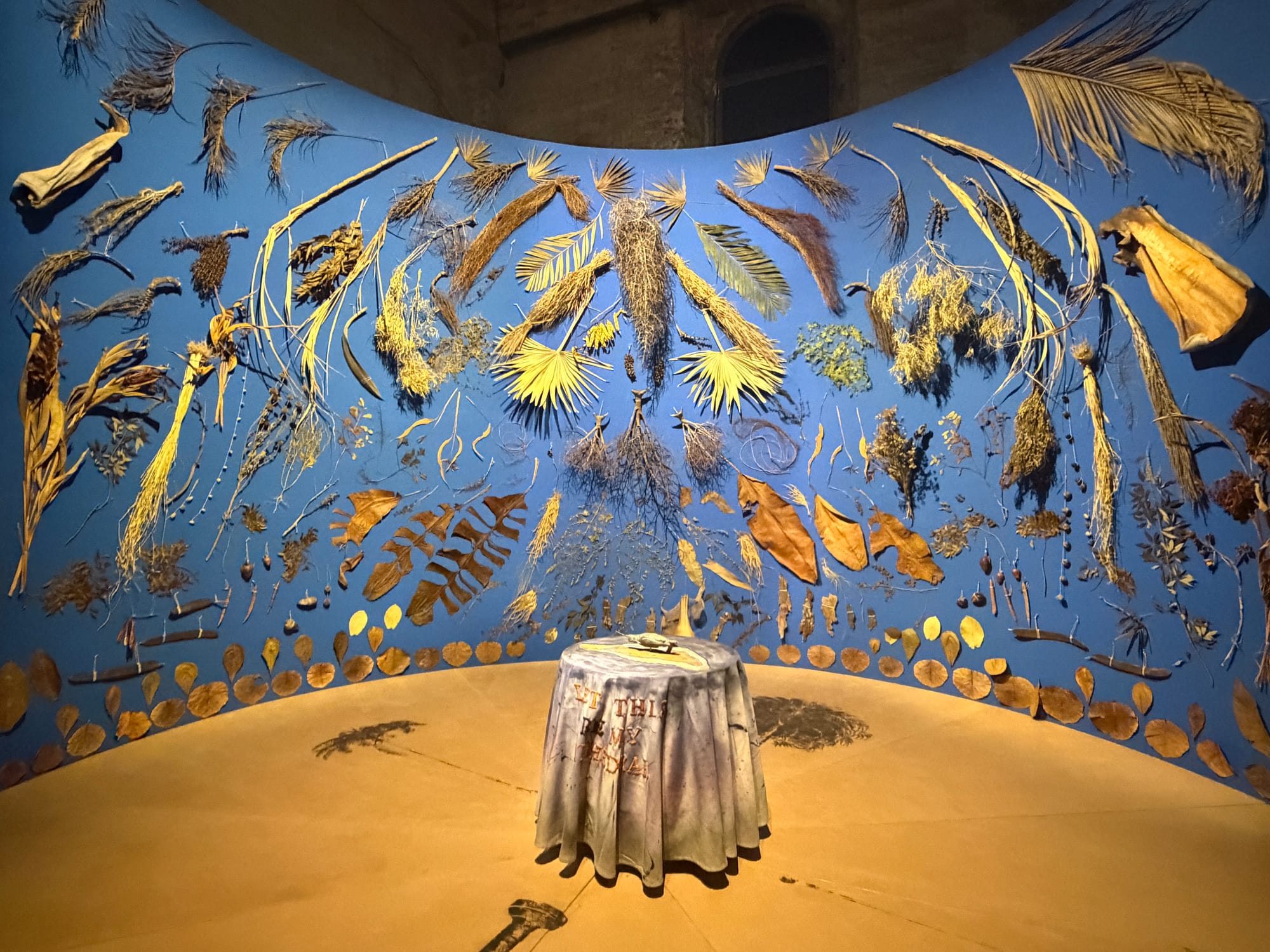
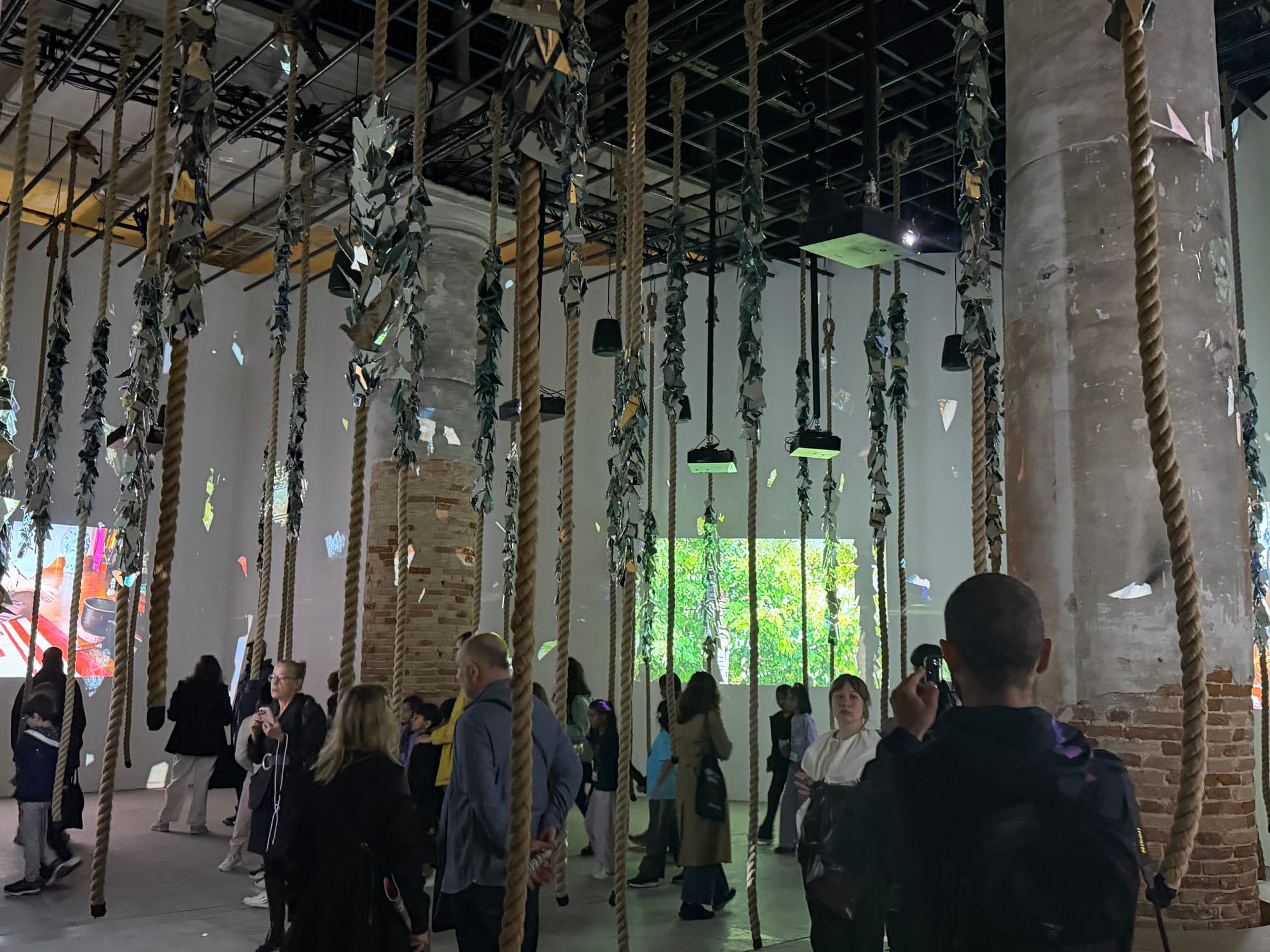
Earth, its offerings, and embedded histories, are a major theme in the exhibition. Michael Joo (US) brings actual fossils of sea lilies to the show. They hang from a mobile and vibrate according to the movement of people around them. Dan Lie’s (Germany) abstracted floral wreaths, hung with ropes and drawing on local histories in Venice, are arresting in their simplicity, and Linda Goode Bryant (US) builds a fully-functional vegetable farm at the Giardini, modeled after her farming initiative Project Eats, which encourages sustainable production of organic food in Black and Brown neighborhoods.
I could go on and on, but after all the above, don’t let anyone tell you this exhibition isn’t political enough.
In addition, massive protests and a historic strike, led partially by the artists in the show and quickly integrated into their art, became an inseparable part of this biennale. Proponents of the status quo took all this political action — including the resignation of the award jury — as the “collapse” of the biennale, while these developments in fact made it the most truthful and relevant biennale in a long while.
On a much deeper level, In Minor Keys successfully plugs into the unseen recesses of political resistance — that subterranean quietude and focus that allow for centuries of endurance. That’s the sound of the strength and confidence of people who see themselves as part of the soil and fauna of their native lands. It’s an ancestral frequency that no foreign colonizer can tune into, not even after ages of settling a land that isn’t theirs.
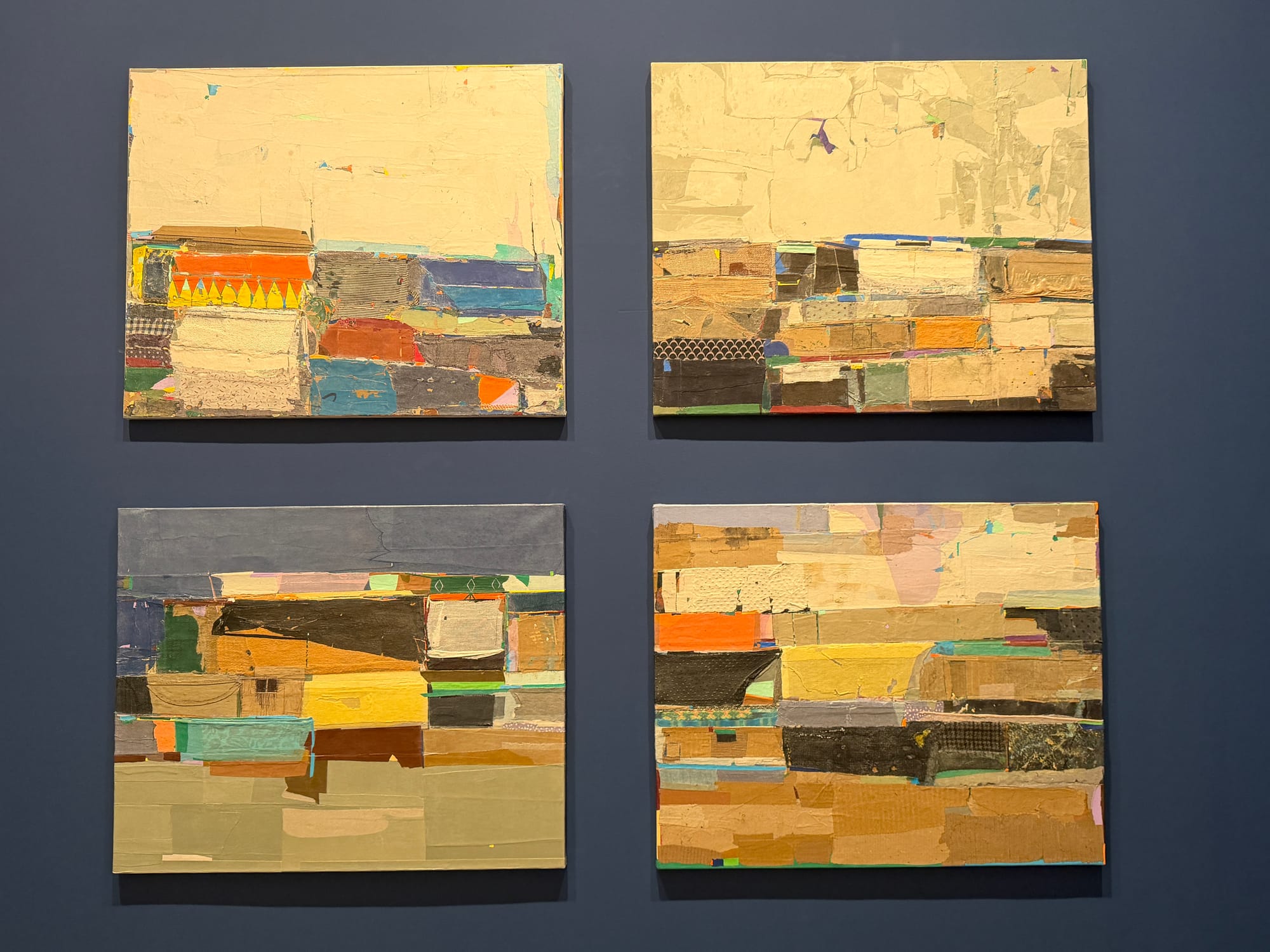
One of the artists in the exhibition that stuck with me most is Gaza-born painter Mohammed Joha, who’s been living in Marseille, France, in recent years. He overlays fabric and cardboard onto canvas to create outstanding abstract collages that recall the tents and tin shacks that people from Gaza have to live under after being robbed of their homes. The series is heartbreakingly titled No Shelter.
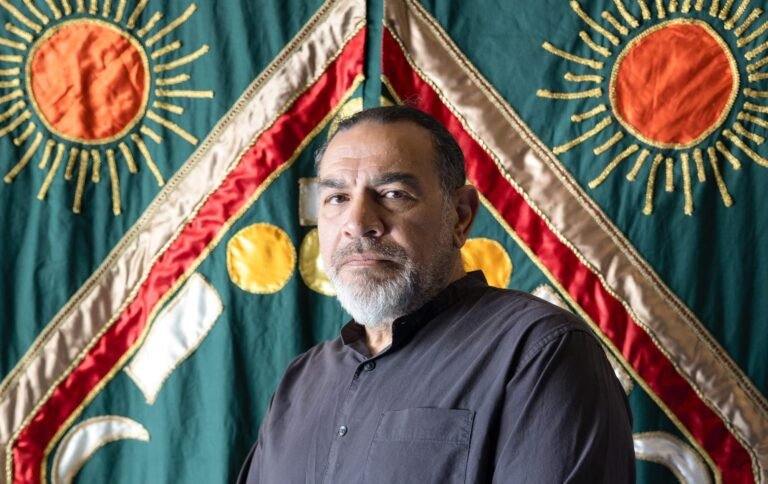
I met Joha at one of the protests. He told me that his mother was slain in her sleep as the whole house collapsed over her head. His twin sister, her husband, and all of their children were killed at once in another Israeli airstrike. He then went on to deliver an impassioned speech in front of thousands of protesters, seemingly unbroken. In this show, artists like Joha have a voice. Sometimes it’s a thunderous roar, and other times, it comes in minor keys.