Carl Timpone/BFA.com; BI
- Scale scale scale: That’s the plan everyone who’s not Netflix has for beating Netflix.
- That’s silly, says Barry Diller, who knows both Hollywood and the internet: You’ll never get enough scale to catch Netflix.
- On the other hand! Platforms like YouTube and TikTok do pose a real threat to Netflix, since they have an endless supply of free content.
Everyone knows what you need to do to take on Netflix: Get really big.
This, after all, is what media CEOs who don’t run Netflix have been saying for years to justify their M&A: It was Disney’s rationale for buying most of Fox, Discovery’s rationale for buying what used to be called Time Warner, and the Ellisons’ rationale for buying first Paramount, and then Warner Bros. Discovery.
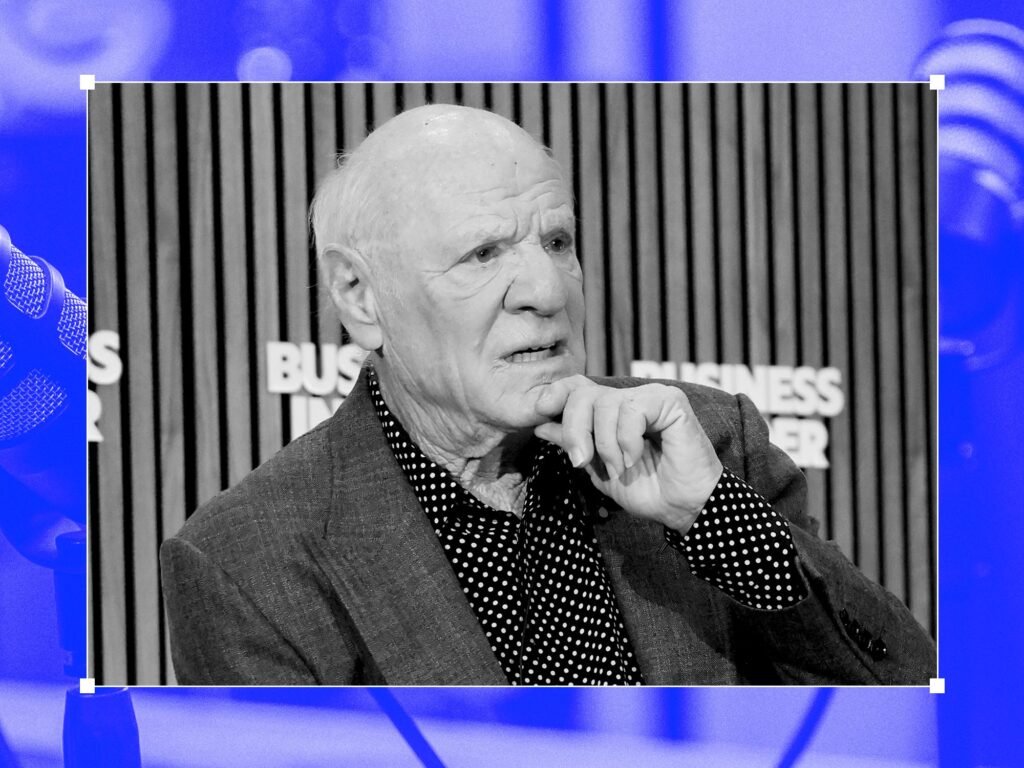
All of which has been misguided, says Barry Diller.
Diller, who previously ran Paramount and Fox’s movie studio — and later launched the Fox broadcast network with Rupert Murdoch — says there’s no point in bulking up to take on Netflix. For a very simple reason: Netflix has owned paid streaming for many years. You can’t fight a war that’s already been won.
Diller has spent his post-Hollywood decades as an Internet Guy, building companies like Expedia, Match Group and Ticketmaster. So he’s got a very good sense of what scale gets you in the digital world — and how new technology can make the biggest companies vulnerable.
I interviewed Diller at Business Insider’s The Long Play event last week. You can hear our entire chat on my Channels podcast — where we also talk about his recent bid for MGM Resorts; why he thinks his portfolio can weather the AI revolution; and why he has no plans to retire at age 84. The following is an edited excerpt of our conversation:
Peter Kafka: You used to run Paramount back when it was a big deal. It’s a smaller deal now. Larry and David Ellison think it can be big again, this time as part of Skydance. Would you make that bet?
Barry Diller: Well, I’m not really in favor of concentration for scale. Scale is not the answer to really much of anything. It is not a determinant. So I don’t really believe in consolidation.
Kafka: You’re really swimming against the tide there. Everyone says, “No, no, we’ve gotta be bigger to take on the Netflixes of the world.”
Diller: Netflix won.
Now, that doesn’t mean you can’t have a perfectly good and profitable and growing business. You are simply never going to beat Netflix, ever, unless they do something weird.
So that game, if you want to call it a game, is over.
It does not mean you can’t have wonderful, profitable businesses. And frankly, the more, the better.
It makes me sad: I ran 20th Century Fox for over eight years, and I adored the company. I adored what we did, both in the movie area and television area.
And it no longer exists. 20th Century Fox is gone. There may be little pieces, remnants. Paramount, I suspect — and I’m not predicting anything — but over time, I suspect Paramount will be gone.
Does it matter if the Paramount brand, the company, goes away, but they’re still making things from that entity?
No. Whatever commitment is made to keep the same level of production, over time they’ll make as many things as the market demands. But the loss of … when we had six major studios, [it] was a very healthy environment to make good stuff. And as you have fewer …
I’m not saying the stuff is getting worse, will get worse. [But] I do think it has gotten worse. I don’t know about all of you, but there was a period when it was being splattered around the world post-COVID with endless stuff. And even before that — for five, 10, 15 years, the quality that came out of just television was extraordinary.
I think generally the quality that has come out, for whatever reasons, in the last couple of years has not really been good.
There was a bubble that deflated.
I’m talking about the quality. When was the last great defining show that you’ve seen, or multiples of them, all of which we had?
I think that’s part of this consolidating trend, and I think it’s not that healthy. And it’s at a time — which is amazing to me — that you can press a button and publish to the world, whatever it is. You can make your own movie, you can make your own journal, you can do whatever you want. Publish essentially free to the world.
So this is why YouTube, if you want to talk about declaring the next “big winner” — it’s absolutely YouTube.
Because that’s thousands and thousands and thousands of people — the same is true with TikTok — creating, publishing, and getting stuff out there.
The established major companies are contracting. The [platforms are] expanding. Still, I’d like these engines of quality production — I want them to thrive.