Independent No More
After 60 years of free reign, Alpina enters a new chapter under BMW’s wing. Established in 1965 by Burkard Bovensiepen, the company became an independent automaker in 1983 but has always had close ties with Munich. It will be interesting to see where the brand goes from here, and we’re keeping our fingers crossed that Bavaria keeps the essence of Alpina.
But what exactly defines an Alpina? Well, there have been several examples per decade that answer that. That said, narrowing its most definitive and significant models down is a monumental task, but it’s safe to say that it’s cars that balance luxury and performance right in the middle instead of going all out like the M Division.
Alpina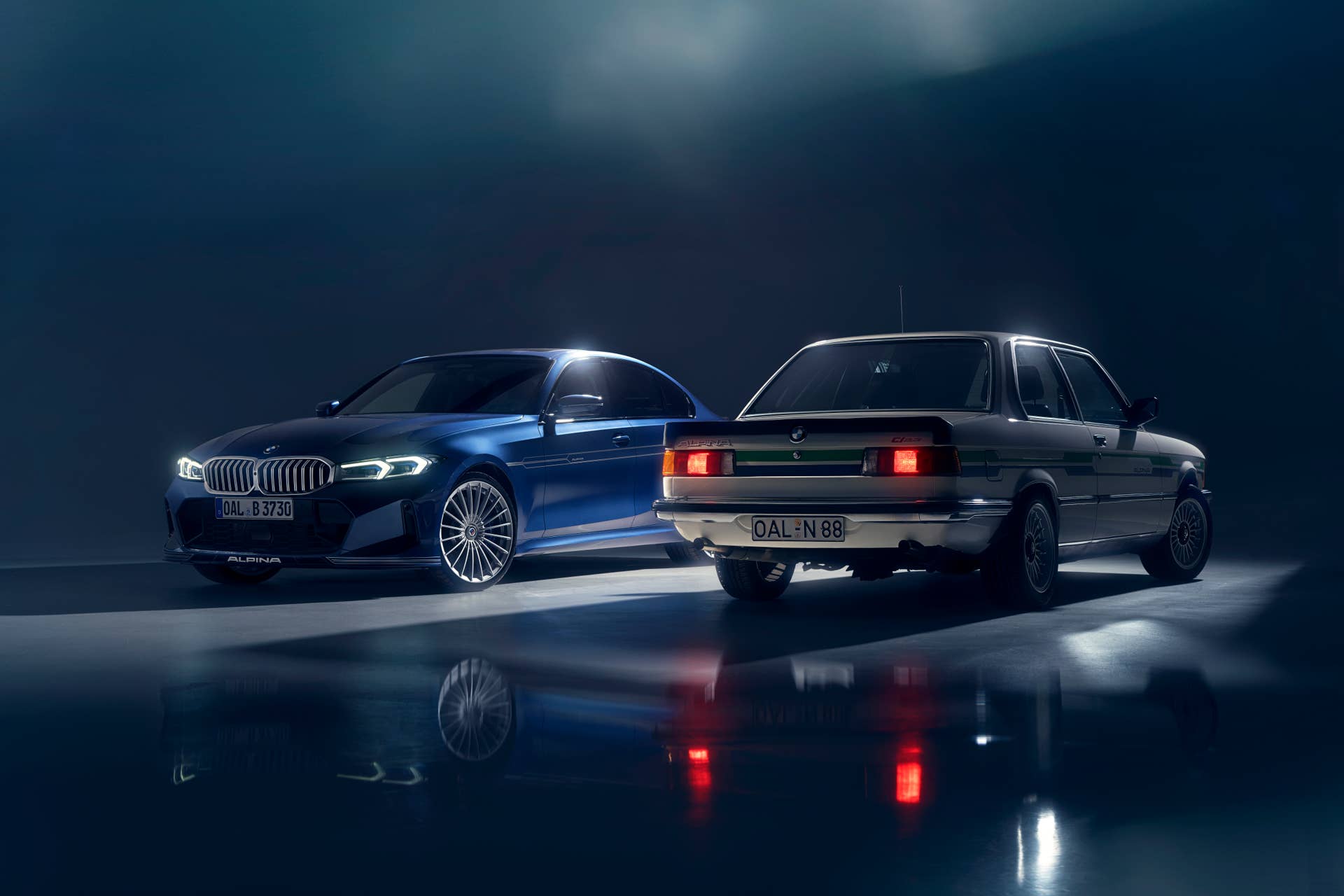
Genesis: From A1/3 to B7 Turbo
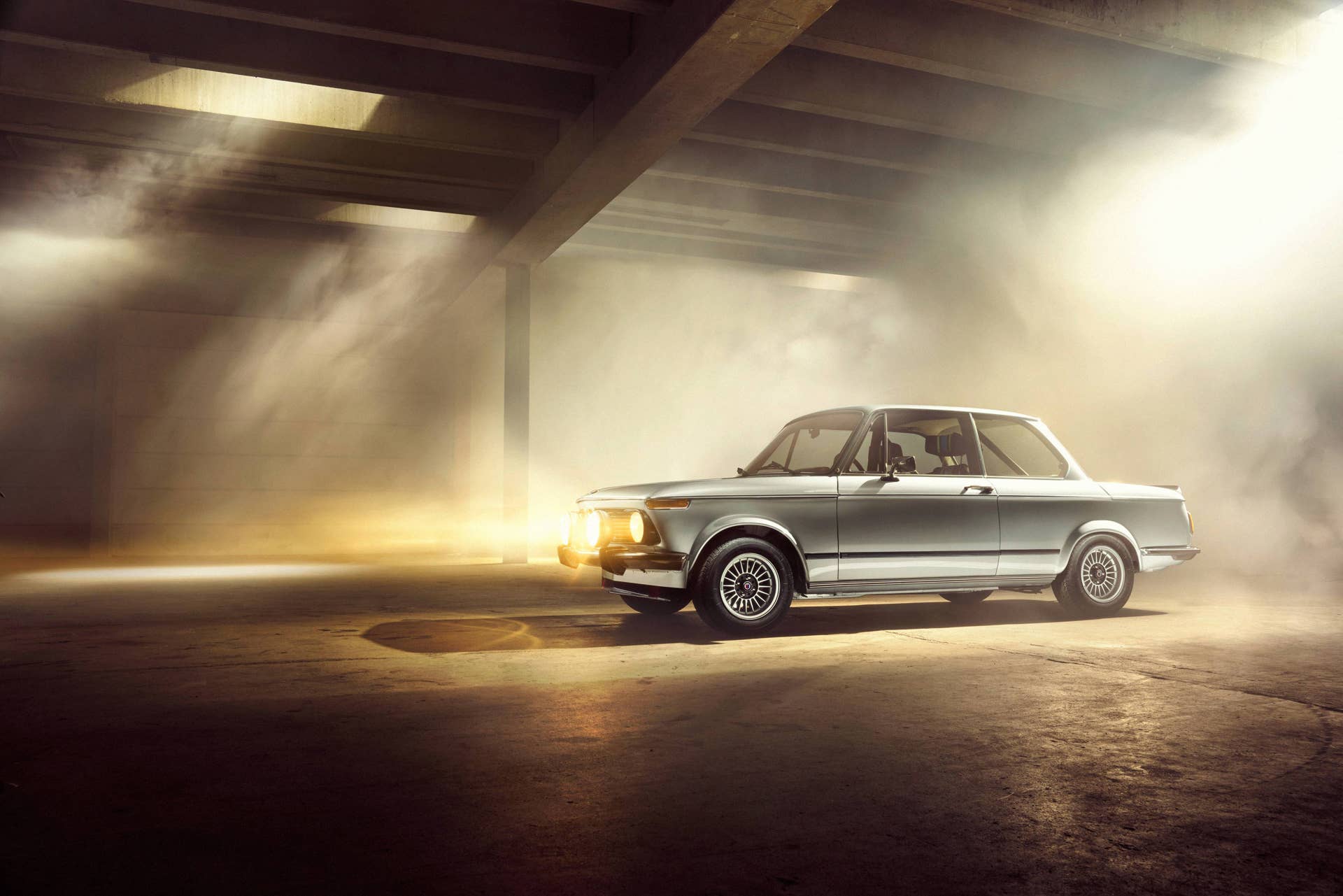
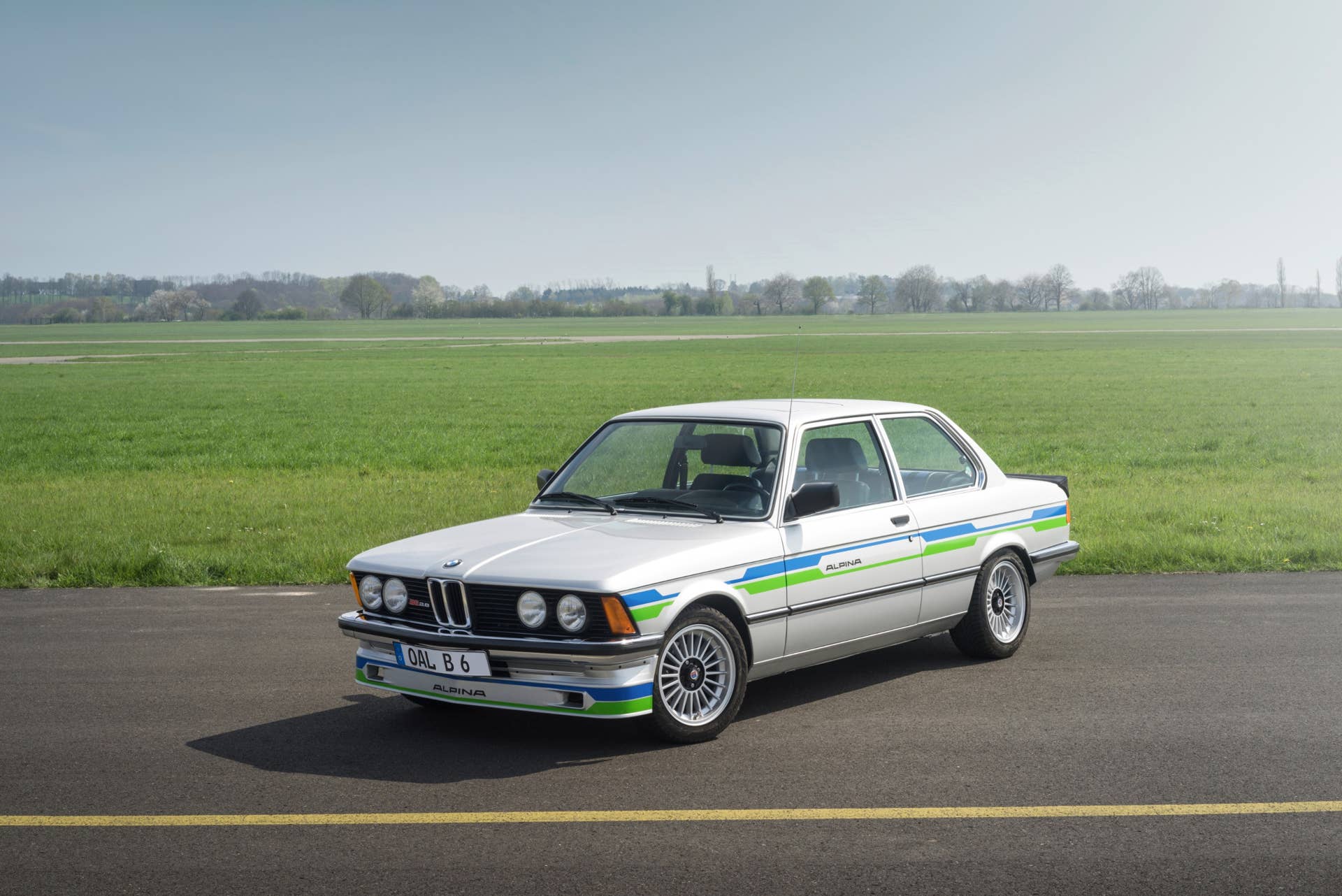
Alpina started by making the 1800 models quicker by upfitting them with modified Weber carburators in a dual setup, and later on, making go-fast parts for the 02 series and 3.0 CS. But Alpina’s turning point would happen in 1975 with the A1/3. It was a standalone model of sorts rather than a lightly tuned E21 3 Series, boasting performance enhancements that laid the groundwork for the company.
Several E21-based models followed, along with E12-based cars. One noteworthy model was the B7 Turbo from the late ’70s. With 300hp from its 3.0-liter straight-six, it was one of the fastest sedans of its era with a 0-60 mph time in about six seconds. Alpina then applied the same trick to the E24 6 Series to create the B7 Turbo Coupe, as well as the E23 7 Series.
True Independence
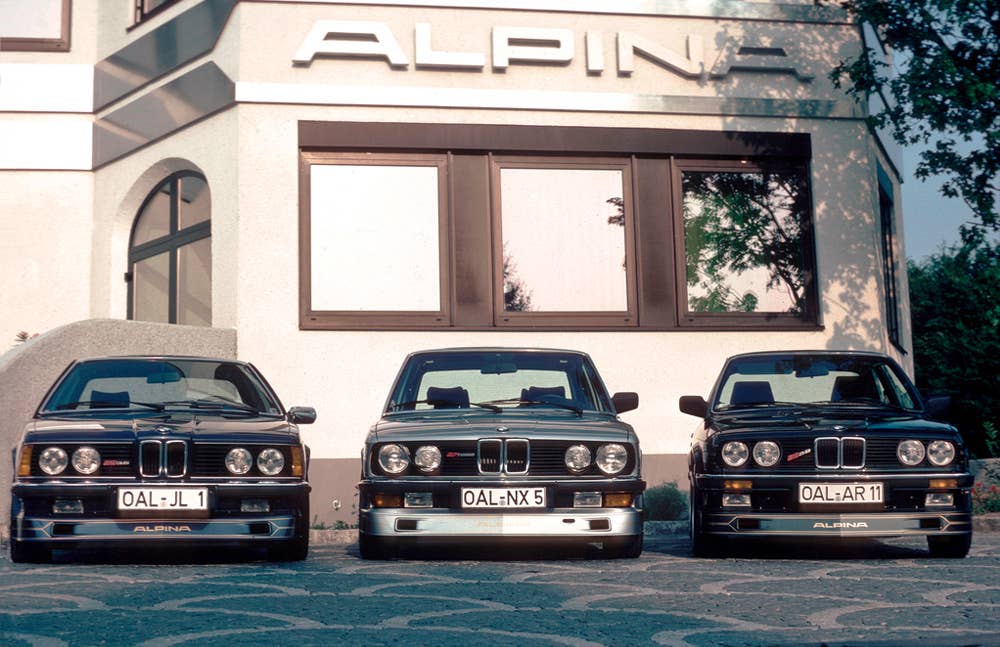
By 1983, Alpina had become recognized by the German Federal Ministry of Transport as an automaker. Just in time, too, as the E30 3 Series had just come out the year prior. The first Alpina-fied E30 was the C1/2, based on the 323i, and would be succeeded by models like the C2 2.5, C2 2.7, and B3 2.8. There were also more extreme (but still cushy) models introduced, namely the B6 3.5 and 3.5 S, the latter being based on the M3 of the time.
Of course, the 5 Series got its fair share of attention, in both E28 and E34 guises. The E28 B7 Turbo and E34 B10 Biturbo models were particular highlights, the latter actually being more powerful than BMW’s own M5. Of course, the company continued building hotted-up 6 Series and 7 Series models.
Nicest of the ’90s
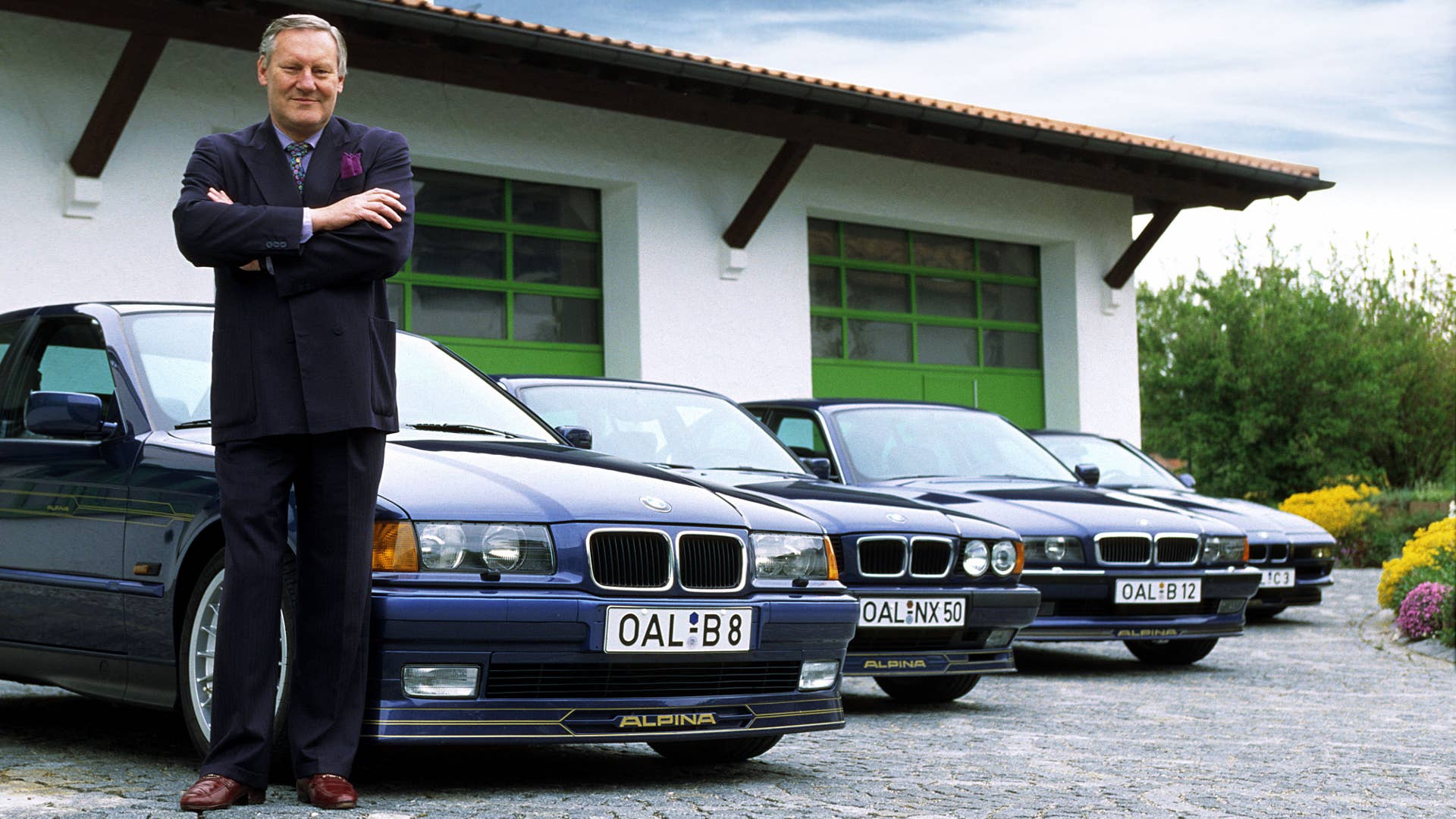
A new decade meant a whole slew of redesigned BMWs. Alpina wasted no time applying its magic to those cars, either. Starting with the E36 3 Series, things started off mildly with the B6 2.8. Succeeding that was the B3 3.0 and B3 3.2, which both punched out more horses than the American M3, and it was topped off by the insane B8 4.6. The B8 4.6 shoehorned an M60 motor in the E36’s slim engine bay, something that BMW themselves said was impossible. Oh, and it was also available as a Touring wagon.
For the E39 5 Series, Alpina gave the 528i power levels that matched the 540i with the B10 3.2 and B10 3.3. Of course, the main attractions of the Alpina E39 range were the V8 models. It was kicked off by the B10 V8, then the B10 V8 S towards the end of E39 production. As for the E38 7 Series, there was the B11 for the V8-powered 735i and 740i, and B12 for, you guessed it, the V12 750i/750iL.
The 6 Series was gone even before the ‘90s began, but that didn’t stop Alpina from having a little fun with the E31 8 Series. Alpina went straight for the 850i V12 for the B12 5.0 Coupe, then upped the ante with the 850CSi-based B12 5.7 Coupe.
Yes, They Made Roadsters Too
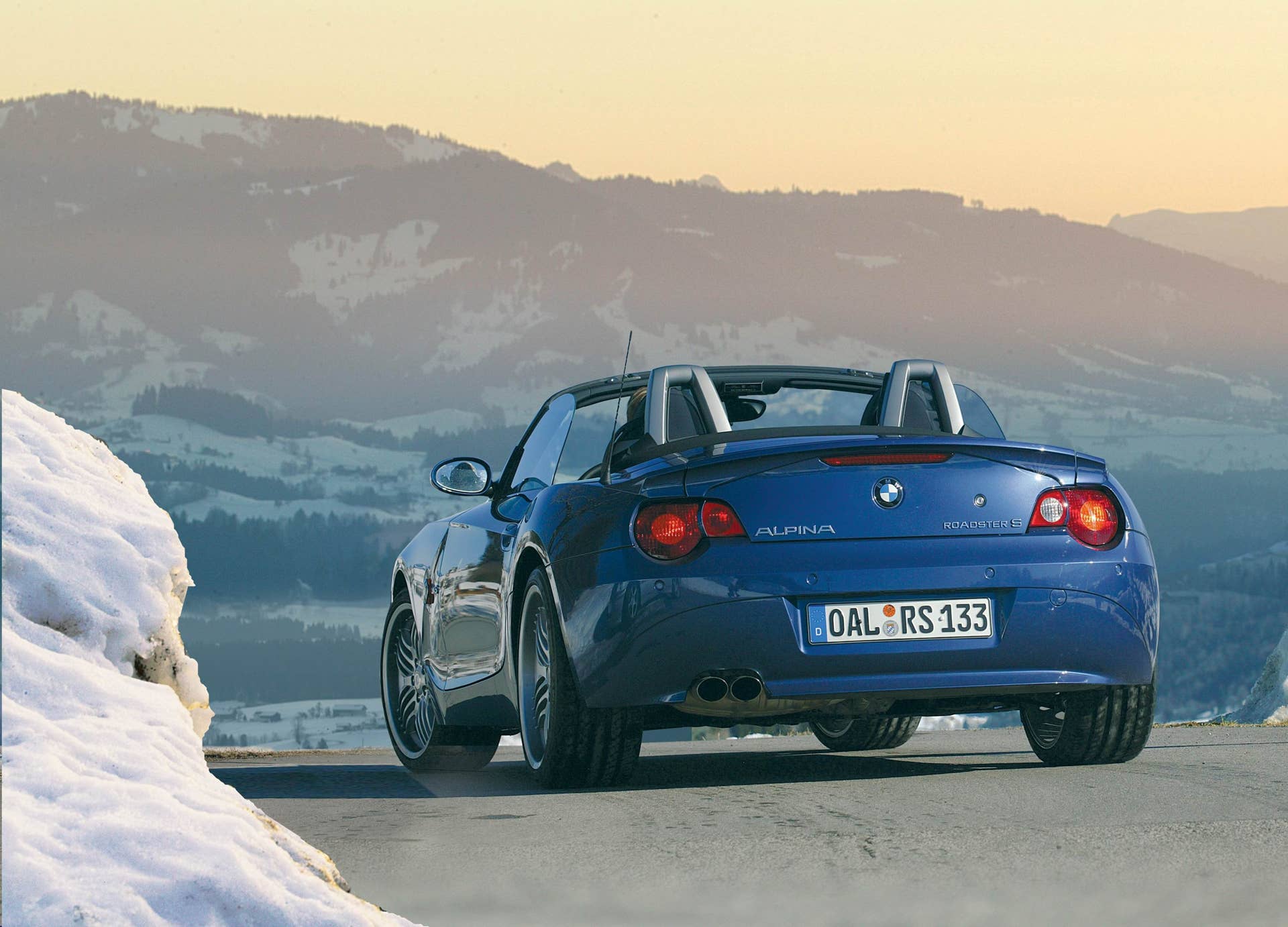
Don’t think that we forgot about the roadsters that Alpina made. Granted, it wasn’t the brand’s bread and butter, but the few it produced are certainly worth a mention.
Alpina’s first open-top car was the Z1 RLE, short for Roadster Limited Edition, and it was, indeed, a limited-run model with just 66 made. It would take another decade before the brand made another one, this time based on the Z8 as the Roadster V8. It was then followed by the E85 Z4-based Roadster S that curiously used the same engine block as the American E36 M3 but tuned to make about 300 hp.
Into the New Millennium and to the Present
In the E46 3 Series front, there was the B3 3.3, B3 3.3 Allrad (all-wheel drive), and B3 S that offered near-M3 levels of performance in a more practical sedan or wagon form. Of course, succeeding 3 Series models followed the same pattern, gaining more performance with each generation. The same went for the 5 Series and 7 Series-based cars.
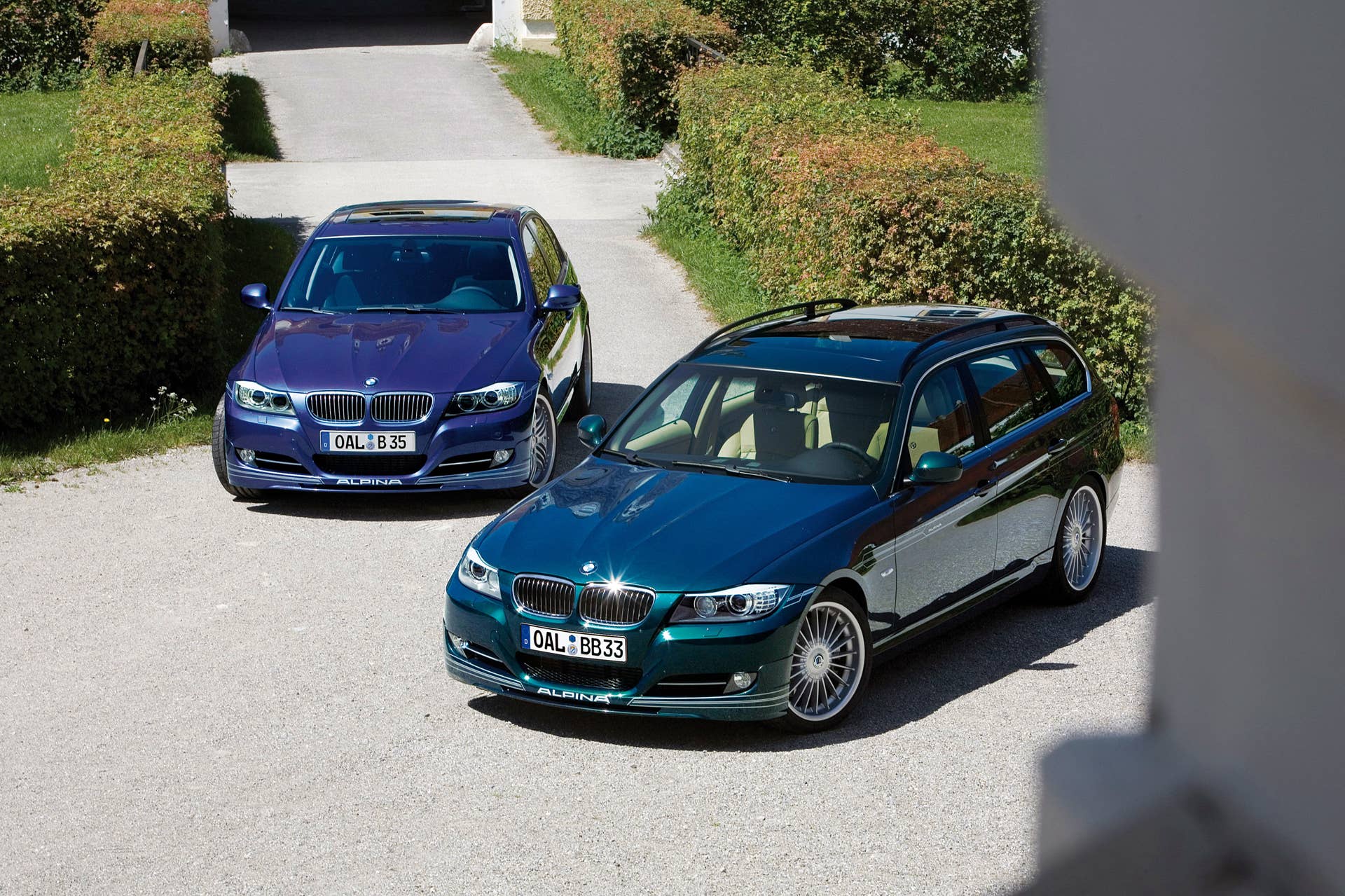
Europe fell in love with diesels in the 2000s, and Alpina jumped into that wave, too. It started with the E39 D10 Biturbo, and then with the E90/91 D3 and D3 Biturbo, which was also offered as a coupe. From that point onwards, the company would build high-performance diesels until 2025.
Of course, Alpina wasn’t blind to the rise of crossovers, either. Its first performance SUV came in the form of the F25 XD3 Biturbo, which was then succeeded by the G01 XD3. Curiously, the company never made an X5-based derivative, but it filled in for the performance derivative of the X7 with the XB7.
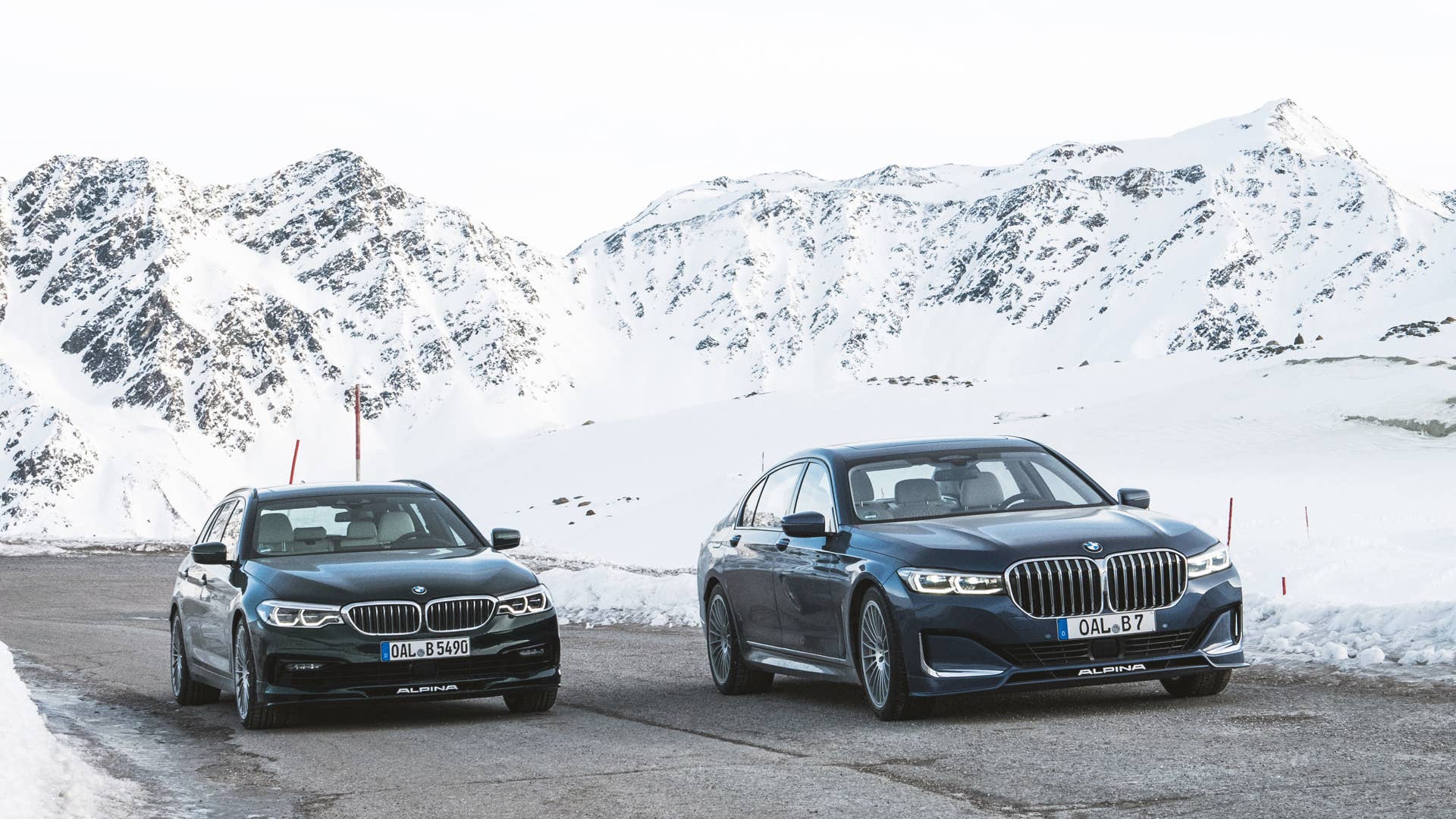
So, what’s next for the brand? By the looks of it, it could become the bridge between BMW M and Rolls-Royce. It’s already been rumored that a new 7 Series-based model is coming soon, and not every BMW model will get the Alpina treatment. It seems that the new Alpina will focus more on the larger BMW platforms in its new chapter. Bespoke models are also possible down the line. Cautiously optimistic would be a good pair of words to describe the acquisition, and hopefully, Alpina won’t just be a trim in the future.
Alpina