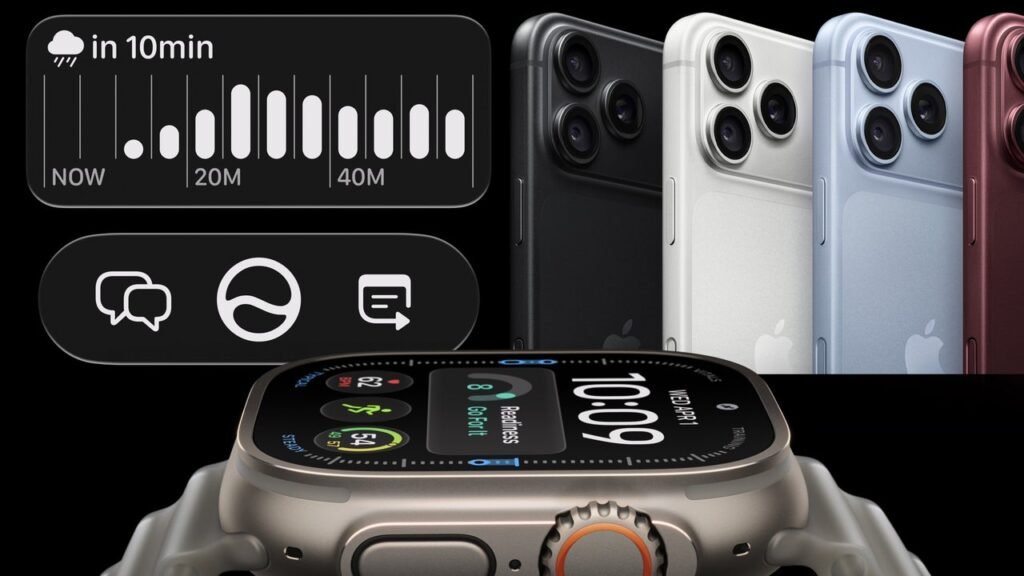
Apple’s phones, watches, and earphones are increasingly judged by how well they enable and support personal AI experiences.
Apple’s new CEO, John Ternus, opened his company’s hardware event Wednesday by explaining how AI will transform the Apple device experience, and how Apple devices are ideally situated to capture and understand users’ personal and contextual data. Ternus said the new iPhone 18 series, the new Duo foldable phone, AirPods 5, and Apple Watch Series 12 and Ultra 4 are “purpose built to serve as your own intelligent personal hub.”
Apple has been adding to the power of the chips inside its devices so they can run more AI processes on the device itself, rather than in the cloud. Apple, for example, added a second “neural engine” accelerator to the A20 Pro chips that power the new iPhone 18 Pro and Pro Max phones and the new Duo foldable phone. The new dual 16-core Neural Engine offers twice the compute power for running on-device AI models as previous iPhone chips, Apple says.
The centerpiece of the new phones is a new, smarter version of Siri powered by Apple Intelligence. It can draw on personal context to help users find what they need across messages, emails, and photos; use onscreen awareness to take action on content on a user’s screen; and answer questions about virtually any topic.
Apple originally announced the new AI-powered Siri in Spring 2024, but, because of developmental roadblocks and performance issues, was forced to delay the launch until this year.) “It will likely go unnoticed amid the product announcements, but Apple also said today that Siri AI will stay in beta even after the new OS versions featuring it ship later this quarter,” says International Data Corporation analyst Tom Manelli in a statement. “Apple slow rolling Siri AI may prove to be the right call long term.”
Duo
With the Duo’s foldable design, users can have a conversation with Siri AI while looking at content on the other side of the screen.
Siri mode in the iPhones’ Camera app allows users to get information and take action on what’s in front of them. Visual AI models running on the A20 Pro chip analyze the scene in the camera view in real time and automatically capture photos when subjects are posing (Smart Take). Users can improve photo composition after capture with the AI-driven Spatial Reframing, Extend, and upgraded Clean Up features. A new computational imaging pipeline produces sharper, more detailed shots from the Main camera, accelerated by the A20 Pro, Apple says.
An on-phone audio model helps the device understand users’ questions and prompts more accurately and generates more human-sounding voices. The new C2 Cellular Modem uses AI algorithms to improve cellular connection speed and reliability. For AI functions that require more computation than the on-device chips can provide, Apple Intelligence uses Private Cloud Compute, which extends the privacy and security of the iPhone into the cloud.
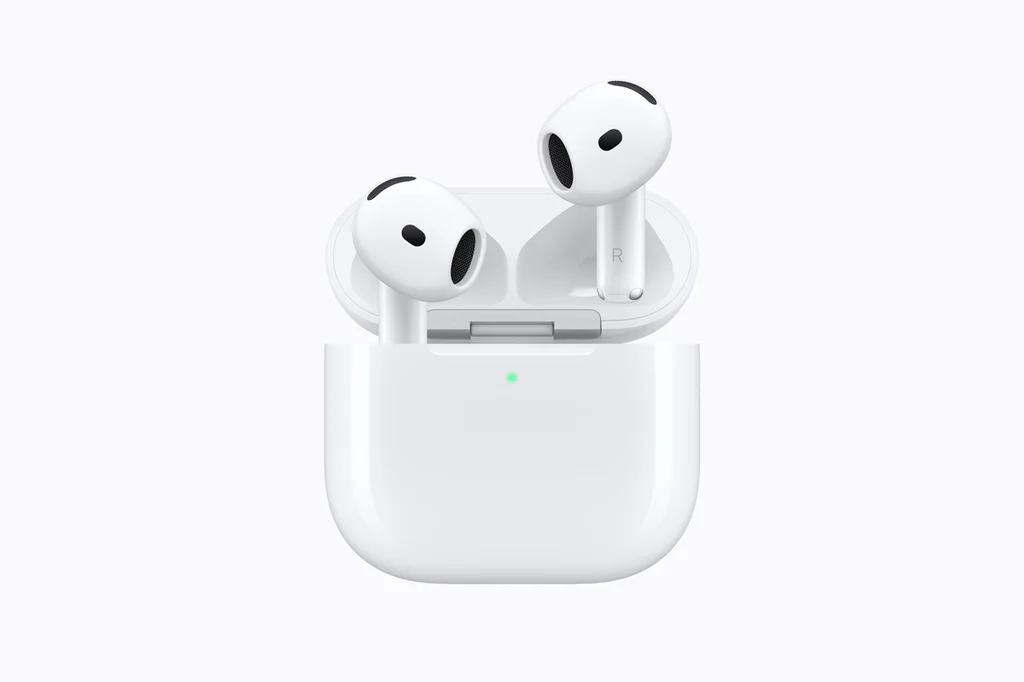
AirPods 5
The main draw of Apple’s new AirPods 5 is better active noise cancellation. Because of “advanced computational audio” algorithms, the earphones remove 50% more external noise than the AirPods 4.
Apple stressed that AirPods are an ideal hands-free way to access personal and contextual information via Siri and hear the AI outputs clearly and privately in the ear. Users can discreetly respond to Siri AI by nodding their head yes or shaking their head no. The new AirPods also feature live translation, a feature Apple introduced last year.
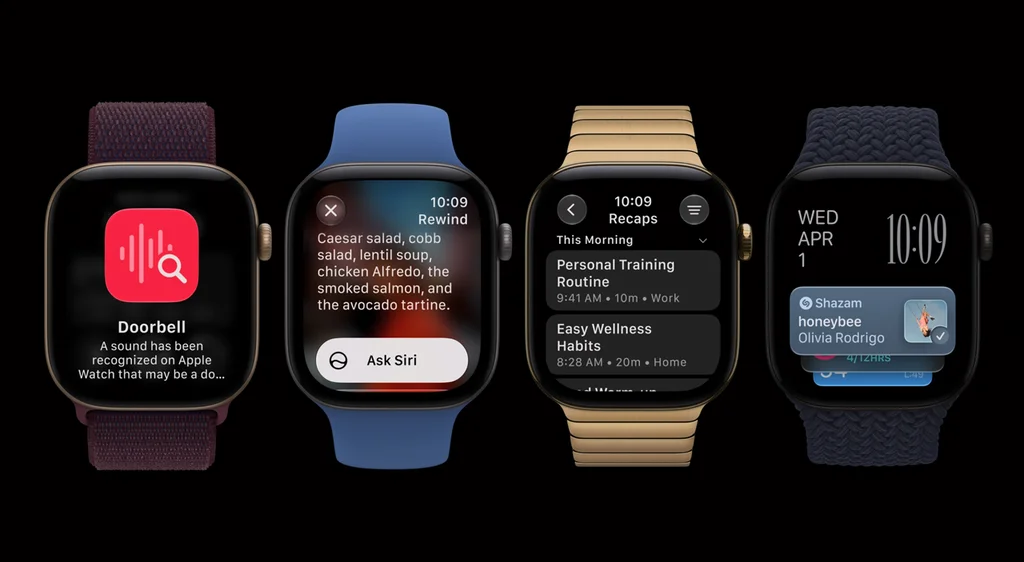
Apple Watch Series 12 and Ultra 4
Similar to Apple’s efforts to build visual reasoning into the iPhone camera, the company is bringing a new set of “audio intelligence” features to the Apple Watch. Sound Recognition uses on-device AI to identify sounds such as sirens, alarms, doorbells, or a baby crying and alert users who are deaf or hard of hearing. Live Rewind can turn the previous 15 seconds of a conversation into a text snippet, while Siri Recap uses AI to automatically generate a title and key points after a conversation.
Apple is also emphasizing privacy. The Watch’s S11 chip includes a “secure exclave,” a dedicated, isolated compartment that processes audio and then immediately deletes it. Apple says the Audio Intelligence features do not create or store audio recordings. The features will become available in beta later this year.
Meanwhile, a redesigned Health app uses AI to dynamically respond to a user’s health data. For example, the new Insights tab can offer personalized guidance based on changes to workout or sleep data. The app can also use visual AI to watch a user’s workout movements through the phone camera and evaluate their flexibility, strength, and balance.