
Google is raising the bar for mobile security on devices in 2026 with Android 17. The company is rolling out a massive security and privacy updates designed to tackle common threats like financial fraud, physical theft, and invasive app tracking.
Android 17 security updates for 2026 bring advanced anti-scam shields
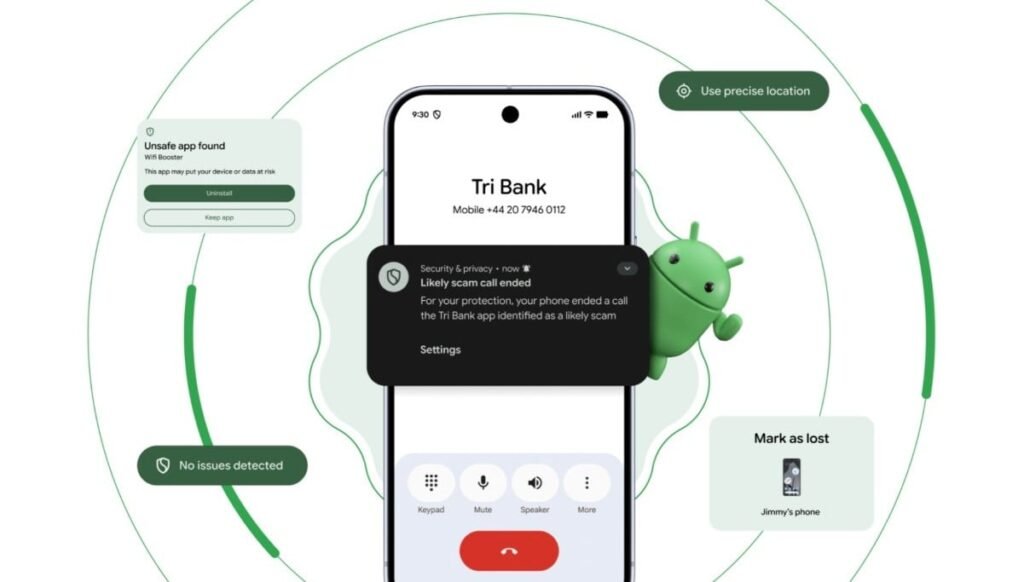
One of the most persistent threats involves “spoofing.” This practice involves criminals disguising their caller ID to look like a legitimate bank. This tactic leads to nearly $950 million in global losses every year. To fight back, Google is introducing verified financial calls.
Devices running Android 11 or higher will now work silently in the background with banking apps like Revolut and Nubank. When a call arrives, the system asks the bank for confirmation. If the bank didn’t actually place the call, Android simply ends it. This protection effectively kills the scam before you even have a chance to pick up the phone.

AI-powered app monitoring
Android 17 is also getting smarter at identifying malicious software. The updated Live Threat Detection uses on-device AI to watch how apps behave after they are installed. If an app suddenly starts forwarding your SMS messages or tries to hide its own icon to launch secretly from the background, the system will flag the suspicious pattern and alert you.
Chrome on Android is also joining the fight. A new safety layer will evaluate APK files for known malware at the moment of download, providing a crucial warning before the app even lands on your storage.

A nightmare for phone thieves
Physical theft is about more than just the cost of the hardware; it’s about the data inside. Android 17 makes a stolen phone much less useful to criminals. A new biometric lock for the “Mark as Lost” feature means that even if a thief stole your passcode, they cannot turn off tracking or re-access the phone without your fingerprint or face scan.
Furthermore, Google is expanding default-on theft protections globally. New and upgraded devices will now automatically enable features like Remote Lock and Theft Detection Lock, which use sensors to detect if someone has snatched your phone and immediately lock the screen.

Granular privacy controls
Privacy is also getting a significant upgrade with “one-time” permissions. Android 17 introduces a temporary location button. Instead of giving a cafe app permanent access to your GPS, you can share your precise location just for that specific moment while the app is open.
A similar approach is coming to your address book. The new contact picker allows you to share specific contacts instead of granting an app broad access to your entire list. This ensures apps only see the absolutely necessary data.

Ensuring your system is the real deal
Security starts with the integrity of the operating system itself. The company has seen an increase in the number of unofficial, modified versions of Android that are designed to look like legitimate software but secretly compromise user data. To combat this, Android 17 is introducing Android OS verification.
Initially launching on Pixel devices, this feature helps you verify that your phone is running an official, widely distributed build of the Android OS. Now, a public, transparent “Source of Truth” ledger provides cryptographic proof that the applications and the system itself are authentic production versions. This ensures that no “fake” version of Android can hide its malicious intent behind a familiar interface.

Future-proof security
Lastly, Google is looking toward long-term threats with features like hiding one-time passwords (OTPs) from malicious apps. Plus, the company introduced Post-Quantum Cryptography in March.
The post Android 17 is Getting New Security Shields Against Scam & Malware, Improved Privacy Controls appeared first on Android Headlines.