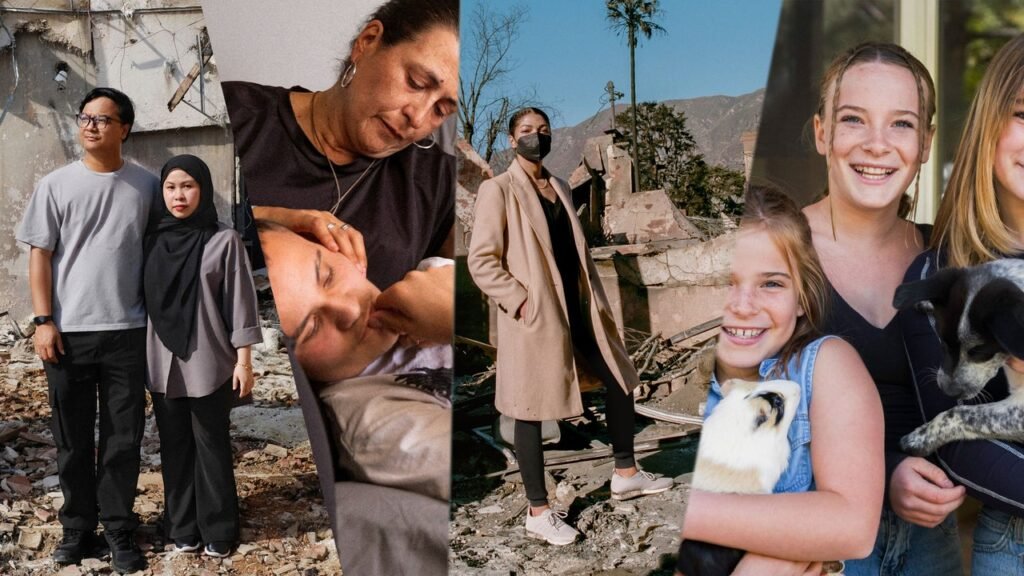
Susan Bailey still vividly remembers the first time she hosted a family in need of emergency housing. It was 2017, and she had just renovated a property near her home in Colorado with the idea of adding it to her growing portfolio of Airbnb rentals. One evening, she got a call out of the blue from someone at Airbnb Open Homes, as Airbnb’s program for housing people in crisis was then known.
“It was eight o’clock on a Thursday night,” Bailey says. Airbnb asked if she would be willing to welcome a refugee family from Iraq, arriving at midnight. That same year, Airbnb pointedly ran ads welcoming refugees in the face of President Trump’s ban on immigrants and refugees from majority-Muslim nations.
Bailey didn’t know anything about her prospective guests, and there were still items left on her property’s renovation punch list. But she said yes. Four hours later, the family was at her door.
In the years that have followed, Bailey has hosted families facing crises of all sorts and sizes, including the wildfires that have plagued communities in Colorado and California, where she also manages short-term rentals. “In many cases, in the beginning, we didn’t even know if Airbnb would fund their stays,” she says. “It was pretty scrappy.”
Those scrappy days are now gone. Airbnb formalized the creation of Airbnb.org, an independent nonprofit, in 2020. Today, it’s making an even bigger commitment to the problem of emergency housing. “We were just getting a huge amount of demand,” Brian Chesky, Airbnb cofounder and CEO, says of the decision to create a new funding model for the nonprofit. This year, as Airbnb.org’s capabilities have accelerated, the organization is responding to a disaster a day.
Going forward, a small portion of the revenue from every Airbnb booking—10 cents—will go toward free, temporary stays that are facilitated by Airbnb.org and its partners.
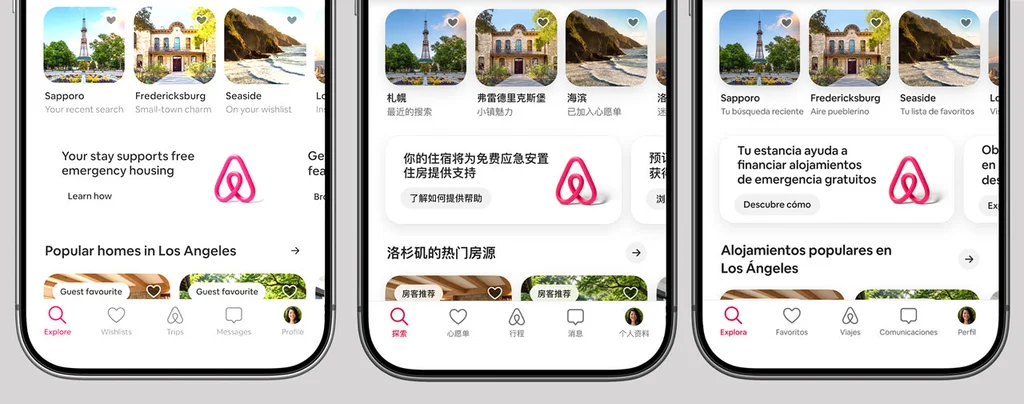
Those dimes will add up; in 2025, the company booked 57 million stays and experiences. Over the next five years, the company plans to provide the nonprofit with $500 million through these dimes and supplementary donations. The new funding will position Airbnb.org to offer 1 million nights of emergency housing each year. It will also support the organization’s expanded mandate, which encompasses displacement due to disasters, like the war in Ukraine or hurricanes in Florida, as well as travel for medical care, safe shelter from domestic violence, and support for veterans. Guests stay for free; hosts are paid, but can discount their rates.
For Chesky, the commitment to Airbnb.org is personal. After his mother was diagnosed with breast cancer in 2011, she took the train daily from Albany to New York City—a 300-mile round trip—in order to seek the best possible care. She wasn’t alone. “She met other people on the train, and they were going back and forth for medical treatment,” Chesky says. “They couldn’t afford to stay overnight. That made us realize, wow, there’s a lot of need out there.”
Hurricane Sandy, in 2012, was similarly eye-opening for Chesky. When a New York City host inquired about helping people displaced by the hurricane, Airbnb started facilitating emergency stays in an ad hoc way, often via word of mouth. That initiative evolved into the establishment of Airbnb.org six years ago. To date, Airbnb.org has provided free stays to 250,000 people.

The time is right to do more, Chesky says. “We’re not going to house everyone, but we felt like we finally got to the place where we had the operational capacity to make a giant commitment,” he says. “This commitment’s a five-year commitment, but we’re going to do this for a lot longer than five years. We hope to do this for as long as Airbnb exists.”
Responding to the Los Angeles Wildfires
The wildfires that ravaged Los Angeles County last year have become a model for how Airbnb.org operates in the face of crisis. They also underscore the hostility between Airbnb and many local governments.
Maribel Marin, executive director of the social services nonprofit 211 LA, was lining up motels and preparing for the worst as fires broke out the first week of January 2025. She and Airbnb.org established a partnership on January 7, initially agreeing to find homes for 100 households.
“Within 10 days, we had 10,000 households [in need],” Marin recalls. People with children and pets, hesitant to go to shelters and hotels, flocked to the offering. (In total, around 100,000 Angelenos evacuated.)
In the end, 211 LA and Airbnb.org covered 78,000 nights of free housing. The organizations have since signed a memorandum of understanding to work together during future disasters, too.
Bailey, who used to live in Long Beach, California, and continues to rent properties there, welcomed a couple with a toddler who were fleeing the Eaton fire as it surrounded their home in Altadena. She texted neighbors to see if anyone could provide a playpen, or an extra car seat. “Pretty soon neighbors were leaving lasagna on their porch,” she says.
Christoph Gorder, Airbnb.org’s executive director, sees the nonprofit’s role as enabling others, whether partners like 211 LA or individual hosts. “It’s a really natural instinct for people to want to help other people when they’re in crisis. We didn’t invent that,” he says. “What we’re doing is bringing technology to be able to scale that at a global level.”

In 2023, Airbnb.org responded to eight crises globally, including a wildfire in Maui and an earthquake in Turkey. This year, it has already responded to more than 200.
But disasters don’t necessarily bring out the best in everyone. Last summer, the City of Los Angeles filed a lawsuit accusing Airbnb of price gouging during the January 2025 wildfires. Airbnb “set and advertised unlawfully high prices and/or charged unlawfully high rents for potentially hundreds, if not thousands, of rental properties” during the period of the government’s emergency declaration, the office of the Los Angeles City Attorney wrote in its complaint.
Increasing the prices of essential goods and services more than 10% during a state of emergency is a violation of California law.
In June, a judge determined that the suit can proceed. “We continue to dispute the inaccurate allegations in the City Attorney’s lawsuit,” Airbnb said in a statement. “We have been, and will continue to support the city of Los Angeles in its recovery and rebuilding efforts.”
Airbnb hosts set their own prices, but the company provides them with pricing tools based on its knowledge of the marketplace. Airbnb says that after the state’s emergency declaration, it took action and sent error messages to any hosts inflating prices by more than 10%.
“The nature of a model is we’ll never be able to prevent everything, because we don’t control the home, we don’t control the price,” says Chesky. “We’re only as good as humanity, and we’re only as good as our host. But it’s our job to self-regulate the best we can, to encourage and elevate the very best, to remove bad actors, and hope that we bring out the best in people.”
Chesky donated $6 million for emergency housing in L.A. after the wildfires. Airbnb.org donated more than $24 million to 211 LA, Habitat for Humanity of Greater Los Angeles, and other local organizations.
Activating its ‘natural superpowers’
Tonight, Airbnb.org will have a happier moment in the spotlight back in Los Angeles, with a first-ever celebratory gala hosted by Jimmy Kimmel. Chef José Andrés, known for his leadership of the disaster response organization World Central Kitchen, is designing the menu.
For Gorder, the gala and the $500 million commitment are important steps toward raising awareness of Airbnb.org. “My vision is that this will become something that people know they can count on,” the nonprofit leader says.
That’s especially important when disasters don’t make national news. “We’re seeing a lot of uptake in smaller regional disasters,” he says of the nonprofit’s operations. “That’s the beauty of the platform: There are Airbnbs all over the place, particularly in rural areas where you might not have other options like hotels.”
This moment of transition for Airbnb.org comes at a time when a flood of AI wealth is reshaping how Silicon Valley thinks about philanthropy. An old-fashioned term like “corporate social responsibility” hardly does justice to the billions of dollars in play. Frontier lab foundations represent a new form of philanthropy, but Chesky thinks they can still learn from examples like Airbnb.org.
“A company should ask, what are their natural superpowers?” he says. “Ideally, your philanthropic arm is connected to what you’re competent in, and we are pretty competent in housing people.”
Focusing on real people, he adds, is generally a good place for aspiring philanthropists to start.
“There’s probably one too many manifestos and one too few meetings [with] real people,” says Chesky.
In other words, he’ll let Airbnb.org speak for itself.