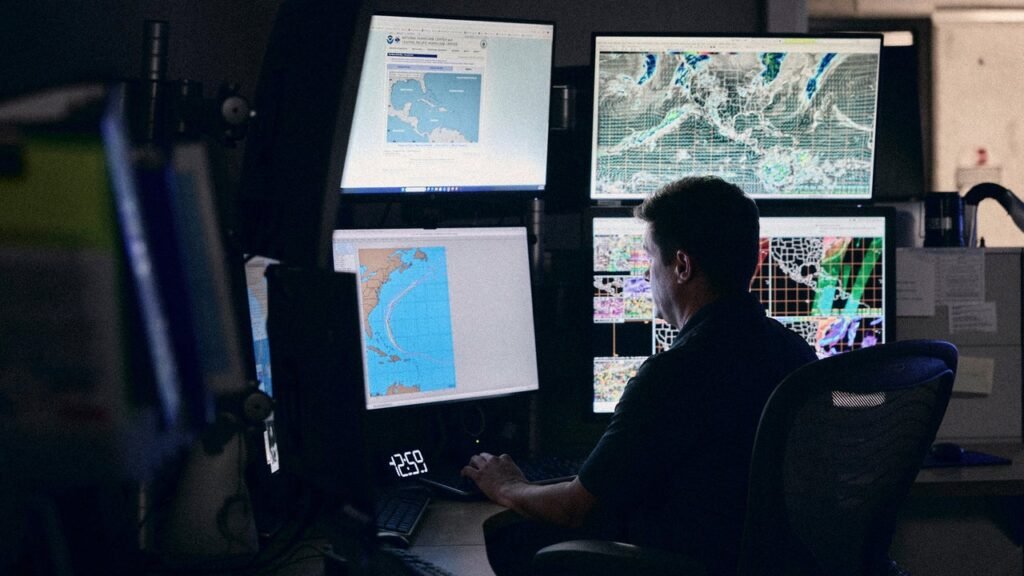
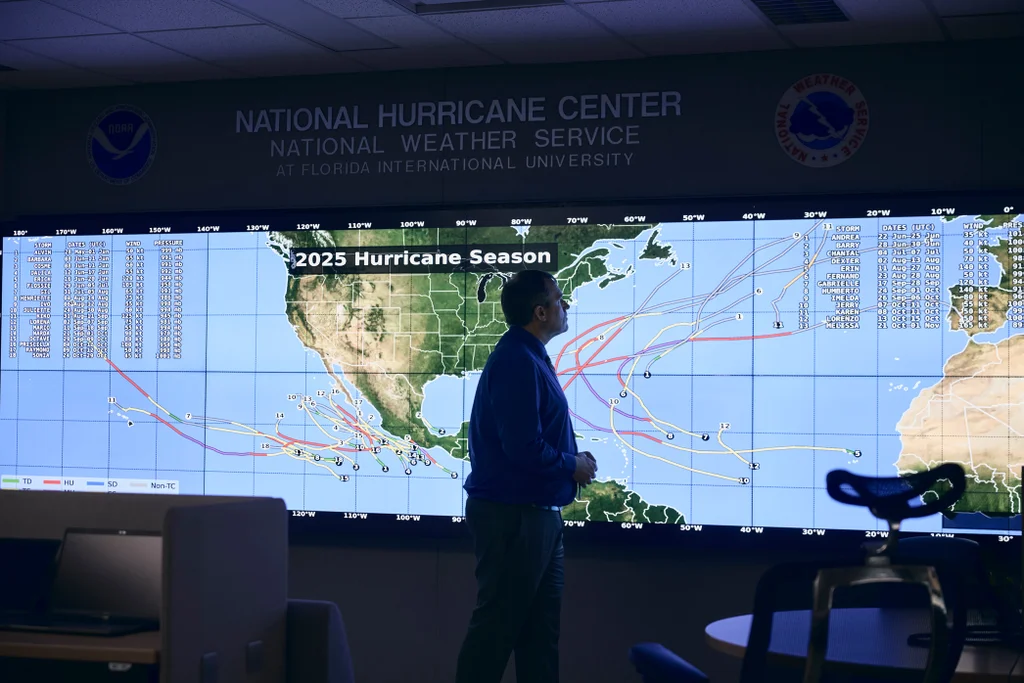
Last October, days before Hurricane Melissa slammed into Jamaica, it wasn’t obvious how quickly the storm would intensify or the path it would take. But inside Google, an experimental AI model was spinning through dozens of scenarios, including the possibility that it might be the strongest hurricane on record to hit the island.
Five days before the storm made landfall—while traditional weather models were undecided on whether it would weaken and turn in another direction—the AI model, called WeatherNext, predicted with 80% confidence that Melissa would rapidly intensify from a Category 1 storm to a Category 5 and land in Jamaica. Google sent its predictions to the U.S.’s National Hurricane Center, which used the models to help make a record-breaking high-intensity forecast.
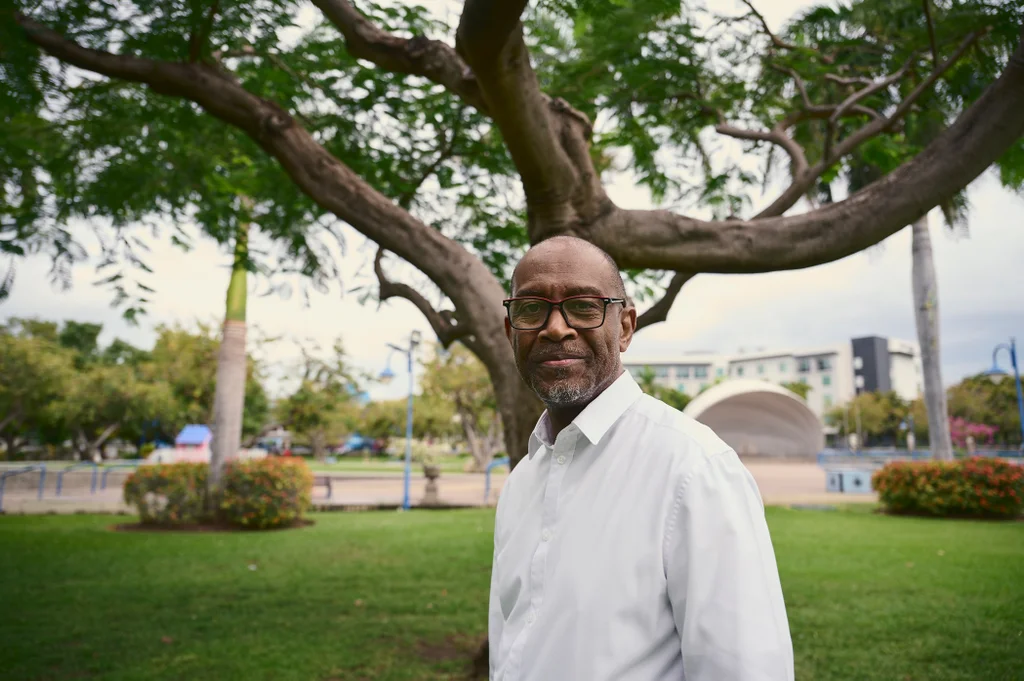
That early forecast “was critical,” says Evan Thompson, principal director of the Meteorological Service of Jamaica. “We want to get the information as soon as possible and then continuously drill that message to the public.” A Category 5 hurricane had never made landfall on the island. The weather office warned residents that anything they had experienced before “would pale in comparison,” Thompson says, and urged people to prepare however they could.
When the storm finally hit, the forecast was correct. Wind speeds topped 131 miles per hour, and the damage was catastrophic: Roofs were torn off more than 120,000 buildings, and tens of thousands of others were destroyed, leaving families homeless. Forty-five people were killed. But the early warnings—and the fact that they stayed consistent as the storm approached—meant that people took them seriously, and likely saved additional lives.
The Google DeepMind model was more accurate than any other model the National Hurricane Center used during the storm. Now, as the new hurricane season begins on June 1, the NHC will work with Google again. Last year, the model ran a set of 50 possible futures every six hours; this year, it will look at 1,000 futures every six hours, making it even more likely that it can predict unusual storms. “This significant increase should provide more stable and consistent guidance,” says Philippe Papin, NHC senior hurricane specialist.
Google is one of several companies working to use AI to reshape forecasting as weather becomes more extreme. That includes other large tech companies like Microsoft, Nvidia, and Huawei, and startups like Atmo, Tomorrow.io, and WindBorne—some of which are also collecting better data through cheap satellites or redesigned weather balloons.
The AI tools are much cheaper and faster than traditional weather models. In many cases, they’re also more accurate. As climate change fuels stronger and less-predictable storms, forecasters are under pressure to issue accurate warnings earlier. And AI companies are eager to offer some of their compute to help, showcasing a use case for the technology that helps scientists and saves lives.
The improved forecasts could also transform how businesses respond to weather risk—from rerouting packages during snowstorms to helping utilities better predict how much solar or wind power will be available on the grid—and expand the market for weather prediction, as more accurate, longer-term forecasts become valuable to a wider variety of companies.
Nvidia powers the forecasting revolution
For decades, weather forecasts have worked the same way: Expensive supercomputers, often owned by governments, run complicated physics-based models that try to mimic what’s happening in the atmosphere. AI works differently, using decades of past weather data to predict what will happen next.
“It’s a completely new way to simulate the atmosphere,” says Mike Pritchard, an atmospheric physicist and director of climate simulation research at Nvidia. A decade ago, he says, experts in the field didn’t expect it to work as well as it does. But early research had suggested that even complex, chaotic systems like the weather could potentially be reproduced by machine learning, and academics with access to powerful Nvidia computers had shown that it was possible to train large, complex models. Inside the research departments of tech companies, working on the challenge of weather was a natural next step.
Already, companies were working on AI videos—training models to predict the next frame of a video based on the previous frame. Weather is a more complicated problem, but it turns out the technology is transferable. At the time, “a lot of the progress in image and video emulation with AI was pretty low dimensional,” Pritchard says. “But AI researchers like challenges that feel like the future. A challenge back then was, could you possibly do video at the scale of thousands by thousands of pixels and dozens and dozens of channels?”
Tech companies and academic researchers started to roll out the first major AI models for weather forecasting in 2022. Google DeepMind put out a model called GraphCast. Huawei, the Chinese tech giant, released Pangu-Weather, a model that looked at the atmosphere three-dimensionally. Nvidia, working with partners at the California Institute of Technology and Lawrence Berkeley National Laboratory, released a model called FourCastNet.
Quickly, it became clear that forecasts from AI models could compete with traditional forecasting on accuracy—and even outperform the older models. The approach also has other advantages. AI can be 100 to 1,000 times more efficient to run than a supercomputer because it learns patterns from past data instead of repeatedly solving physics equations in millions of grid cells across the atmosphere.
In the past, the cost of those supercomputers—which can run to tens or hundreds of millions of dollars—meant that poorer countries didn’t have their own.
“Realistically, only about eight countries have had forecasting models,” says Julian Green, a serial entrepreneur who is now CEO of Brightband, an AI weather startup with a mission to democratize weather forecasting. “And they tend to be the richer countries. Both those models, and where the money has been spent making observations, mean that rich-country forecasts are much, much better than poor-country forecasts. There’s some data that the seven-day forecast for a rich country is better than tomorrow’s forecast for a poor country.”
At first, AI forecasts were tested only in experiments. But last year, the European Center for Medium-Range Weather Forecasts rolled out the first operational forecast system powered by AI. For headline weather metrics, AI models are 10% to 20% more accurate than the best physics models. (Research is ongoing to compare the performance for specific weather phenomena, but for monsoons, for example, AI forecasts have far fewer errors than traditional forecasts.)
It doesn’t work perfectly yet: One recent study highlighted the fact that AI can struggle to predict record-breaking weather, since it’s trained on data from the past. But researchers are testing ways to tweak it for the most extreme weather, such as training it not just with real-world data, but mixing in more extreme, theoretical examples.
And the models continue to show radical improvement. In the past, weather forecasting improved slowly. Roughly every decade has yielded a day of accuracy, so a seven-day forecast now is about as accurate as a five-day forecast was 20 years ago. But AI is rapidly speeding up the pace of improvement.
In a single generation of AI models, “we were able to make the progress that used to take a decade or more,” says Ferran Alet, a research scientist at Google DeepMind.
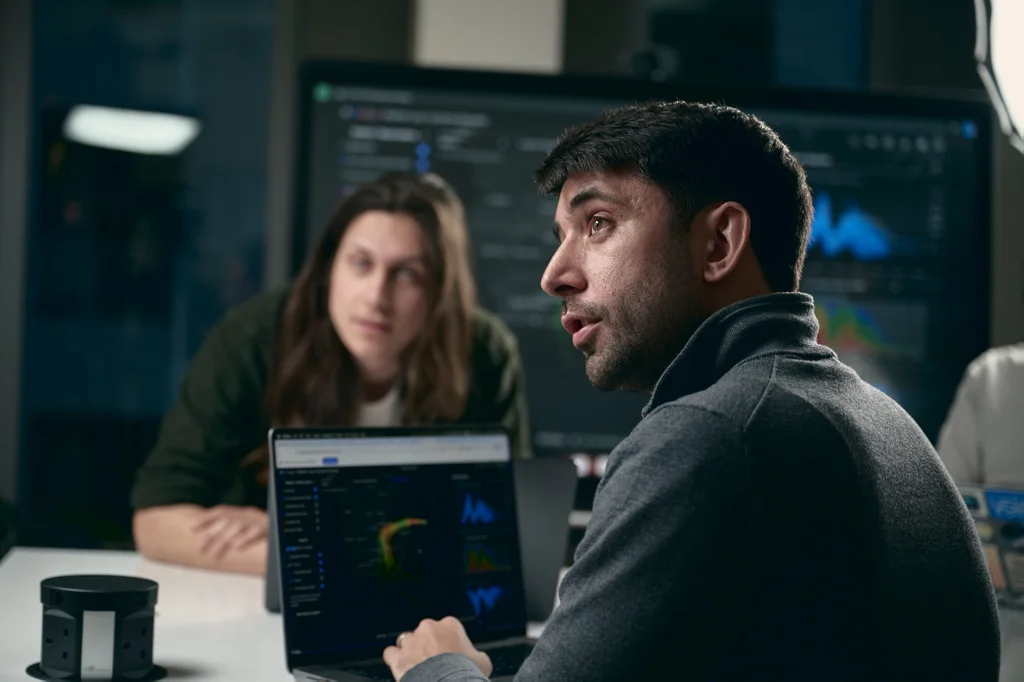
Traditional weather forecasts “have imperfect human assumptions about how some processes in the atmosphere work,” says Nvidia’s Pritchard, noting that we still don’t fully understand the physics behind weather formation. AI avoids those assumptions by learning only from data. And the models keep getting smarter.
“A physicist can come in and poke it and look at the response and realize it’s learned physics,” Pritchard says. “You can see that by doing some credibility tests.” And figuring out how to model systems with “high-dimensional chaos” like the weather will help inform future innovation, like air quality predictions.
The rate of change “is insane, to be frank,” says meteorological scientist Monte Flora, who previously worked on AI weather models for the National Oceanic and Atmospheric Administration (NOAA) before last year’s layoffs. He’s now developing an internal model for the Weather Co. “I kind of get overwhelmed as someone who tries to really stay up [to date].”
It’s not clear exactly how far the technology can go; since weather is naturally chaotic, some errors are inevitable. But two-week forecasts are likely to keep getting much more accurate. As AI improves, better data is helping it forecast even further out.
A new balloon could transform how business uses weather data
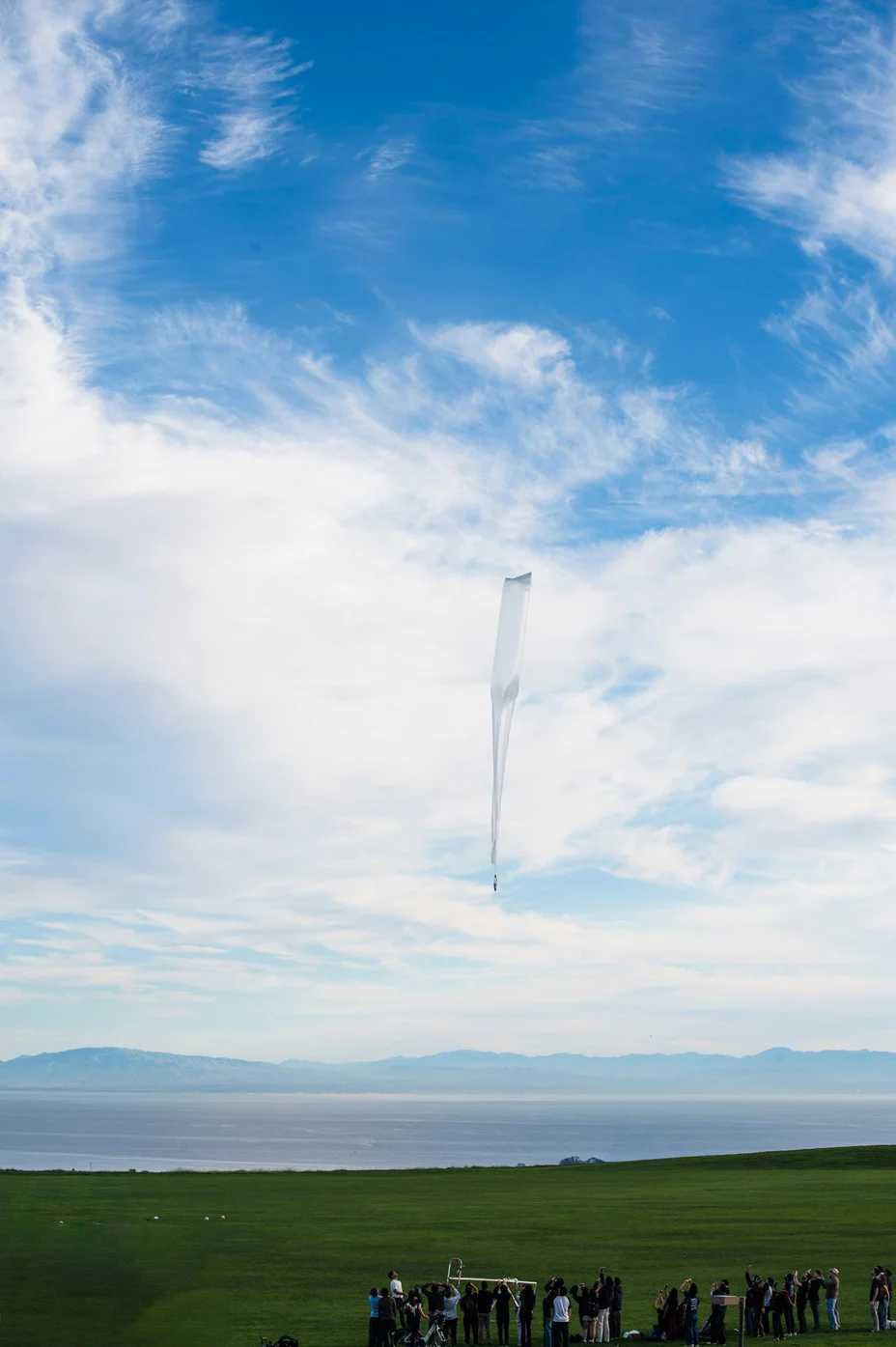
Inside a factory in Redwood City, California, WindBorne is scaling its assembly line for its custom, 8-meter-tall weather balloon. The balloons are designed to stay aloft for weeks (a typical weather balloon, by contrast, might last only a couple of hours before popping) and navigate remotely by changing altitude to catch different wind streams, so they can gather much more data. The startup now has 400 balloons in the air at any given time, and is working to grow that number to 10,000.
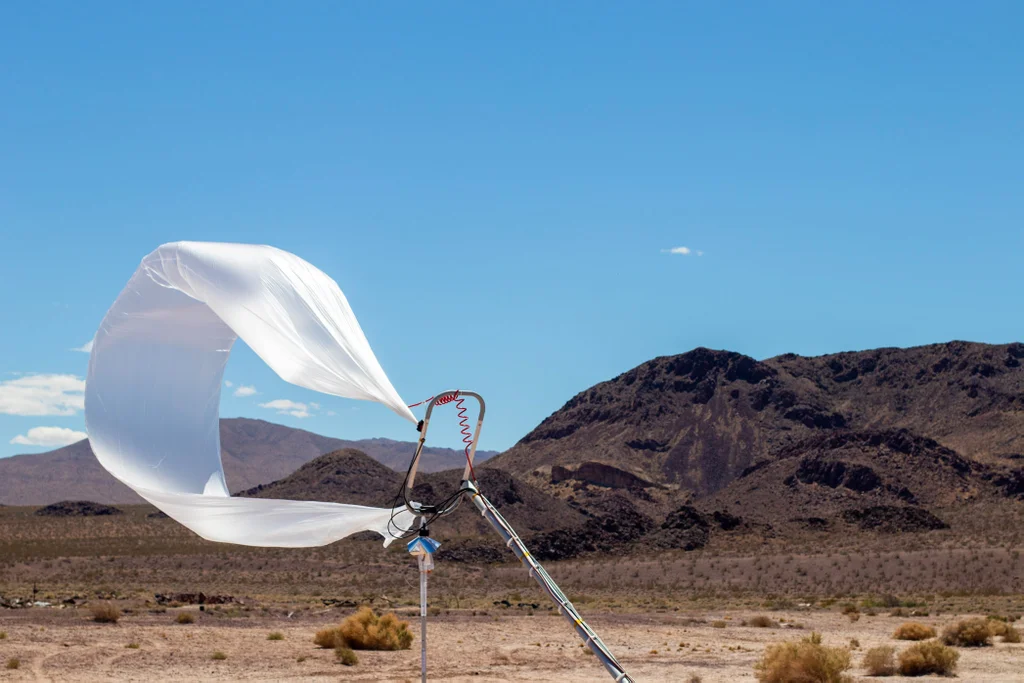
Launched by Stanford grads in 2019, WindBorne started out collecting better data for traditional forecasting. Two years ago, the team began racing to also improve AI. Now almost all AI models are trained on a dataset called ERA5, with decades of historical data reconstructed from weather observations and forecasting models. But ERA5 only estimates conditions at grid points roughly 25 kilometers apart. In the space in between, “there’s basically zero training data available,” says cofounder Kai Marshland.
Because WindBorne’s balloons can fly much longer than traditional weather balloons, and also can be steered to specific locations if needed, it’s possible to cover the Earth in much more detail. The company now launches its balloons from strategically chosen sites around the planet. In South Korea, its balloons drift over the Pacific, providing crucial data before storms hit the West Coast of the U.S. At its latest launch site, in Uruguay, the company is providing the first sounding data—atmospheric measurements from a balloon—that has ever been collected in the area.
The combination of AI and unique data is important, says Bill Clerico, founder and managing partner of Convective Capital, a VC firm focused on wildfire tech, which invested in WindBorne in 2024. (For wildfires, the data from balloons can be critical both for prevention—for example, helping a utility company understand when it needs to shut off power lines—and for anticipating how a fire is likely to spread once it starts.)
“There are a lot of companies that are just innovating at the software layer,” Clerico says. “I think those companies have some really difficult questions about what their long-term defensibility will be. The state of the art in models is changing so quickly. There are so many companies getting funded, so many companies building things. You can have the best AI model in the world right now, and then that could change 30 days from now.”
Real-time weather data plus agents can equal key business insights
Tomorrow.io, another company in the space, is gathering data from its own fleet of 13 satellites that sample every point of Earth roughly every 60 minutes. “The gap that we saw is that 90% of the Earth, or more than 5 billion people, are blind to real-time weather data,” says CEO Shimon Elkabetz. Like sounding data from balloons, the company’s satellite data can help improve forecasts. At the same time, AI is making it possible to churn through the growing pile of measurements.
“In the past it took an hour to six to process global physical models,” Elkabetz says. “With AI you can do it within a minute, if not seconds. And because of that you have the ability to consume in an efficient way much more data. . . . Now data becomes even more important.”
The company also builds AI agents for different use cases. For airlines, for example, it shares not just the forecast but also specific recommendations, such as how many deicing trucks need to be in place by a certain time to deal with snow at an airport. For a company like Uber, Tomorrow.io can recommend where drivers should be positioned before rider demand spikes because of a rainstorm. For companies delivering time-sensitive products like pharmaceuticals, the software can help shift logistics so deliveries arrive in advance of a storm. At a recent Formula One event, Tomorrow.io’s data helped change the schedule.
Like Clerico, Elkabetz says that having the best AI model isn’t enough. “We have 30 PhDs in the company focused just on building AI models, and we do that day in and day out. But we remember that it’s not enough to create an impact,” he says. “Everybody has smart teams. Everybody’s building. I think what really matters is, how do you operationalize this model? How do you put it in the hands of the decision-maker so they can make the right decision in the right time?”
Open science, private stakes
For several of the companies racing to improve AI forecasting, part of the goal right now is to share the technology. Nvidia’s Earth-2, a set of forecasting tools released earlier this year that can process observational data and support forecasts up to 15 days in advance, is open source and available for anyone to use, from national governments to energy companies.
“Nvidia isn’t a weather service provider,” Pritchard says. “We have no intention of becoming one. Our goal is to produce really great software—that happens to run great on our GPUs—to accelerate and stimulate this ecosystem, and do it transparently, so that everyone can exchange notes and everyone can experience the end-to-end process of training and testing and interrogating weather simulations.”
He points out that the motivation is help the world better respond to extreme weather, and to grow broader AI adoption. Nvidia’s free model is designed to be a base that others can use to build a bigger ecosystem of models customized for different domains.
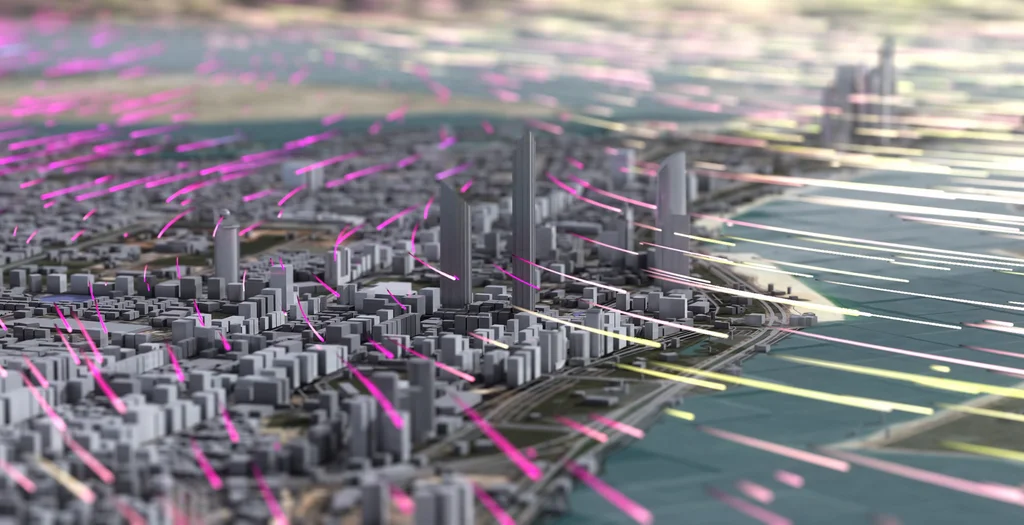
The startup Brightband is using Nvidia’s tech, along with other AI models that are public, including those from Google and Microsoft. In turn, when it runs the models and creates forecast data, it shares the results so that anyone can see how AI is performing and where it needs to be improved.
“The first thing that we think about is, we can’t be successful as a company if AI weather forecasting isn’t any good,” Green, Brightband’s CEO, says. “And we’re not the only ones who are going to be able to make that happen. So we want lots of smart people to come into weather forecasting and bring AI into it, and we open source a bunch of stuff and try and increase innovation in general.”
Google, like others in the space, has published papers about its innovations in weather forecasting so that others can learn from them. “I think all the best [models] are published scientific papers, and give all the details,” says Peter Battaglia, senior director of research at Google DeepMind. “They’re mostly open-source code.” For tech companies, it’s partly a way to build reputation and prove the potential of AI.
As the models continue to be proven and accepted, there’s obvious economic opportunity for the companies building them, and there are questions about how much may be privatized. On the data side, when the Trump administration cut hundreds of jobs at NOAA in 2025, and others left through early retirements and resignations, the agency started to buy some data from companies like WindBorne. On the AI side, as forecasting becomes less dependent on expensive supercomputers and can be run on relatively cheap AI models, it’s possible to imagine private companies eventually playing a bigger role. And with that, there’s some risk that the best forecasts will be available only to those who can pay for them.
For now, there’s a clear upside to the changes. In India, AI forecasting is helping predict monsoons and giving farmers forecasts about the optimal times to sow fields or use fertilizer. (A University of Chicago study found that giving an accurate monsoon forecast has helped some farmers nearly double their incomes.) In sub-Saharan Africa, which historically had very little weather data, WindBorne worked with the Gates Foundation to gather data more cost-effectively than was ever possible before, so it can be used in AI weather forecasts and give farmers advance warning about extreme weather. Tomorrow.io is working with farmers in Kenya and the Philippines and with governments in Indonesia and Thailand.
Setting up a state-of-the-art national weather forecasting system no longer requires large teams and expensive equipment; an AI system can run on a relatively inexpensive inference unit like Nvidia’s DGX Spark, which costs roughly $4,500. Training the AI still requires more equipment, but that’s happening at a global scale, and countries can use that data without needing to retrain the AI themselves.
“There’s such a huge opportunity in the developing world,” Pritchard says. “It used to take a small legion of people to stand up the personnel and the computing that was required to do niche weather forecasting. But that’s totally changed in the age of AI.”