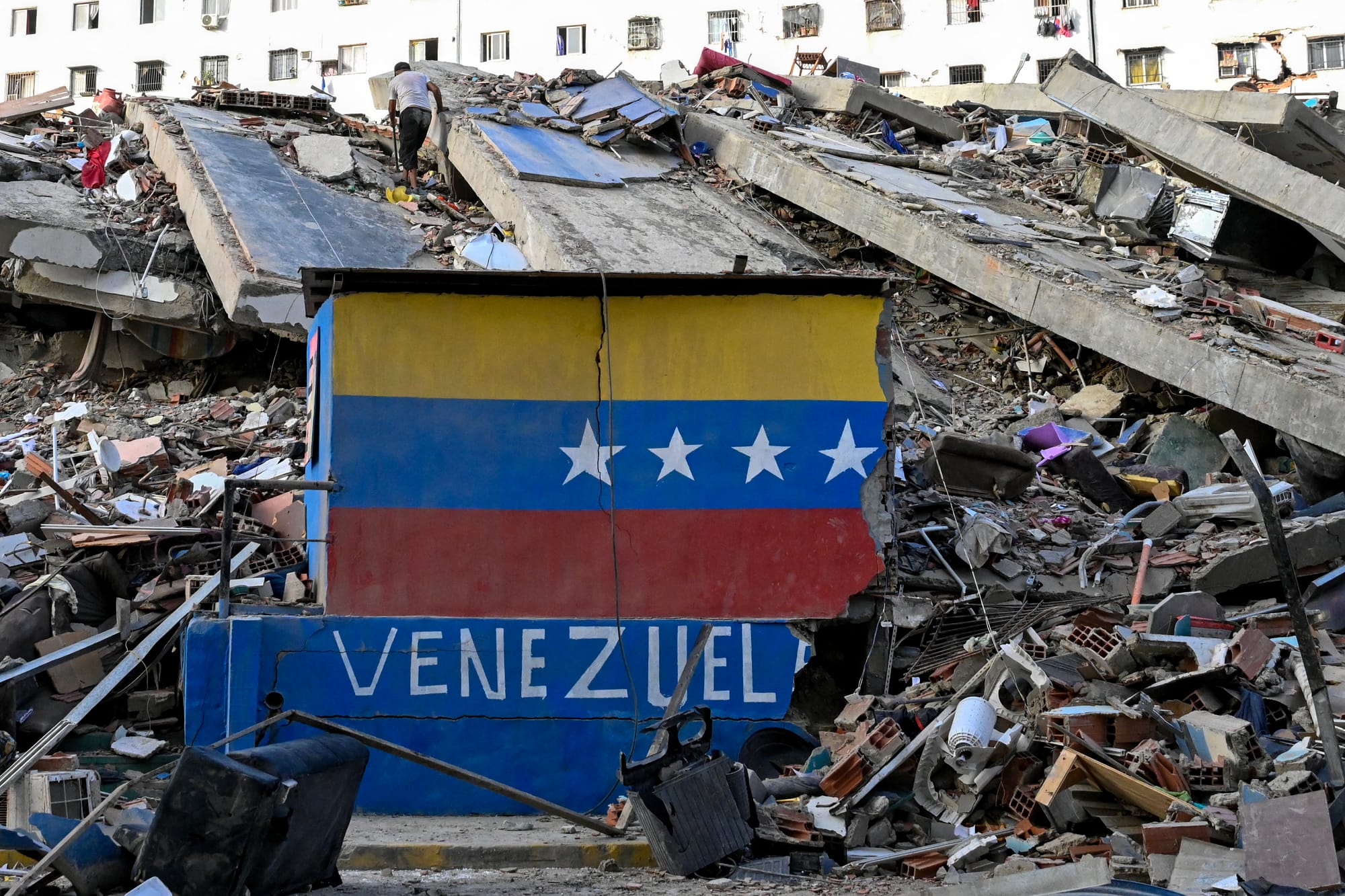
Artist Gloria Blancato was asleep in her bedroom on the early evening of June 24 when she was abruptly awakened by violent tremors. The shaking was so strong that the panes of her windows shattered, exploding into glass shards on her bedspread as the walls collapsed around her.
She held on tightly to the doorknob, the ground quivering beneath her, before finding a pair of shoes, slipping them on, and jumping out the window of the two-story building in the port city of Catia La Mar in La Guaira. Her feet are still swollen and her legs bruised from running among the debris, and she and her family have been sleeping outside for the last week.
“I send this with my eyes filled with tears,” Blancato said in a text message in Spanish to her friends, which she forwarded to Hyperallergic. “I love you, don’t forget me.”
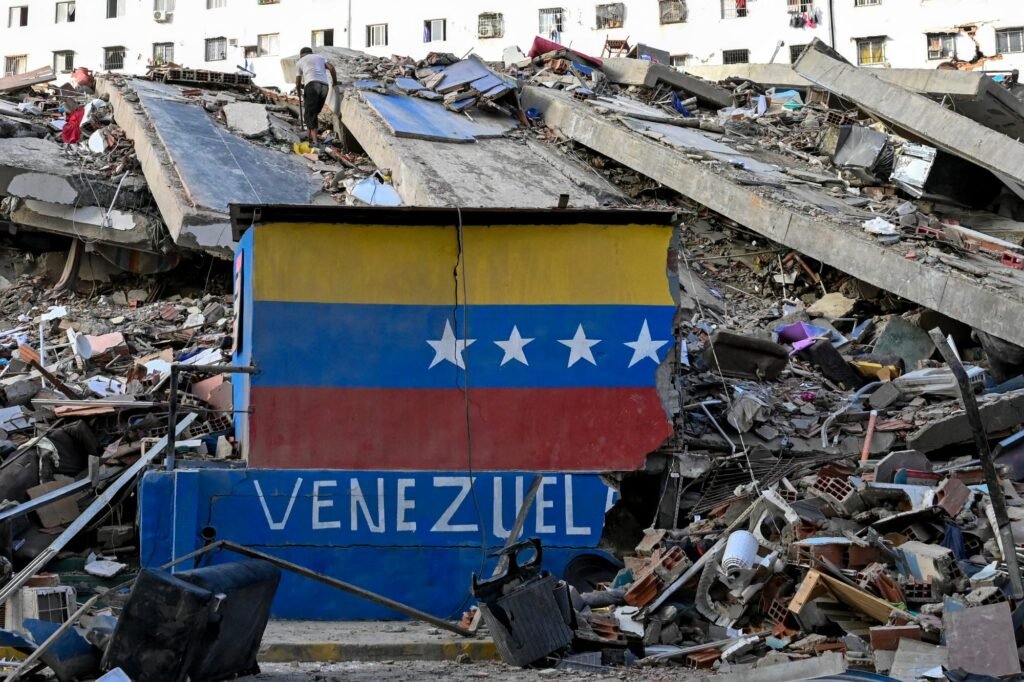
Blancato is among the tens of thousands of Venezuelans impacted by the 7.5- and 7.2-magnitude “doublet” earthquakes that struck the nation last week, devastating the northern coast and reverberating across densely populated urban areas. Over the weekend, the official death toll surpassed 1,700, likely a drastic undercount, as at least 50,000 people remain unaccounted for. Many more are displaced and unhoused.
Hyperallergic spoke to a dozen artists and cultural workers located in the hard-hit coastal region of La Guaira and in the capital city of Caracas. Many of the quotes in this article have been translated from Spanish, and we have included links to some artists’ social media profiles, where they are posting updates and sharing ways to send help.
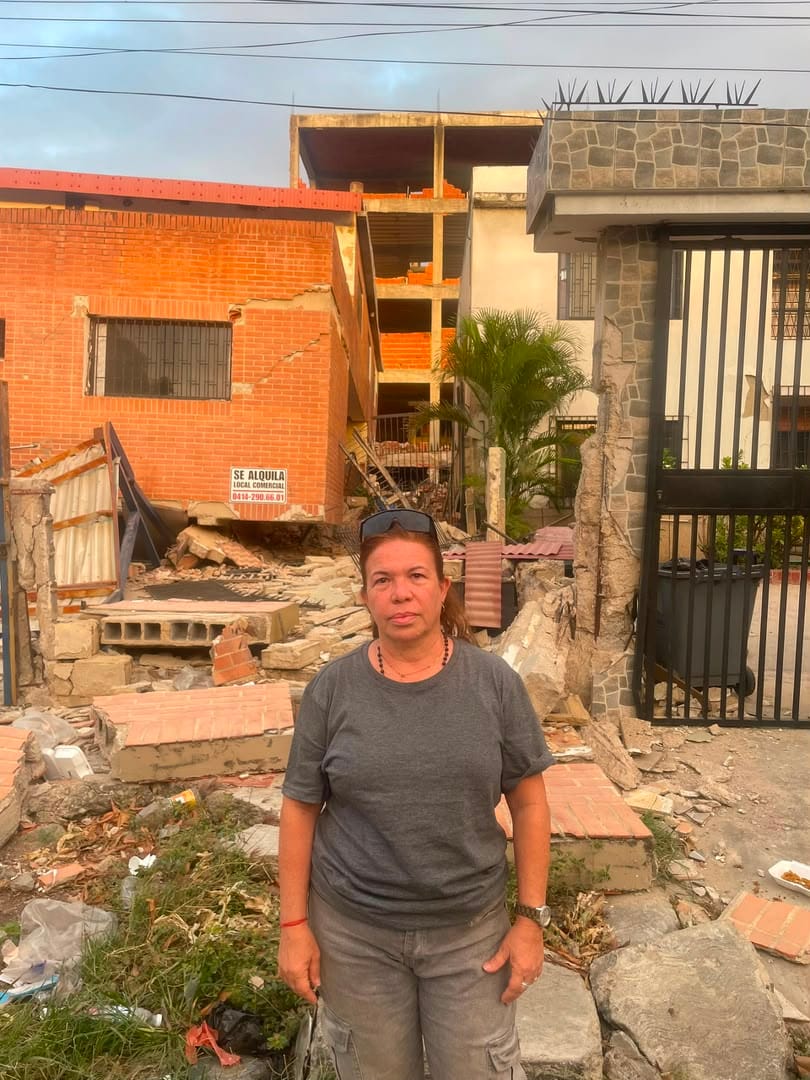
Facing a narrowing window for finding survivors and a major humanitarian crisis, everyday citizens have become rescue workers, family WhatsApp groups have turned into fundraising operations, and close-knit artistic communities have mobilized ad hoc search groups and mutual aid networks.
In La Guaira, dozens of friends and relatives of Onai Quiñonez marshaled to try to save the beloved painter, who was trapped under the rubble of a residential building. Sources close to Quiñonez told Hyperallergic that he did not survive. “It was a beautiful effort, it came from the heart,” said artist Francisco Schutte, who works with concrete and helped source jackhammers and other tools to cut through slabs and beams.
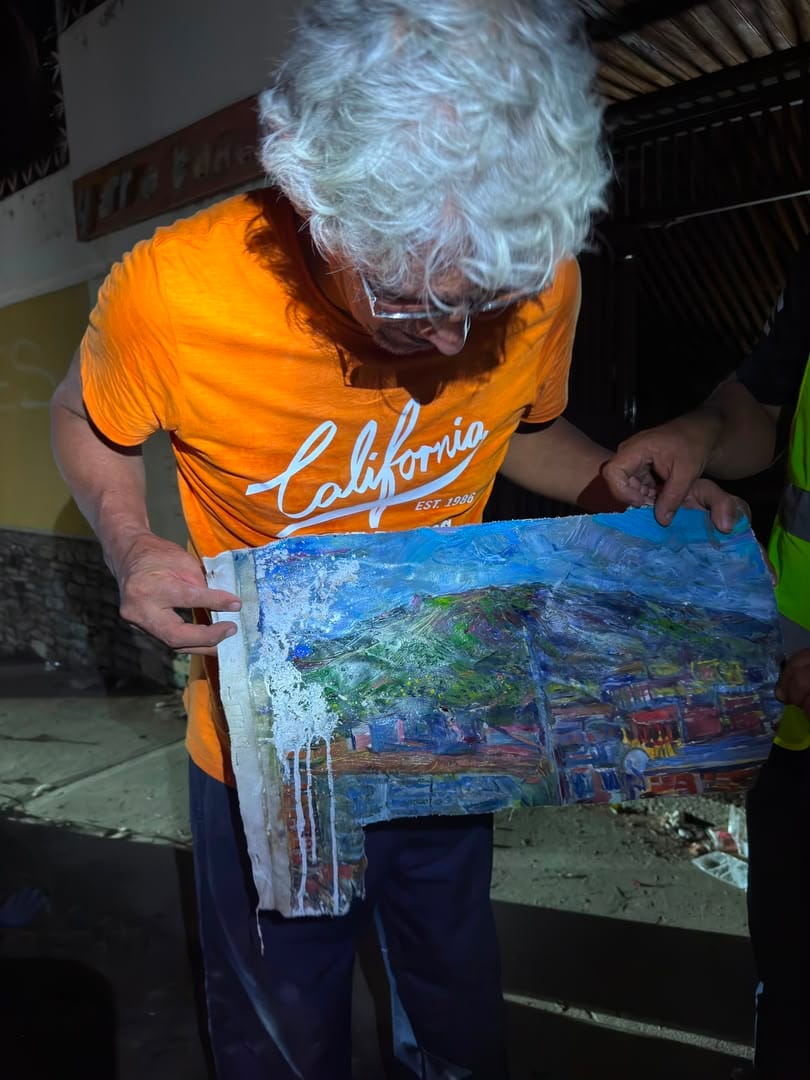
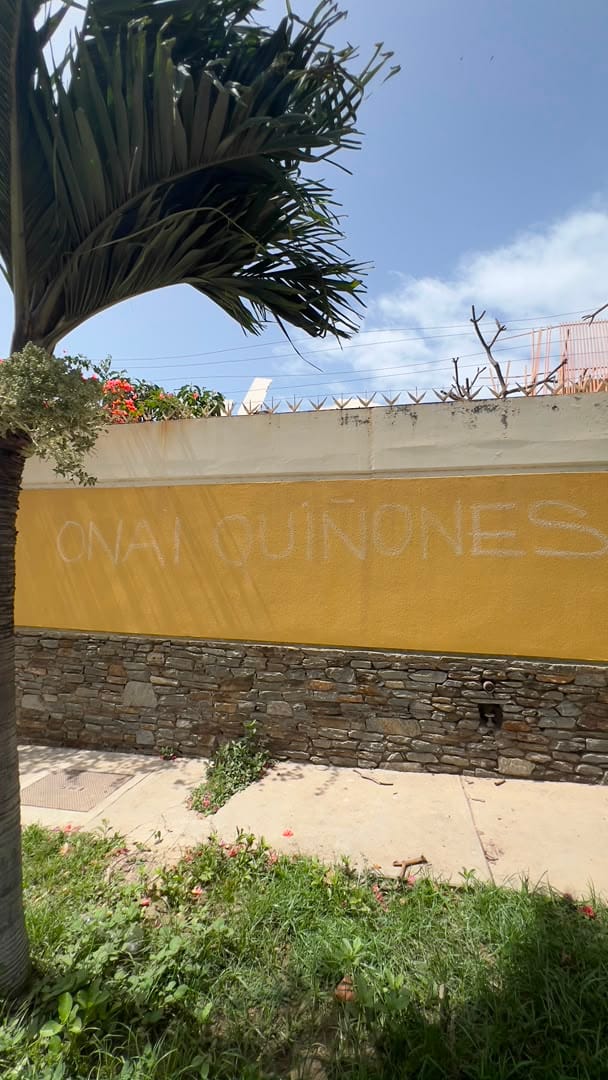
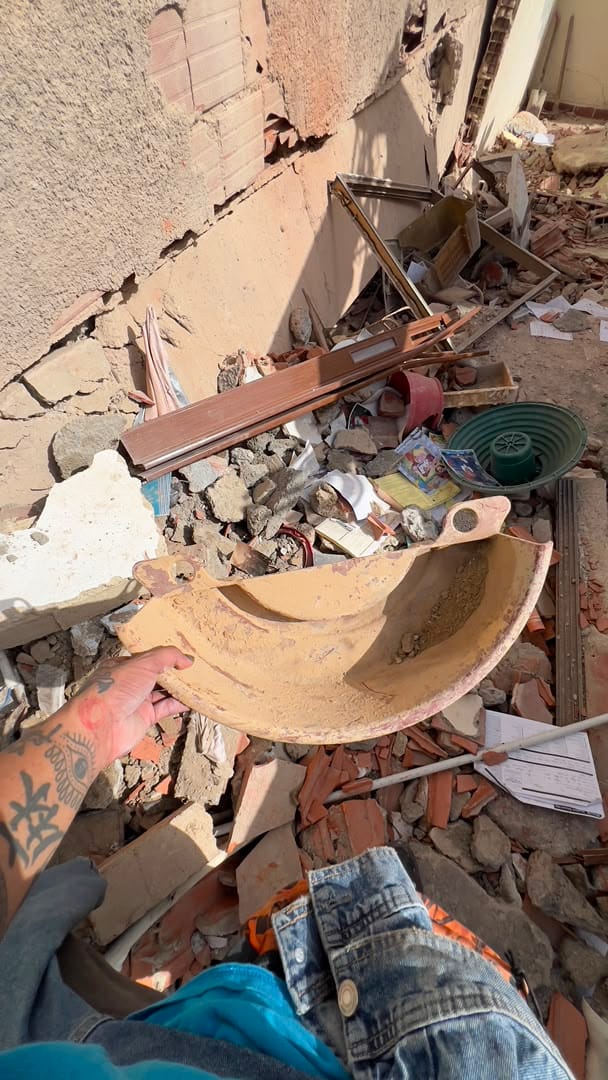
Left to right: Onai Quiñonez’s father holds up one of his son’s paintings, Onai Quiñonez’s name memorialized on a wall in La Guaira, and a pottery wheel tray belonging to artist Laura Silva (photos courtesy Michael Wong)
Many of the most heartbreaking testimonies come from the coastal city of La Guaira, Venezuela’s main port, known for its sandy beaches and for artist Carlos Cruz-Diez’s multichromatic public artworks that tower over the glittering Caribbean Sea. But it also holds the history of another deadly catastrophe — the 1999 Vargas tragedy, a series of landslides and torrential rains in the eponymous state that killed thousands and destroyed entire neighborhoods. For many survivors, the earthquakes have reopened a painful wound.
“I was 11 years old at the time, and I lost everything, but I didn’t lose any family members,” said local textile artist Siul Rasse. “I’ve lost three relatives in the earthquakes, a niece and two cousins. I feel that I am reliving a trauma.”
Rasse was working on one of her intricate embroideries in her home and studio in La Guaira when her cell phone lit up with an urgent alert. Puzzled, she walked to her sister’s room, where the pair exchanged just a few words before the first earthquake hit.
“The shaking was extremely aggressive,” she told Hyperallergic in an audio message. “I ran toward the door and stayed there, waiting for it to pass.”
Rasse told Hyperallergic that her house in La Guaira is still standing, and she is grateful for the help she has received from friends and acquaintances in recent days — food, water, and some basic supplies. She mentioned that another artist, the photographer Azalia Licón, whose brother was killed in the earthquakes, has also been receiving donations thanks to the organized efforts of people in their community.
But Rasse and her sister are so nervous that they are taking turns sleeping, a bag packed with necessities at the ready should they have to run out again.
“I have moments when I’m calm, I have moments when I’m crying,” Rasse said. “Any little sound makes us anxious
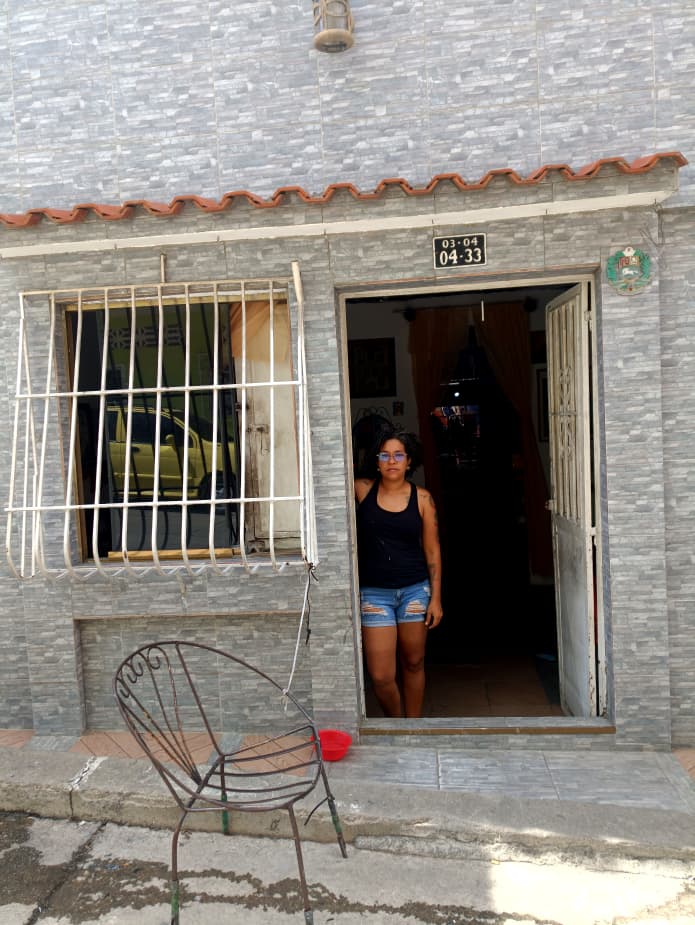
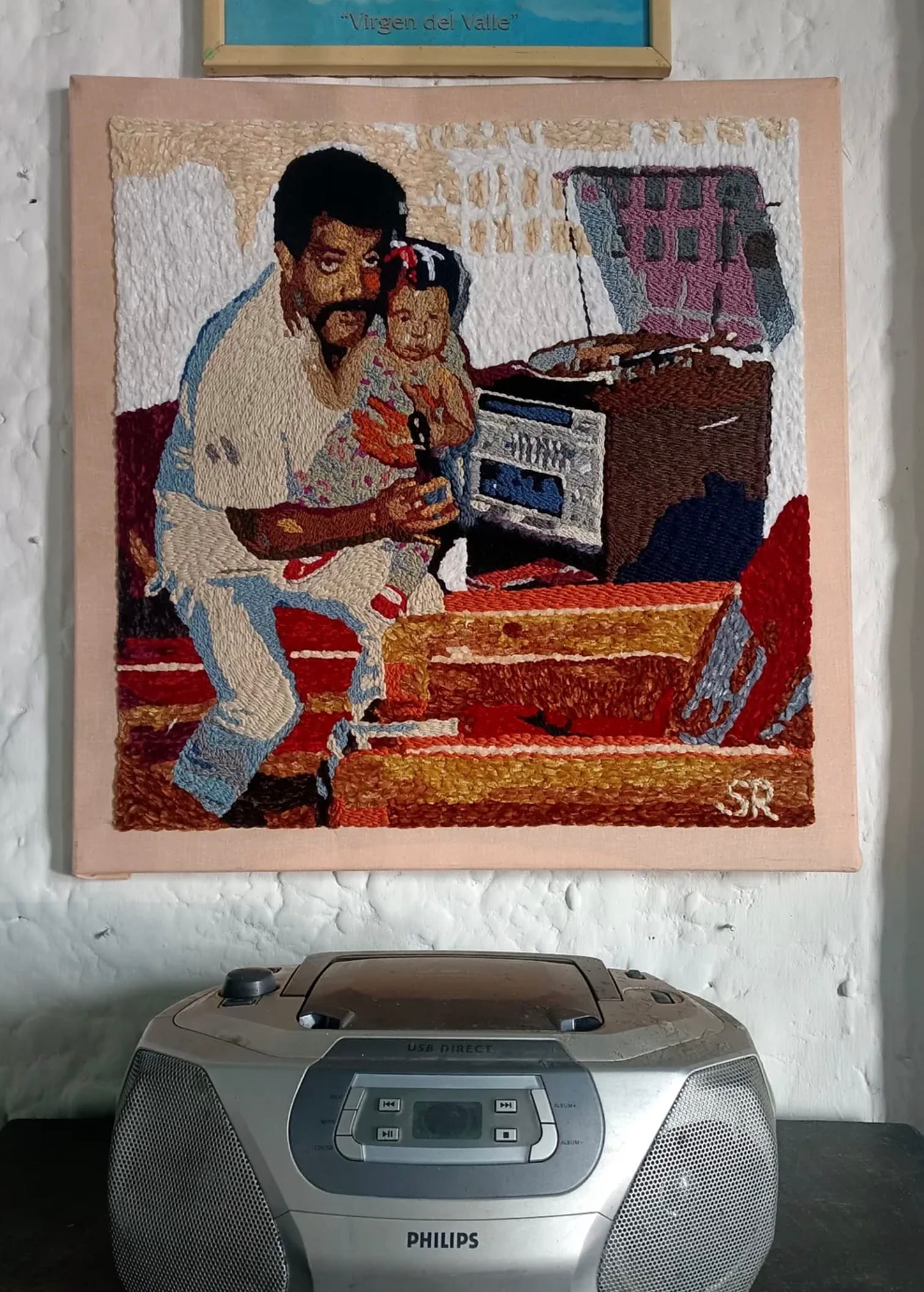
Siul Rasse in her home in La Guaira (left), one of her embroidered artworks (right) (photos courtesy the artist)
The back-to-back tremors, the strongest in Venezuela in over a century, struck a nation woefully unprepared for such a disaster. Decades of crippling economic sanctions imposed by the United States, hyperinflation, and government mismanagement have weakened the country’s infrastructure and emergency response capabilities. Following the US abduction of Venezuelan President Nicolás Maduro and the installation of Delcy Rodríguez as acting leader, President Donald Trump has leveraged foreign aid strategically, motivated by the nation’s record oil reserves.
The tragedy has been exacerbated by widespread power and internet outages that hamper communication and access to information. Armando Velutini Suñer, a Caracas-based sculptor who runs the technology incubator Artedita Studio, said that in the days since the earthquakes, he has pivoted to installing satellite antennas along the coastline.
“We’re doing this so that people can be in touch with their loved ones and have some peace,” said Velutini Suñer. “I’ve been very moved by the civic action and how artists have organized to help each other and move forward.”
“Us Venezuelans, when we support each other, anything is possible,” he said.
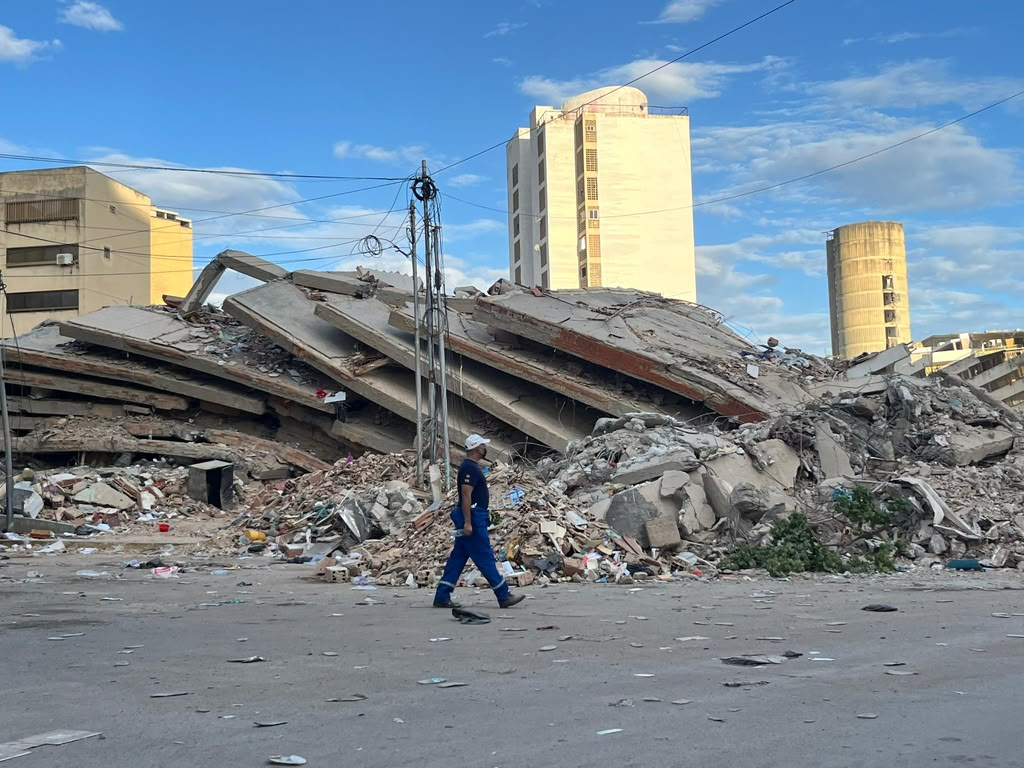
Stories of improvised aid efforts are so common within Venezuela’s creative sectors that they appear to be the norm rather than the exception. Polyriddim, Poliritmo, a Caracas-based cultural collective, had spent the spring running a series of events pairing talks and film screenings on the late philosopher Mark Fisher with DJ sets in the city’s unconventional venues. To promote the gatherings, organizers had set up a WhatsApp group that was urgently repurposed last week. After several organizers witnessed a building collapse in the Los Palos Grandes area, the chat became a lifeline for emotional support and the coordination of medical supplies almost overnight.
At the Universidad Nacional Experimental de las Artes in Caracas, a public university with programs in visual and audiovisual arts, theater, and dance, community members have established supply drop-off sites across several locations. Dozens of students enrolled at the school reportedly remain unaccounted for.
In a moving photograph shared by artist Michael Wong, who attended the vigil for Omai Quiñonez, the late artist’s father holds up one of his son’s canvases recovered from the wreckage. Another photo shows a broken pottery wheel tray belonging to Quiñonez’s wife, Laura Silva, a ceramicist who survived the earthquake and led the rescue initiative.
Wong told Hyperallergic that “it is essential not to stop creating.”
“Something stuck with me that I heard at an exhibition opening: ‘Artists live to live’ — they never die. And Onai [Quiñonez] is proof of that. I never met him in person, but I knew his work, and after getting involved in preserving it, I feel him as a close friend and a great loss for art, not just for Venezuela, but for the world,” he said.
“I personally don’t like dwelling on the subject of death,” Wong continued, “but I’d like to be remembered the way I remember Onai today.”