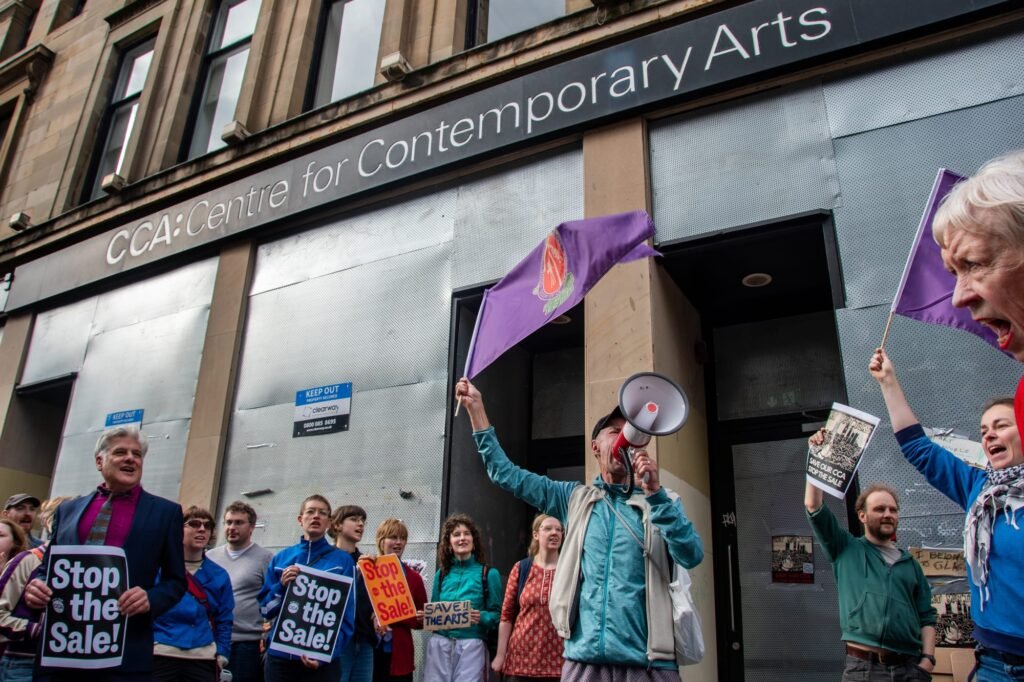
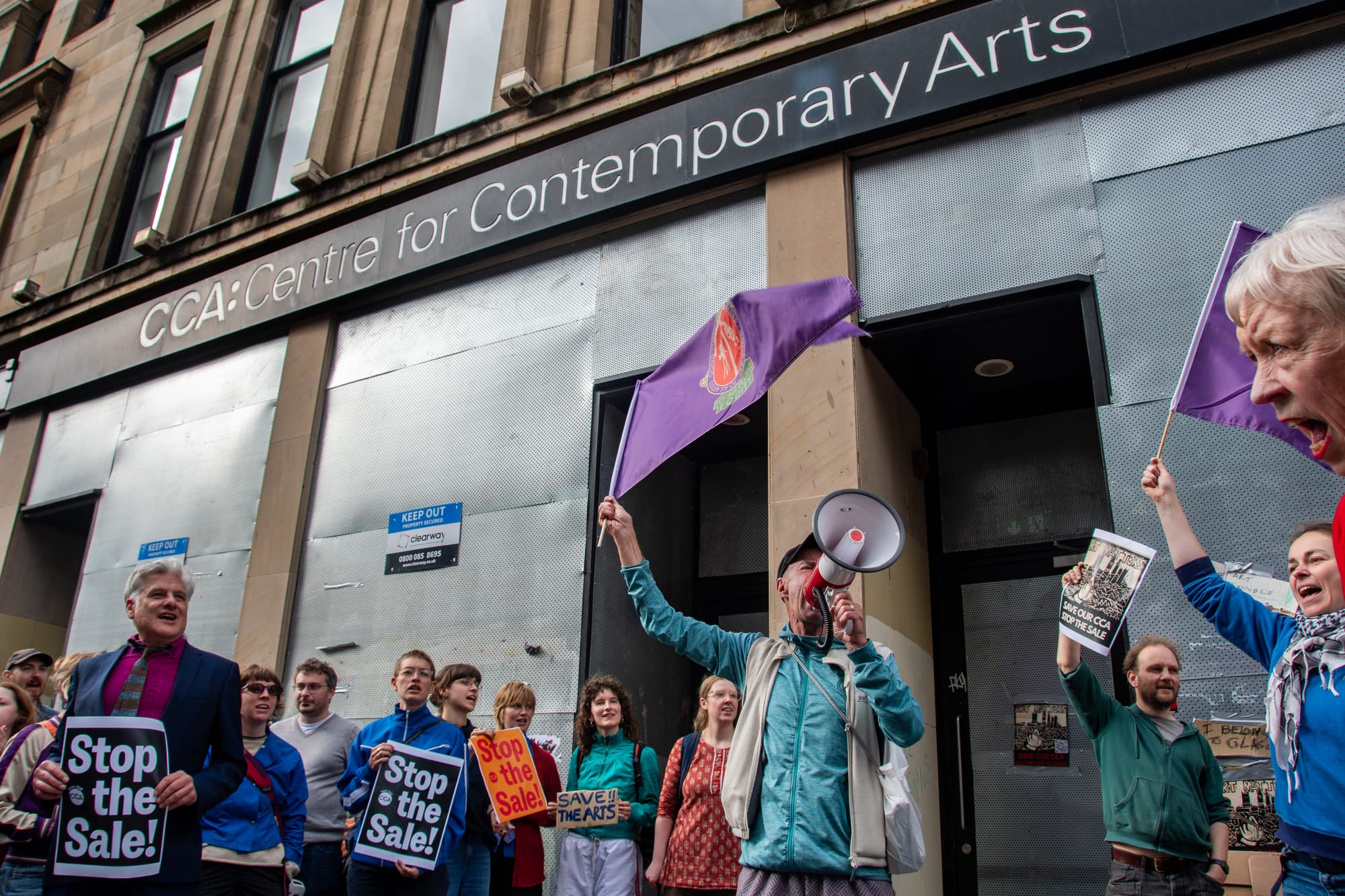
Advocates, politicians, and artists are ramping up their campaigns against the sale of Glasgow’s Centre for Contemporary Arts (CCA) building and archive, which they say would be a devastating loss to Scotland’s cultural history.
Due to financial troubles, the CCA permanently closed its doors in January, leaving the fate of its building and archival collection uncertain. The Sauchiehall Street headquarters previously housed the Third Eye Centre, founded in 1974 by Scottish playwright Tom McGrath, which welcomed artists such as actor Whoopi Goldberg, poet Allen Ginsberg, and painters Steven Campbell and Ken Currie. The CCA replaced the Third Eye Centre after it closed in 1991 and helped retrieve formerly inaccessible archival records for researchers. It would go on to host programming and exhibitions by artists such as Janine Antoni, who had her first solo show at the institution.
The CCA archives were recently listed as an asset under the advisory firm MB (Middleton Barton) Valuation for liquidation proceedings. Included in the potential sale are papers, films, photographs, brochures, and other publications, along with similar documents from the Third Eye Centre.
Between the two defunct museums, the archives span over 50 years of Scotland’s cultural history and contemporary art scene. Critics warn that selling the archives could break up the collection and remove the records from public access and view.
The Scottish Government agency, Creative Scotland, owns the Sauchiehall Street institution and announced plans to sell or lease the building to buyers last month.
In a July 23 statement, Creative Scotland said that it would work with the Scottish archive groups, Glasgow Life and the Ballast Trust, to ensure that both archives remain “complete, protected and available to researchers and the wider public.”
“The Third Eye Centre and CCA Archive documents these important cultural institutions,” a Glasgow Life spokesperson told Hyperallergic. “We are committed to seeing it retained in Glasgow.” It is unclear what specific measures the three organizations are undertaking to keep the archives intact and in the city.
At an auction last week, furniture, fittings, and tech equipment from the CCA were sold for as little as £1 (~$1.35). The archive and the building remain up for sale, with the MB Valuation welcoming offers until August 14.
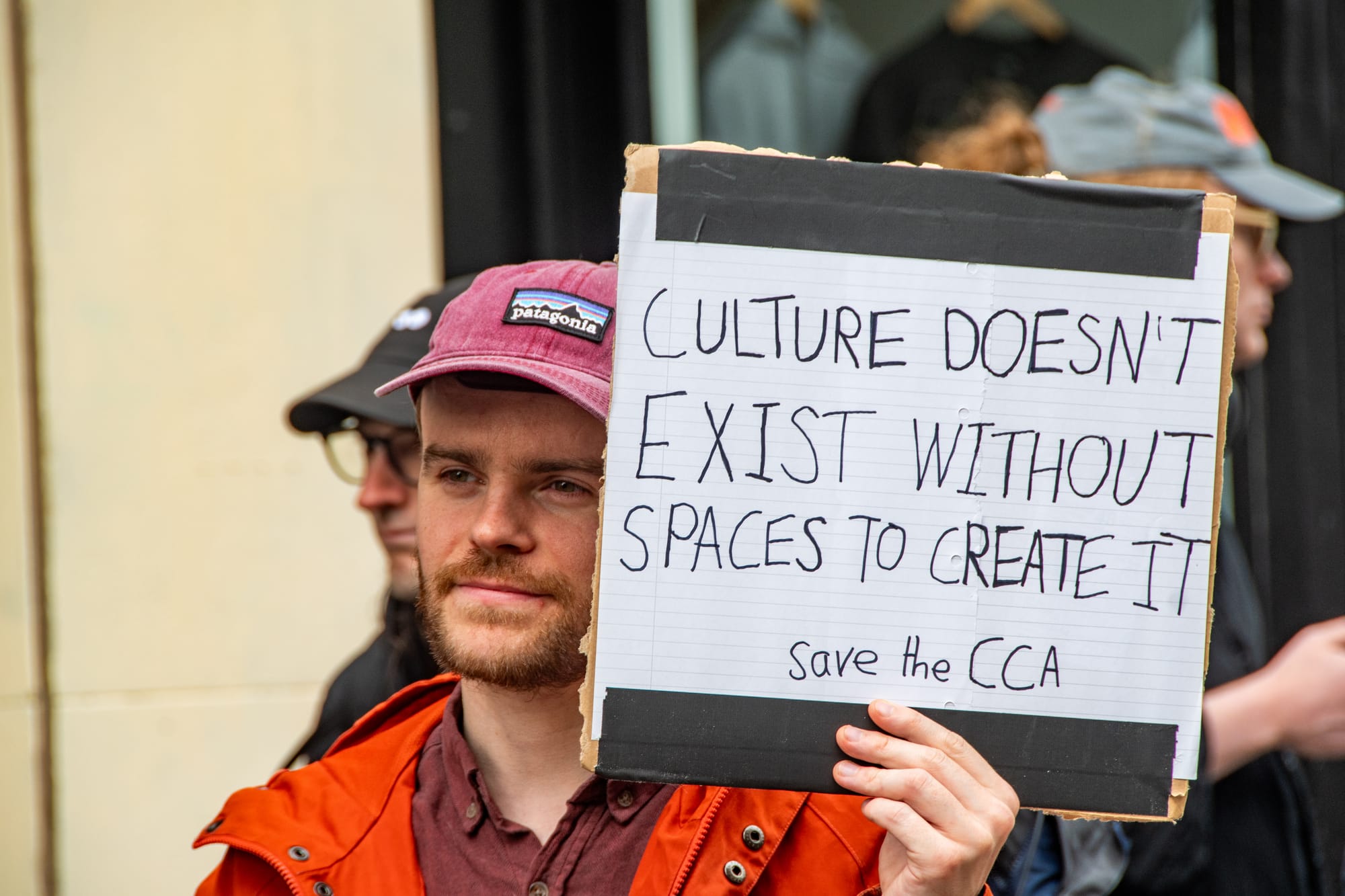
Meanwhile, protesters have been advocating for the archives to remain in one piece and for the building to maintain public ownership.
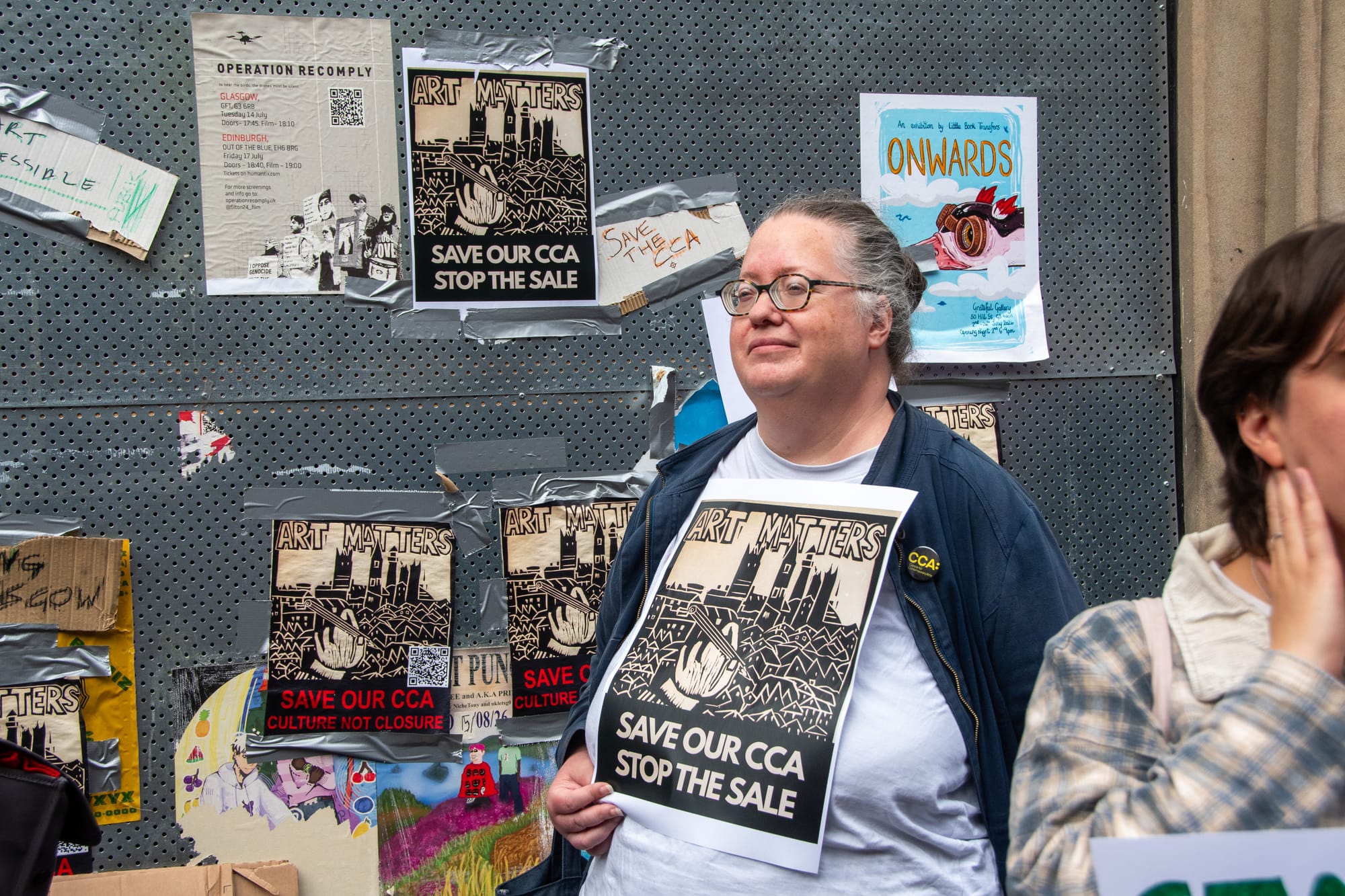
Throughout July, artists and former workers at the Glasgow museum have campaigned with the Save Our CCA activist group. On July 31, dozens demonstrated in front of the museum, holding signs that read, “Culture not closure,” and “Culture doesn’t exist without spaces to create it.”
The group also launched a petition, demanding that Creative Scotland stop the sale of 350 Sauchiehall Street, consult with the public, and ensure the building remains an accessible cultural venue for all. While Creative Scotland has expressed a desire to maintain the building as a venue for arts and culture, campaigners say it is not a mandatory condition for the sale.
“Our aims as artists and educators are being thwarted by the council’s gutting of the city’s cultural infrastructure,” Tanoa Sasraku, an artist and lecturer at Glasgow School of Art, said in a statement shared with Hyperallergic.
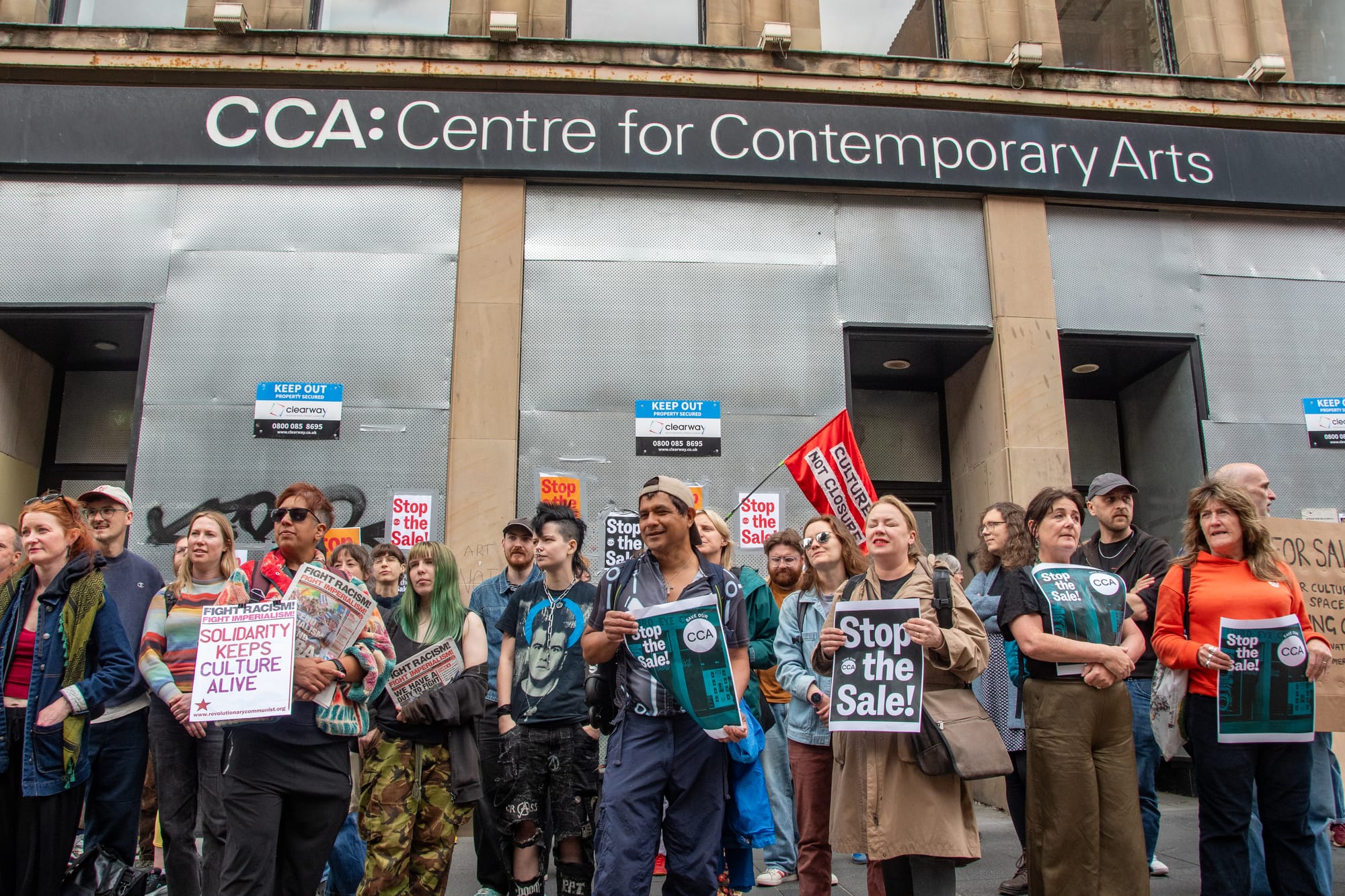
Karla Black, a modern sculptor, saw her first exhibition at the CCA, and attended events, gigs, and screenings there while attending the Glasgow School of Art in the late 1990s.
“There was a structure of public funding and public exhibition spaces that created the art of our generation in Glasgow,” Black stated. “It’s not fair to rob future generations of their opportunity.”
Scottish politicians have similarly called for the preservation of the building. Paul Sweeney, a member of the Scottish Parliament for Glasgow, sent an opposition letter to the national government, cautioning that the current proposal “risks placing a nationally significant cultural venue beyond the reach of the public and the arts sector.”
“We need urgent clarification from the liquidator about what they’re doing with their assets of the CCA,” Sweeney told Hyperallergic.
He added that Creative Scotland should seek lease agreements with nonprofit arts organizations.
“Let’s see the CCA and the successor organization use it for the purpose of a cultural center for the public good, and not as a commercial enterprise,” Sweeney said.