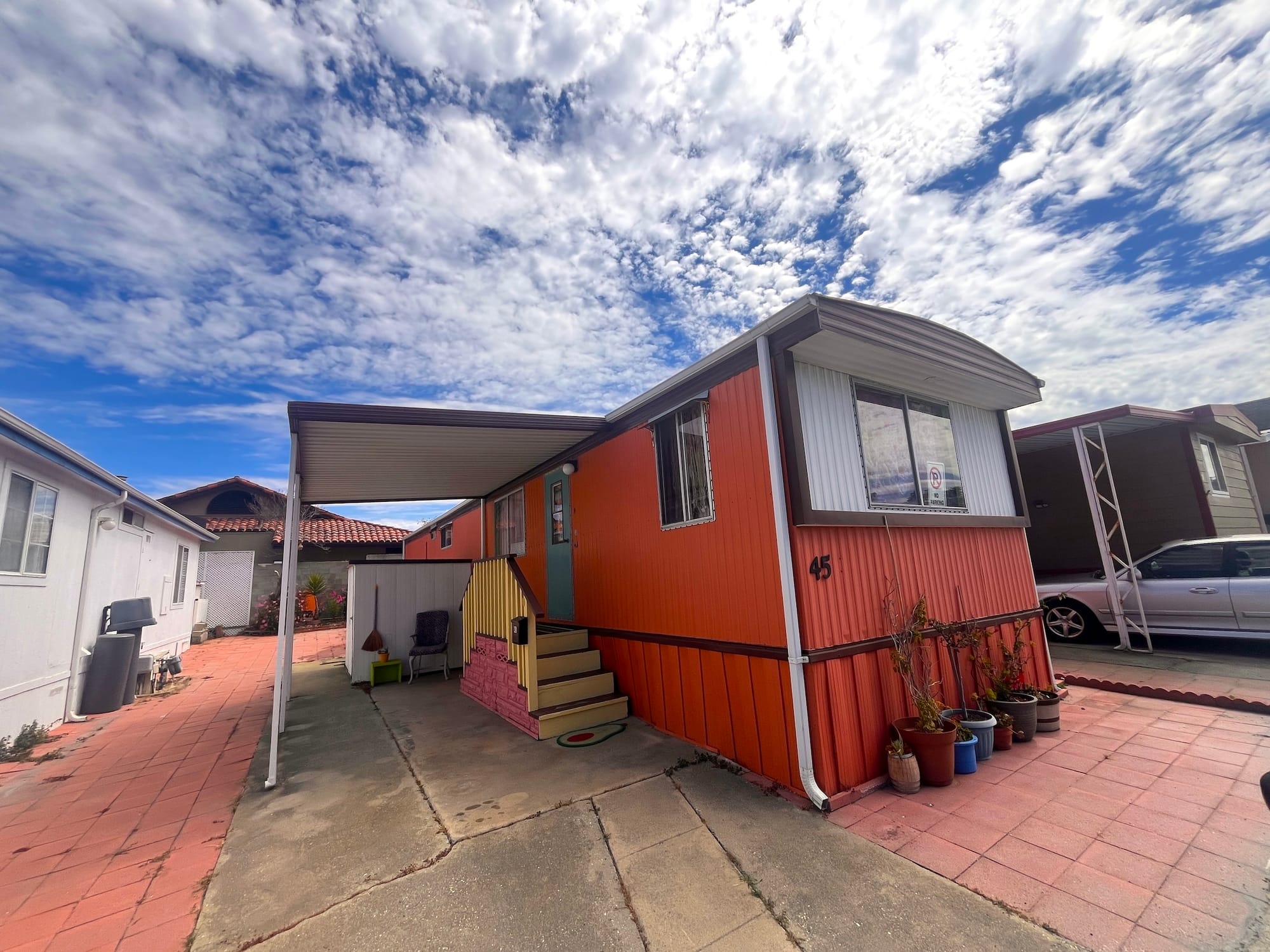
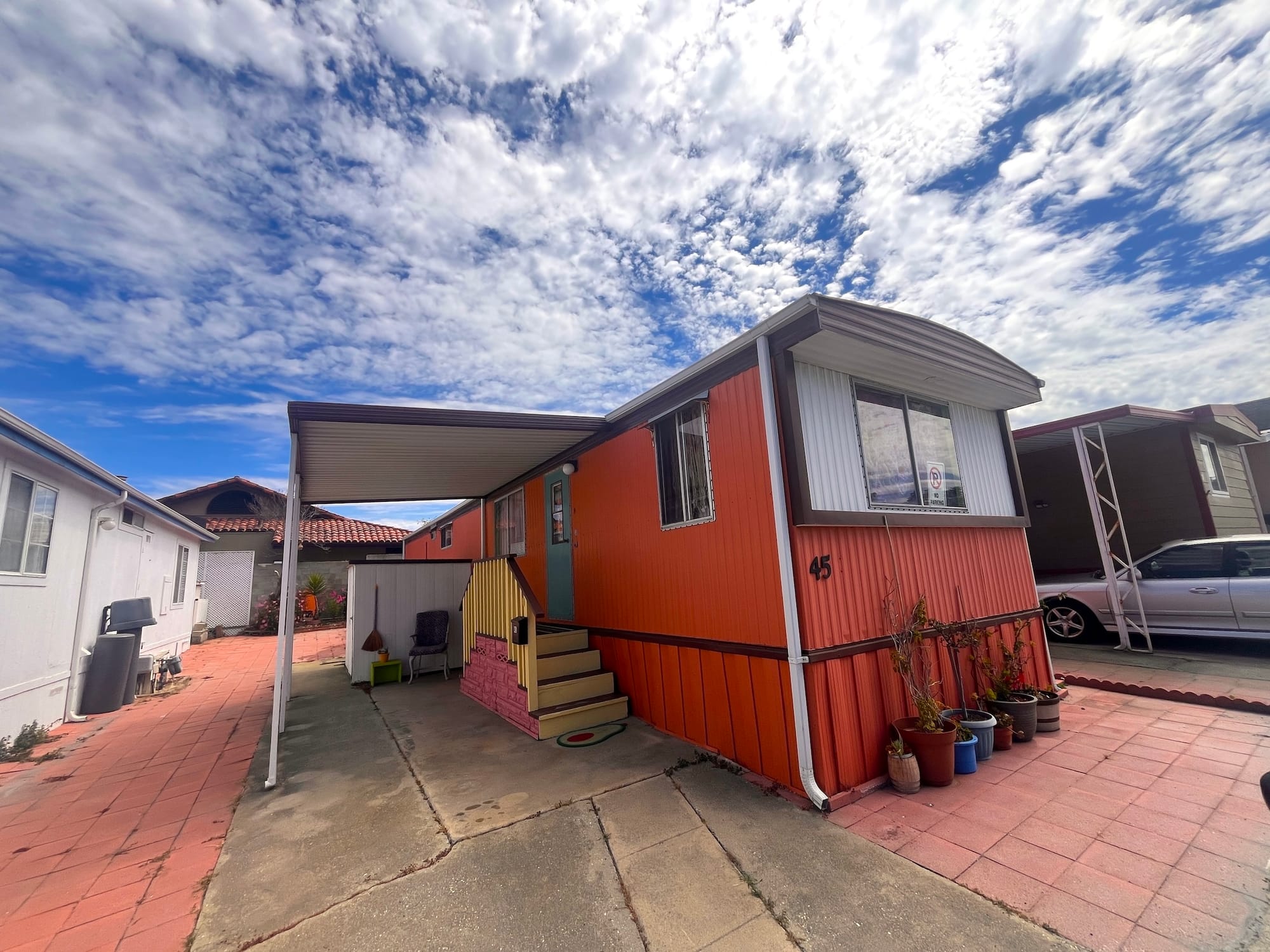
Welcome to the 350th installment of A View From the Easel, a series in which artists reflect on their workspace. This week, Linda Lay sets up shop in the mobile home she grew up in, collapsing time and tenderly reclaiming the space through her vibrant art practice.
Want to take part? Check out our submission guidelines and share a bit about your studio with us through this form! All mediums and workspaces are welcome, including your home studio.
Linda Lay, Marina, California
How long have you been working in this space?
Three years.
Describe an average day in your studio.
An average day in my studio begins around 10 in the morning, as I’m most productive at the start of the day, and although I rise early, I like to first have coffee with my partner at home, which is nearby. In my main working areas I have little “stations” where I keep projects-in-progress, often with supplies close at hand, so that I can get right to it. I allow myself the freedom to start with whatever feels natural in the moment, as I know that will lead me to working on whatever has a deadline.
In art school, one of my professors observed that my “starting routine” for making art is something like what a dog does when they lie down for a nap — how they move around in circles on their bed until it feels right to settle in. I’m still very much that way, figuratively, of course.
The first thing I do when I enter the studio is open the windows for airflow and light. I then walk around to say “hello” to the space and plants, and if I feel the need to, I safely light some sage. I always burn incense as this helps me feel like I’m setting some sort of “intention” for the day. I often listen to podcasts or audiobooks once I get settled into working. (I love Fashion Neurosis by Bella Freud.) When I was busy converting this mobile home, which I was raised in, into my art studio, I was listening more to music from eras of my past that I may have listened to when I was a child and teenager, or what I listened to when I moved away from home at the start of the ’90s.
How does the space affect your work?
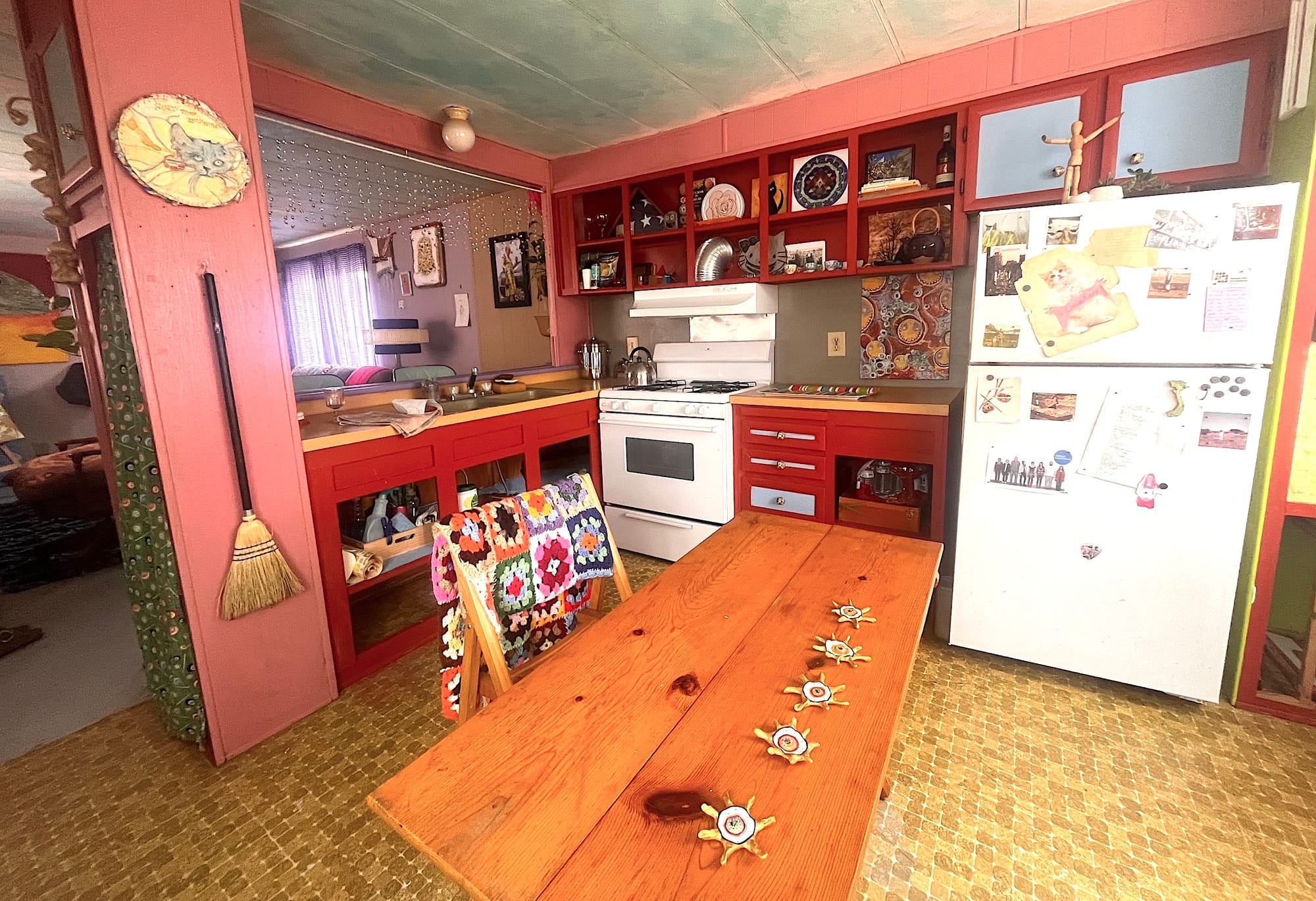
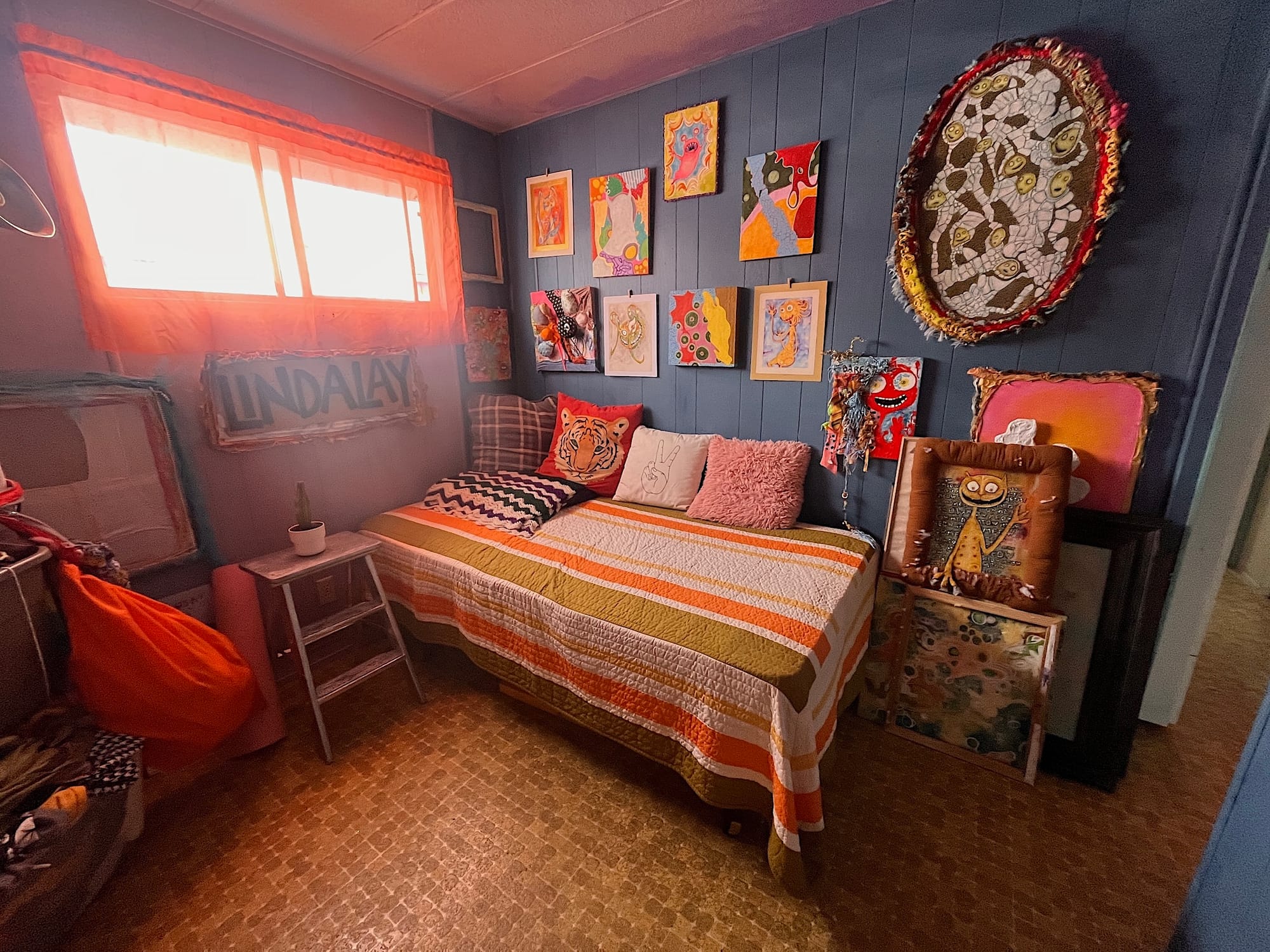
The space affects my work in two different ways: In one way, it’s the first time I’ve had a full art studio outside of home or shared studios. I have a lot of stuff from the past hung up at the moment, combined with newer pieces and projects. I’m able to be with it all in a way that’s private, and this is important to me. It helps my focus tremendously.
The second way the space affects my work is that it was once my childhood home, and it wasn’t a positive space. I didn’t know what to expect when I was given the freedom to make changes that I had so wished I could change as a child. Being in this very specific place, and having been able to change it without worry of perfect construction or traditional interior design rules, has made the space itself a very personal conceptual artwork.
I work in an intuitive manner with a lot of craft-inspired processes that mirror how things are made while being raised in poverty, which I was. Many of my artistic concepts have to do with synchronicities occurring in space and time, so it’s like I’m “communicating” with the past in a very direct way.
How do you interact with the environment outside your studio?
The literal environment outside of my studio is the mobile home park I used to play in as a child in the ’80s. It was a great place to be, and I had fantastic friends. There was a playground and we used to stay outside all day long. I have an incredible memory of wandering around the park, giggling with my pals as pre-teens while the Live Aid concert was being televised. We’d occasionally leave our televisions in order to pretend to flirt with a cute boy who was visiting his grandparents for the summer. It’s been great to consider moments like this while working on my art. There are two older women still there who I knew back then, the mothers of kids who were my friends. These older women are immigrants who were hard-working, like my own mother was. They often knock on my door and bring me food and check in. It’s very warm and comforting.
I am connected to the art community here on the Monterey Peninsula, and for the past three years I’ve been organizing and hosting a private monthly art salon, which has been great. Everyone must perceive their art as something more than a hobby.
There are people in my community who are focused on art in a big way — who are exploring many different concepts and work in varied practices and mediums. I returned to the area after living in Los Angeles for many years, and I’ve found my community here through hosting my salon and by attending local art and literary events. It’s a bit difficult to sift through the “sell art to tourists” mentality out here, but there is definitely more to be found.
What do you love about your studio?
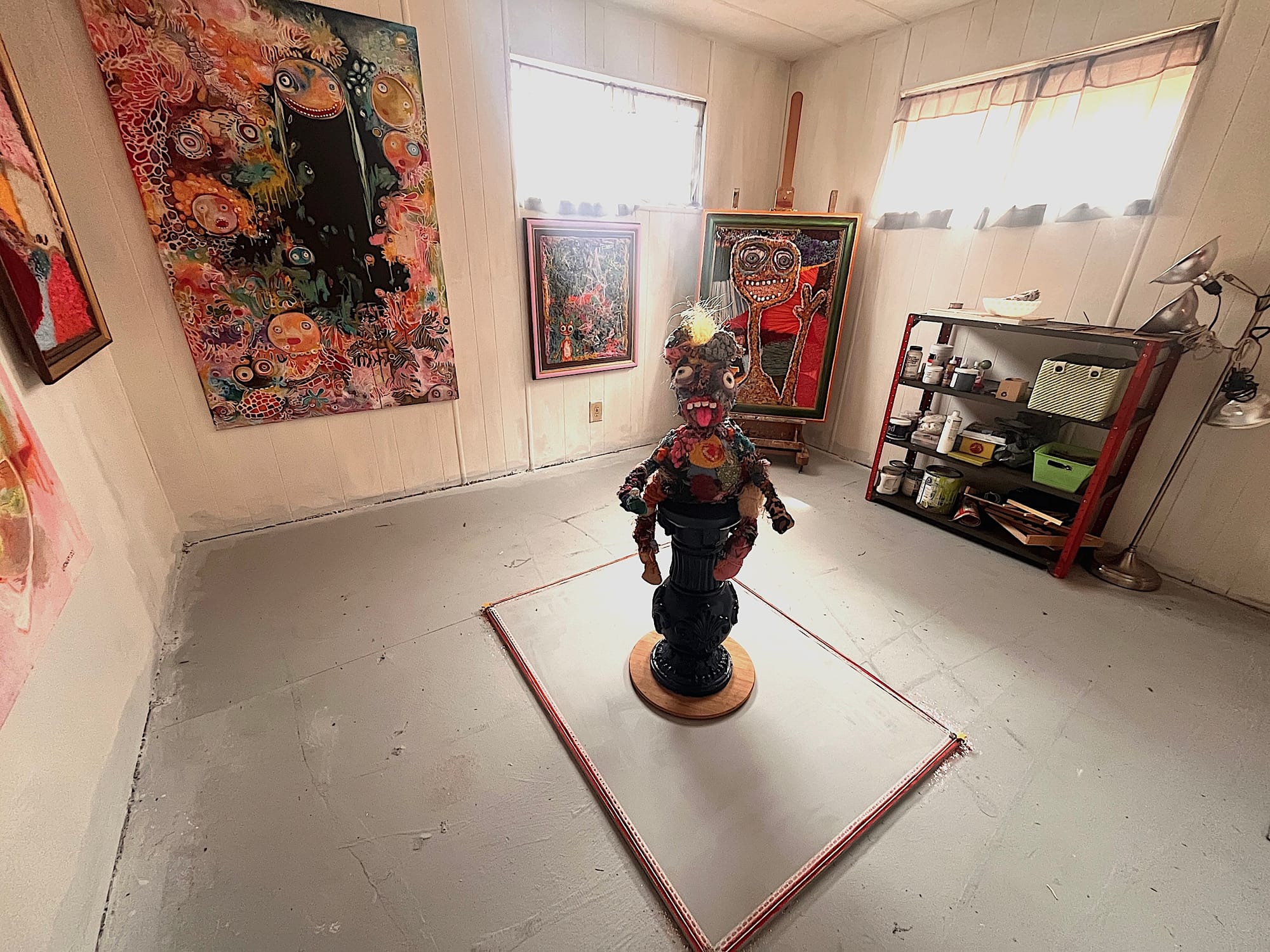
I love that I have a history with and connection to my studio, and that I have made it something special. I love that I set parameters on spending money on materials when I was fixing it up. I visited a local charity shop that offers free, donated house paint. I got so many great colors from there, for free!
I love that I decided to play and “listen” to the space in keeping certain family mementos, plants, and objects in my work areas. I love that the studio itself is a work of art and that it has a story.
I am in heaven over the fact that I have space to make as well as space for my work to hang, as I have a specific aesthetic that isn’t always easy to showcase with the works of others, especially in my community.
I love that I can finally have proper studio visits.
What do you wish were different?
I wish I had more parking available. We are only allowed one spot, and street parking is always taken.
What is your favorite local museum?
We don’t have a lot of options outside of all things having to do with John Steinbeck, early California history, and the Monterey Bay Aquarium, so I’ll say the Monterey Museum of Art. They showcase California art, and for a smallish town, they were able to swing a David Hockney exhibition in 2019 with mostly his iPad works depicting Yosemite. They support local artists, engage with the community, and they sometimes challenge our expectations, which doesn’t always happen here.
What is your favorite art material to work with?
Fiber materials are my favorite.