Welcome to the 335th installment of A View From the Easel, a series in which artists reflect on their workspace. This week, Gerardo Camargo draws inspiration from Latino communities and transforms basic materials into artistic tools.
Want to take part? Check out our submission guidelines and share a bit about your studio with us through this form! All mediums and workspaces are welcome, including your home studio.
Gerardo Camargo, Kensington, Maryland
How long have you been working in this space?
Six years.
Describe an average day in your studio.
I like to start early in the morning before everybody wakes up because my studio is in my basement. I listen to a couple of news podcast, one in Spanish and one in English. I constantly listen to music that I find powerful like cumbia, folk music, or rancheras because I like to sing and dance as well. If I feel in need of inspiration, I look for videos related with the theme I am working on, nowadays about codexes, myths, and gods/goddesses of Mesoamerican cultures. I work on several pieces at the same time, jumping in between three dimensional works, collages, and small drawings, but I mainly focus on the deadlines I am dealing with at the moment.
How does the space affect your work?
My studio is in my home, so I need to be quiet early in the morning, and start working with techniques that are quieter or start reading and making sketches. My studio doesn’t have windows, so I can get lost in time and not get distracted from what is happening outside.
How do you interact with the environment outside your studio?
My work has been focused around the architectural industry, collecting discarded materials from construction sites. I can say that the immigrant Latino community is the one I have been most inspired by lately. A very important part of my process is talking and learning from the workers’ hard work, skills, and playful work environment. My studio is in the suburbs, but I am fortunate to live in a very diverse community.
What do you love about your studio?
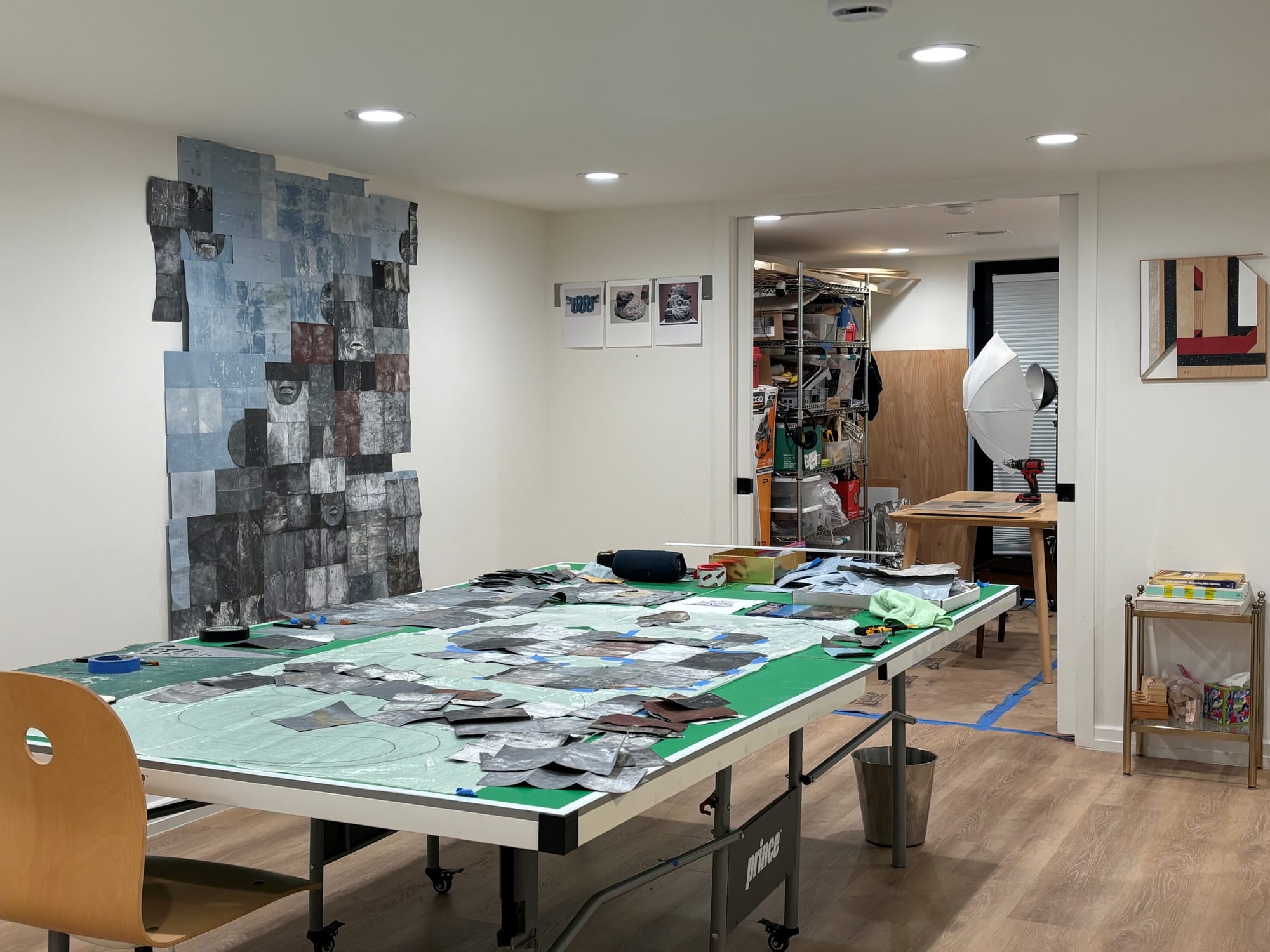
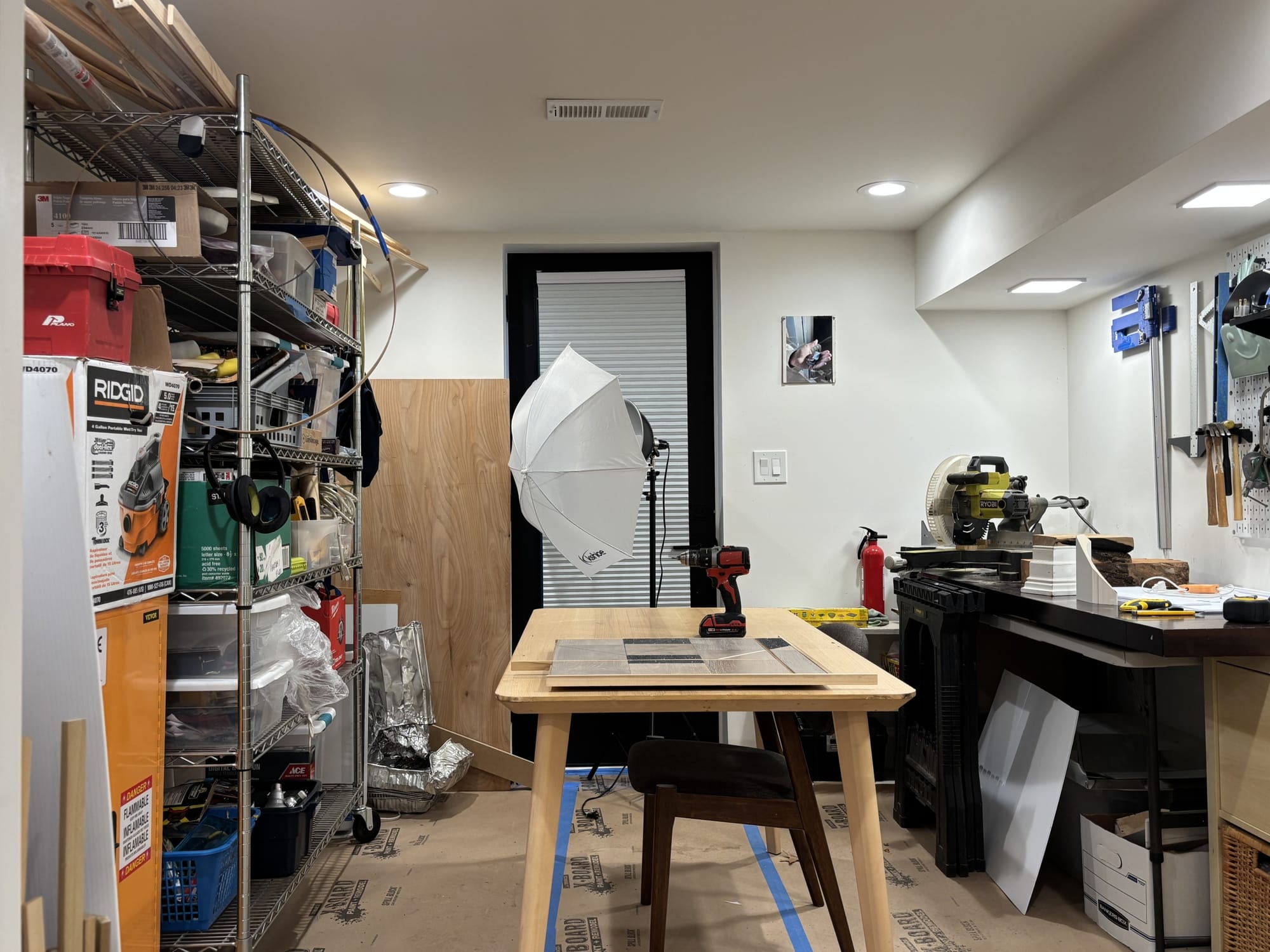
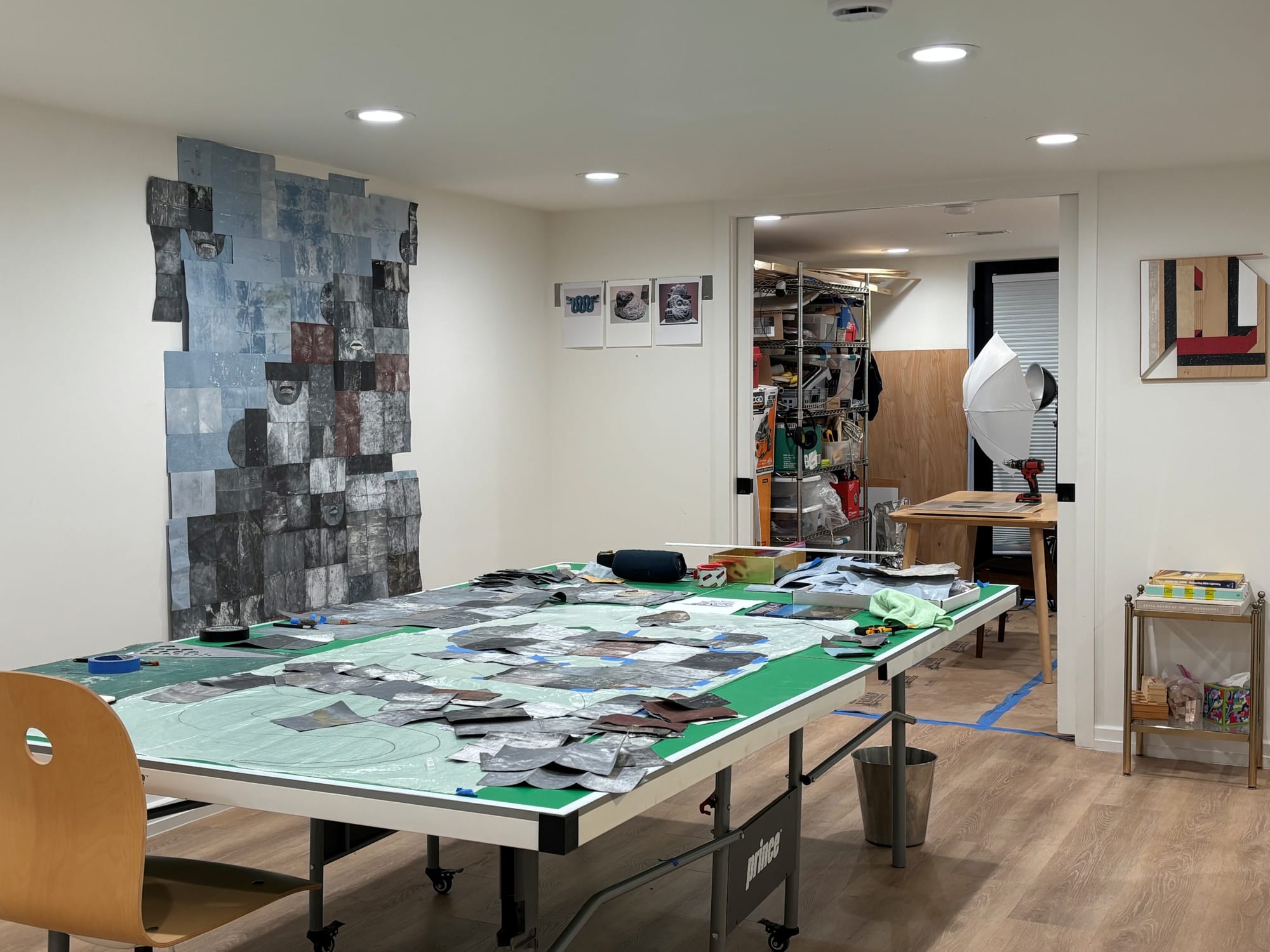
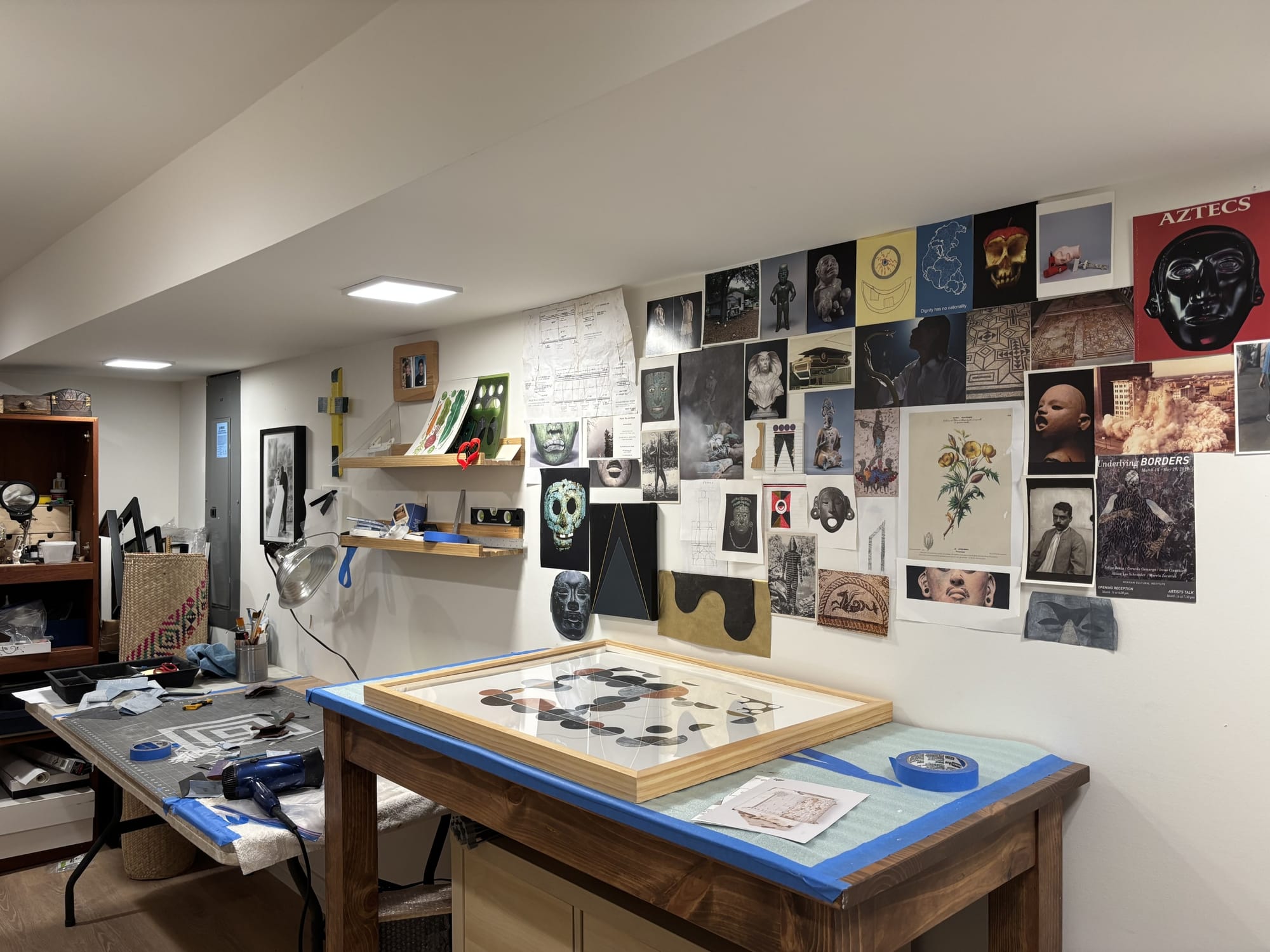
It is spacious and very well illuminated, and I keep it clean and organized. It is divided into three main areas which I have designated for different purposes: dusty power tools room, two-dimensional art and framing area, and an assembling and gallery-like area.
What do you wish were different?
I would like to be more involved with the artistic community and have more interaction and feedback. Fortunately, my wife is also an artist and her studio is also in our home; I am glad we are always giving each other feedback and enjoying conversation.
What is your favorite local museum?
It is hard to choose but I love the Hirshhorn Museum. It is the one where I have been finding the most moving pieces, the ones that resonate strongest with me. I also like the American Visionary Art Museum in Baltimore.
What is your favorite art material to work with?
I haven’t really used art materials for several years, besides tape, glue, erasers or paper. I don’t feel a connection with materials that are supposed to be for the particular purpose of making art. It feels like buying a dog when I can find many of them that have been waiting to be adopted into a family. I like to play with materials that have a history of manipulation, that require a solution in how to be approached, and how to be exposed.