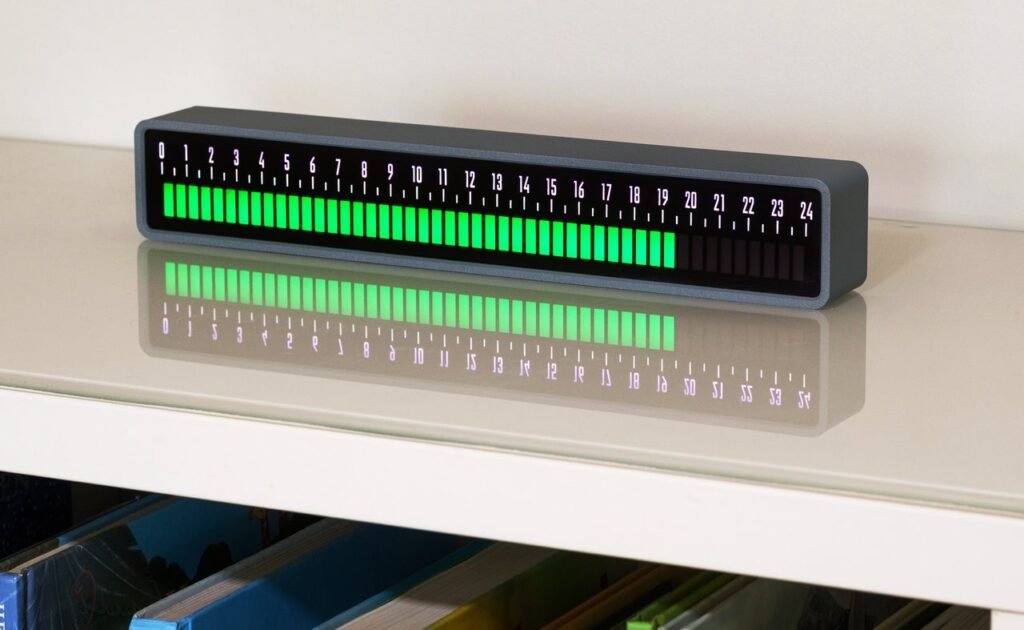
On a standard, round wall clock, time is a circle. With the Linear Clock, it’s a horizontal line.
A Danish engineer, Johannes van Ginkel, designed his clock to show 24 hours of the day laid out like a computer progress bar. The clock is divided into 48 segments, one for each 30-minute interval, so you can easily gauge the time at a glance. The later it gets, the further it loads. Though the clock is sold out for now, it will be available through his company, Daylight Machines, for $175 in the coming weeks.
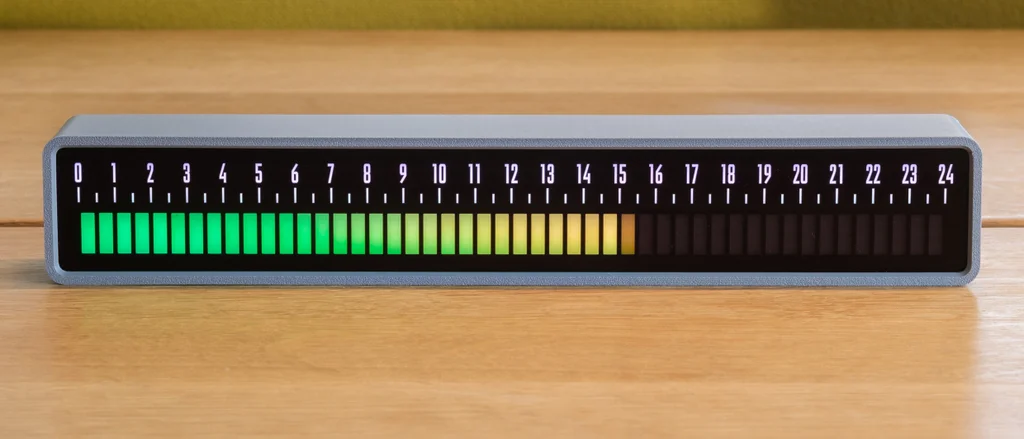
Van Ginkel designed the first prototype of his clock in 2019 as part of a Tell Time Contest hackathon for the Hackaday blog. To him, the idea of a linear clock felt intuitive because the straight line is so commonly used as a digital visual interface.
He redesigned the prototype a year later to be more legible, and his latest version, which he worked on as a passion project outside his day job, was further refined for ease of use and to improve the clock’s menu system. The back has just three buttons and a USB-C port.
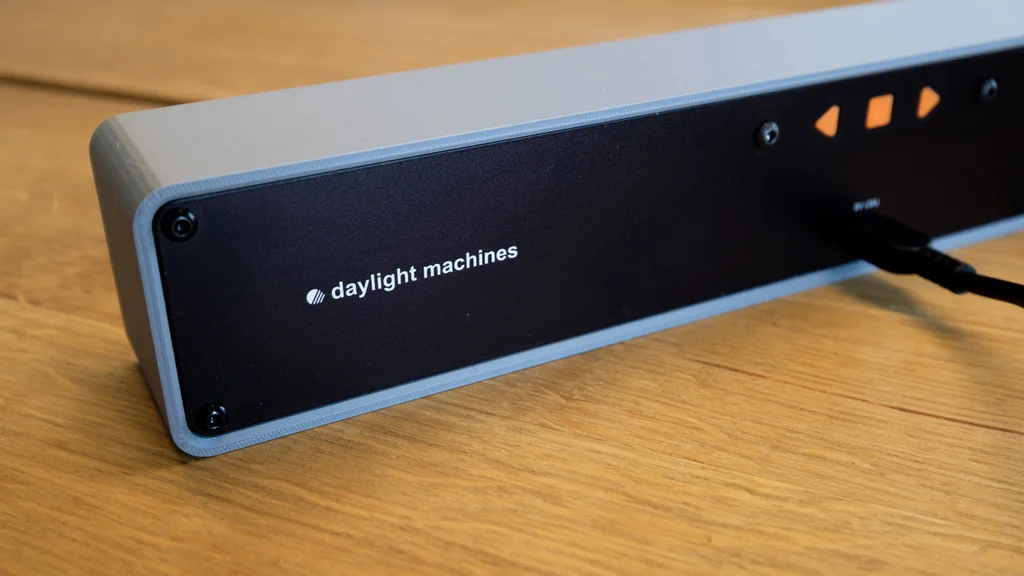
“I wanted the clock to be a stand-alone object without the need to install an app or anything to set it up, while still giving the end user enough customization options to make it their own based on feedback and requests I got,” van Ginkel tells Fast Company.
A linear clock offers a different way to communicate time than a typical analog or digital clock. And, as it turns out, the format could be helpful for people with ADHD who experience “time blindness,” or difficulty accurately perceiving and managing time, according to Stanford University’s Center for Teaching and Learning. Van Ginkel has gotten feedback from people who have ADHD or have family members with ADHD, who said the visual interface of time as a straight line made sense, whereas numbers demarcating hours or a round clock shape with hands that returned to the same position every 12 hours didn’t.
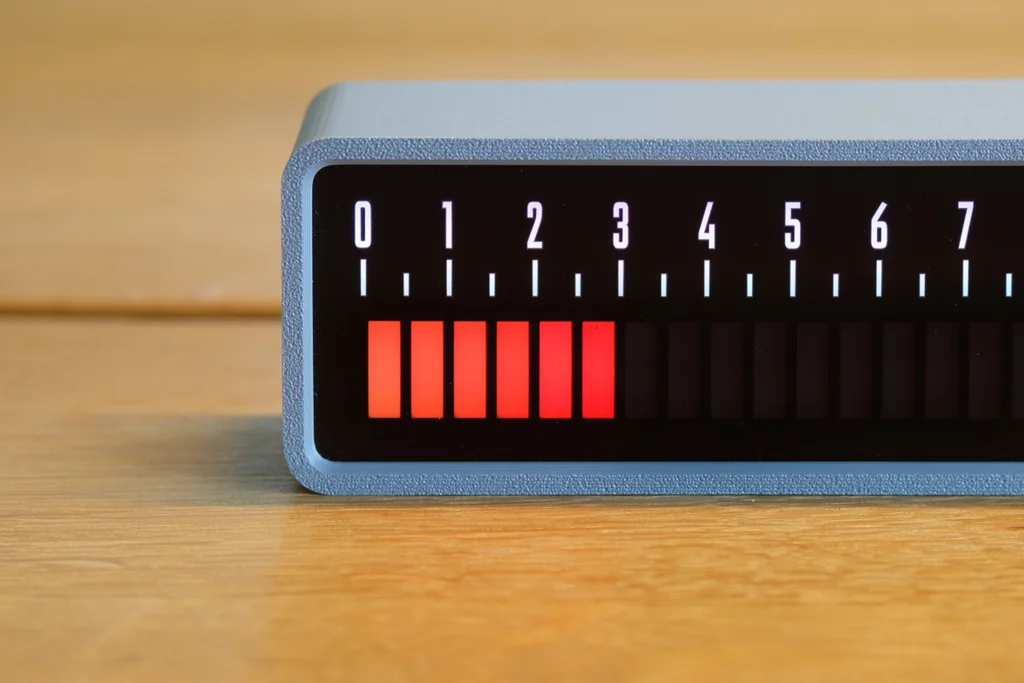
The clock has different faces. Default mode is green, but there’s also gradient mode and sunrise/sunset mode. With schedule mode, users can customize different chunks of time in different colors using the clock’s RGB LEDs, offering an analog—but highly visual—way of doing calendaring that doesn’t require Google Calendar. In this version, an appointment lights up the number on the front display in red for the time it’s set.
Van Ginkel points to one big technical challenge he had with the clock: getting a soft, diffused light for different display segments while at the same time avoiding light leakage from segment to segment, as the dividers between them are less than a millimeter thick. The numbers are set in a font he designed himself, as he didn’t find anything he considered an exact fit for what he wanted.
The Linear Clock could be helpful as a time management tool for people who don’t like reading typical clocks, but it’s also aesthetic. Time moves in one direction—forward. And now there’s a clock that shows it that way.