France and Germany want the EU to settle for a 90% cut in new-car CO2 emissions in 2035, and they don’t want automakers to make up the last 10% some other way. If the rest of the bloc agrees, new combustion cars, plug-in hybrids and range extenders keep a legal route into European showrooms after the date that was supposed to close it.
The joint position, which Reuters reported on Friday, goes further than the European Commission’s December proposal. That proposal also set 90%, but it wanted carmakers to cover the gap with low-carbon steel and alternative fuels. In exchange for dropping that requirement, Paris got stricter “Made in Europe” rules for subsidies and public procurement, with Britain treated as a trusted partner. German Chancellor Friedrich Merz said the combustion engine ban is now history.
What Does The Franco-German Deal Mean For BMW?

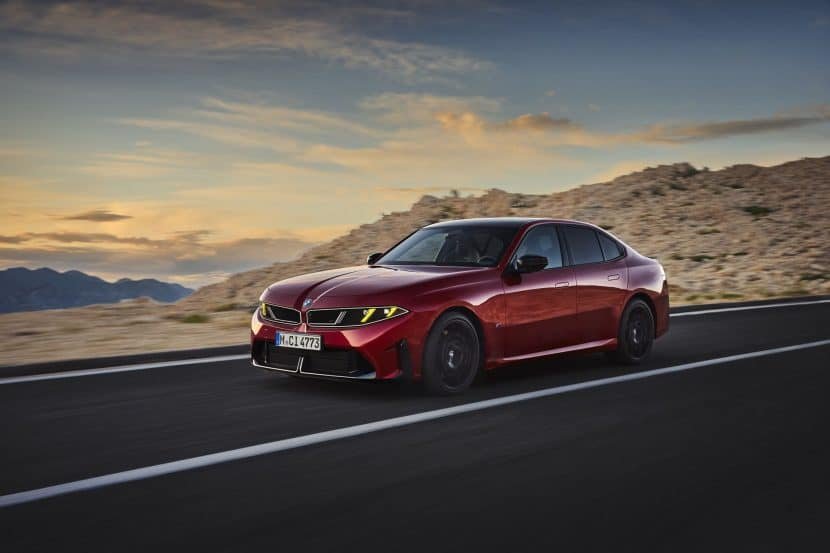
For BMW, the timing is close to perfect. Seventeen days before the deal, Munich revealed a G50 3 Series that looks like the electric i3 but keeps its gasoline engines on the CLAR platform, while the i3 rides on dedicated Neue Klasse hardware. That split is what BMW calls Technology Openness. Former CEO Oliver Zipse told shareholders in May 2025 that “E-mobility as the sole technology leads to a dead end.”
The new 3 Series launches with mild-hybrid four- and six-cylinder engines, including a 437-hp B58 inline-six in the M350 xDrive, and adds a plug-in hybrid in 2027. The G65 X5 offers gasoline, diesel, plug-in hybrid, electric and, from 2028, hydrogen power. The facelifted G70 7 Series just gained the 570-hp V8 M760 xDrive, and a combustion G84 M3 arrives in 2028 alongside the electric one.
Those cars would have spent most of their lives on sale under the old rules anyway. What the deal changes is the next round. Without a hard 2035 cliff, BMW has a reason to fund another CLAR generation for Europe instead of writing off a platform and engines it has already paid for. None of this makes BMW an EV laggard. The group delivered 110,257 fully electric cars in the third quarter, and one in three BMW Group cars delivered in Europe was a BEV.
Porsche, Audi, And Mercedes Are Already Backpedaling On EVs

BMW’s rivals are getting to the same place by reversing. Former Porsche CEO Oliver Blume admitted that making the Macan electric-only was a mistake, and Porsche plans a combustion compact SUV by 2028. Audi no longer treats its 2021 promise to stop launching combustion models in 2026 as fixed. Mercedes-Benz scaled back its plan to go electric-only where possible by 2030 to about half its sales, and Ola Källenius expects combustion models to stay well into the 2030s.
Why The Combustion Engine’s Reprieve Has Limits
The leftover 10% is a fleet average, and it won’t stretch far. Plug-in hybrids with long electric range will soak up most of it, which is why BMW asked Berlin in February to keep the rules for rating PHEVs from getting stricter. Running CLAR and Neue Klasse side by side also costs money that a single-platform rival doesn’t spend.
None of this is law yet, either. Other EU members and the European Parliament still have to sign off, and a final text is unlikely before early next year. Anna Krajinska of Transport & Environment called the plan a “historic mistake,” and her group calculates it would cut the EV share of new-car sales in 2030 from 57% to 43%. Our best guess is a European BMW lineup in 2040 that’s overwhelmingly electric, with CLAR-based combustion cars and plug-in hybrids, and maybe some six-cylinder M cars as the exceptions. That’s far from an inline-six in every 3 Series, but it’s more than the 2023 law left room for.
First published by https://www.bmwblog.com