
A couple of days ago, I wrote about the Apple iPhone Duo’s advantages over the Galaxy Z Fold 8. I wrote about parts of Apple’s first-ever foldable that trump what the Galaxy Z Fold 8 has to offer. Now, I’m here to do the complete opposite and highlight the strong suits of the Galaxy Z Fold 8. Each of these two phones has something over the other, so yes, there are things that make the Galaxy Z Fold 8 better than the competitor from Apple.
Just to be clear, the Galaxy Z Fold 8 is the very first wide foldable from Samsung. However, Samsung has been releasing foldable phones since 2019, so it has far more experience in doing so than Apple. That can be considered another advantage, but that’s not something I listed below. Apple has been studying foldables for a long time, and the company waited until it was ready to release something worthwhile. So even though this is its first-gen foldable, it’s not your typical first-gen product, of course. In any case, let’s see what the Galaxy Z Fold 8 can offer that trumps the iPhone Duo… in no specific order. And once again, this is my opinion, your may differ, of course.
Symmetry
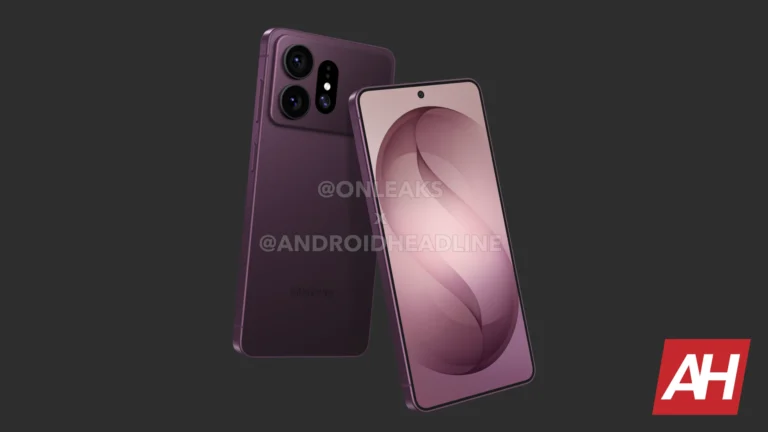
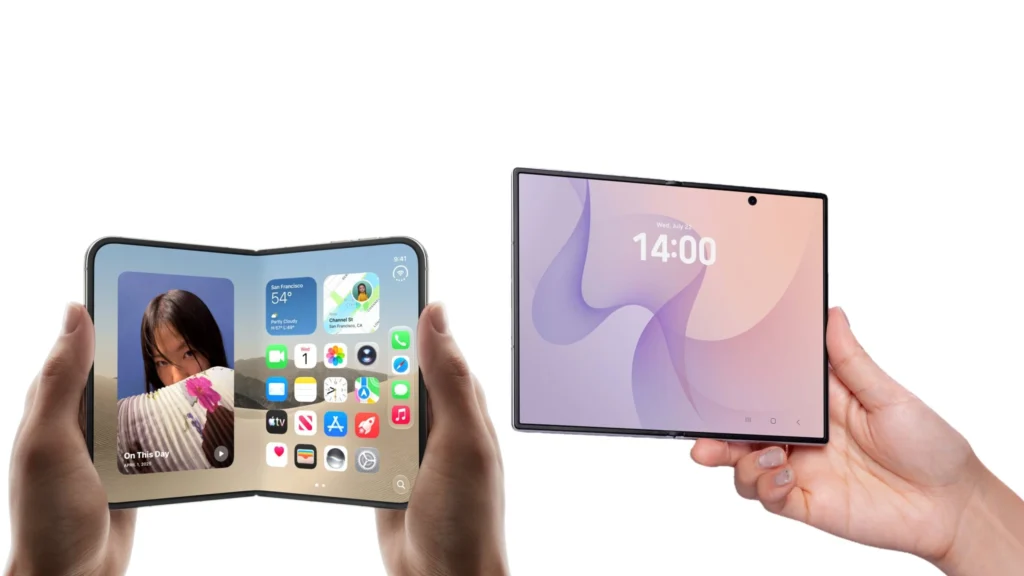
The Samsung Galaxy Z Fold 8 is a phone that offers a symmetrical design. That is true regardless of whether the phone is folded or unfolded. All four corners of the device offer the same sharpness, and the bezels are identical on all sides. Once again, that goes for both its folded and unfolded orientations. The same cannot be said for the iPhone Duo, however, at least not for its folded form.

When the iPhone Duo is folded, its corners on the left side are considerably sharper than the corners on the right side. Those sides are curved, quite a bit. It simply leaves us with that asymmetrical look that not everyone will like. When the phone is unfolded, on the other hand, things change. The iPhone Duo is completely symmetrical in its unfolded form; it doesn’t even have a display camera hole.
If you take into account display camera holes, the iPhone Duo even has the edge when it’s unfolded, as the Galaxy Z Fold 8 does have a camera hole on its main display. Overall, however, the Galaxy Z Fold 8 has the edge in the symmetry department. It’s notably more aesthetically pleasing when folded, in my opinion. I don’t think many people will care all that much, however.
Thickness & Weight
This is actually the first difference between the two phones that came to mind when I was watching the iPhone Duo’s announcement. I instantly started to wonder how much the phone will weigh. As I expected, it’s notably heavier than the Galaxy Z Fold 8. The iPhone Duo weighs 254 grams, compared to 201 grams for the Galaxy Z Fold 8. A 53-gram difference is no joke when it comes to smartphones, not at all. That is even more true for foldables. I’d say.
The Galaxy Z Fold 8 has an outstanding weight for its size. It is extremely pleasant to hold and use, and in case you’re wondering, yes, the difference is quite noticeable when you handle the iPhone Duo. That is not deal-breaking, as the iPhone Duo is not too heavy or anything like that, but if you’re coming from the Galaxy Z Fold 8, you’ll surely notice the difference. In fact, it may even bother you.
What about the thickness? Well, in addition to being heavier, the iPhone Duo is also thicker than its competitor. It measures 11.3mm when folded and 5.2mm when unfolded, compared to the Galaxy Z Fold 8’s 9.7mm when folded and 4.5mm when unfolded. This bothered me less than the weight difference, but yes, you can notice the difference between them when they’re folded. That’s something to take into account.


Price
The Samsung Galaxy Z Fold 8 is also notably more affordable than the iPhone Duo. That difference is “only” $100, but in other markets, it’s much more notable. The Galaxy Z Fold 8 starts at $1,899 in the US, while the iPhone Duo’s price is $1,999. Apple’s foldable is not yet available; however, it will go on sale next month. The price has been confirmed by the company, though.
In Germany, for example, the Galaxy Z Fold 8 starts at €1,999, while the iPhone Duo will start at €2,299. €300 is around $345, so that’s a considerably different price tag. That’s the case for most of Europe and various other markets. The differences vary, but the point is, it’s nowhere near as close as it is in the US. Needless to say, €300 ($345) is not a small amount of money, not at all.
In case you’re wondering, both phones start at 256GB of storage, so those are prices for their base variants.
Nano SIM
The Apple iPhone 18 Pro and iPhone 18 Pro Max come in both nano SIM + eSIM and eSIM-only variants. The eSIM-only variant is available in the US and a bunch of other markets, while most markets, including Europe and China, get the nano SIM + eSIM model. With the iPhone Duo, Apple decided to take a completely different approach. All models, everyone in the world, are eSIM-only.
That can be quite annoying for some people, depending on where you live. It can also be annoying if you’re travelling a lot and prefer using local SIM cards, etc. With the nano SIM option, you don’t lose the eSIM option, so that’s definitely what I’d prefer. Like on the European model of the iPhone 18 Pro. However, Apple did not offer that option to anyone, unfortunately.
That’s another area where I believe the Galaxy Z Fold 8 has a notable advantage. That phone comes with the nano SIM + eSIM option globally. There may be a couple of exceptions, but I don’t think there are. Every single major market on the globe gets the nano SIM + eSIM model of that phone, and you can actually add two eSIMs on top of that nano SIM.
Android
This is highly debatable and a point of preference, but I much prefer Android over iOS for a number of reasons. In the other article, where I talked about the iPhone Duo advantages, I did highlight the Apple ecosystem as a plus. Well, as far as the general OS goes, I think Android has the edge. It simply gives you way more freedom, and there are a number of things that I can do on Android that I either cannot do on iOS, is quite limited, and/or it requires a ton of additional steps.
You may, of course, disagree and prefer iOS. Many people do. For me, however, there’s no real debate. iOS did get new features over the years, but there are still a ton of issues with all that. The somewhat linear scrolling is one, for example. You need to get traction when scrolling in order to scroll extremely fast; you cannot simply flick your finger. Once you’re used to something (in my opinion) better, on Android, it’s quite frustrating to go back.

Third-party launchers are another example. Launchers like Niagara Launcher make a huge difference. The same goes for customization of the OS itself. While iOS did make some improvements over the years, it’s nowhere near what Android offers. In fact, that whole customization discussion can be separated into so many sub-sections, but that would take an age, and it would require me to go off topic. Either way, in my opinion, Android is the superior OS, and that will be reflected on a foldable screen as well.
The post 5 Ways the Galaxy Z Fold 8 Beats the iPhone Duo appeared first on Android Headlines.