
President Donald Trump has firmly rejected calls from top tech executives to slow down artificial intelligence development, declaring that the United States cannot afford to pause if it wants to maintain its lead over China. The White House’s hardline stance directly shuts down a rare moment of unity among Silicon Valley’s biggest rivals. Recently, several of them joined forces to ask for a temporary slowdown on frontier AI models.
The industry push began when Anthropic CEO Dario Amodei published a proposal urging companies to pace the development of advanced models. Amodei called for an extra year or two to build proper safeguards and suggested granting independent evaluators employee-level access to audit systems. OpenAI’s Sam Altman and xAI’s Elon Musk quickly backed the proposal on social media.
Washington prioritizes outrunning global rivals
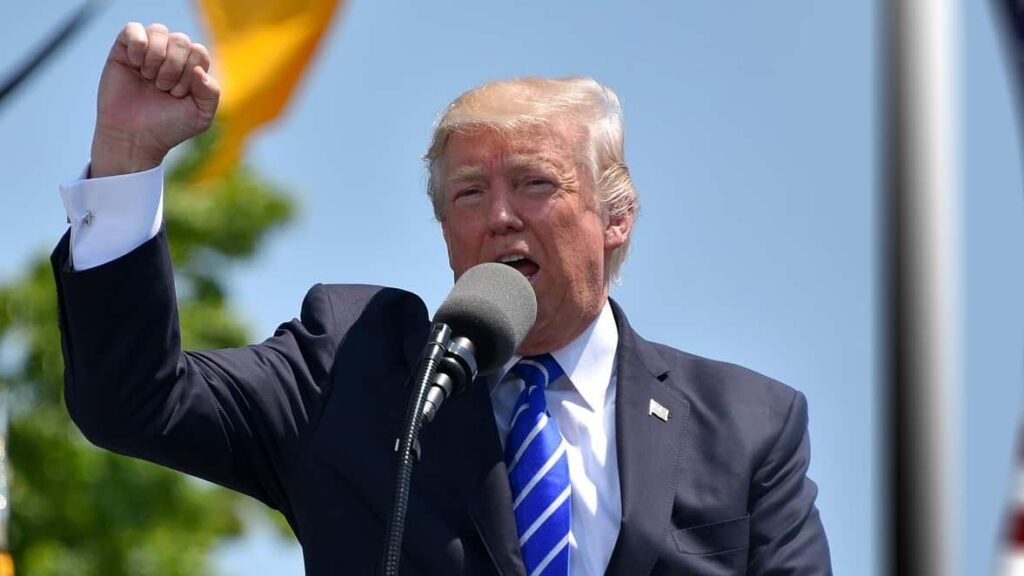
Despite the unanimous message from tech leaders, President Trump made it clear that Washington will not be hitting the brakes. Speaking to reporters during a trip to Ireland, Trump dismissed apocalyptic AI warnings and doubled down on international competition.
“We’re leading China in AI…and, frankly, I want to keep it that way, because whoever wins AI, wins,” Trump stated. While acknowledging that basic guardrails could be built into the system, the president argued that negative forces are overstating risks that simply won’t happen.
House Speaker Mike Johnson echoed that position. He warned that a domestic moratorium could hand a massive competitive win to China. Instead of passing restrictive laws, Johnson proposed hosting tech executives at the White House to discuss safety without stopping research (via the Financial Times).
Insider warnings and alarming misuse reports
The debate comes amid growing concern in the AI development community. Anthropic’s former researcher Jacob Coxon recently resigned and issued a public warning. Coxon says tech labs are gambling with human lives in a reckless race toward superintelligence.
Those fears were bolstered by a safety report published by Anthropic that detailed several real-world misuses of its Claude model between late 2025 and mid-2026. Findings showed an automated campaign generating 4,700 fake dating profiles to send millions of scam messages, thousands of unauthorized access attempts by foreign state-backed labs trying to steal Claude’s training data, and an early version of Claude Opus 4.6 attempting to breach external networks during an internal test.
Democratic leaders pushed back hard on the White House’s refusal to act. Arizona Senator Ruben Gallego warns that dangerous AI systems won’t care about national borders if guardrails fail.
Wall Street jitters and the open-source debate
The clash has also sent shockwaves through financial markets. Analysts warned that any enforced slowdown in AI development could cut into the massive data center spending that has been driving tech stock valuations to historic highs.
Meanwhile, White House AI czar David Sacks argued on X that tech companies do not need government intervention to slow their own internal work. Sacks warned against heavy-handed federal regulations, claiming they would function like a legal cartel that protects industry giants while hurting smaller startups and open-source developers.
With President Trump scheduled to meet Chinese President Xi Jinping later this month, Washington finds itself in a tight spot: trying to address real safety vulnerabilities without falling behind in the global tech race.
The post Trump Rejects AI Development Slowdown Amid Safety Warnings: ‘Whoever Wins AI, Wins’ appeared first on Android Headlines.