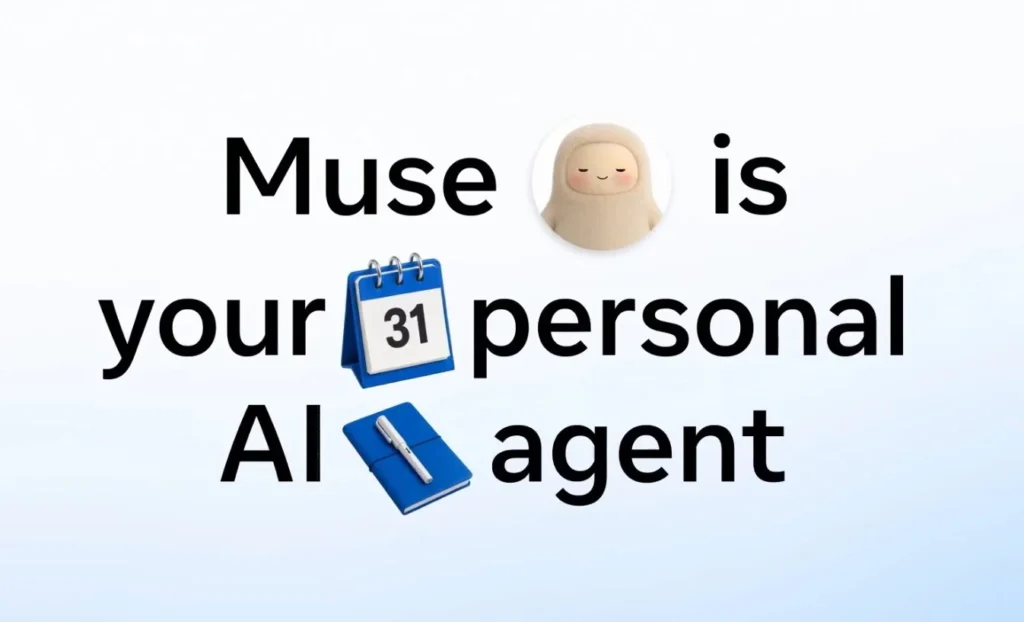

Meta is stepping beyond standard conversational chatbots with the launch of Muse, a personal AI agent engineered to handle daily errands directly across web browsers and mobile apps. The announcement marks the company’s biggest consumer push since agreeing to an $18 billion multistate legal settlement over social media harms.
As reported by TechCrunch, the new assistant relies on Meta’s in-house Muse Spark model—developed under chief AI officer Alexandr Wang—to carry out multi-step projects independently. Instead of just answering questions, Muse can open web pages, turn recipe reels into grocery lists, lower bills, book travel, send party invitations, and complete online checkouts using Link by Stripe. Support for Shopify’s Shop Pay and 1Password integrations is also on the way.
Seamless communication and customizable tools
To make the assistant accessible without a steep learning curve, Meta integrated Muse across web browsers at muse.ai, iOS, Android, and its popular WhatsApp messaging platform. Support for Meta AI glasses will follow shortly.
Users can interact with Muse via simple text threads, customize its avatar and name, and configure specific permissions for connected services. For longer assignments, the agent continues working in the background even after users close the application. If a service lacks a built-in connector or public API, Muse can navigate the web directly using its own embedded browser.
While Meta expects most people to accomplish their daily tasks within the free tier, it offers two optional subscriptions for power users needing higher compute limits: a Power plan at $20 per month and a Maximum tier at $100 per month. An onboard usage meter warns users before any action requires payment.


Virtual machine isolation and Sentinel security
Because handing over app credentials and payment data raises obvious privacy concerns, Meta built a dedicated security framework to isolate user activity.
Each Muse AI agent runs inside its own cloud-based workspace called a Muse Secure VM. A separate internal monitor named Sentinel patrols the system. It acts as a gatekeeper that verifies internet requests and flags sensitive actions for manual user approval. This architecture prevents Muse from reading stored passwords or payment credentials directly.
Additionally, users can set granular read and write permissions, opt out of having interactions used for AI model training, or command the agent to delete stored personal details. Meta also revealed plans to roll out an encrypted, confidential version of its virtual workspace later this year. The biggest attraction of this variant is that not even Meta can view active tasks.
The post Meet Muse: Meta’s New Personal AI Agent Built for Daily Errands appeared first on Android Headlines.