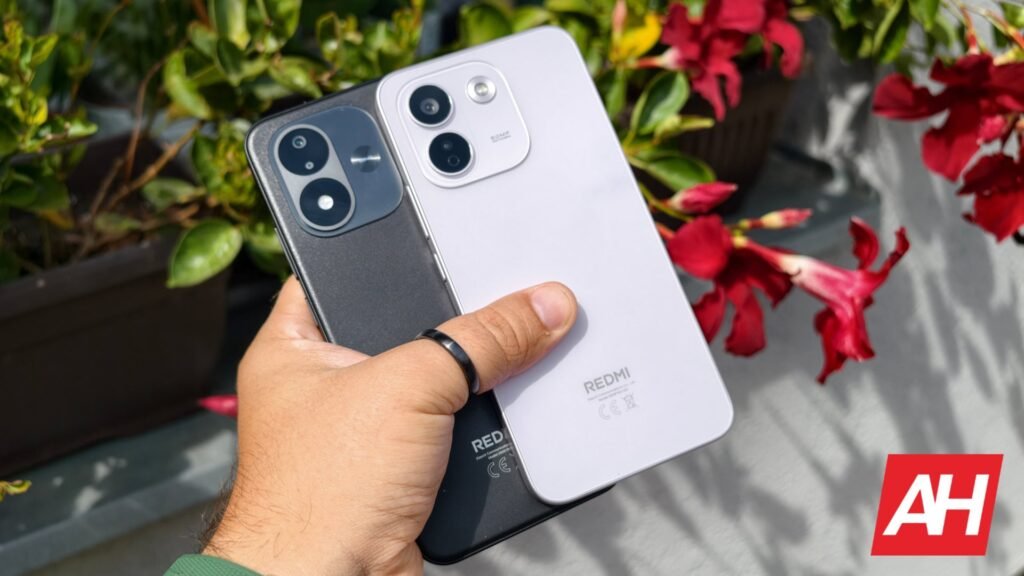

Xiaomi announced its Redmi Note 17 series recently, and as per usual, those devices are available for global markets. Xiaomi sent over two phones from the series, the base Redmi Note 17 and the top-end model, the Redmi Note 17 Pro Max. Keep in mind that both of these phones are budget devices. That goes for Xiaomi’s Redmi Note devices in general, so there you go.
I decided to use both of these phones at the same time, as that’s the best way to see the differences between them. Therefore, this review will include both of those phones, even though there are quite a few differences between them, which I’ve come to realize as I was using them. Without further ado, let’s see what’s what, shall we?

A budget phone that doesn’t feel like it’s cutting every corner.
Pros
- Solid build quality
- Good display for the price
- Great battery life
- Feels good to hold and use despite its size
- Very affordable
Cons
- HyperOS needs work
- Performance could be better, stuttery
Xiaomi supplied us with a review unit of the Redmi Note 17 5G, but didn’t have a say in our opinion, nor did they see this review before you. We’ve been using the device for about two weeks before forming an opinion.

Faster, brighter, and better in nearly every way that matters.
Pros
- Great display for the price
- Solid build quality
- Alright performance
- Camera performance is good considering the price range
- Great battery life
- Proper fast charging
- Good ingress protection
- Comfortable to hold and use
Cons
- HyperOS needs work
Xiaomi supplied us with a review unit of the Redmi Note 17 Pro Max 5G, but didn’t have a say in our opinion, nor did they see this review before you. We’ve been using the device for about two weeks before forming an opinion.
Specs
Xiaomi Redmi Note 17 5G Specs
| Display Size | 6.99 inches |
| Display Resolution | 2396 x 1080 |
| Refresh Rate | Up to 120Hz |
| Dimensions | 169.70 x 79.14 x 8.45mm |
| Weight | 225 grams |
| Chipset | Qualcomm Snapdragon 4 Gen 2 |
| RAM | 6GB/8GB |
| Storage | 128GB/256GB |
| Battery | 7,700mAh |
| Charging | 45W wired, 22.5W reverse wired (charger included) |
| OS | Android 16 with HyperOS |
| Main Camera | 50MP (f/1.8 aperture, 5P lens) |
| Front-Facing Camera | 16MP (f/2.5 aperture) |
| Network and Connectivity | Wi-Fi, GPS, Bluetooth 5.1, NFC |
| Water Resistance | IP65 |
| Colors | Celestial Purple, Sky Teal, Black |
Xiaomi Redmi Note 17 Pro Max 5G Specs
| Display Size | 6.83 inches |
| Display Resolution | 2772 x 1280 |
| Refresh Rate | Up to 120Hz |
| Dimensions | 163.44 x 78.27 x 8.57-8.65mm |
| Weight | 225.1 grams |
| Chipset | Qualcomm Snapdragon 6 Gen 5 |
| RAM | 8GB/12GB (LPDDR5X) |
| Storage | 128GB (UFS 2.2) |
| Battery | 9,210mAh |
| Charging | 100W wired, 27W reverse wired (charger included) |
| OS | Android 16 with HyperOS |
| Main Camera | 50MP (f/1.5 aperture, OIS, 0.8um pixel size, 6P lens) |
| Ultrawide Camera | 8MP (f/2.2 aperture) |
| Front-Facing Camera | 32MP (f/2.2 aperture) |
| Network and Connectivity | Wi-Fi 6, GPS, Bluetooth 6.0, NFC |
| Water Resistance | IP66/IP68 |
| Colors | Cloud Blush, Green, Purple, Black |
Xiaomi Redmi Note 17 & Pro Max Review: Design
As you’ll quickly realize, these two phones look similar. They both have flat displays with a centered display camera hole up top. That camera on the Redmi Note 17 does have a silver ring around it, though, unlike on the ‘Pro Max’. They both also have a flat frame and a flat backplate. That backplate is completely flat on the Redmi Note 17 Pro Max 5G, while that’s not the case on the Redmi Note 17 5G. On the base model, the backplate curves slightly on all edges towards the frame. The camera island design also looks similar, but not identical. The Redmi Note 17 5G is, interestingly enough, taller and slightly wider than the Redmi Note 17 Pro Max 5G. Why? Well, the Redmi Note 17 5G has a slightly bigger display and a thicker bottom bezel.
The Redmi Note 17 Pro Max 5G has a more immersive display
While the display bezels on the Redmi Note 17 Pro Max 5G are uniform, that’s not the case with the Redmi Note 17 5G. You’ll quickly realize that the bottom bezel, aka “chin,” is thicker than the rest of them. Other bezels are also thicker than on the Pro Max model. The in-hand feel, however, is very similar. They weigh the same, and the Redmi Note 17 5G is not a lot taller, so… they do offer a very similar in-hand feel. And yes, both devices are quite slippery, at least the models that we received are.

All the buttons are located on the right-hand side, and they’re quite clicky. You’ll notice that despite the similar camera island design, the ‘Pro Max’ model has one extra camera back there. It has two compared to a single snapper on the base model. Overall, both phones do feel nice in the hand, though both of them are quite large. They’re the ideal weight, I’d say – not too heavy, not too light; I don’t think many people will have an issue with that.
The ‘Pro Max’ model also comes with better ingress protection
It is also worth noting that the Redmi Note 17 Pro Max 5G offers better ingress protection. It comes with IP66 and IP68 ratings, while the Redmi Note 17 5G is IP65 rated. The difference probably won’t matter much to you, but yes, the ‘Pro Max’ variant technically offers better ingress protection. I was caught in the rain once during my usage, and both phones were just fine, despite the fact I used them while it was raining.
The Redmi Note 17 5G comes in Celestial Purple, Sky, Teal, and Black colors. The Redmi Note 17 Pro Max 5G was announced in Cloud Blush, Green, Purple, and Black colors. As you can see, we received the Black color of the base model and the Purple variant of the Redmi Note 17 Pro Max 5G.


Xiaomi Redmi Note 17 & Pro Max Review: Accessories
What’s interesting with these two phones is that neither of them includes a charger. Only the more expensive Redmi Note 17 Pro Max 5G comes with a charger, a 100W one. Both retail boxes do include a charging cable, though, and a silicone case. That case is quite nice for an in-box case, actually. It provides plenty of protection, and at the very least it will serve you well until you get something better. In addition to that, a SIM card ejector tool is included, along with some paperwork. Both phones do include a screen protector, so technically that’s also an accessory. That screen protector is already applied on them, a regular plastic one.
Xiaomi Redmi Note 17 & Pro Max Review: Display
These two devices do not have the same displays, not at all. The Redmi Note 17 5G has a 6.99-inch fullHD+ AMOLED display with a refresh rate of up to 120Hz. The resolution here is 2396 x 1080 pixels, while the maximum brightness is 1,800 nits. Touch sampling rate is 240Hz, while the display is TÜV Rheinland Low Blue Light (Hardware Solution) and TÜV Rheinland Circadian Friendly certified. This panel has 8-bit color depth, and covers the DCI-P3 color gamut.
Both phones have large, 120Hz panels
The panel on the Redmi Note 17 Pro Max 5G, on the other hand, measures 6.83 inches. It’s an AMOLED display with a 1.5K (2772 x 1280) resolution. Its refresh rate is up to 120Hz. The peak brightness here is 3,500 nits, while we’re looking at 12-bit color depth. This display also covers the entire DCI-P3 color gamut, while its touch sampling rate is 240Hz. The Gorilla Glass Victus 2 protects it, while HDR10+ and Dolby Vision are supported here. This panel also has 3,840Hz PWM dimming and three TÜV Rheinland certifications. Those certifications are: TÜV Rheinland Low Blue Light Certification (Hardware Solution), TÜV Rheinland Circadian Friendly Certification, and TÜV Rheinland Flicker Free Certification.

By default, the Redmi Note 17 5G’s display is colder. You can tweak that in the settings, though. What you can not tweak is the fact that it’s less bright than the Redmi Note 17 Pro Max 5G’s panel. That’s something you’ll clearly notice outdoors in direct sunlight. The panel on the ‘Pro Max’ model is also better for your eyes due to high-frequency PWM dimming and a certification related to it. On top of all that, that panel is also sharper in comparison.
Both displays are good, but one is a clear winner
Don’t get me wrong, though. The Redmi Note 17 5G’s panel will be more than enough for most of you. If you’re used to better displays, however, and want extra eye care, the Redmi Note 17 Pro Max 5G’s panel is the way to go. Especially if you’re planning on using it outdoors in direct sunlight a lot. It’s simply a better and brighter panel. It’s also worth noting that, by default, both phones come with a pre-installed screen protector, a regular plastic one.
Xiaomi Redmi Note 17 & Pro Max Review: Performance
These two devices have considerably different performance-related hardware. The Redmi Note 17 5G is fueled by the Snapdragon 4 Gen 4 processor, while the ‘Pro Max’ model includes the Snapdragon 6 Gen 5 chip. That processor is notably more powerful, and that goes for its GPU as well. Still, not even the Snapdragon 4 Gen 4 is bad, not at all. That chip is not the only advantage of the ‘Pro Max’, though. The Redmi Note 17 comes in 6GB and 8GB RAM variants, while LPDDR4X RAM is used. That is combined with up to 256GB of UFS 2.2 storage. We received the 6GB RAM model with 256GB of storage.
The Redmi Note 17 Pro Max is more powerful and a better performer
Now, with the Redmi Note 17 Pro Max 5G, things are a bit different. That phone combines the Snapdragon 6 Gen 5 with 8GB or 12GB of LPDDR5X RAM. So it does have faster RAM. If you get the 128GB storage option, you’ll get UFS 2.2 storage, so we’d suggest 256GB or 512GB models, as they use UFS 4.1 flash storage. We received the 8GB RAM variant with 256GB of storage for testing, so with faster storage. And yes, you can definitely see the difference in performance between these two phones, not only in benchmarks.
The Redmi Note 17 Pro Max 5G is a notably faster phone. It is snappier during general use and has far fewer stutters than the Redmi Note 17 5G. Not that the Redmi Note 17 5G is bad or anything, but if you use them side by side, you notice how much snappier the Redmi Note 17 Pro Max 5G is. That’s not surprising, though, considering its benefits in SoC, RAM, and storage. It simply packs more of a punch. If you’re used to faster phones, switching to the base model will definitely be a change for you.
Neither device is a gaming phone, though, not at all
The Redmi Note 17 Pro Max 5G’s advantages can also be seen in gaming. While neither phone is made for gaming, especially when it comes to graphically-intensive titles, the Redmi Note 17 Pro Max can be pushed considerably further than the Redmi Note 17 5G. As long as you’re no aiming to play the most demanding games and expect miracles, the ‘Pro Max’ can handle it. The Redmi Note 17 5G less so, but it still offers solid performance in that regard. Keep in mind these are budget devices, though, and they cannot compete with higher-end models in terms of performance. So, manage your expectations.
Benchmarks:
Geekbench:
| Device | Single-Core | Multi-Core | GPU |
| Xiaomi Redmi Note 17 5G | 819 | 1,435 | N/A (crashed) |
| Xiaomi Redmi Note 17 Pro Max 5G | 940 | 2,998 | 3,304 |
| Motorola Moto G 2026 | 788 | 2,101 | 1,471 |

3D Mark (Wildlife Extreme Stress Test):
| Device | Best Loop | Lowest Loop | Stability |
| Xiaomi Redmi Note 17 5G | 190 | 188 | 99% |
| Xiaomi Redmi Note 17 Pro Max 5G | 1,162 | 1,155 | 99.4% |
| Motorola Moto G 2026 | 382 | 379 | 99.2% |
Thermals:
3D Mark (Wildlife Extreme Stress Test) thermals:
| Device | Temperature (F) |
| Xiaomi Redmi Note 17 5G | 92.1 |
| Xiaomi Redmi Note 17 Pro Max 5G | 101.2 |
| Motorola Moto G 2026 | N/A |
Genshin Impact thermals:
| Device | Temperature (F) |
| Xiaomi Redmi Note 17 5G | N/A |
| Xiaomi Redmi Note 17 Pro Max 5G | 103.4 |
| Motorola Moto G 2026 | N/A |
Xiaomi Redmi Note 17 & Pro Max Review: Battery Life
Both the Redmi Note 17 5G and Redmi Note 17 Pro Max 5G have huge batteries. The base model comes with a 7,700mAh battery, while the ‘Pro Max’ includes a 9,210mAh unit. Both of those are silicon-carbon batteries, needless to say. After spending nearly 2 weeks with both phones, I can safely say that both offer great battery life, and you really don’t need to worry about that. I mostly used them together, but for a couple of days in those two weeks I relied on one only to push them as far as they can go.
Both offer great battery life, but the Redmi Note 17 Pro Max edges out its sibling
I’ve found out that the Redmi Note 17 Pro Max 5G is better in terms of battery life. That is probably not surprising considering that it has a slightly smaller display and a notably larger battery. That chip that Xiaomi opted for is also very good with power consumption; it’s a 4nm chip. In all honesty, even if you’re a power user who really pushes their phone to the max, chances are you won’t kill either device before the end of the day. You can always do it purposely, to keep 4K video recording running all day or something. However, with general use, you won’t be able to do so.
I can see both of these devices running for multiple days for many people, especially the ‘Pro Max’. I feel like Xiaomi could have done even more with more software optimization, but with such gigantic battery packs, it doesn’t really matter. I’ve played some games, filmed 4K videos, took plenty of pictures, watched plenty of YouTube, and so on, and both have been true road warriors. Even on days I was outside in the sun for most of the time, battery life was not a problem, and neither was heat of any kind.
The ‘Pro Max’ also charges notably faster
It’s a good thing that Xiaomi included a 100W charger with the Redmi Note 17 Pro Max 5G, mainly because its battery capacity is truly gigantic. The Redmi Note 17 5G will take considerably longer to charge, plus you have to get at least a 45W PD/PPS charger to get the full speed here. Yes, it has a smaller battery, but it also has notably slower charging. You can see the details regarding that below. Fast reverse wired charging is much appreciated as well. You’ll learn to love this feature if you ever need to recharge your truly wireless earbuds while you’re out and about.
| Device | Battery life | Charging |
| Xiaomi Redmi Note 17 5G | 22:57:31 | 1:39:17 |
| Xiaomi Redmi Note 17 Pro Max 5G | 24:44:17 | 1:01:42 |
| Motorola Moto G 2026 | 22:35:30 | 2:04:24 |
Xiaomi Redmi Note 17 & Pro Max Review: Camera
These two smartphones have notably different camera setups. The Redmi Note 17 has a single 50-megapixel camera on the back. That camera offers an f/1.8 aperture and uses a 1/2.76 sensor size, along with PDAF support. The Redmi Note 17 Pro Max has a notably better main camera, while it also includes an ultrawide snapper. A 50-megapixel main camera is included on that phone as well, but a camera with a 1/1.95-inch sensor size, with both PDAF and OIS support. An f/1.5 aperture lens is used here. There is also an 8-megapixel ultrawide camera with an f/2.2 aperture, and a 1/4.0-inch sensor size. The selfie cameras on both phones have rather small sensors and are nothing to write home about.
They have notably different camera setups
Let’s start with the better of the two camera setups, the one on the Redmi Note 17 Pro Max. The photos during the day are not bad at all, actually. They offer a rather natural look with good dynamic range. The contrast tends to be a bit too high, in some cases, though, and the color rendering tends to be a bit off. The portrait shots are also fine for this price range, in all honesty. The ultrawide camera is… well, not good. The photos could be sharper, though the dynamic range is fine. When it comes to the Redmi Note 17, its main camera provides results that are less impressive during the day, but still fine. The colors are worse in comparison, and the photos have a bit less detail as well.

Neither phone is great in low-light, but one is a lot better than the other
What about low light? Well, the Redmi Note 17 Pro Max actually does a decent job. The dynamic range is actually excellent, and the white balance is good as well. There’s also enough detail in the shots, unless we’re talking really dark situations. 2x photos are very soft, though. The ultrawide camera here is something you should avoid using in low light. There is not enough detail in the shots, and the exposure is dim. The Redmi Note 17, on the flip side, does a notably worse job in low light compared to the Redmi Note 17 Pro Max. You’ll get less detail, worse dynamic range, and colors. The photos are still not bad for this price range, though.
Redmi Note 17 5G Camera samples:


Redmi Note 17 Pro Max 5G Camera samples:


4K video recording thermals:
| Device | 5 minutes | 10 minutes |
| Xiaomi Redmi Note 17 5G | 90.7 | 91.2 |
| Xiaomi Redmi Note 17 Pro Max 5G | 97.2 | 98.4 |
| Motorola Moto G 2026 | N/A | N/A |
Xiaomi Redmi Note 17 & Pro Max Review: Software
Both of these phones ship with HyperOS 3, which is installed on top of Android 16. If you’ve used HyperOS thus far, well, you’ll be right at home here. The animations have been improved compared to the last version, but other than that, the OS feels pretty much the same. You can choose between keeping all your apps on the home screen(s) or putting them in the app drawer. The overall usage feels similar to other Android brands, though Xiaomi does have some added features, including customization via themes. Plenty of Xiaomi apps are installed as well, quite a few of which you can remove.
HyperOS is a good take on Android
HyperOS 3 also includes a split notification shade, and global search when you swipe from top down (on the home screen). You can change that to act as a trigger for the notification shade, though. Xiaomi Share is also baked in here, while you have the standard set of interconnectivity options here. Xiaomi also has a suite of AI tools called ‘HyperAI’. That includes Gemini, AI Dynamic Wallpapers, AI Writing, AI Creativity Assistant, AI Speech Recognition, AI Subtitles, and more.

There is plenty of customization included here, though not as much as on One UI. You do get theme support, while you can choose lock screen styles as well. You can also change fonts, fingerprint scanner effects, and have access to the Always-On Display. You also get some control over icons, but no, third-party icon packs from the Google Play Store are not supported here. That is a shame, and more important than what Xiaomi offers in terms of icon control, that’s for sure. Floating windows are also available, and more.
Old HyperOS annoyances are still here
Old annoyances, when it comes to Xiaomi’s software, remain, though. The most important one, for me personally, is the fact that by default, you can see only 1 notification icon in the status bar. You can increase that to 3 via the settings, but that’s it. Status bar notification icons are one of the best features of Android, and have been from the start, basically. I have no idea why Xiaomi decided to mess with that a while back, but it’s quite annoying. Also, if you use navigation gestures, third-party launchers will be completely blocked; you won’t be able to use them at all. Those are just a couple of HyperOS oddities that trigger me every time I use the OS. In general, however, it’s a solid Android skin, and it works really well.

Xiaomi Redmi Note 17 & Pro Max Review: Audio
When audio is concerned, the Redmi Note 17 Pro Max does have the edge. Both smartphones do include stereo speakers, that’s for sure, but the Redmi Note 17 Pro Max has Dolby Atmos support. In fact, when compared directly, the Redmi Note 17 Pro Max speakers do get a bit louder, and we also preferred the overall sound output from those speakers. Not that the Redmi Note 17 output is bad; it’s fine, perfectly fine.
What about call quality? Well, it was very good on both phones. In fact, we didn’t really notice the difference in that regard. We were able to hear the other end of the line with normal clarity, while we also didn’t hear any complaints about audio quality, not even when specifically asked about it.
Xiaomi Redmi Note 17 & Pro Max Review: Should you buy it?
The difference in price between these two phones is $200. If that is a difference you can handle, the Redmi Note 17 Pro Max is a phone that is much easier to recommend. It offers so much better performance, not to mention a better display, and notably better camera performance. If you’re on a tight budget and you can’t go over the Redmi Note 17’s price, there are much worse phones out there for that price tag, that’s for sure. Xiaomi did cut corners here, but it also provided value for the asking price.

You should buy the Xiaomi Redmi Note 17 & Pro Max if you:
- Want a large phone
- Are on a budget
- A solid 120Hz display is a must
- Are worried about the elements (Redmi Note 17 Pro Max)
- Require a charger and extremely fast charging (Redmi Note 17 Pro Max)
You shouldn’t buy the Xiaomi Redmi Note 17 & Pro Max if you:
- Are playing a lot of games
- You expect stutter-less performance
The post Xiaomi Redmi Note 17 & Pro Max Review: Same Family, Different Class appeared first on Android Headlines.