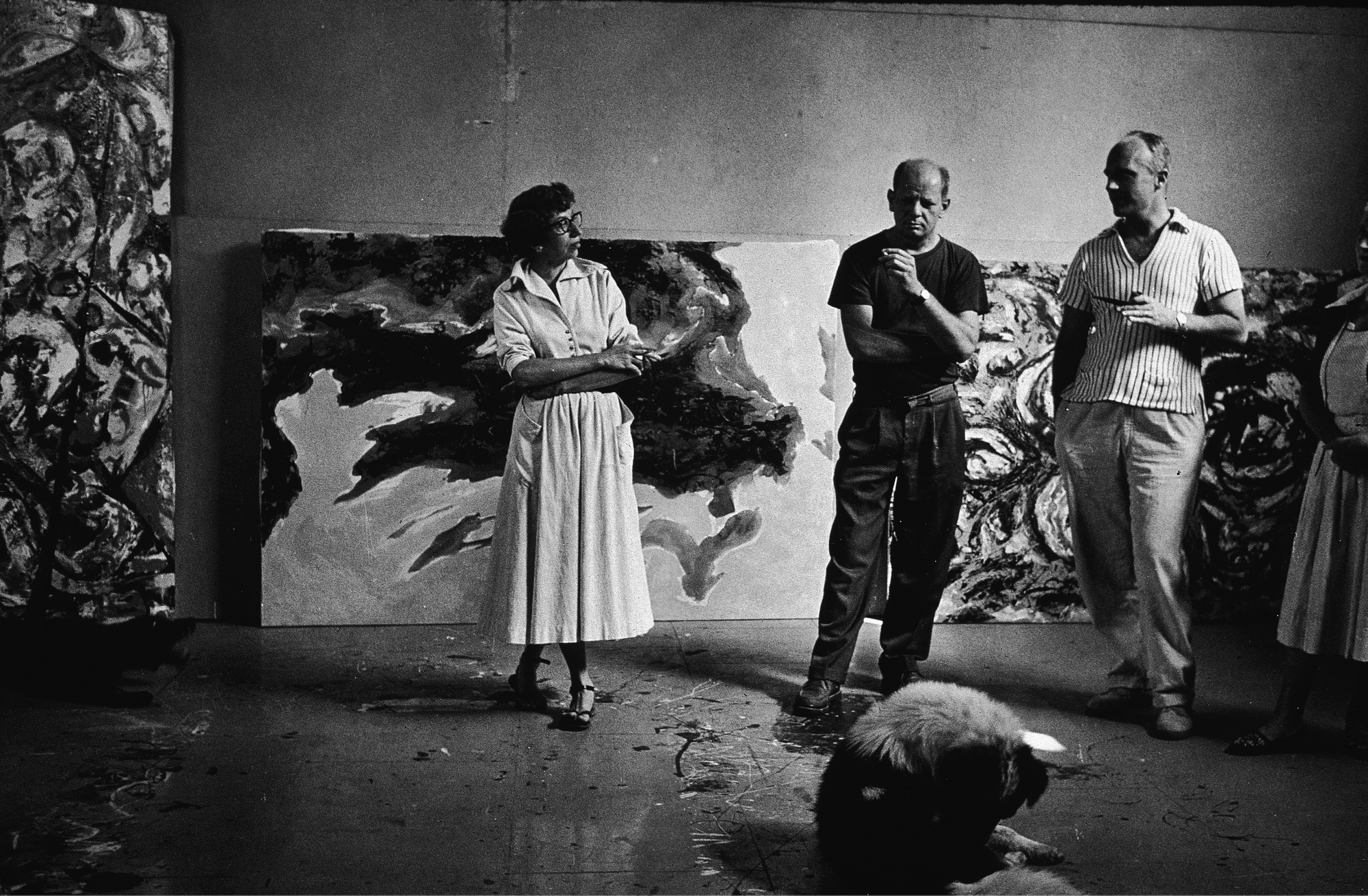
Earlier this year, the Metropolitan Museum of Art announced its forthcoming exhibition Krasner and Pollock: Past Continuous on Instagram, alongside a photograph of the artists by Hans Namuth. Seething, I looked to the comments for affirmation. I didn’t have to scroll for long. “Give her a solo show!”
Months earlier, I had visited the Pollock-Krasner House in Springs, East Hampton, knowing far more about Jackson Pollock than I did Lee Krasner. I am a painter myself, and I had come to Springs in the wreck of yet another failed relationship … with a painter. I thought I already knew Krasner’s story. I thought her story was partly my own.
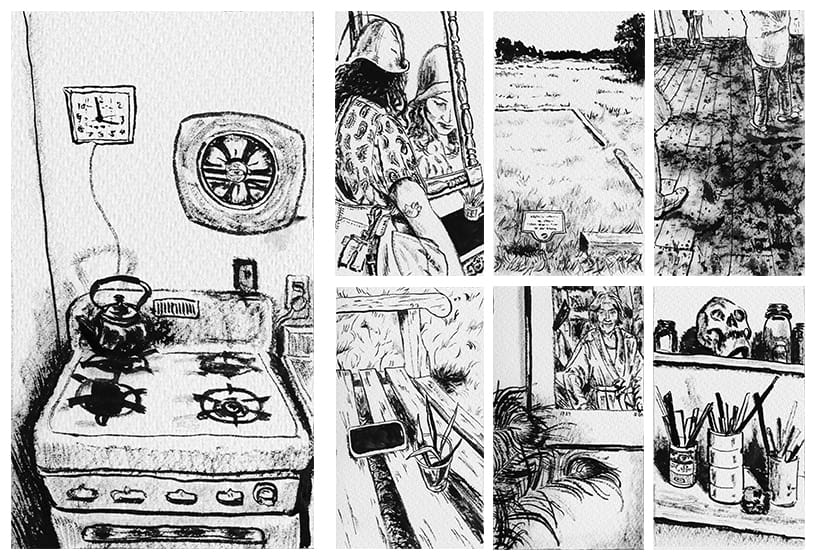
The first stop on the tour was Krasner’s studio: a small second-floor bedroom overlooking Accabonac Creek. The guide told us Pollock would displace Krasner when it was too cold to paint in the barn, and how she would then work by the warmth of the kitchen stove: a woman in the kitchen in the 1950s, working around her husband’s tempestuousness. In the living room, we learned how Krasner navigated gender bias, poverty, and Pollock’s alcoholism while using her own credibility in the art world to promote his paintings, the sales of which supported their frugal life. I mourned all the paintings that could have been had she not been saddled with such a mess.
Then we crossed the lawn to the barn and its famous floor, where Pollock developed his drip technique. But I stared instead at the bare rectangles on the walls, fringed with splattered paint, the spaces where Krasner’s canvases had hung. After Pollock’s death, it took her a year to claim the studio. When she finally did, she painted at a sweeping scale and filled the barn with her own explosive work. As the guide described Krasner’s grief-induced insomnia, I couldn’t reconcile it: Why, when she finally had the studio her spirit and ambition deserved, when she was rid of the weight of that difficult man, was she so bereft?
The tour ended, and I grumbled my way into the gift shop. Still looking for an injustice to protest, I struck up a conversation with an employee about women painters. He placed a large yellow book in my hands, saying, “This is a wonderful introduction, not just to Lee, but to the other women of Abstract Expressionism.” Only then did he introduce himself: Matthew Ward, director of the Pollock-Krasner House. I bought Mary Gabriel’s Ninth Street Women (2018), and we said goodbye.
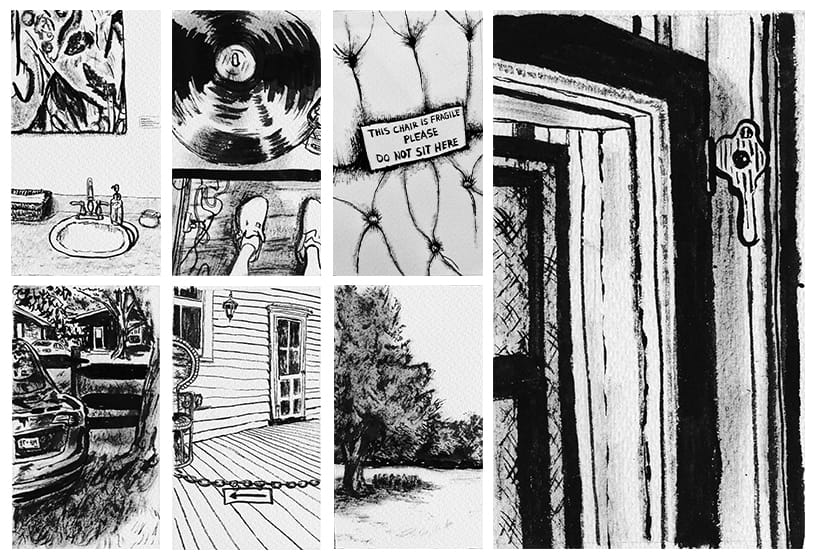
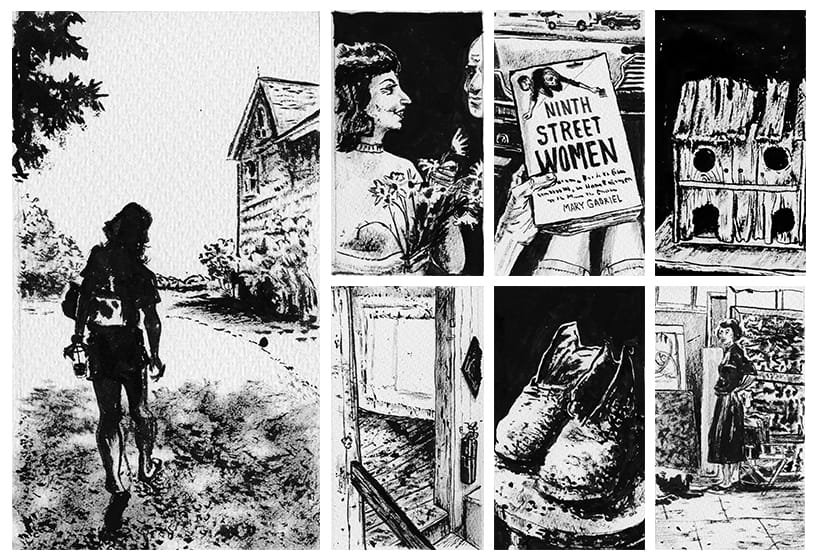
In the following months, I made a series of drawings from my photographs of the house and finished Gabriel’s book. I sent Matt a short video of the work, and he suggested we discuss it over a call. About a week before we spoke, The Met announced the show. I assumed Matt would commiserate with me over the decision to exhibit Krasner alongside Pollock, but he was excited.
“A lot of people don’t know this, but for two of the most avant-garde artists of their time, they led surprisingly domestic lives,” he told me. “They slept in separate beds, and they made appointments to visit each other’s studios. The romance was in the passion for their art, in what the other was doing on canvas.”
Throughout our conversation, I was struck by how often Matt said “they” and “them.” He rarely referred to one artist apart from the other. Every time I tried to steer him toward Krasner’s sacrifices, he returned to their partnership. “He was the face of their business, but she managed everything. I’m not sure Jackson would have kept painting if it weren’t for Lee.”
Then he offered a thought that astonished me. He described Krasner’s habit of destroying and reassembling older paintings that no longer felt true to the artist she had become, and wondered whether she had done something similar with her memories of Pollock. She outlived him by almost three decades. Perhaps she had revised the relationship to align with the Lee Krasner she became.
Still, I couldn’t imagine anyone who knew Krasner’s life intimately thinking The Met’s decision was right. When I googled “contact Mary Gabriel,” the most promising result was an author page on her publisher’s website. I sent my note into the void and began working on a backup plan. Four days later, the author agreed to a Zoom call from her home in Ireland.