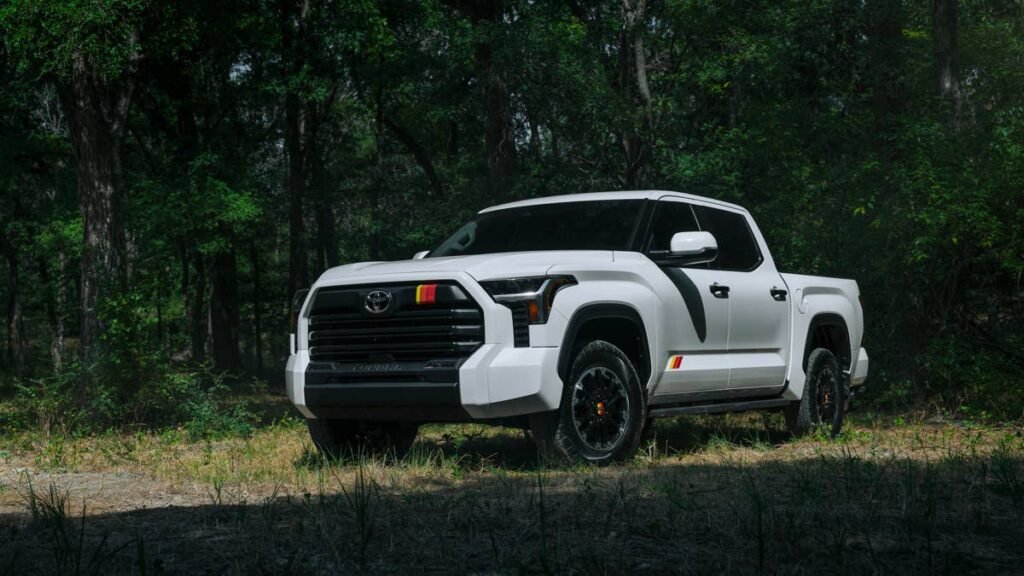
If you walk into a dealership and see a mechanic whacking a brand-new truck engine with a hammer, you might assume they have finally lost their minds. However, this is actually the latest official diagnostic procedure from the Japanese automaker. Dealership technicians are currently utilizing a plastic hammer to determine the fate of the V35A twin-turbo V6 engine found in certain 2022-2024 Tundras. While it looks entirely unhinged, the method prevents perfectly healthy trucks from undergoing massive and unnecessary mechanical heart transplants.
This bizarre directive is tied to an ongoing manufacturing nightmare. The automaker previously issued massive recalls because rogue machining debris was left inside the engine block during production, causing catastrophic failure. Unfortunately for truck owners, this recall expansion recently grew to include the 2024 model year. To manage the immense volume of affected trucks, engineers developed this striking new inspection method to efficiently sort the good engines from the doomed ones.
How The Impact Test Actually Works
The root of the problem lies deep within the block. A recent engine teardown vividly showcased how leftover manufacturing debris destroys the main bearings, leading to knocking, rough idling, and a complete loss of motive power. Toyota claims engines produced later received an improved No. 1 main bearing designed to resist this exact debris, but thousands of trucks remain in the danger zone.
Enter campaign 25TA14, officially known as the V35A Crank Bearing Inspection. According to a report from Pickup Truck + SUV Talk, the process is surprisingly rigorous. Technicians must first change the oil, reach specific operating temperatures, remove accessory belts, and align the crankshaft perfectly. They then mount a sensitive accelerometer directly to the crankshaft bolt. Finally, the mechanic strikes the crankshaft pulley at the 3 o’clock position with a specific plastic hammer.
This impact sends vibrations through the metal, which are captured by the accelerometer and fed into advanced diagnostic software. The computer analyzes the resonance, judges the quality of the strike, and automatically uploads the data to the cloud to return a simple pass or fail grade. Because of this software, the targeted replacement strategy guarantees mechanics are replacing only the specific engine assemblies that genuinely fail the acoustic check.
Method Behind The Madness
Calling it a hammer test makes the entire ordeal sound laughably primitive, but it is rooted in solid science. This technique is formally known as experimental modal analysis. Engineers have used impact sensors for decades to measure how structures respond to a controlled force. By analyzing the natural frequencies and damping within the crankshaft, the software can effectively detect compromised bearings without tearing the entire block apart.
While the engineering principle is an established industry practice, seeing it deployed on the service floor is undeniably unusual. It is a brilliant way to save millions of dollars in warranty claims while quickly diagnosing customer vehicles. Still, peering through the service bay window to watch a mechanic hitting your expensive rig with a hammer is definitely going to spark some highly entertaining conversations at the dealership counter. Until then, try not to panic if you hear rhythmic thumping coming from the garage during your next scheduled maintenance visit.