
In the foldables market, Samsung remains the most well-known globally, but that’s partly because it’s been in the foldables market far longer than most of its competitors. It’s also taken all of that time for Samsung to nearly perfect a flip-style foldable smartphone in its Galaxy Z Flip series. Each year Samsung has been improving the Galaxy Z Flip devices and this year, with the Galaxy Z Flip 8, it has finally, finally addressed my biggest gripe that I have with every foldable: the crease.
Samsung has made other improvements as well, and even though I prefer the book-style foldables to the clamshell-style, I can completely understand the desire for a phone like the Galaxy Z Flip 8. It’s smaller and more compact, and that makes it a perfect fit for those who like smaller devices. That being said, it’s still an expensive device and it has gone up in price this year. Are Samsung’s improvements enough to make it worth spending that additional money? That’s what this review is aiming to answer. So let’s take a closer look and find out if the Galaxy Z Flip 8 is worth your hard-earned money.

The Galaxy Z Flip 8 is what you get when you’ve spent six years fine-tuning and refining the clamshell-style foldable smartphone. Year after year, Samsung has made little tweaks here and there, getting ever closer to the perfect flip foldable. With a brighter and more visually pleasing display, great battery life, and great cameras, the Galaxy Z Flip 8 is the best Flip Samsung has made so far.
Pros
- The display crease is nearly impossible to see when the display is on.
- Better battery life compared to the Galaxy Z Flip 6.
- The Amor Flex Hinge tech makes the display easier to fold and unfold.
- Great performance for games and everyday use.
- Seven years of OS upgrades, feature updates, and security patches.
- Runs on Android 17 with One UI 9 uot of the box.
- Lighter than the Galaxy Z Flip 7 and 0.4mm thinner when unfolded.
- The Flex Window (the cover display) now supports most apps.
Cons
- The price went up $100, making it even more expensive.
- No option for 16GB of RAM.
- No vapor chamber, so the temperatures can get a little warm during intensive activies like video recording or gaming.
- Not a very big upgrade over the Galaxy Z Flip 7.
- No telephoto zoom lens for photography.
Samsung sent us over the Galaxy Z Flip 8 for review. I’ve spent the past couple of weeks using the 256GB model to see how it stacks up to older versions and competitors. This is not a sponsored review, and Samsung did not see this review before publishing.
Samsung Galaxy Z Flip 8 Specs
Samsung Galaxy Z Flip 8 Specs
| Main Display Size | 6.9 Inches |
| Cover Display Size | 4.1 Inches |
| Main Display Resolution | 2,520 x 1,080 |
| Cover Display Resolution | 1,048 x 948 |
| Main Display Refresh Rate | 120Hz |
| Folded Dimensions | 85.7 x 75.4 x 13.1mm |
| Unfolded Dimensions | 166.9 x 75.4 x 6.1mm |
| Weight | 180g |
| Chipset | Qualcomm Snapdragon 8 Elite Gen 5 for Galaxy |
| RAM | 12GB |
| Storage | 256GB/512GB (non-expandable) |
| Main Camera | 50MP (f/1.8 aperture, OIS, Autofocus) |
| Ultrawide Camera | 12MP (f/2.2 aperture, OIS, Autofocus) |
| Main Display Camera | 10MP (f/2.2 aperture) |
| Battery | 4,300mAh |
| Charging | 25W wired charging, 15W wireless, 4.5W Wireless PowerShare (reverse wireless) |
| OS | Android 17 with One UI 9 |
| Network & Connectivity | 5G, LTE, Wi-Fi 7, Wi-Fi Direct, Bluetooth 6.0 |
| Water Resistance | IP48 |
| Colors | Pink, Cream, Graphite, Mint (Samsung Exclusive) |
Samsung Galaxy Z Flip 8 Review: Design and Build Quality
The design of the Galaxy Z Flip 8 hasn’t really changed from the Galaxy Z Flip 7, and some will certainly see that as a negative thing, that Samsung didn’t “innovate enough,” but I see it as Samsung knows what works and what might need the change and what doesn’t, and the design was one of those things that really just didn’t need a change was the design. Though one could say that the design has changed a little by virtue of the slightly slimmer and slightly more lightweight build, and I think this is a good thing to change as the phone becomes even more pocketable than it ever has been. And when I saw the phone is thin when unfolded this year, it really is thin.
Granted, I never really spent much time with the Galaxy Z Flip 7, and the last one I reviewed was the Galaxy Z Flip 6, so I’m comparing the thinness to that, though it is 0.4mm thinner than the Galaxy Z Flip 7. I also recently reviewed the Motorola Razr 2026, and it’s considerably thinner than that phone as well. Specifically, 6.1mm compared to 7.3mm on the Razr 2026. So, yeah, it’s an incredibly thin device when unfolded. As far as weight goes, the Galaxy Z Flip 8 weighs 180g, so it’s 8g lighter than last year’s model, and 8g lighter than the Razr 2026.


The camera bump doesn’t feel too big, but it does have a little more wobble than the Razr 2026. This didn’t bother me much because I almost always had the phone folded with the cover display facing up, which is there the cameras are. Even when the phone was unfolded, however, the phone lays flat enough where it really only wobbles if I were to tap the top left corner of the display. Unless I push right on that point, the wobbliness isn’t an issue, so I see this as a win.
I also really like that the fingerprint sensor is once again placed inside the power button, as this is where my thumb naturally sits on the side of the phone so it’s just extremely simple and convenient to unlock the phone this way. If I had any gripes at all about the design, it would be that my fingers just seem to naturally sit where they’re touching the cover display when the phone is unfolded. So be prepared to wipe off smudges and fingerprints often. Other than that, the design is great. Build quality-wise, this is the most premium-feeling flip foldable I’ve had my hands on.
Samsung Galaxy Z Flip 8 Review: Display
Although not really much has changed from the Galaxy Z Flip 7 display to the Galaxy Z Flip 8, compared to the Galaxy Z Flip 6, which is the last one I used for more than a few minutes, it feels like a lot has changed. For one, the crease is barely noticeable. In fact, I’ve told friends this repeatedly over the past few weeks, that you can’t see the crease unless you either turn the display at a very specific angle where you’re looking at the phone’s USB-C charging port, or unless the display is off. For me personally, this is a major step up because my biggest complaint about foldables every year is the display crease and how it’s still visible. I think this takes away from the user experience and the enjoyment, so it’s nice to see that it’s essentially gone here.
In terms of brightness, Samsung gave things a bump up here. Not by a massive amount, but certainly by a significant amount. The peak brightness now goes up to 3,000 nits compared to last year’s 2,600 nits. This little change makes it easier to see in direct sunlight or brightly-lit rooms.
Unfortunately, the Galaxy Z Flip 8 didn’t get the Flex Titanium Technology for the display like the other two phones did this year, but I have found that the display tends to lay pretty flat anyway so I don’t see this as much of a disappointment. Overall I think both the main display and the cover display are great. The inner display has a higher resolution which is very nice for media entertainment and mobile gaming, while the cover display is just as bright so it’s easy to use outdoors. And while the resolution isn’t as high, it’s not necessary since you’re really not doing anything where a higher resolution would matter.
Samsung Galaxy Z Flip 8 Review: Performance
Samsung made the decision to move back to Qualcomm for the North American version of this phone, swapping from the Exynos chip it used on the previous model to the Snapdragon 8 Elite Gen 5 for Galaxy. This is the same chip you’ll find in the Galaxy Z Fold 8 Ultra and the Galaxy Z Fold 8, and it’s a chip that really puts in the work. That added performance power ultimately means it ends up with a little higher temperatures over sustained periods, but not by much and certainly nowhere near a point where the phone becomes uncomfortable to hold.
That being said, for everyday basic tasks or use, like scrolling through Reddit, watching a YouTube video, checking emails or sending messages in Discord or other communication apps, there’s not really a noticeable change for me even compared to my normal daily phone, the Pixel 10 Pro. Where the performance really makes a difference is when multi-tasking and when playing mobile games. This is where, for me, the Snapdragon 8 Elite Gen 5 truly shines.
Speaking of games, I’ve been playing a lot of Genshin Impact and Diablo Immortal, two games that really do tend to tax the resources of a phone quite a bit, and the Snapdragon 8 Elite Gen 5 kind of just shrugged them both off and went about its business. In other words, you can play any mobile game you want on this device and not have problems with graphics or frame rate. The phone only comes with 12GB of RAM and I think ultimately, this is fine for most people, and although the phone didn’t struggle at all in anything I did, I still think that 16GB would have suited it better, especially for the $100 price bump.
Benchmarks
In addition to real-world use, we also like to put the phone through benchmark tests to see how it scores on paper, and we put it through three different benchmarks. We use Geekbench 7, 3DMark’s Wildlife Extreme Stress Test, and AnTuTu benchmark. We also run benchmarks for thermals, which is just testing the temperature after a few different activities, and then we do benchmarks for battery life, but we’ll get into that in the specific battery life section.
So let’s get into the benchmarks and start with the actual benchmark testing apps, beginning with Geekbench. We used to use Geekbench 6, but Geekbench 7 is out now and we have moved to using that instead.
| Device | Geekbench 7 CPU Single-Core | Geekbench 7 CPU Multi-Core | Geekbench 7 GPU |
|---|---|---|---|
| Samsung Galaxy Z Flip 8 | 3,028 | 8,262 | 13,650 |
| Samsung Galaxy Z Fold 8 | 3,049 | 9,991 | 17,574 |
| Samsung Galaxy Z Fold 8 Ultra | 2,615 | 7,507 | 15,719 |
| Motorola Razr 2026 | 1,108 | 3,268 | 3,167 |
| Motorola Razr Ultra 2026 | 2,788 | 8,443 | 19,253 |
As you can see, the Galaxy Z Flip 8 performed pretty well on paper and it even beat out the Galaxy Z Fold 8 Ultra in both the single-core and multi-core CPU scores.
Next we ran the Galaxy Z Flip 8 through AnTuTu, and this tests the phone complete including CPU and GPU tasks. It also tests out memory and the UX.
| Device | AnTuTu Score |
|---|---|
| Samsung Galaxy Z Flip 8 | 2,275,786 |
| Samsung Galaxy Z Fold 8 | 3,476,324 |
| Samsung Galaxy Z Fold 8 Ultra | 3,453,998 |
| Motorola Razr 2026 | 1,030,712 |
| Motorola Razr Ultra 2026 | 3,053,889 |
Overall, the Galaxy Z Flip 8 scored pretty well in AnTuTu, though it did score the lowest out of Samsung’s foldables this year.
Lastly, we run the phones we review through 3DMark’s Wildlife Extreme Stress Test. This is a test that mainly focuses on the GPU and memory, and it’s a great way to see how the phone might perform in games that require a lot of device resources and powerful performance.
- Best Loop: 3,028
- Lowest Loop: 8,262
- Stability: 35.9%
Thermals
OK, so performance is pretty good, but what about the thermals? Thermals can be just as important as performance because it’ll somewhat determine how well your device can run at its peak performance sustainably. To test the thermals we check the temperature of the device after three different activities. First, we check out the temperature after the 3DMark Wildlife Extreme Stress Test, because this test is meant to push the device to its absolute limits. Therefore, seeing its temperatures afterward is a good indicator of what it’ll be like during the most resource-intensive activities.
We also check the temperature after 10 minutes of video recording at 4K and 60 frames per second, and after at least an hour’s worth of gameplay in a game like Genshin Impact, because it’s a huge game and one of the most resource-intensive games available on Android.
| Device | 3DMark Wildlife Extreme Stress Test | Genshin Impact | Camera Recording – 10 Mins @4K60 |
|---|---|---|---|
| Samsung Galaxy Z Flip 8 | 110.8 | 117.5 | 104.3 |
| Samsung Galaxy Z Fold 8 | 114.1 | 95.6 | 98.4 |
| Samsung Galaxy Z Fold 8 Ultra | 113.1 | 96.2 | 98.6 |
| Motorola Razr 2026 | 96 | 95.3 | 98.3 |
So, for the most part the temperatures are pretty good. They’re a little lower than the Galaxy Z Fold 8 and Fold 8 Ultra after the 3DMark test, but higher than both devices in the Genshin and 4K60 recording tests. Overall, not bad. The device isn’t going to get extremely hot to the touch and make it so you can’t hold the device. It will get warm, but in my testing it was never so warm that it made my skin irritated.
Samsung Galaxy Z Flip 8 Review: Battery Life and Charging
While we never ended up being able to review the Galaxy Z Flip 7, we did review the Galaxy Z Fold 7, and I reviewed the Galaxy Z Flip 6, and Samsung has definitely improved the battery life over the Flip 6, and it mostly rivals the Galaxy Z Fold 7 while falling just a bit short of the Galaxy Z Fold 8 and Galaxy Z Fold 8 Ultra by a few hours.

With the Galaxy Z Flip 6, Samsung had a 3,700mAh battery inside. This year, the Galaxy Z Flip 8 has a 4,300mAh battery inside which is the same as last year. Samsung’s claim is that it can last for up to 31 hours on a single charge with average daily use. I’d say that’s probably accurate as it gets close to what I was getting during our testing. At the end of the day on average I would end the day with about 45% battery left, with around 7 hours of screen-on time. That’s pretty good I’d say and would easily last through the end of the day and beyond with how I normally use devices.
Now this isn’t an upgrade over last year’s battery but it is an upgrade, by far, over the battery life of the last flip phone I tested, which is the Razr 2026, and a noticeable upgrade over the Galaxy Z Flip 6. I think for most people, the battery life on this device is going to be more than enough.
Benchmarks
Remember earlier when I said we run benchmarks for the battery life and temperatures? Well now we’re gonna talk about the benchmarking we do for battery life and charging. Our testing for the battery life rundown is just to pull up a 24-hour fireplace video in 4K, and letting that run until the battery drains down to 1%, and we measure that time.
For charging, we simply plug the device in when it hits 1%, and we time how long it takes to get to 100%. Pretty simple stuff. Now the Galaxy Z Flip 8 will only charge at 25W wired, which isn’t that fast compared t some devices, but surprisingly it didn’t take too long to charge this device up. You can see the figures for everything in the table below.
| Device | Battery Life | Charging |
|---|---|---|
| Samsung Galaxy Z Flip 8 | 20:30:58 | 1:19:09 |
| Samsung Galaxy Z Fold 8 | 23:01:34 | 1:06:34 |
| Samsung Galaxy Z Fold 8 Ultra | 25:12:36 | 1:01:12 |
| Motorola Razr 2026 | 12:32:30 | 1:15:03 |
| Motorola Razr Ultra 2026 | 19:23:09 | 0:56:23 |
As you can see, battery life and charging speeds are good. I wouldn’t say the best, but far from being anywhere near the bottom, and I think it will easily last most users who go for this type of phone until they’re able to plug it in.
Samsung Galaxy Z Flip 8 Review: Software
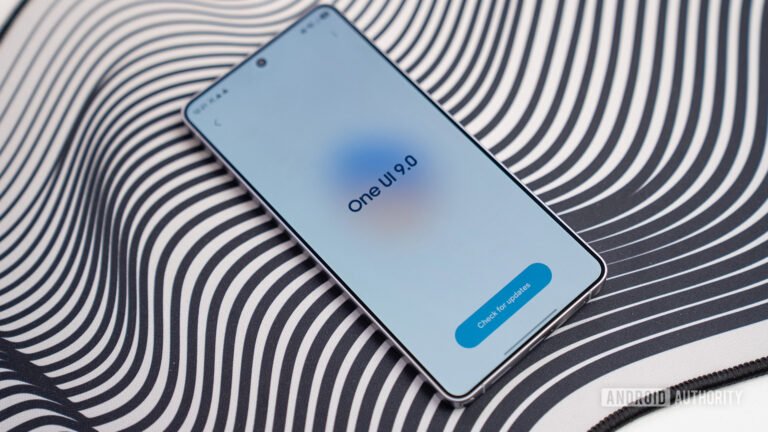
If you’re looking for a HUGE amount of changes to the software with the Galaxy Z Flip 8, you aren’t going to get that if you’re coming from the Galaxy Z Flip 7, because there isn’t a huge difference between Android 16 with One UI 8, and Android 17 with One UI 9. However, that doesn’t mean that there aren’t any changes at all. Samsung knew where to play the effort in the software department, and in this case, it’s with the changes that the company made to the FlexWindow feature.
There are some other nice improvements, too, like with some new AI tools, better integration with Gemini, and things like the Now Brief and Now Nudge features. While those aren’t entirely new to Samsung devices, they have been slightly improved.

Now Brief gives you a bit more detail and better insight than before, and the Now Nudge feature can recommend you do certain things when it recognizes they might need attention. Such as buying movie tickets or checking times when you get a text message asking if you wanted to go see a movie.
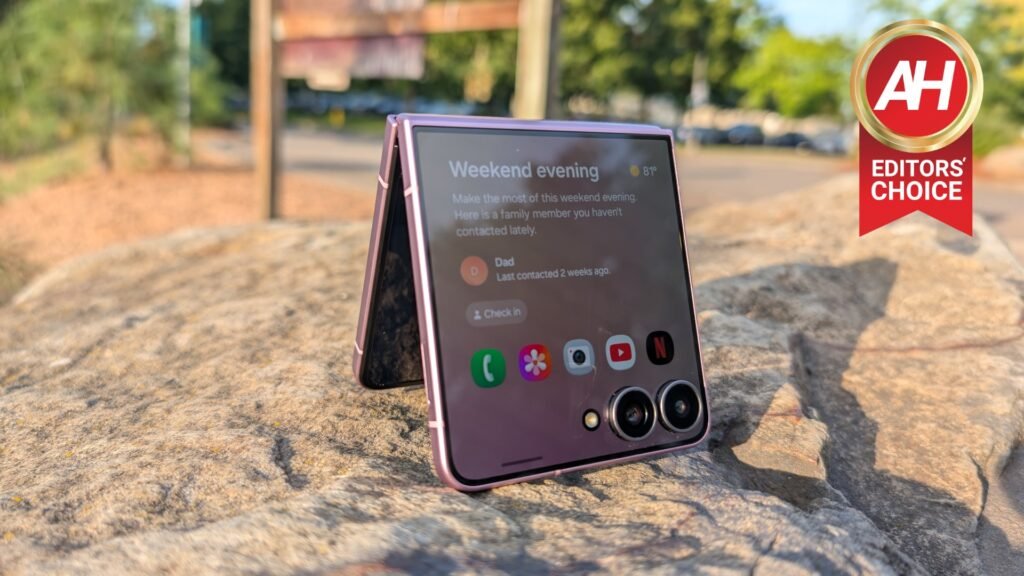
As for the FlexWindow, this is arguably the biggest part of the software that’s been improved. You used to not be allowed to use more than a few communication apps on the cover display. Now, you can do quite a bit more, even watch YouTube videos or pop open a Netflix movie. It’s also possible to use the calculator or launch the voice recorder, take some notes, and check your metrics in the Samsung Health app. It’s pretty varied. Even if you can’t use every single app on the cover display, you can use considerably more than you used to be able to, and I found myself bringing up music to stream from YouTube using the FlexWindow quite often since it was added as a compatible app. I do wish it could more, but this is a pretty good start.
Samsung Galaxy Z Flip 8 Review: Camera
Some will argue that when it comes to a foldable you’re going to end up with lesser quality images than something like the main bar-style flagships, for example, the Galaxy S26 Plus or the Galaxy S26 base model compared to the Galaxy Z Flip 8. That might be true to an extent, but from my experience having used both the Galaxy S26 and Galaxy S26 Plus, and now the Galaxy Z Flip 8, the cameras aren’t that different and the image quality is really just about the same, if not a little better now that Samsung has had several months to make any software improvements it might have needed.
And I’m willing to bet that most people who buy this phone are going to think that the camera produces images with pretty good quality. Only the really big camera buffs, those who continually test the world best phone cameras, are going to pay any attention to the minor details. I’m not saying these are the best phone pictures ever, just that they’re actually pretty decent and I think they will serve most people’s needs.


The hardware is basically the same here from the Galaxy S26 cameras, so there’s not really a change in the hardware, but the software has had some tweaks. Obviously, the feature where you can operate the camera in Flex Mode is back and that lets you use the phone like a small digital camcorder. It’s actually a much more convenient way to record videos, because it frees up a hand, and you can access the zoom on the UI with your thumb.
Interestingly enough, Samsung has eased up a bit on the saturation it pushes into its photos, resulting in a cleaner, slightly more realistic image with better color accuracy. With most of the Samsung phones I’ve tested in the past few years, images have come out with unnatural colors that feel like they were dialed up, and I noticed less of that here. I was also impressed with how much detail came through in most of the picture as well. When it comes down to it, the camera on the Galaxy Z Flip 8 is a solid camera. You get loads of detail with pretty accurate colors that’s fit the needs of the majority of users.
Should you buy the Samsung Galaxy Z Flip 8?
At $100 more this year, it’s going to be an even tougher sell to get someone to go for the Galaxy Z Flip 8 over the Galaxy Z Flip 7, or the Motorola Razr 2026. There’s more to choose from in the clamshell foldable market these days, and Samsung has to really stand out to capture the consumer’s attention, especially when the 256GB version is $1,199.99. That being said, the Flip 8 has arguably better performance than the Flip 7, and unquestioningly better performance than the Razr 2026. So if you’re looking at things from a performance perspective, the Galaxy Z Flip 8 wins out here.
That being said, the Razr 2026 is only $799.99. Several hundred less than the Flip 8, for a mostly similar experience, aside from performance and battery life. Not to mention better color options. I think it really comes down to what you want most out of a clamshell foldable. If performance, slightly better cameras, and a better software experience are key elements for you, then the Galaxy Z Flip 8 is the way to go. If you’re more concerned with the price, it’s really hard to recommend anything other than the Razr 2026 as this is was a solid phone too, and you just save a lot more money by giving up a few things.
If you’re coming from a Galaxy Z Flip 7, I don’t think I would recommend this as an upgrade. The Flip 7 is already very similar and there just aren’t that many improvements to warrant spending the money. If you’re using an older phone, however, and the price bump doesn’t bother you, I’d say it’s worth it.
The post Samsung Galaxy Z Flip 8 Review: I love this pocket-friendly foldable appeared first on Android Headlines.