SRT Is Back, And It Already Has A New Trick
Stellantis didn’t waste a second after reviving the Street and Racing Technology (SRT) badge. The performance crew is already churning out 900-horsepower Ram pickups – take your pick between a rody street truck wler or an off-road beast.
Now SRT is rolling out eBoost Air – and no, this is not a collaboration between Adidas and Nike, but rather an electric compressor setup aimed squarely at the age-old turbo lag gripe. Instead of twiddling your thumbs while exhaust gases spool up those big turbos, eBoost Air jumps in with an electric assist right off the line.
If that idea sounds familiar, it’s because Porsche has already adopted a similar (but not identical) philosophy with its latest Porsche 911 T-Hybrid models.
How eBoost Air Works
Old-school turbos need exhaust gases to get spinning, which is fine for efficiency but means you’re stuck with that annoying pause at low revs. The bigger the turbo, the longer you wait for the fun to start.
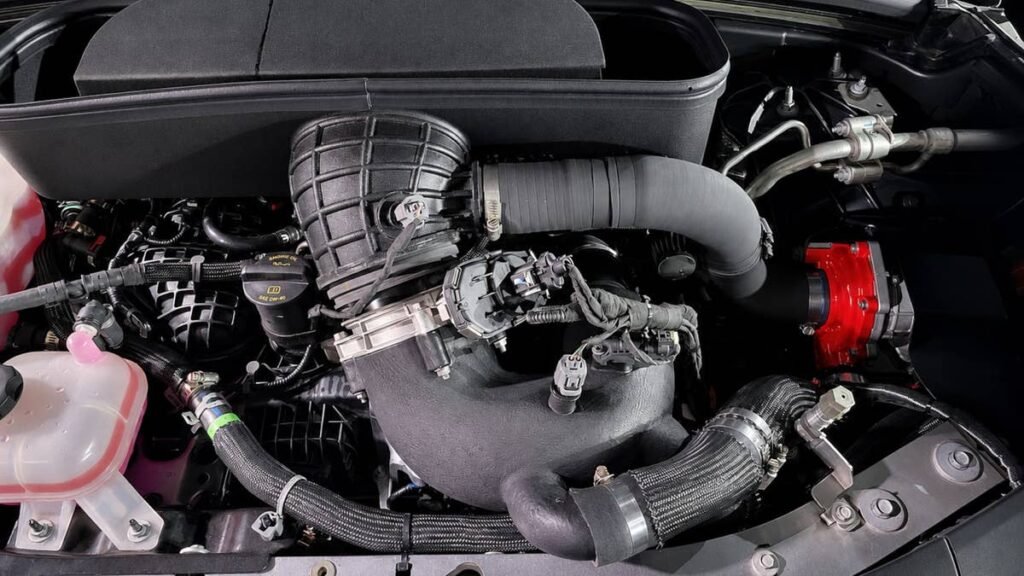
SRT’s fix? Bolt an electric compressor in front of the regular turbos. Stomp the gas and, if the turbos aren’t awake yet, a smart bypass shoves air through the electric compressor instead. That means boost builds fast, and the turbos get spinning quicker than exhaust alone could ever manage.
Once the revs climb and exhaust flow is up to speed, the system flips back to the usual route. The idea is that you get punchy low-end grunt with zero lag, but still keep the big-turbo power rush up top. Stellantis says the end result is a wider powerband and throttle response that feels more like a supercharged V8, all while hanging onto the efficiency perks of turbocharging.
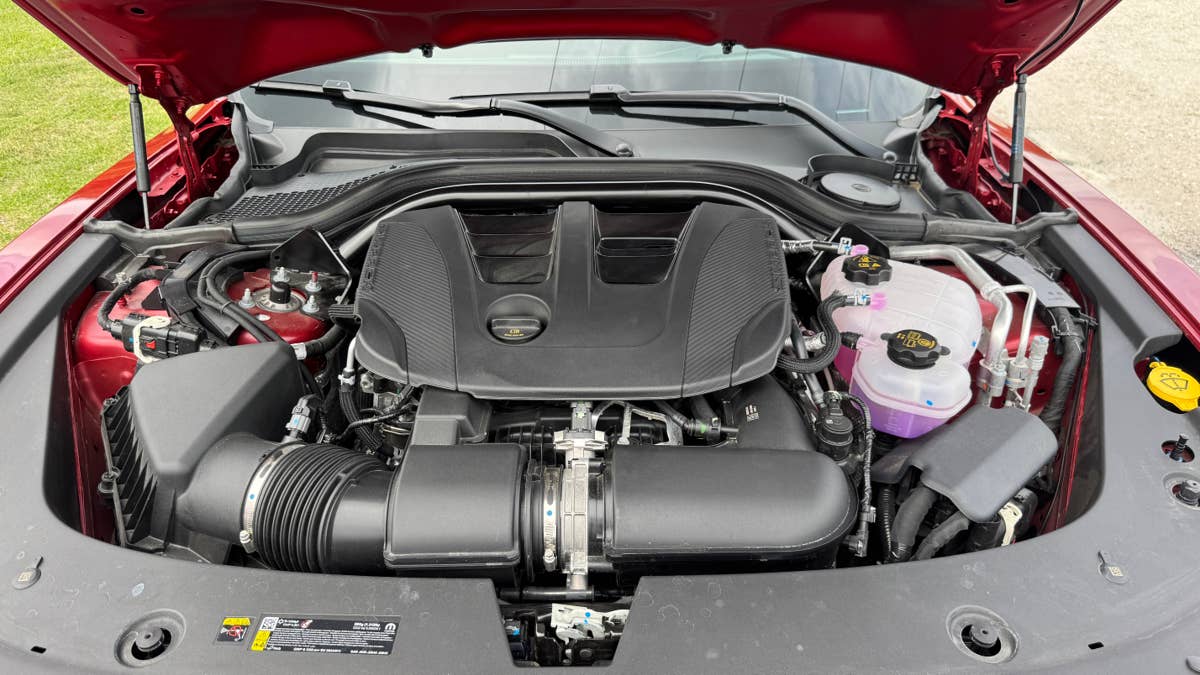
It’s still just a fast-tracked proof of concept for now, but it shows SRT is thinking beyond just piling on more horsepower. The system is currently strapped to a prototype 3.0-liter Hurricane high-output inline-six.
Stellantis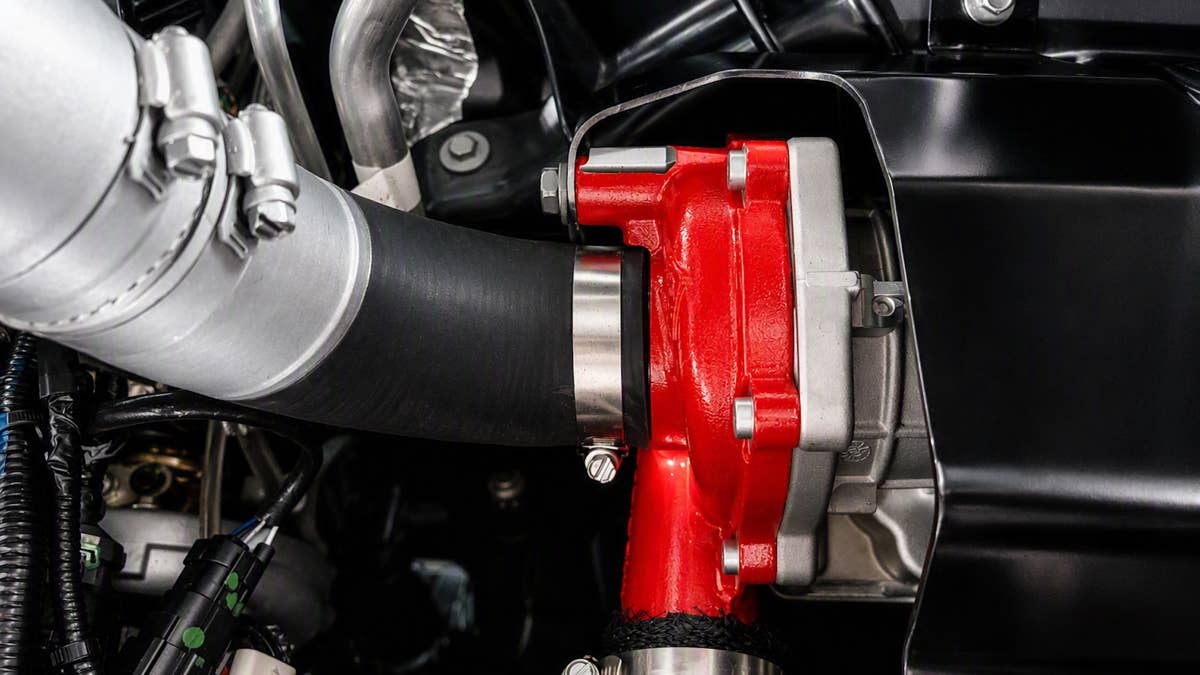
How It Differs From Porsche’s T-Hybrid
Both SRT’s eBoost Air and Porsche’s T-Hybrid setups are gunning for the same thing: killing turbo lag. But they take very different routes to get there.
Porsche’s T-Hybrid system centers around an electric exhaust turbocharger, or eTurbo. Instead of using a separate electric compressor ahead of the turbo, Porsche integrates an electric motor directly into the turbocharger itself. That motor can instantly spin the turbo regardless of engine speed, dramatically shortening spool-up time while also generating electrical energy that can either power the transmission-mounted electric motor or recharge the compact high-voltage battery.
T-Hybrid is also much more than an anti-lag solution. It combines the electrically assisted turbocharger with a lightweight 400-volt battery, a compact electric motor integrated into the PDK transmission, power electronics, and a newly developed boxer engine.
SRT’s eBoost Air, on the other hand, is all about sharpening turbo response – no hybrid drive, no electric motors turning the wheels. It’s a simpler fix for cars that still want to keep things old-school under the hood. Will it make it to production? That’s anyone’s guess, but if it does, future SRTs could finally deliver that instant punch without giving up the big-turbo fireworks up top.
Jared Rosenholtz/Autoblog