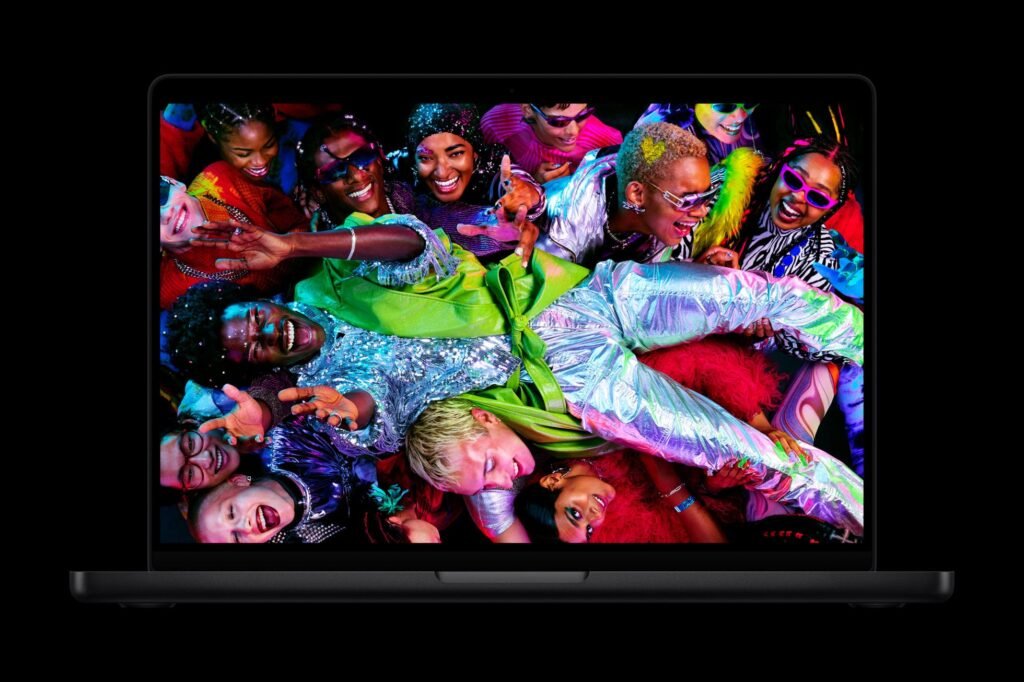

When Apple brought tandem OLED displays to the iPad Pro, the tech world praised the incredible brightness and deep contrast levels. However, screen technology never sits still for long. As the company prepares to transition its laptop and desktop lines to organic light-emitting diodes, a new industry report suggests that the next big screen upgrade will focus on pure, unadulterated color accuracy. More specifically, Apple plans to integrate next-generation OLED panels capable of hitting an impressive 95% coverage of the BT.2020 color gamut.
The latest information comes from research firm TrendForce. According to the leak, the company plans a gradual rollout across future MacBook Pro, iPad Pro, and iMac lines.
Understanding the color jump
To appreciate this shift, it helps to understand how digital color spaces work. Currently, premium Apple screens utilize the DCI-P3 standard. It’s a fantastic color space, and it glides through HDR video and professional photo editing. It offers way more vibrant tones than older monitors.
However, BT.2020 is an entirely different class. Originally developed for Ultra HD 4K and 8K television broadcasting, it encompasses a significantly wider range of reproducible colors. No commercial consumer OLED panel on the market can hit 100% of this standard today. If Apple manages to successfully deploy panels achieving 95% coverage, it will mark a major industry milestone. While everyday users browsing the web might not spot a night-and-day difference, professional filmmakers, colorists, and HDR editors will gain an unprecedented level of precision.
The secret is in the chemistry
Achieving this level of color fidelity requires a fundamental shift in how individual pixels generate light. Manufacturers cannot simply crank up the brightness; they need to alter the actual emissive materials inside the panel.
The TrendForce documentation (via 9to5Mac) highlights that the industry is moving toward advanced chemical architectures like MR-TADF and hyperfluorescence. Instead of a complete hardware overhaul, these complex molecular systems allow pixels to emit incredibly narrow, pure wavelengths of light. The beautiful byproduct of this engineering is efficiency. These advanced materials produce richer reds, deeper greens, and vibrant blues while simultaneously preserving overall panel lifespan and reducing battery drain.
This transition is already causing display giants like Samsung Display and various Chinese panel manufacturers to completely restructure their supply chains. The competitive race is officially shifting away from making screens thinner or brighter, turning instead toward a delicate balance of cost, manufacturability, and molecular IP.
As expected, Apple keeps its official display roadmaps tightly guarded. However, industry tracking suggests we could see the first OLED MacBook Pros arrive between late 2026 and early 2027.
The Android Headlines Take
Perhaps you’re wondering, should I wait for it? In the current scenario where component prices increase significantly every so often due to data center demand, the answer depends entirely on your needs.
If you’re a professional in areas like coding or writing, the implementation of the BT.2020 standard won’t be particularly impactful on your daily workflow. So, if you’re thinking of buying a MacBook now, it would be best to do so before they’re hit by further price increases.
On the other hand, if you’re a professional in media editing and content creation, the improvement could be beneficial for you. In any case, the current panels in MacBooks are good enough to handle these tasks without problems. Still, waiting for future models with BT.2020 support isn’t a bad idea at all—especially if you already have a relatively recent MacBook.
The post Apple Eyes a Massive Color Accuracy Upgrade for Future OLED Macs appeared first on Android Headlines.