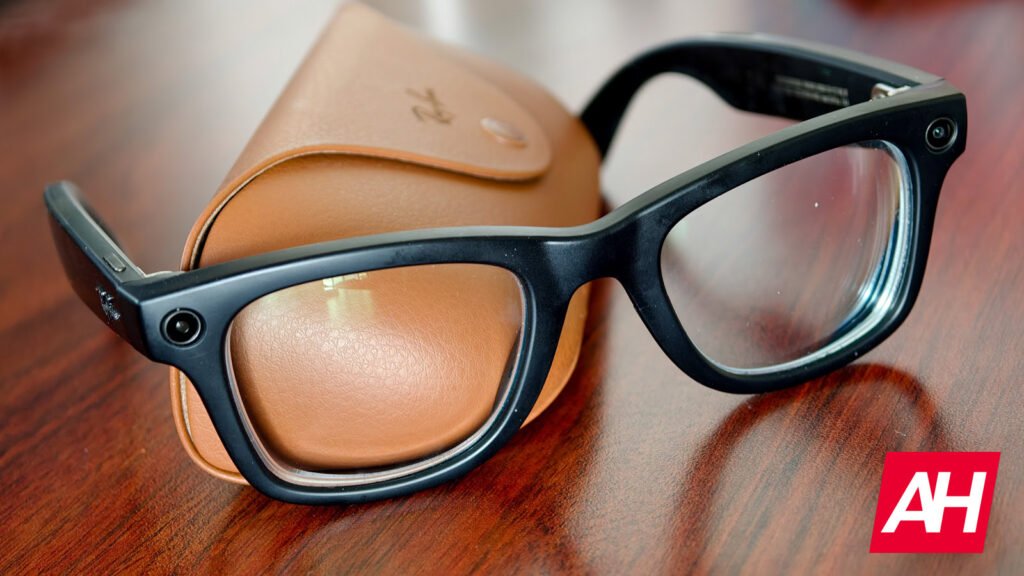

Imagine walking down the street wearing smart glasses that can instantly scan and identify every face in the crowd using the exact same software trusted by the FBI and the U.S. military. As it turns out, tech giant Meta has been quietly exploring that exact reality behind closed doors. According to a recent report, Meta secretly licensed advanced facial recognition software to prototype features for its Ray-Ban and Oakley smart glasses.
However, there’s a twist behind this. The Wired report states that the technology came directly from Rank One Computing, a Denver-based firm that generates roughly 80% of its revenue from high-level government contracts, including police departments and elite military divisions.
A digital backdoor inside 50 million phones
According to uncovered licensing documents, Meta acquired access to Rank One’s core facial recognition tools alongside its specialized “liveness detection” feature. This system effectively allows a camera to determine if it is looking at a real, breathing human being rather than a static photograph or a mask.
Meta never actually activated these tools for the public. Still, software experts found remnants of Rank One’s integration code sitting completely dormant inside the standard Meta AI companion app. The code, which has already shipped out to more than 50 million smartphones worldwide, lived side-by-side with an unreleased, proprietary face-scanning feature that Meta internally named “NameTag.”
Once the investigation brought these hidden frameworks to light, Meta moved at lightning speed. The firm completely erased the dormant code strings on June 5—exactly one day after the initial security leaks broke.
Where consumer tech meets government spying
Rank One Computing isn’t a typical Silicon Valley startup. The company’s leadership ranks are packed with former heavyweights from the intelligence community, including its CEO, who previously managed the FBI’s biometric database division. Its board features former high-ranking officials from the CIA, FBI, and the Pentagon.
Furthermore, Rank One provides biometric tracking infrastructure to the U.S. Marshals Service, the Naval Criminal Investigative Service, and the U.S. Special Operations Command—the latter of which funded research to identify human faces from a staggering distance of up to one kilometer away.
When questioned about the corporate partnership, Meta declined to clarify why it sought out the surveillance vendor, when the agreement initiated, or whether the business relationship remains active. Rank One similarly declined to comment on the matter.
The blurry line of consumer privacy
History shows that military innovations frequently trickle down into consumer goods. This even includes the foundational technology behind the internet itself. However, civil rights groups are raising major red flags. Convincing regular consumers that camera-equipped glasses won’t compromise public anonymity becomes an uphill battle when the underlying algorithms are pulled straight from police databases.
Compounding the anxiety is a total lack of regulatory oversight. Currently, almost no federal laws govern how consumer tech companies deploy biometric scanning. Without clear boundary lines, the transition from simple wearable hardware to mobile surveillance infrastructure remains incredibly easy to cross.
The post Meta Under Fire After Secretly Testing Military-Grade Facial Recognition Tech appeared first on Android Headlines.