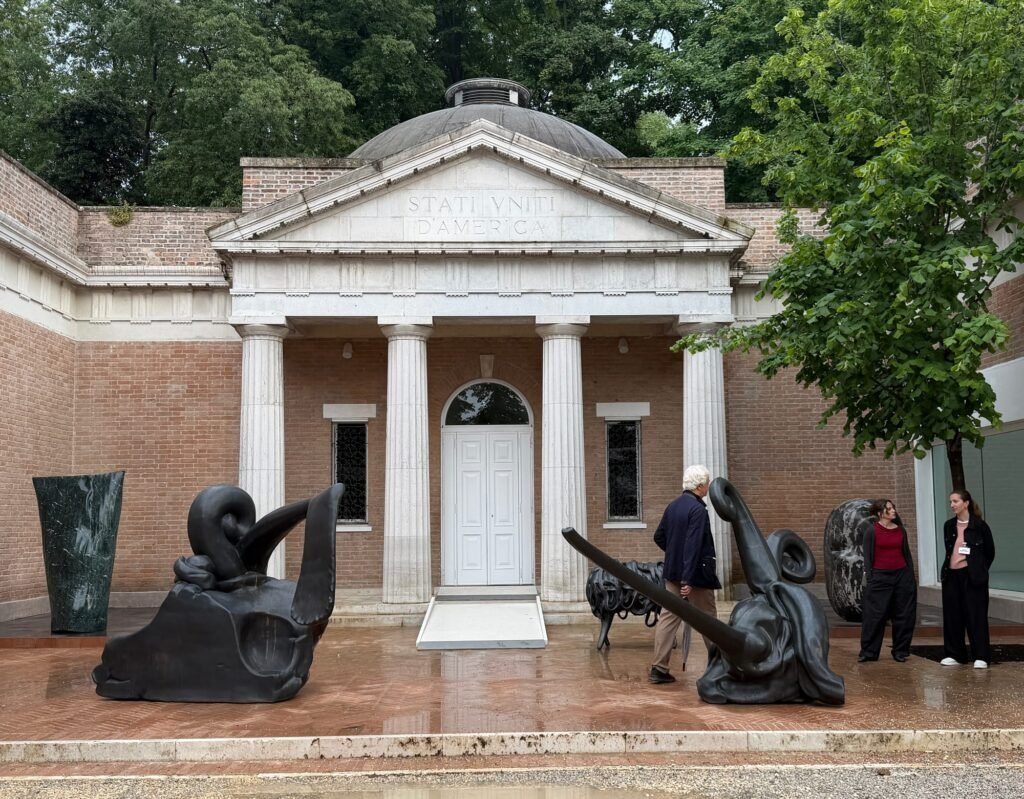
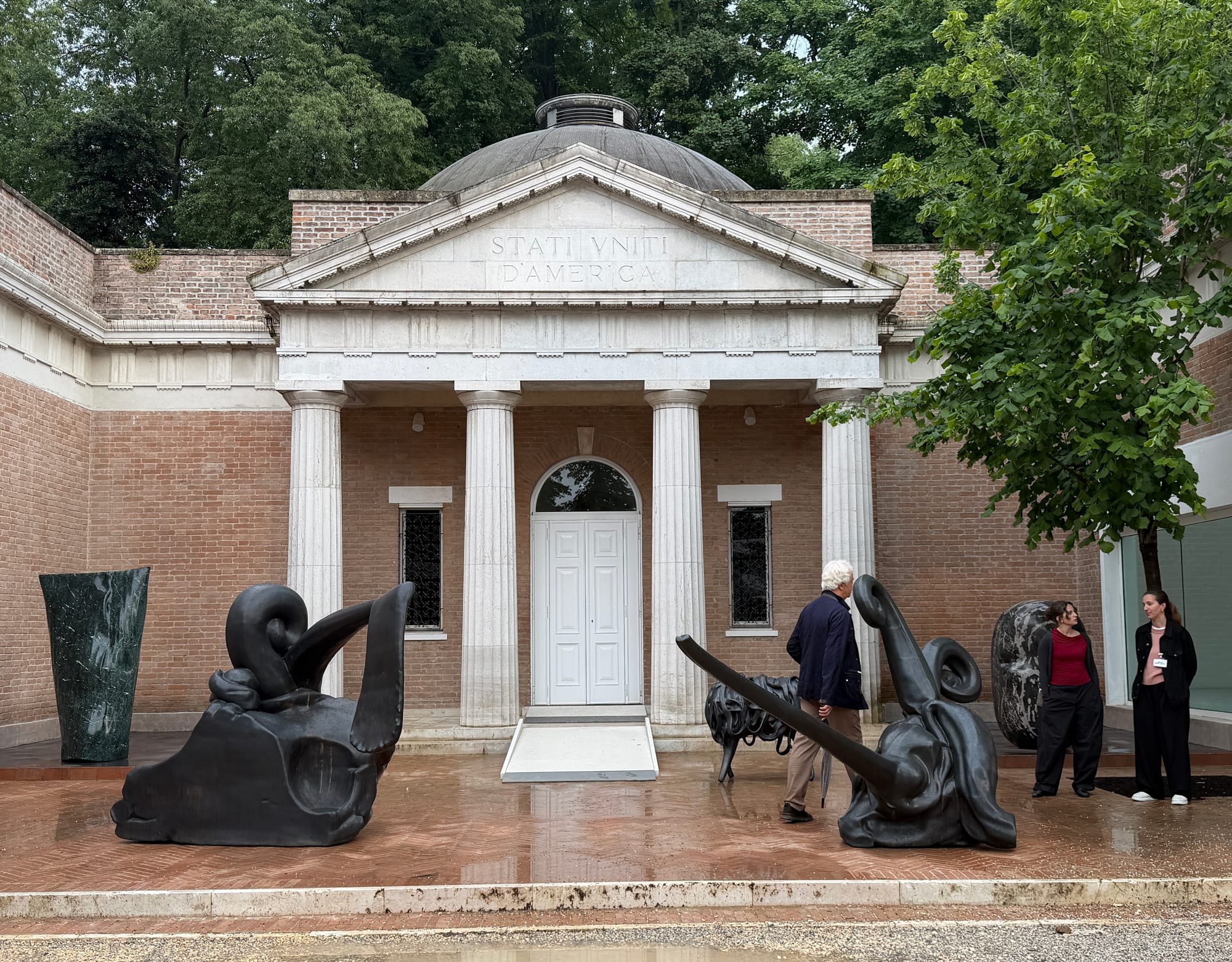
VENICE — Alma Allen’s United States pavilion at the Venice Biennale says nothing, does nothing, means nothing, and goes nowhere.
Curated by Jeffrey Uslip, who resigned from a job in 2016 after accusations of “racial insensitivity,” the show is titled Call Me the Breeze. That’s also the title of a 1974 Lynyrd Skynyrd song.
A breeze is something refreshing, nourishing, mood-altering. However, I left Allen’s pavilion feeling the same as I did before. Nothing.
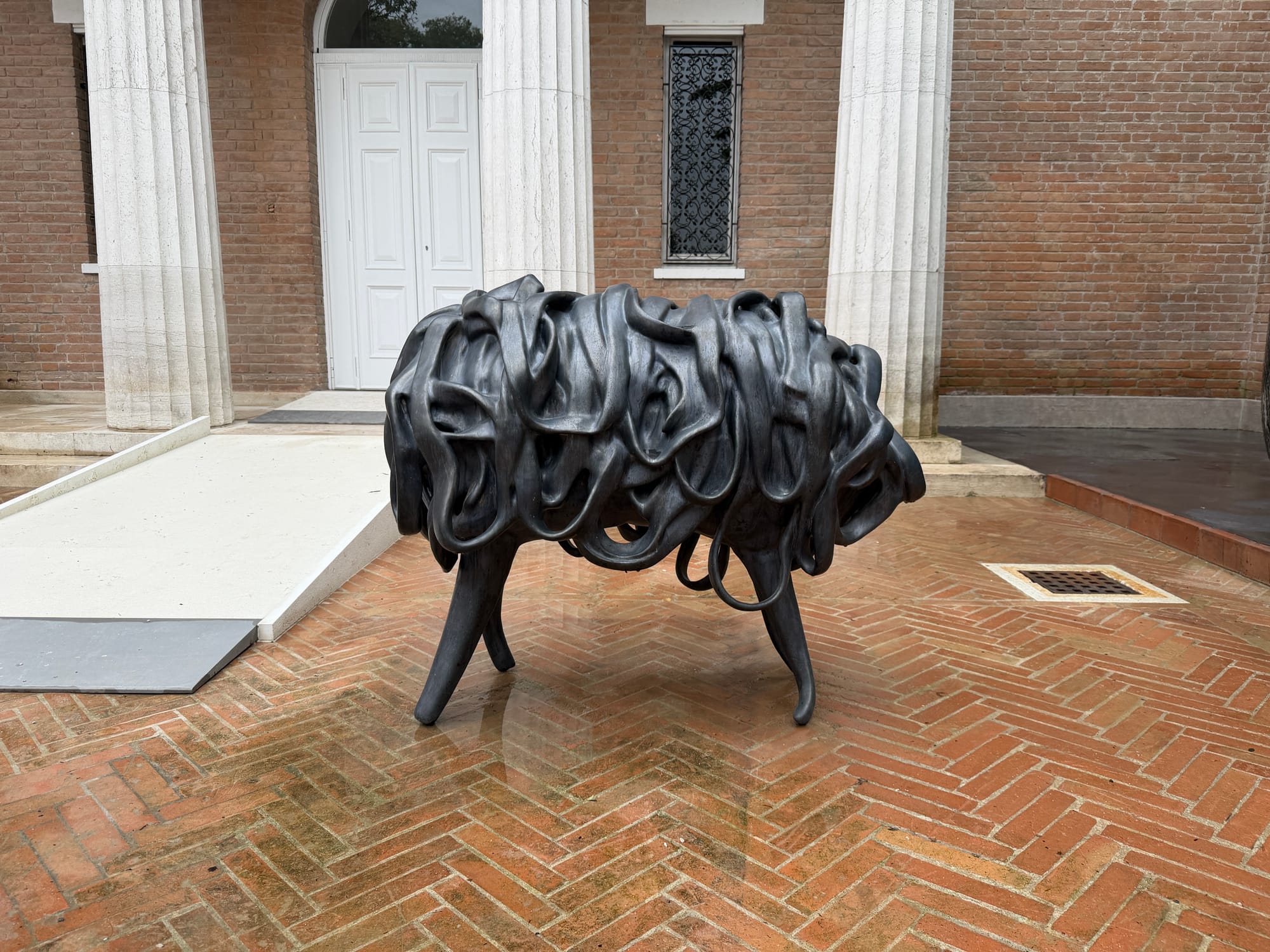
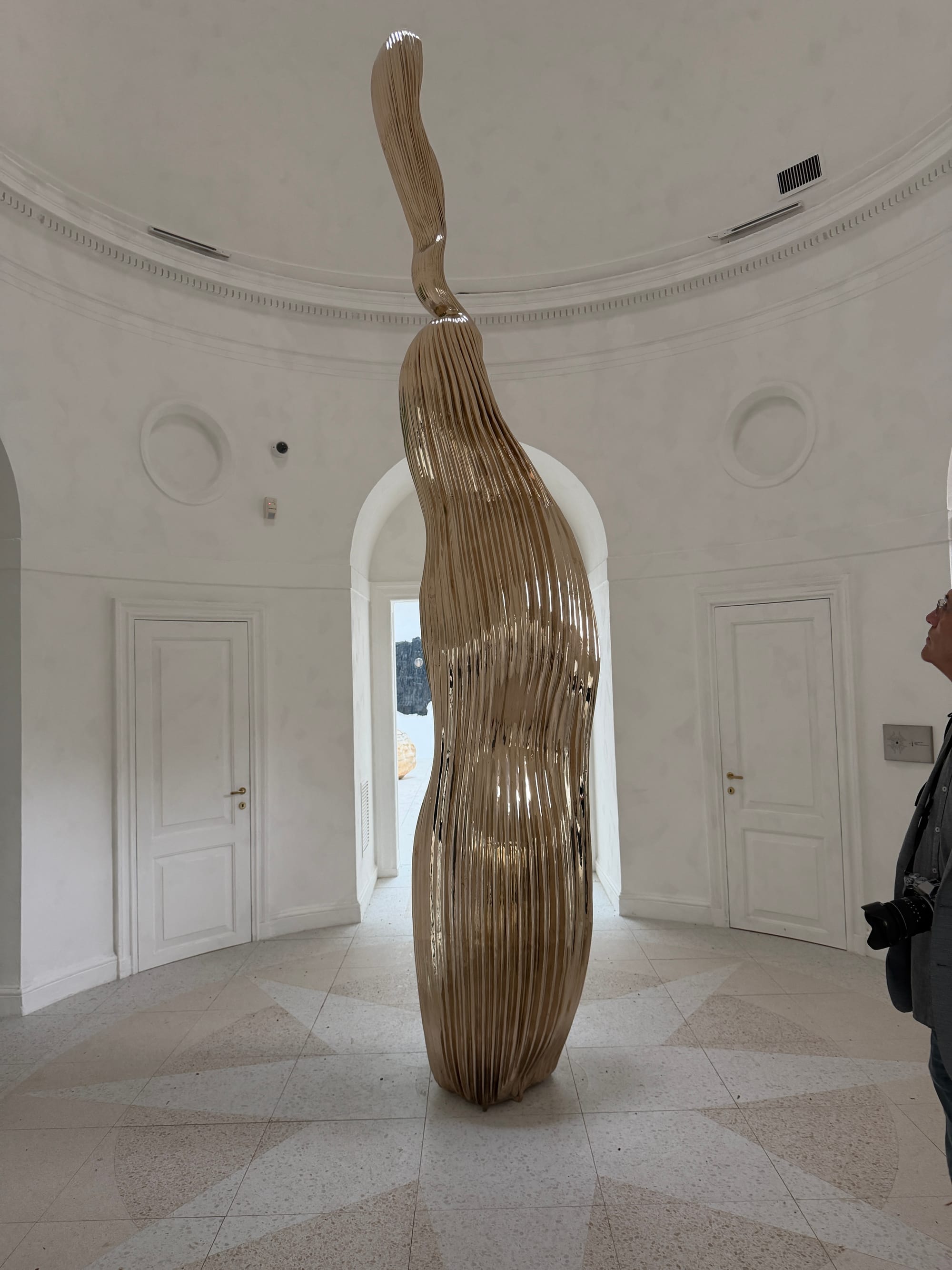
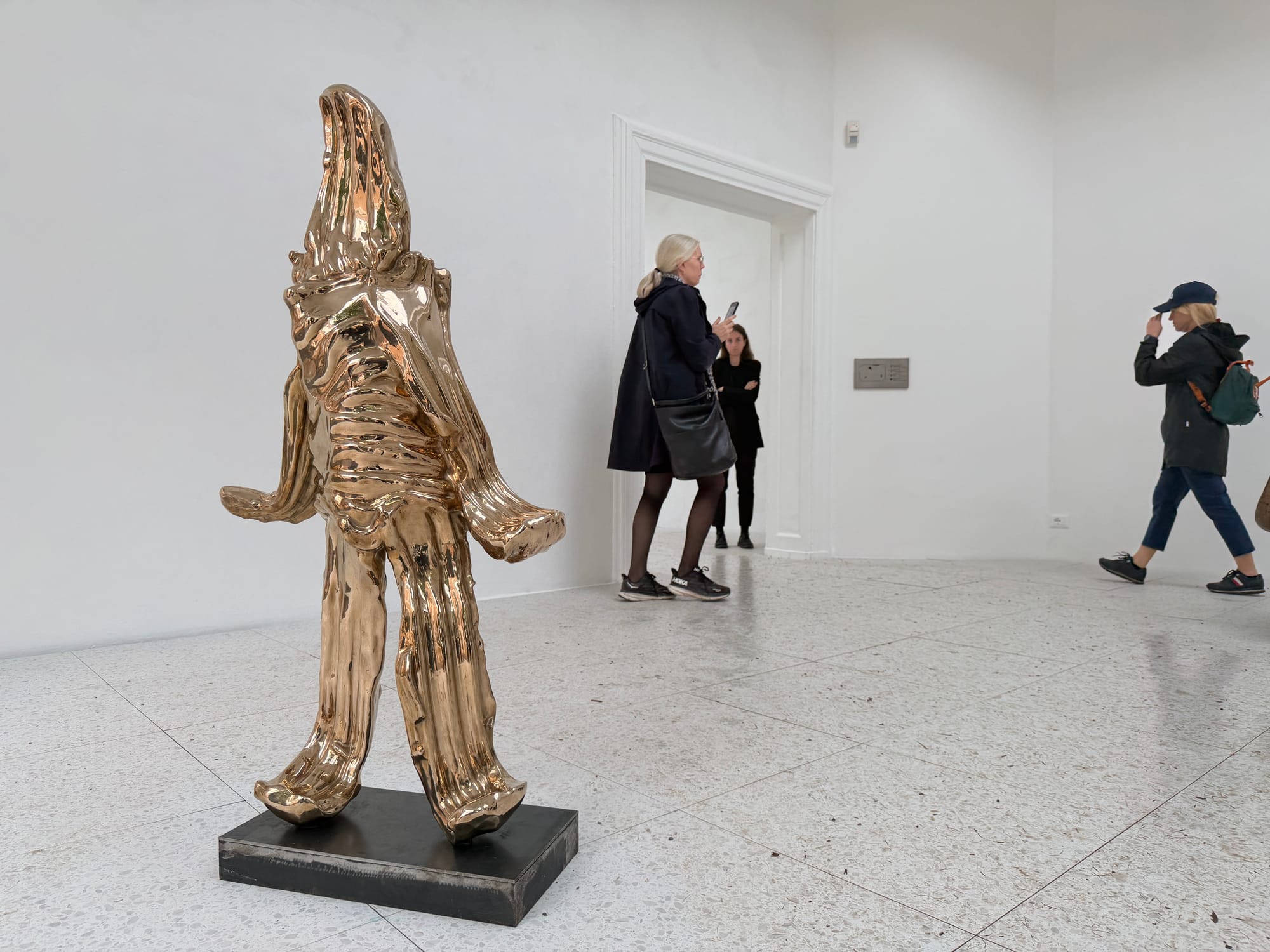
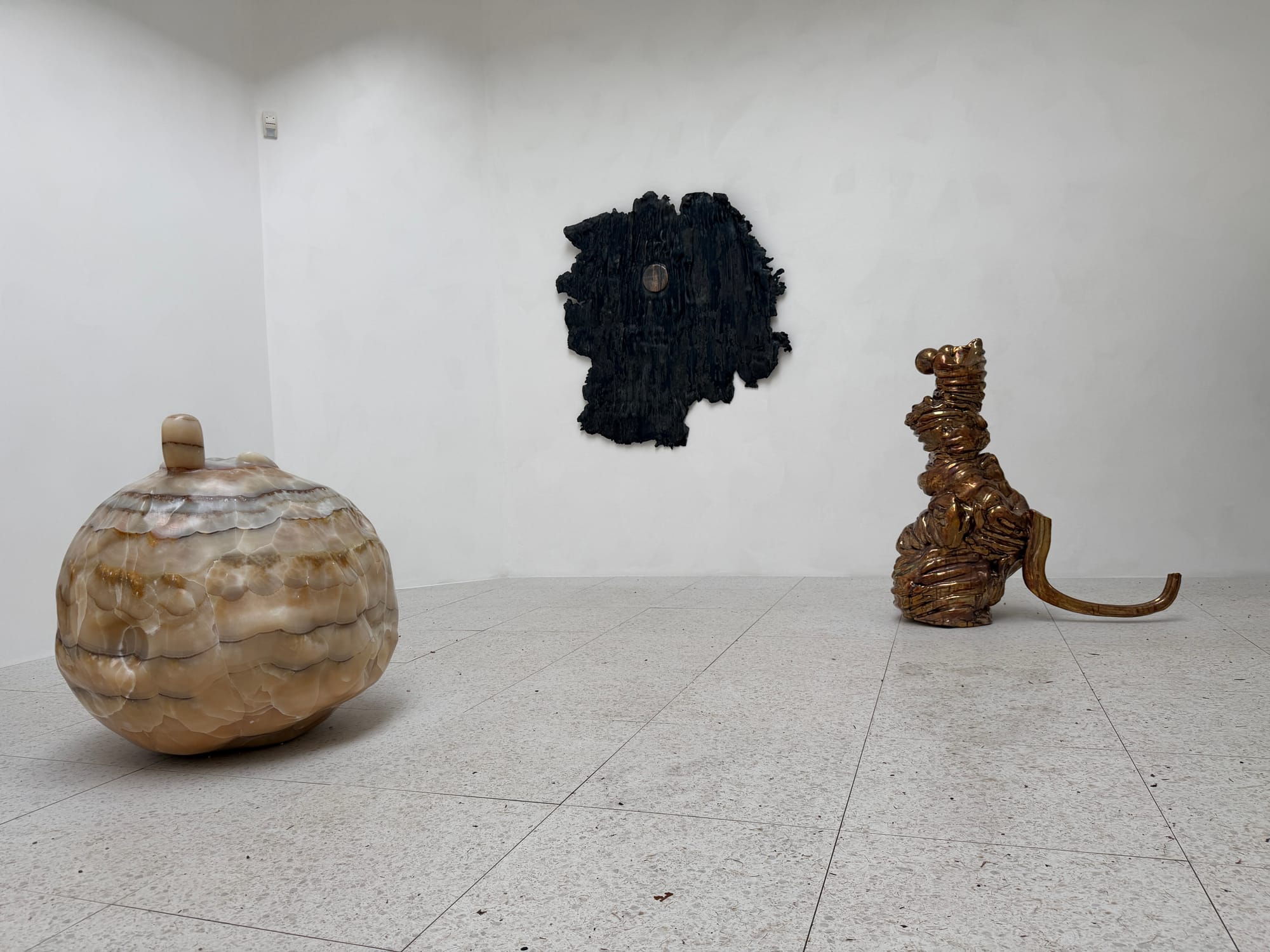
The pavilion features a series of amorphous, nature-inspired sculptures — all untitled — made of bronze, wood, and stone.
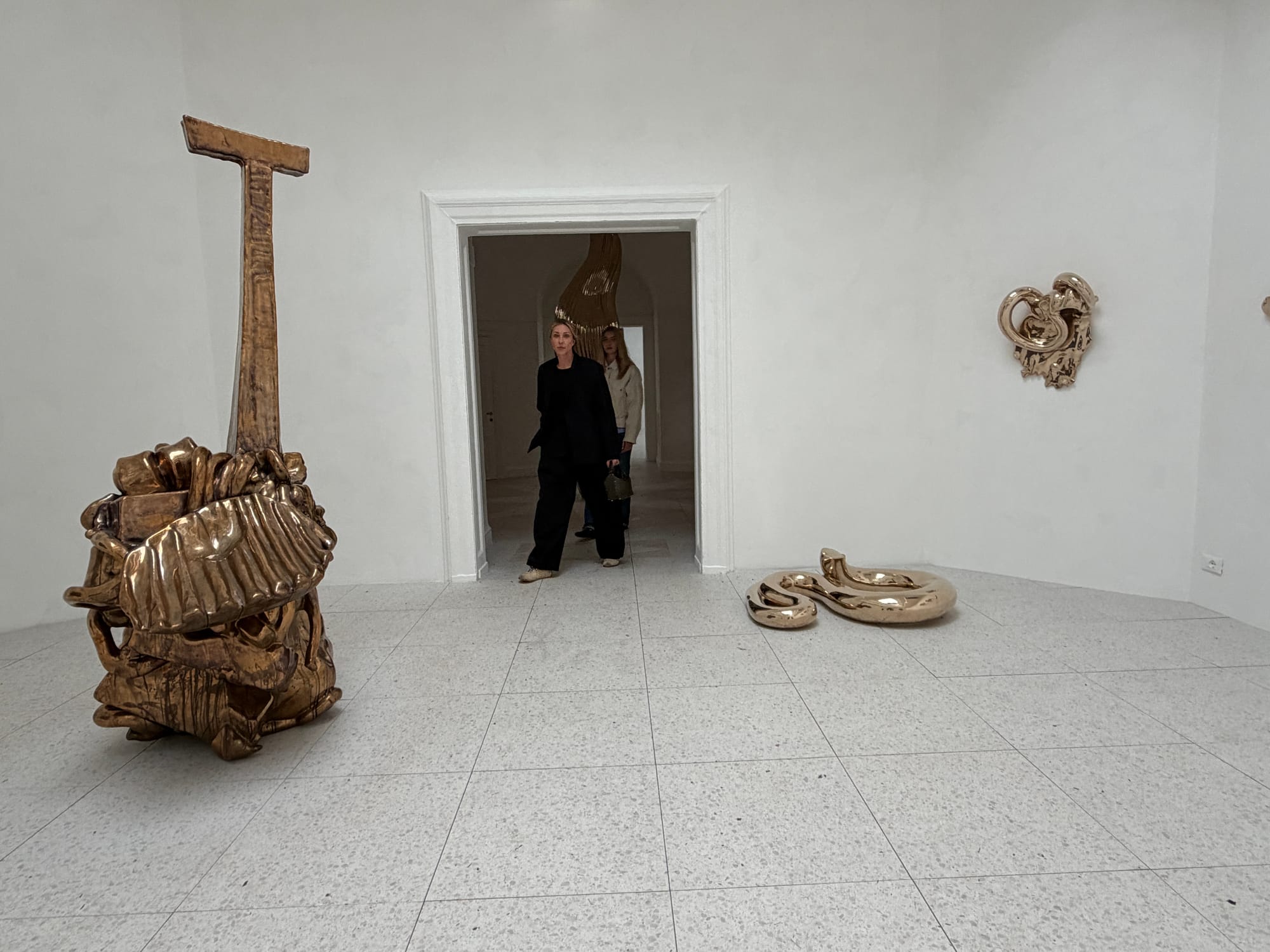
If there’s any essence to the show, it’s in the choice of specific materials. For example, Allen uses Colorado Yule marble, a brilliant white stone from which the Lincoln Memorial in Washington, DC, was made.
What do we actually see? It’s not always easy to tell. Some forms seem informed by living organisms, like worms. A large gold-coated piece at the pavilion rotunda evokes a cactus. There’s one sculpture in the front yard that can be seen as either a lamb or a pile of spaghetti.
A young gallery attendant was kind enough to give me one piece of insight into Allen’s process: He tinkers with materials with his fingers without looking, letting a form take shape. If he ends up liking what’s in his hands, he blows it up into a large-scale sculpture.
Ultimately, his is the kind of art favored by some high-end collectors: inoffensive, expensive-looking, and great next to the obligatory collection of African masks.
After monumental presentations by Jeffrey Gibson and Simone Leigh in the last two biennales searched the soul and history of this nation, how did we end up with this art from the land of the bland?
Like all things touched by the Trump administration, a long-held selection process was upended and turned into a horrifying but dismally entertaining farce. The details aren’t fully clear, but here’s what we know in a nutshell: After excluding experts from the National Endowment for the Arts from the process, the US State Department picked curator John Ravenal and artist Robert Lazzarini to represent the country. Alas, Lazzarini’s proposal was ditched unceremoniously due to funding complications and vague behind-the-scenes politics.
Along came the American Arts Conservancy, an obscure new arts nonprofit led by Jenni Parido, a Floridian from the Mar-a-Lago orbit whose last serious job was running a pet food store. Somehow, Parido was entrusted with picking the artist representing the US at the world’s most important art exhibition. She hired Uslip, the curator, to find her an artist. According to reports, he approached Barbara Chase-Riboud and William Eggleston, but they said no thanks. He landed on Allen, a Utah-born sculptor based in Mexico. The sponsors of Allen’s pavilion were a mystery until the preview in Venice this week. A plaque inside the pavilion reveals a list of donors, including businessman John Phelan, who was recently fired from his position as US Navy Secretary, and fashion designer Tommy Hilfiger.
“Alma Allen’s biomorphic sculptures evoke the visceral realities of contemporary life and reveal the fragility and resilience of the human condition,” writes Uslip in the same plaque. I don’t know about that, but he’s right to add that the work “eschews finite positions.”
My favorite piece in the pavilion is the one made with the white Colorado Yule marble. That was the closest I could get to feeling a “breeze.” Maybe that’s because it was shaped like a portal — something to zap me into a better US pavilion in a parallel universe.
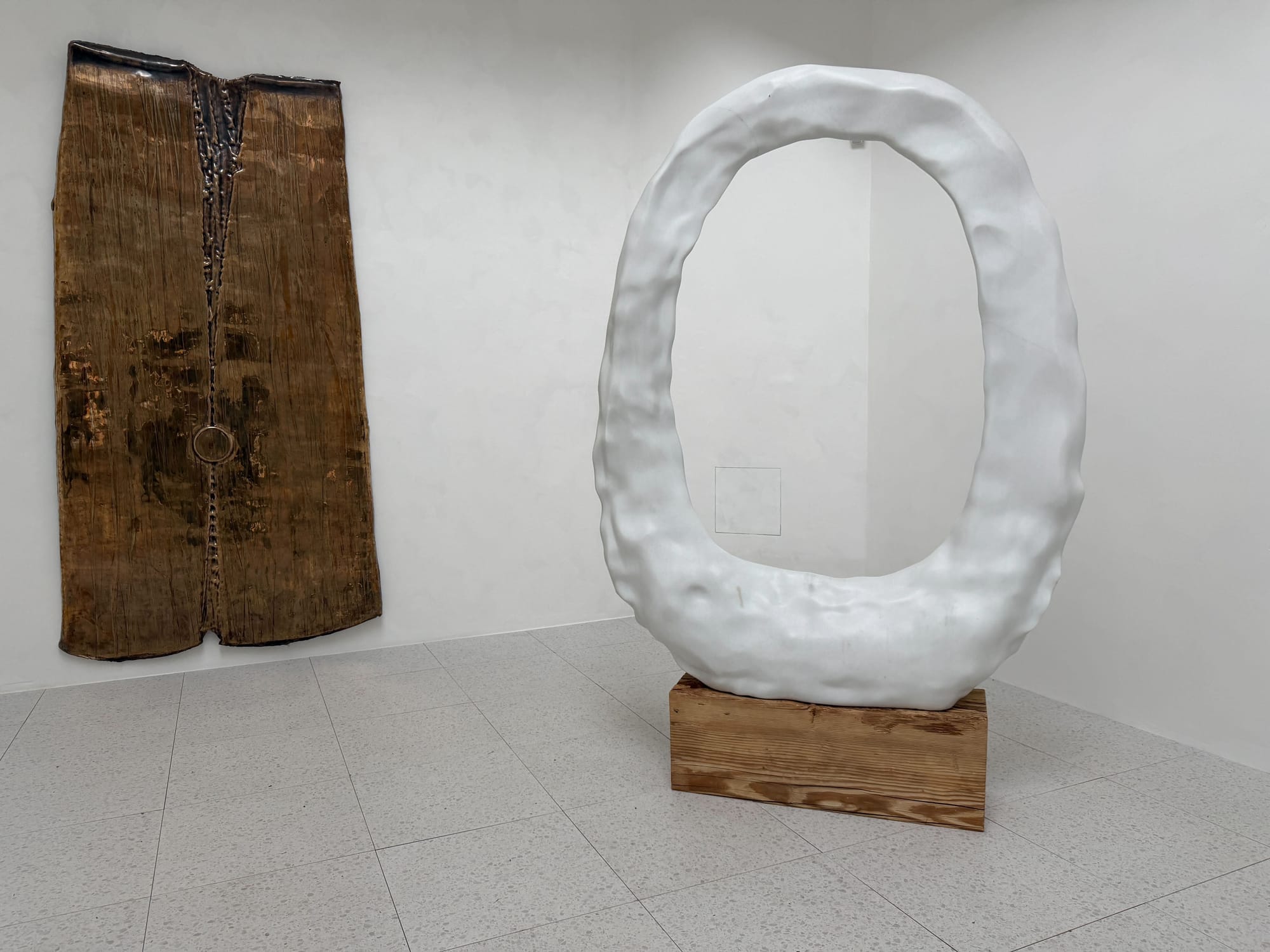
Alma Allen: Call me the Breeze continues at the United States pavilion at the 2026 Venice Biennale (Giardini della Biennale, Calle Giazzo, Venice, Italy) through November 22. The exhibition was curated by Jeffrey Uslip.