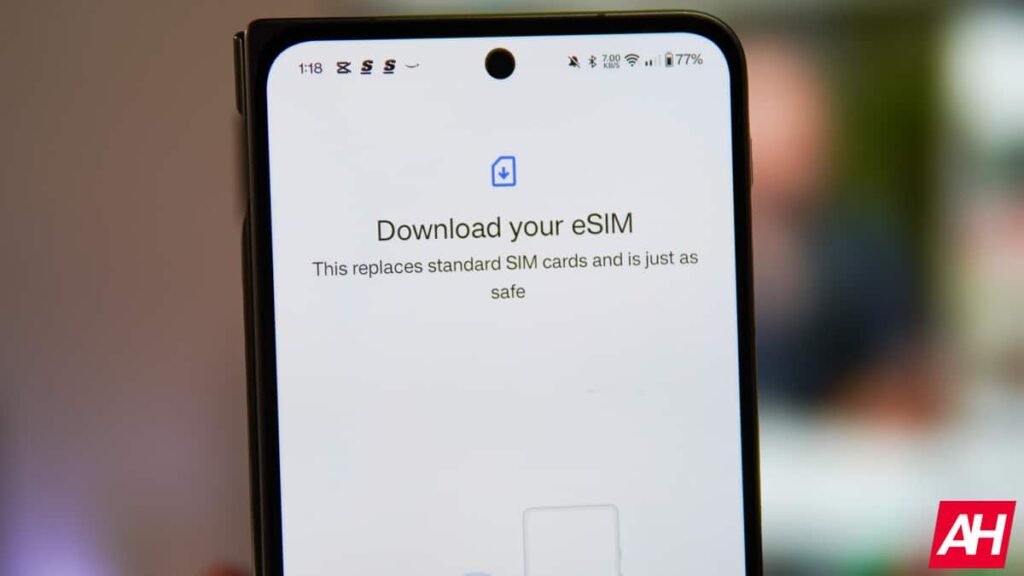

When eSIM was initially released, it was hyped in the industry with a promise of a seamless and card-free future of mobile connectivity. However, recent reports show the customer adoption of eSIM remains slow, despite earlier forecasts suggesting strong future growth. The customers aren’t yet ready to switch from traditional SIM cards to eSIM due to several reasons, including ease of switching or awareness.
Why eSIM faces slow customer adoption even after clear technological advantages
Recent insight from ETNews suggests the eSIM only accounts for about 5% of the total subscriber base in South Korea. The figure translates to about 2.9 million users out of the total 57 million active SIM users. For reference, the total eSIM users were about 3% as per the earlier reports. This suggests a very modest increase and a slow customer adoption.
Authorities have highlighted the low public awareness and usability concerns as the key drivers of the slow growth. Further, the government is also considering measures such as cost reductions, improved access, and awareness campaigns to boost the eSIM adoption rate.
The situation of the eSIM adoption is totally different in the United States. As per the report published by Persistent Market Research, North America alone accounts for about 38% of the total global eSIM userbase. While this is surely impressive, the growth is attributed more to modern phones than to consumer adoption. The latest iPhones and Google Pixel phones support only eSIM networks in the US, which effectively means users have no choice but to use an eSIM.
User awareness is highlighted as the main concern
In regions like the UK, Europe, and India, dual SIM support remains a standard on most smartphones. This basically means the user can use an eSIM or a physical SIM as per their preferences. However, consumer awareness still remains the biggest reason behind the slow adoption rate. A survey cited by DataM Intelligence suggests that about 40% of users have never heard of an eSIM. Further, the other 41% of the users aren’t sure about the eSIM support on their phones.
Despite the slow consumer adoption, industry forecasts suggest a strong future for eSIM. The GSMA report suggests that about 50% of new smartphone connections could use eSIM by 2028. The numbers are expected to grow tremendously to about 88% by 2030. However, smartphones won’t remain the key driver of growth. A report credits smart infrastructure and industrial IoT growth for increasing eSIM usage.
The post eSIM Adoption Is Stalling Worldwide — Except Where People Have No Choice appeared first on Android Headlines.