The most succinct visual embodiment of the complexities and contradictions of the English Renaissance is displayed on an ornate mantel in a mansion at 1 East 70th Street in Manhattan. Hans Holbein the Younger’s c. 1527 “Portrait of Sir Thomas More” and his 1532 “Portrait of Thomas Cromwell” (a contemporary copy of the lost original) sit on opposite sides of Gilded Age industrialist Henry Clay Frick’s New York estate, now better known as the Frick Collection.
More, the celebrated humanist and Lord Chancellor (effectively Secretary of State) of England, is stern-visaged, eagle-beaked, with a steely gaze focused on the distance. He is dressed in resplendent red and black velvet, the Tudor rose chain around his neck. This portrait, as Elizabeth Goldring puts it in her excellent new book Holbein: Renaissance Master, intended to depict him as the Tudor “statesman par excellence” — an exercise in what literary scholar Stephen Greenblatt has termed “Renaissance self-fashioning,” or the process of cultivating a persona related to the new humanism of the time. Published by Yale University Press and the Paul Mellon Centre for Studies in British Art, the book offers those who can’t easily get to the Frick, or the other myriad collections that exhibit the painter, a way to understand his genius not just through glorious reproductions, but Goldring’s exacting scholarly detail about his biography and work.
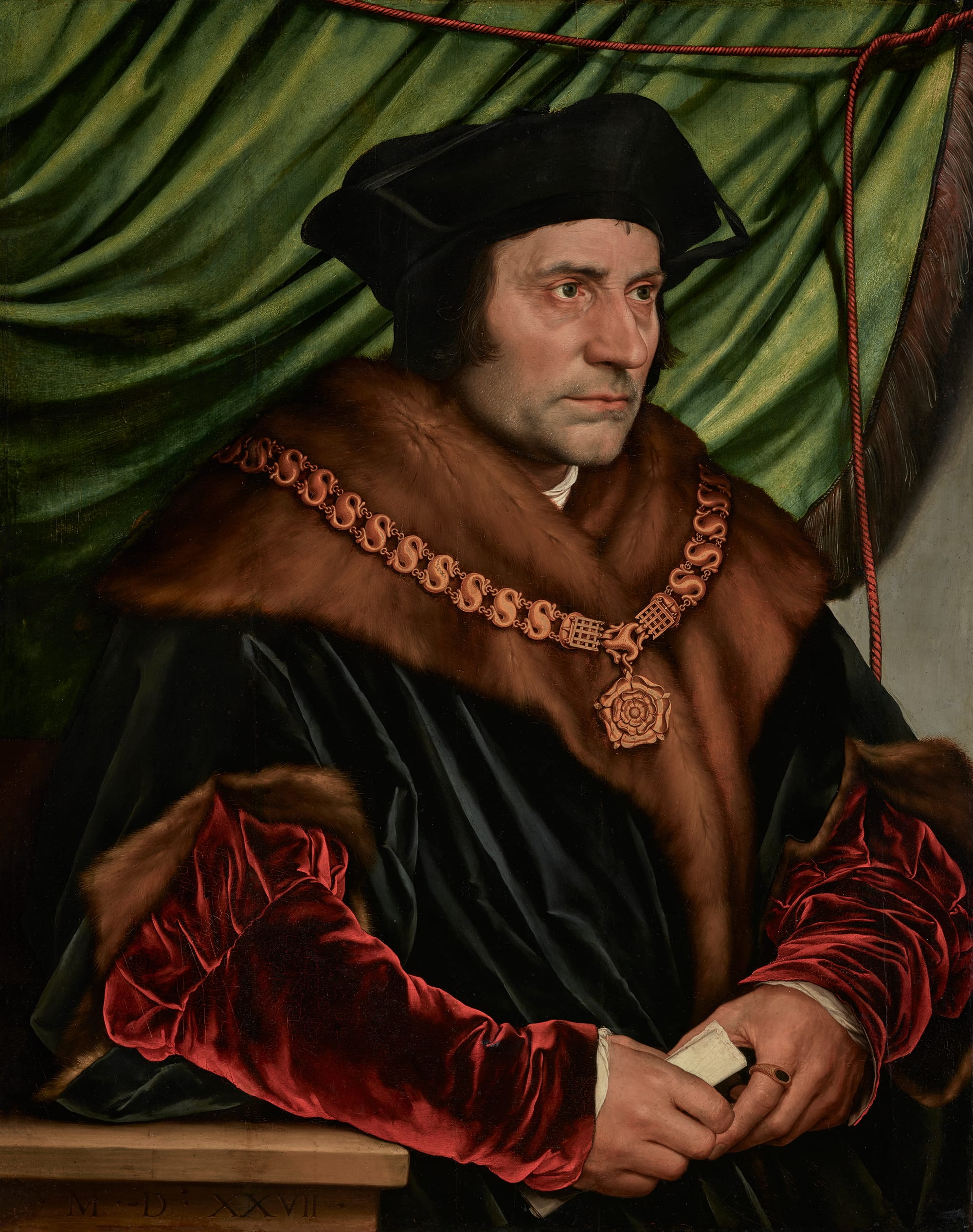
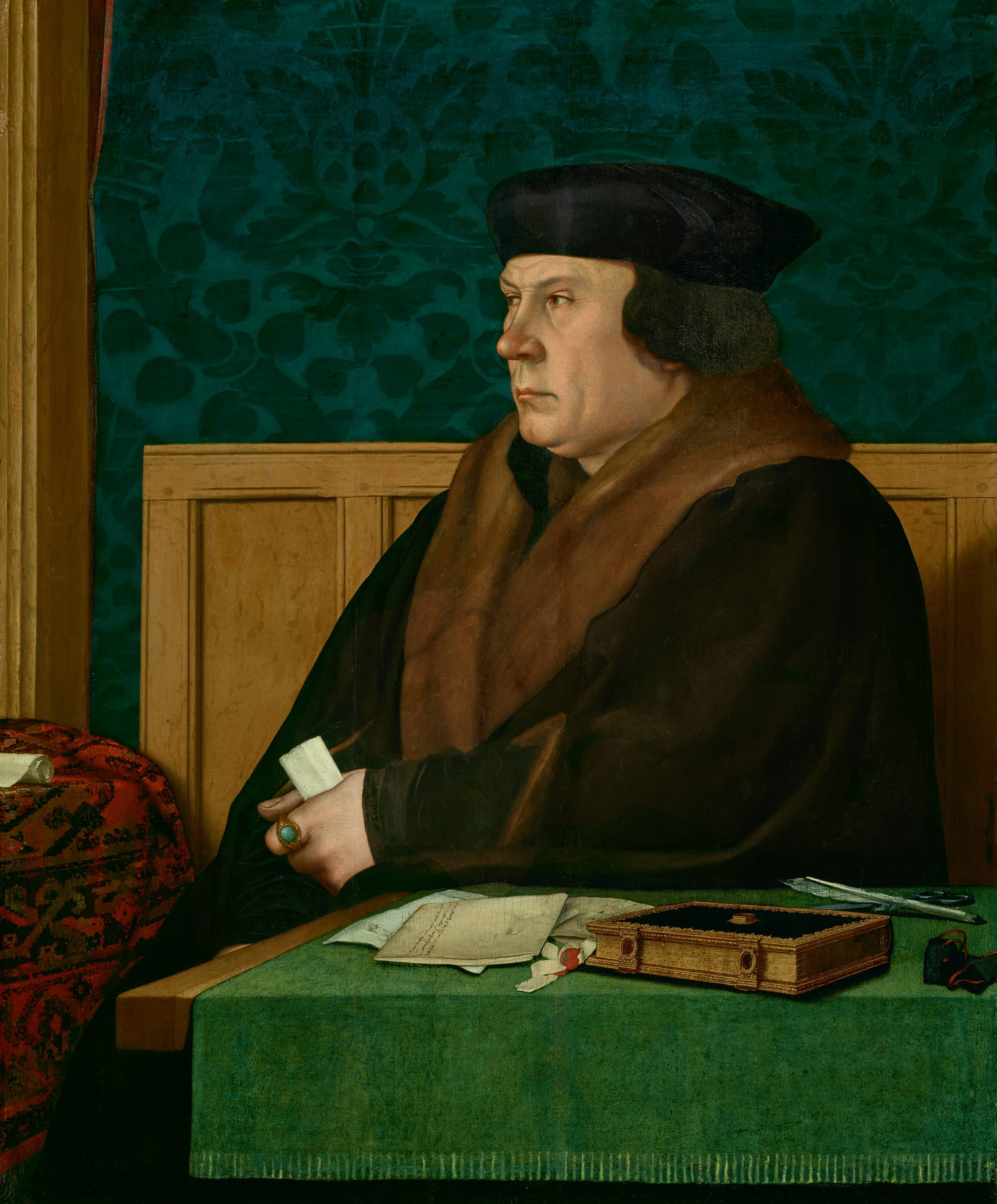
Left: Holbein, “Sir Thomas More” (c. 1527), oil on oak; right: Holbein and London workshop, “Sir Thomas Cromwell” (1532), oil and tempera on oak, both works held at the Frick Collection, New York (both photos © The Frick Collection)
Just a few feet away from Holbein’s depiction of More, on the other side of Frick’s mantle, with its mahogany molding carved into the shape of a Corinthian column, is More’s political nemesis and eventual supplanter, Cromwell, who would later serve in a similar position as his adversary. Unlike the Catholic More, with his sumptuous pomp of red, black, and green velvet, Cromwell is outfitted in an austere, properly black Protestant robe, a lining of fur about the neck to guard against the draft. With equally keen eyes, the arch-eyebrowed reformer seems to glare across the short expanse of the fireplace towards More. Both would eventually be beheaded at the behest of the king they served.
In that gap of five years between Holbein’s painting of those portraits and the few feet between them at the Frick Collection, there is a veritable dissertation about 16th-century England. In More’s depiction, we see an advocate for the new learning and sensuality of the Renaissance, as well as a penchant for life-denying corporeal mortification in the form of the uncomfortable hair-shirt he is wearing, a mark of the Church that he’d quickly become a martyr for. In Cromwell’s, we encounter the cagey and canny working-class operator who ingratiated himself with the authoritarian monarch that was King Henry VIII and laid the groundwork for reform within the kingdom, only to eventually run afoul of the tyrant he served.
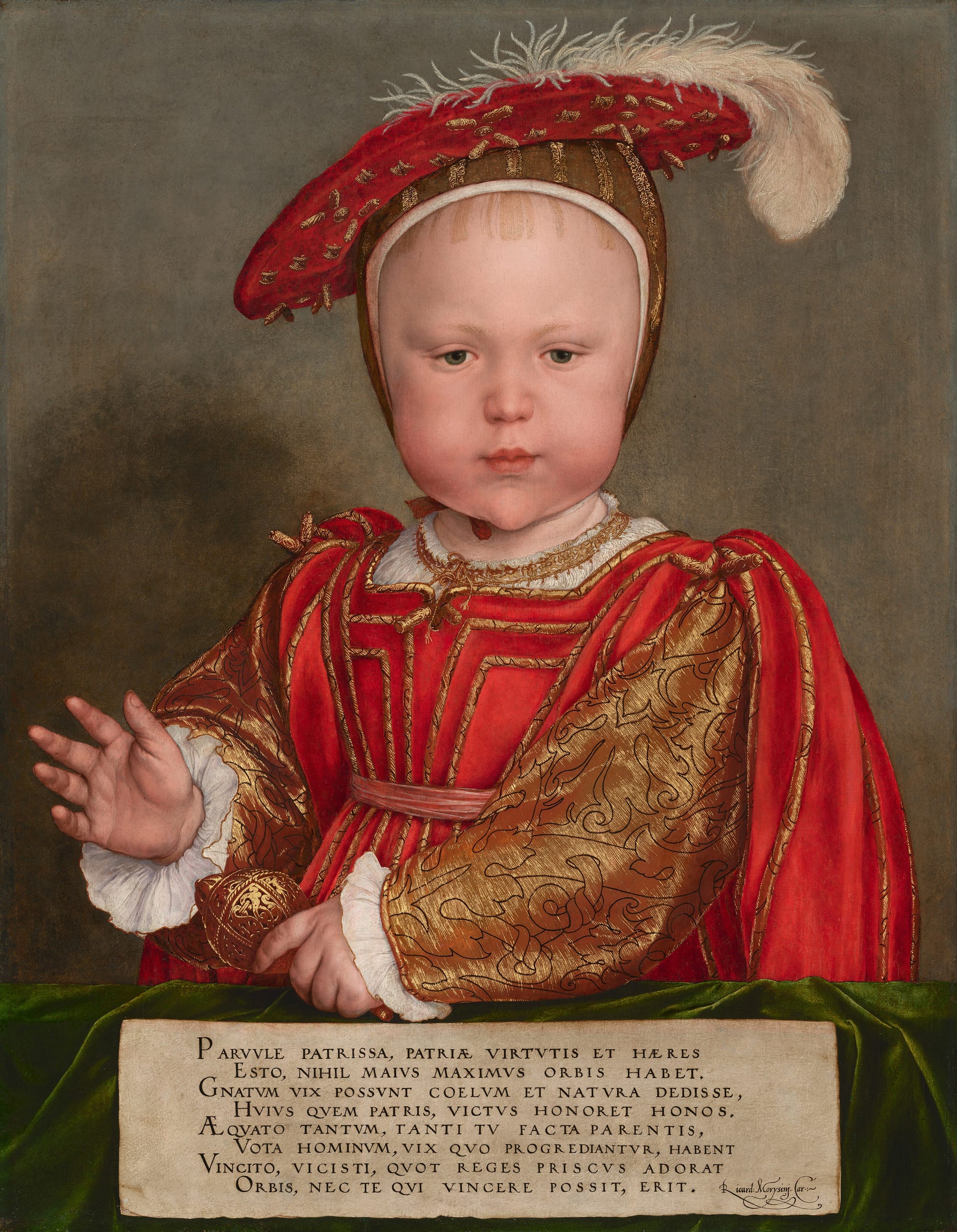
In Holbein’s portraits, these are estimably believable characters. Despite their differences in ideology and religion, they’re united in the shared characteristics of intelligence, ruthlessness, ambition, commitment, zealotry, charisma, and humanity — even while neither seems particularly likable. We know More and Cromwell possessed these attributes from the historical and biographical record, but our contemporary understanding of them is due to the particular genius of Holbein. In examining these portraits we don’t see arbitrary people, but the individual person — there is a conveyance of personality, character, individuality. Did any artist in the Renaissance so perfectly capture the “human” in the “humanistic”?
Until recently, it has felt like the greatest of British visual artists were, like their greatest composers, imported from the continent, and Holbein was no exception. Born in the free imperial city of (Lutheran) Augsburg, Germany, Holbein arrived in England a little more than a decade after the beginning of the Reformation, holding letters of introduction to More written by the great Dutch humanist Erasmus. An impressive strength of Goldring’s study is that she considers him not just within Tudor England, but restores to Holbein his status as a cosmopolitan European painter, equally at home in Augsburg and Basel as in London. Nor was his artistic vision limited. As Goldring writes, Holbein “was a master of multiple disciplines … equally at home in the realms of sacred painting, history painting, allegorical painting, heraldic painting and decorative painting,” though most of all in portraiture. Despite there being no shortage of talent in that regard throughout 16th-century England (as Goldring’s 2019 study Nicholas Hilliard: Life of an Artist can attest), Holbein surpassed all of his colleagues in the sheer depth, visceral intimacy, and empathy conveyed in his renderings of nobles, aristocrats, and thinkers.
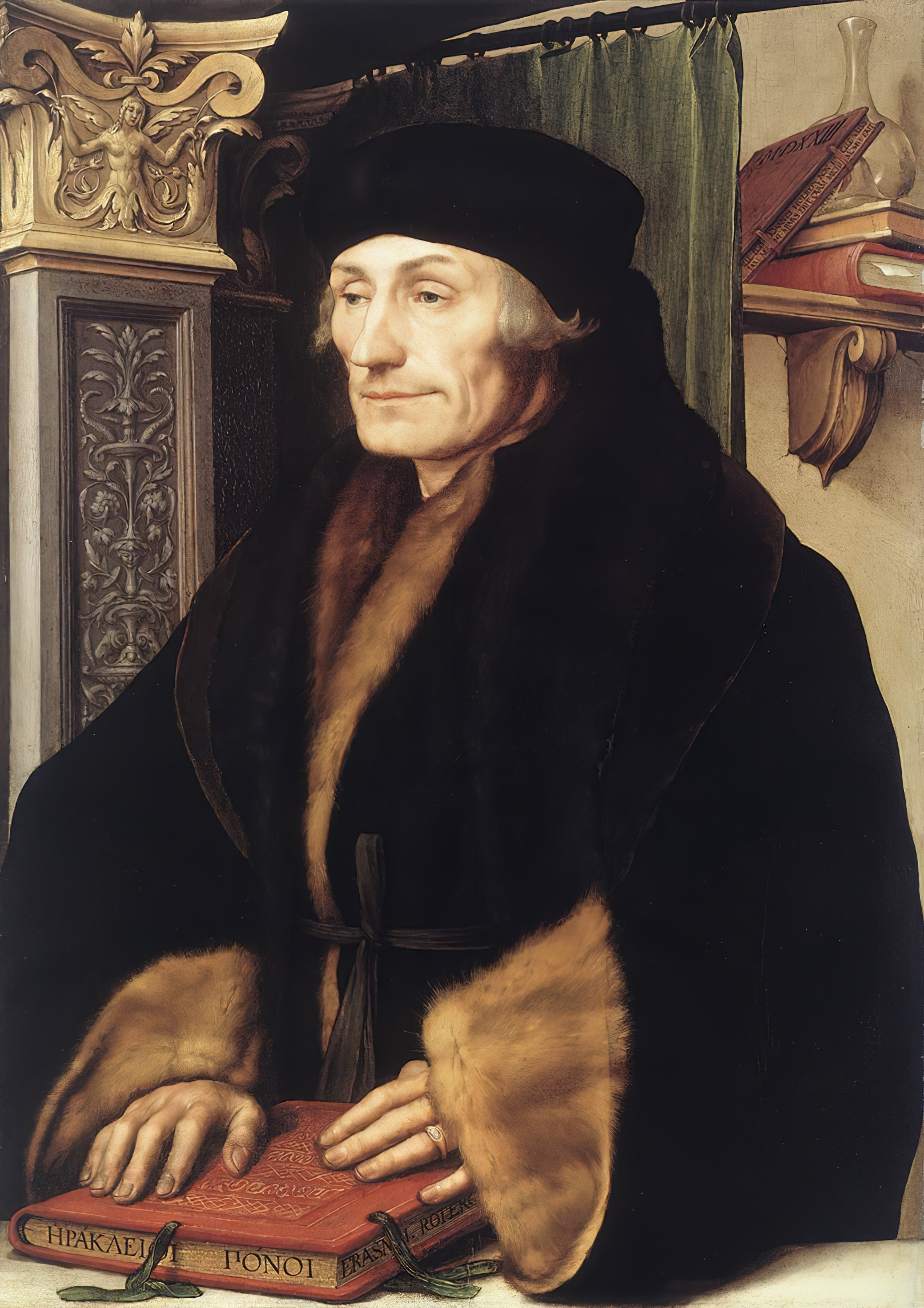
Take the series of portraits Holbein made of Erasmus, the series that first earned the artist his reputation (and that arguably contributed to his subject’s fame as well). In an earlier example by painter Quinten Massys from 1517, the young Erasmus works diligently at writing, wearing a wry smile and clothed in black as he pens the satirical lines of In Praise of Folly, the allegorical fable that would elevate the Dutchman to the status of preeminent Renaissance humanist. In Holbein’s portrait from 1523, held by the National Gallery in London, Erasmus is markedly older, with a hooded gaze, a faint five o’clock shadow, and a curtain of graying hair escaping from his black cap. Both his hands are atop a leather-bound book — the figure is no longer actively writing, but now thinking.
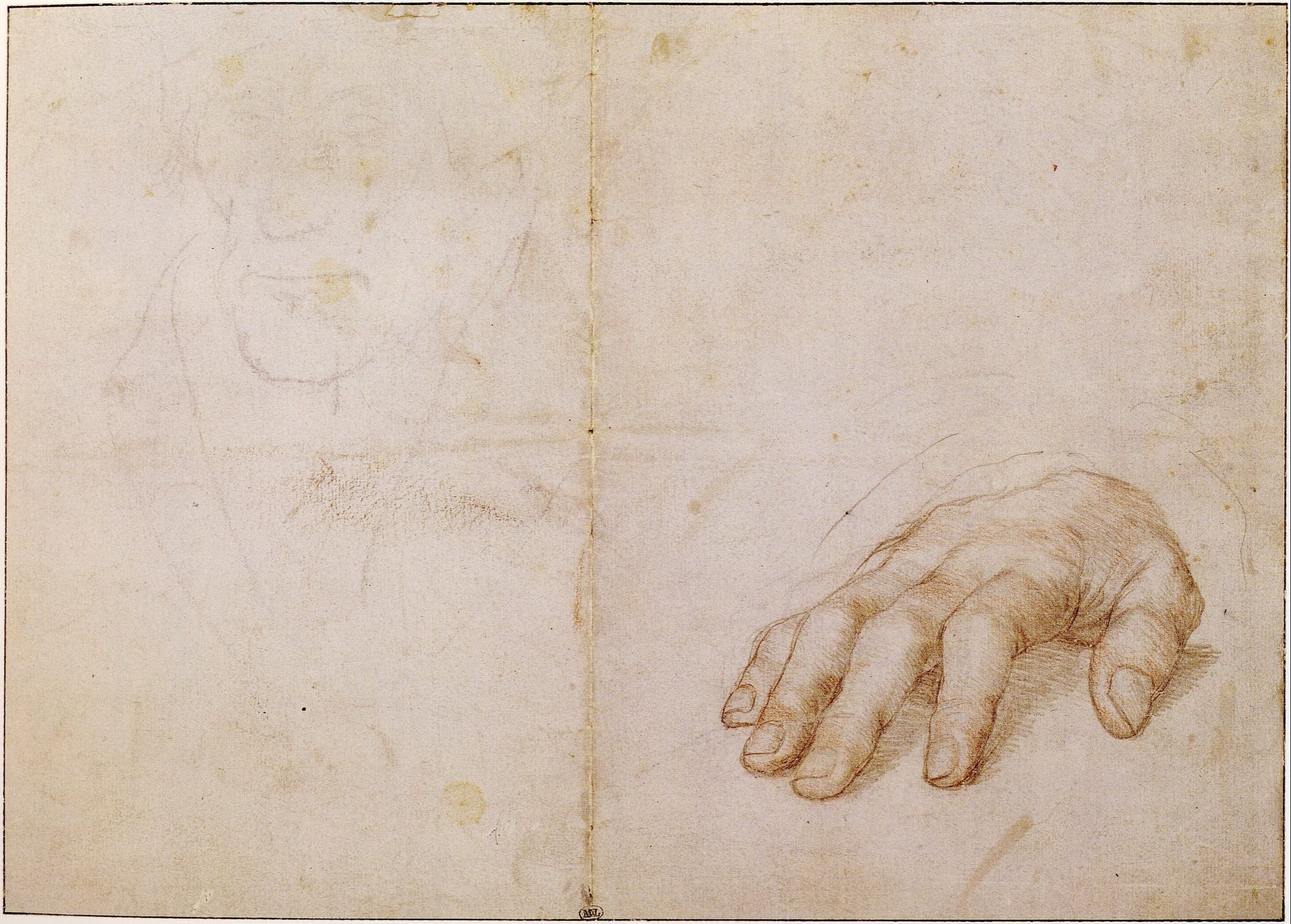
Among the most difficult of anatomical subjects, as any artist can attest, are the hands. In that regard, Holbein was a master. Sketched studies of Erasmus’s hands by Holbein from 1523 — the same appendages that penned In Praise of Folly and translated the Bible into corrected Latin — depict them grasping a pen in one example, or resting fattened, arthritic fingers atop a desk in another. These drawings, held by the Louvre, were executed in chalk, crayon, and silverpoint. But as Goldring notes, “Holbein must have executed studies of Erasmus’s face using the same materials” — a potent metaphor for the union of mind and matter, soul and flesh. By around 1532, a portrait of the writer shows him even further aged, the toll of the Reformation he rejected and which the Church nonetheless blamed him for evident in his lined and gaunt face. (The artist himself had a variable relationship to Protestantism, depending on who was paying his bills).
Meanwhile, the colorized sketches of Holbein are remarkable for the degree of psychological exactitude they display. A copy of the original “John Fisher, Bishop of Rochester” from sometime between 1526 and ’28 depicts its subject, the soon-to-be-martyred future saint, as ghost-like and crepuscular, his head rising out of a barely sketched background like an apparition from the ether. A similar composition in black and colored chalk with pen and ink on pale paper from a decade later shows the poet and courtier Thomas Wyatt framed by his own prodigious beard, his nervous but beautiful blue eyes looking to the right. Fitting, as the sonneteer was rumored to have slept with Anne Boleyn, but shockingly escaped the axe.
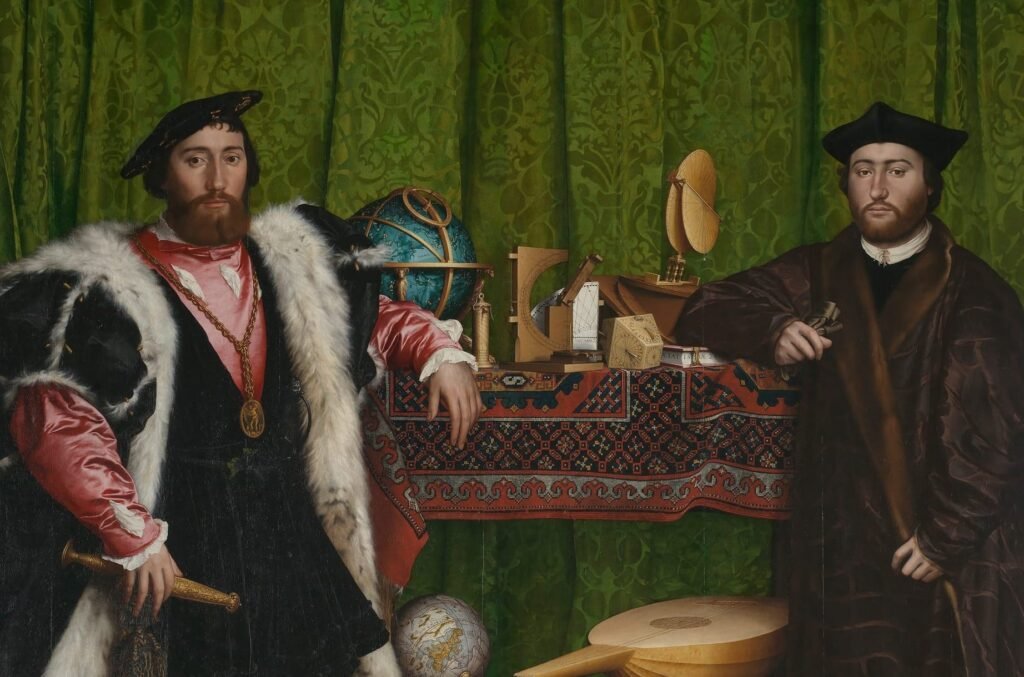
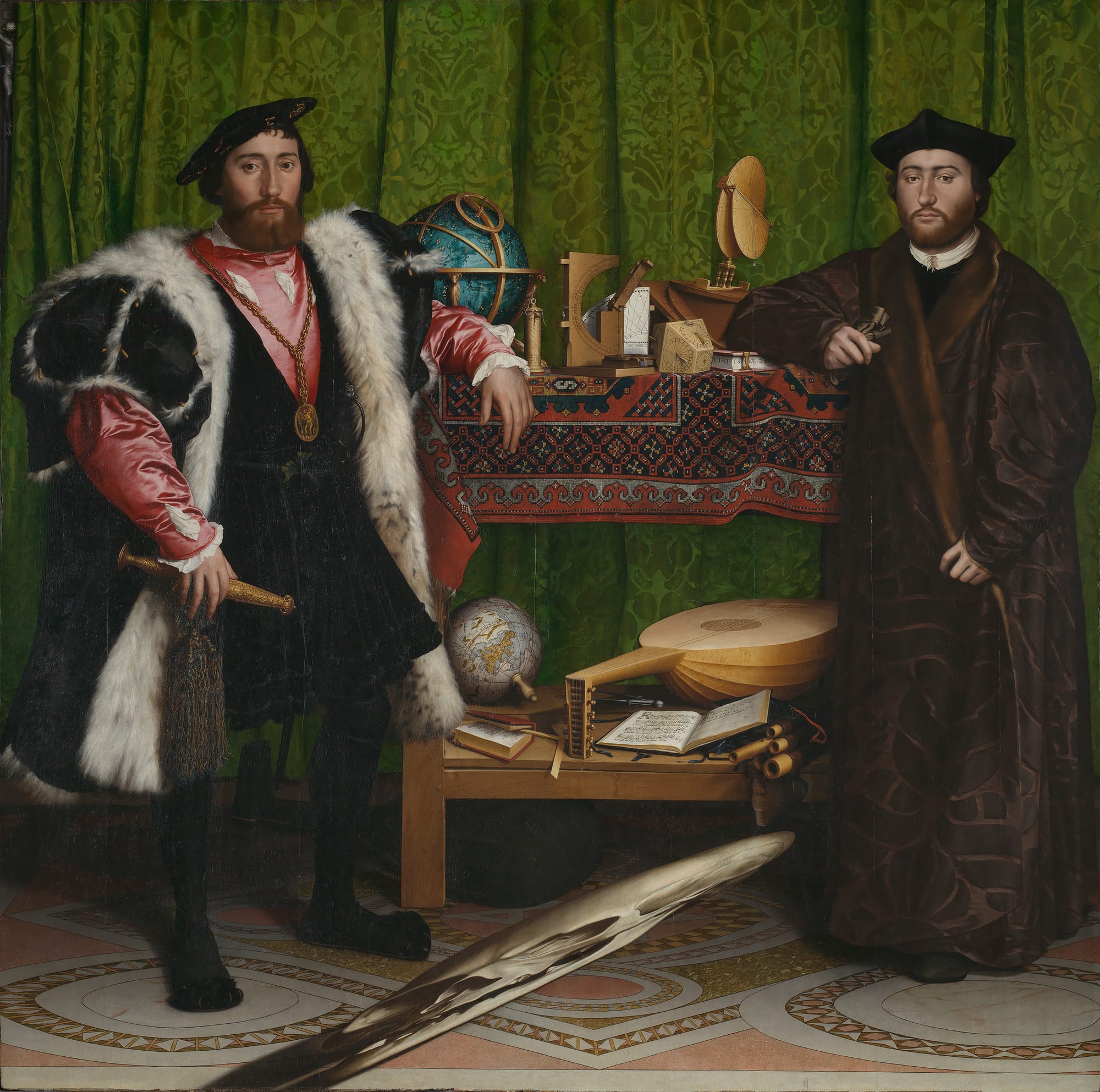
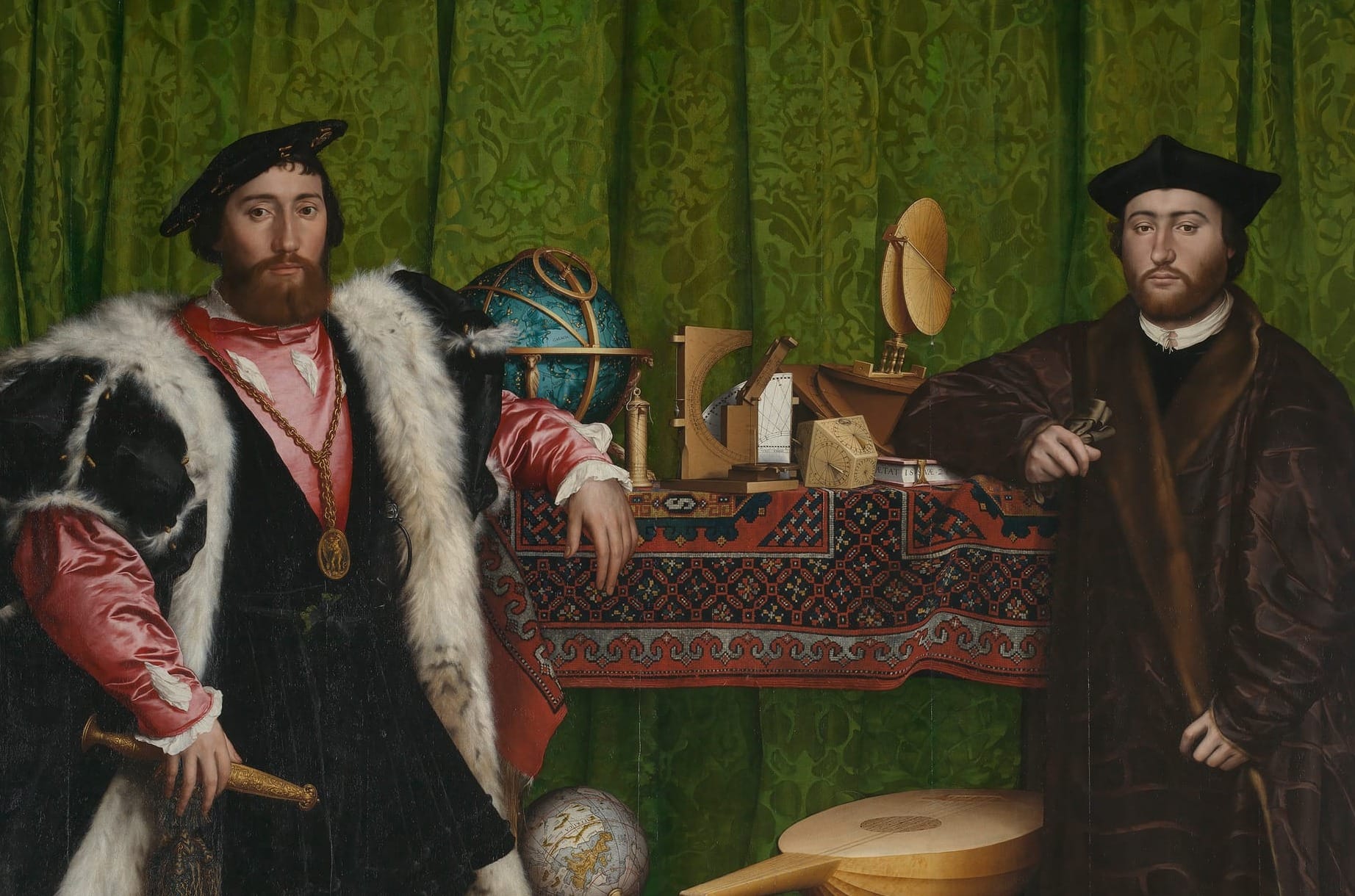
The great masterpiece of Holbein’s career, however, is the 1533 massive dual portrait “The Ambassadors,” depicting French diplomats Jean de Dinteville and Georges de Selve, which is displayed at the National Gallery of London for anyone fortunate enough to see it. It appears like a revelation when you either ascend or descend toward it on the stairwell landing where it’s hung, an allegorical lesson in the abstractions of Renaissance humanism combined with the reality of its subjects. Represented in the painting are dials and globes, a lute, a hymnal, and an arithmetic book. Layered over all of it is the visual illusion of an anamorphic skull, only visible from certain perspectives, that acts as a memento mori, a lesson in how close the life of the mind could be to the reality of death. (Same as it ever was, and for all of us).
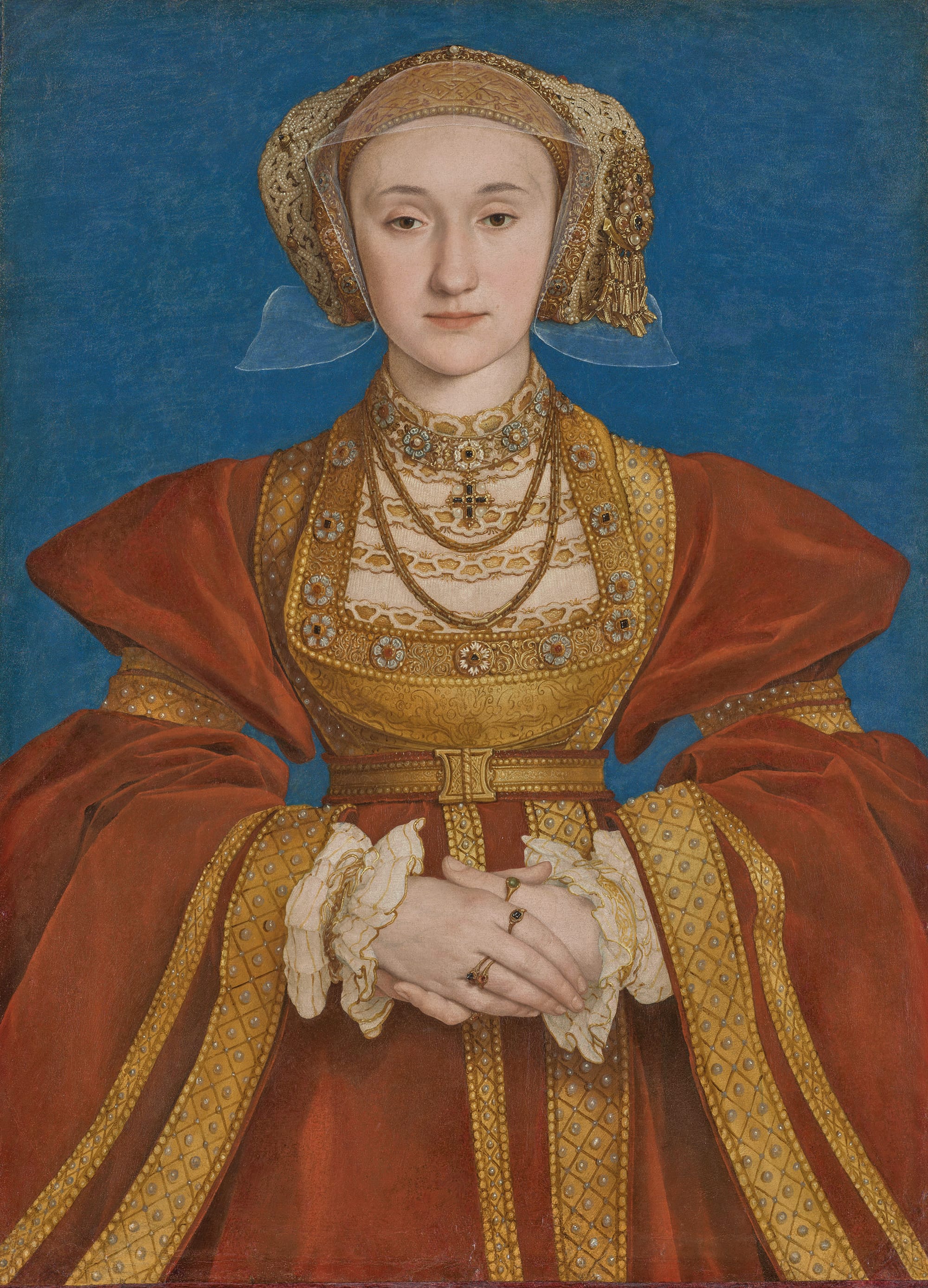
Indeed, there was danger in Holbein’s talent. His 1539 painting of his fellow German Anne of Cleves, among his most celebrated portraits, was the impetus for yet more Tudor political dysfunction. A commission by Cromwell, this portrait of the woman who would become Henry’s fourth wife presents an attractive lady in gold-threaded red velvet with an unblemished ivory face, a clever and pursed smile, and knowing eyes. The smitten king — another popular subject of Holbein, in part because of his prodigious heft and stalwart presence — was supposedly horrified when the actual, and apparently homely, Anne of Cleves arrived at court. Because Cromwell had pushed for the union, the former powerbroker would face the scaffold (Anne was only served with a divorce).
Cromwell was just one of many of Holbein’s subjects who were executed after facing Henry’s ire. But despite his duplicitously flattering portrait of Anne, Holbein was spared the monarch’s punishment. Goldring’s book helps a reader more fully understand the exemplary genius of Holbein, how his talent beguiled a tyrant, and his art preserved the memory of those it depicted forever. As the anecdote has it, Henry once said, “I could make seven earls from seven peasants if it pleased me, but I could not make one Hans Holbein out of seven earls.”