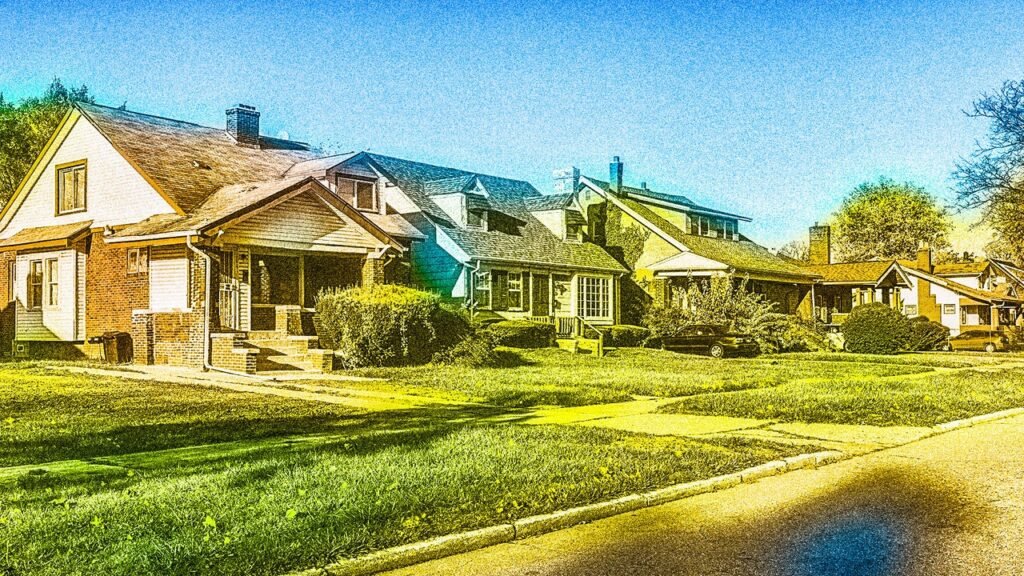
If you want to live somewhere where you can cheer on a college sports team—and actually afford a home—then a new ranking may give you some ideas for relocating. Hint: Prepare for cold winters or hot summers.
That’s because the most affordable college towns in the U.S. are largely located in the South and the Midwest, where the median asking price is less than $120,000, according to a new ranking from Realtor.com. The economists from the Austin-based real estate site examined the cities and towns across the U.S. that are home to an NCAA Division 1 university with at least 15 homes on the market, then ranked those 231 markets by the 2025 median asking price.
While you may picture quintessential college towns that revolve around the local higher education institution, Realtor.com identified “affordability bastions” in five places that might not immediately come to mind:
- Detroit, Michigan—home to the University of Detroit Mercy
- Jackson, Mississippi—home to Jackson State University
- Pine Bluff, Arkansas—home to the University of Arkansas
- Macomb, Illinois—home to Western Illinois University
- Peoria, Illinois—home to Bradley University
Whereas the median listing price nationwide exceeded $400,000 in 2025, these locations offer an entry to homeownership that’s far more accessible—and are located in the regions of the country where housing is less expensive right now.
More specifically, the most affordable college towns offer lower land and construction costs, flatter or slower-growing populations, and a housing stock that was largely built out before the last two decades of price appreciation, according to Hannah Jones, senior economist at Realtor.com. “That combination keeps home prices tethered to what local wages can actually support, rather than being pulled upward by demand outrunning supply.”
A BROADER APPEAL
For many people, there’s an appeal to education hubs that extends beyond the opportunity to take in a college sports game. By virtue of the town-gown relationship, these cities may boast more diversity, cultural attractions or transportation options, for example.
That’s certainly true of Detroit, with a population of about 650,000, where a broader revitalization has been underway for years and the housing market is among the most affordable in the 50 largest U.S. metros.
Though competition has increased, housing is still relatively affordable, particularly for younger buyers, according to Jones. “Prices are still well-calibrated to local income levels, which lets young buyers get into the market sooner and pair affordable housing with the built-in amenities college towns offer,” she said.
And some places, like Peoria, may be appealing as a place for recent grads to stick around after completing their degree. There, the median listing price in 2025 was $118,462.
“At a time when starter-home inventory is scarce nationally and young-professional wages make both renting and buying a stretch, these five towns stand out as places where recent grads and early-career professionals can still access the wealth-building potential of homeownership,” Jones said.