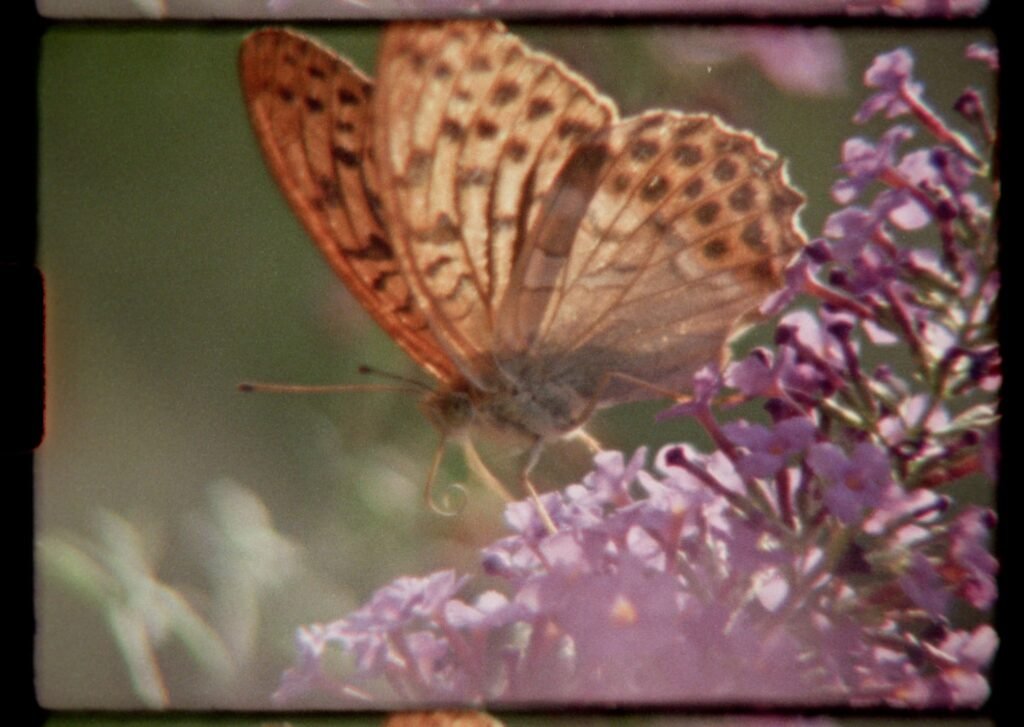

Before the iPhone essentially turned all of us into documentarians, the Super 8 camera offered a more democratic approach to filmmaking. Kodak introduced the analog format in 1965 with an eye toward amateurs and hobbyists interested in capturing the world around them, and today it remains a stalwart of the discipline, particularly for those drawn to the grainy, nostalgic qualities of shooting on film.
Ed Sayers, director and founder of the annual Super 8 competition and community called straight 8, tapped into the camera’s equalizing legacy for his latest project. Bringing together 40 collaborators in 25 countries across five continents, Super Nature is a collective ode to our planet. Rather than travel the world capturing the sights and sounds of far-flung locales, Sayers subverts the traditional documentarian approach by stitching together stories of people and creatures directly from their homes.
Participants include lauded photographers Gideon Mendel and Ami Vitale, who also founded Vital Impacts, alongside communities like the Enawene Nawe tribe in Brazil. Sayers invited several filmmakers from straight 8, and Greenpeace introduced his team to folks in the organization’s network, too. “I wanted them to feel very free. I made sure they were tuned into the spirit of what the film was trying to achieve, putting precious intimate moments and thoughts on a pedestal,” he tells Colossal. “Many had never used Super 8 before so we sent them cameras and taught them how to use them on video calls.”
Because the prompt had few guardrails, the difficulty came in making the final film appear cohesive and intentional. This meant finding where disparate segments fit together and which might offer an interesting and suitable segue to the next. “It was important that as an ensemble the stories came across as more than the sum of their parts,” Sayers says. “In the end, you’re watching one immersive story made and voiced by a chorus of people whom you meet and see in the film, captured on Super 8 just like all the animals and environments in the whole film.”
Alongside cinematic shots underwater, in air, and on land, Sayers also asked for glimpses of the filmmakers themselves, alongside narration that situates each frame into a larger portrait. He attributes the intimacy of Super Nature to this impulse as it showcases a sense of vulnerability and connection both in front of and behind the camera. Eleven languages and dozens of accents appear throughout, emphasizing the rootedness of each filmmaker.
In an age of AI and frictionless digital technologies, analog approaches to creation are ever more radical. Part of what continues to draw Sayers to film is that it requires more planning, intention, and an innate sense of when it’s time to act. “With Super 8 film, the roll only lasts a couple of minutes before it runs out, and there’s a cost to it. So suddenly you’re studying your subject and waiting for what you think it is a great moment, with the right light, before pulling the trigger,” he says. “Looking at your subject—be it a grasshopper or a glacier with the eye, or through an old camera with vintage glass—is very different to whipping out your iPhone and taking 20 shots.”

This sentiment echoes the trailer’s opening line from one of the filmmakers, too: “It’s like it resets something in your brain. You feel part of things again.”
Released by BFI Distribution, Super Nature is screening in the U.K. and Ireland this month, with several London showtimes. Find one in your area on the film’s website.


Do stories and artists like this matter to you? Become a Colossal Member today and support independent arts publishing for as little as $7 per month. The article 40 Filmmakers in 25 Countries Team Up for an Ode to Nature Shot Entirely on Super 8 Cameras appeared first on Colossal.