With over 160,000 units sold this year so far, the Hyundai Tucson is the best-selling model for the Korean automaker in the U.S., despite being close to the end of its life. It’s safe to say that this is a vital model for the brand in major markets around the globe, so all eyes were on Hyundai when the fifth-generation Tucson was unveiled in August. The makeover is dramatic, but now the key specifications for this Toyota RAV4 and Mazda CX-5 rival have been shared to coincide with its world premiere in New York City. That includes specifics about the powertrains, all-new Pleos Connect infotainment system, and cabin materials. Can it finally ascend to the top of the class?
Design and Dimensions
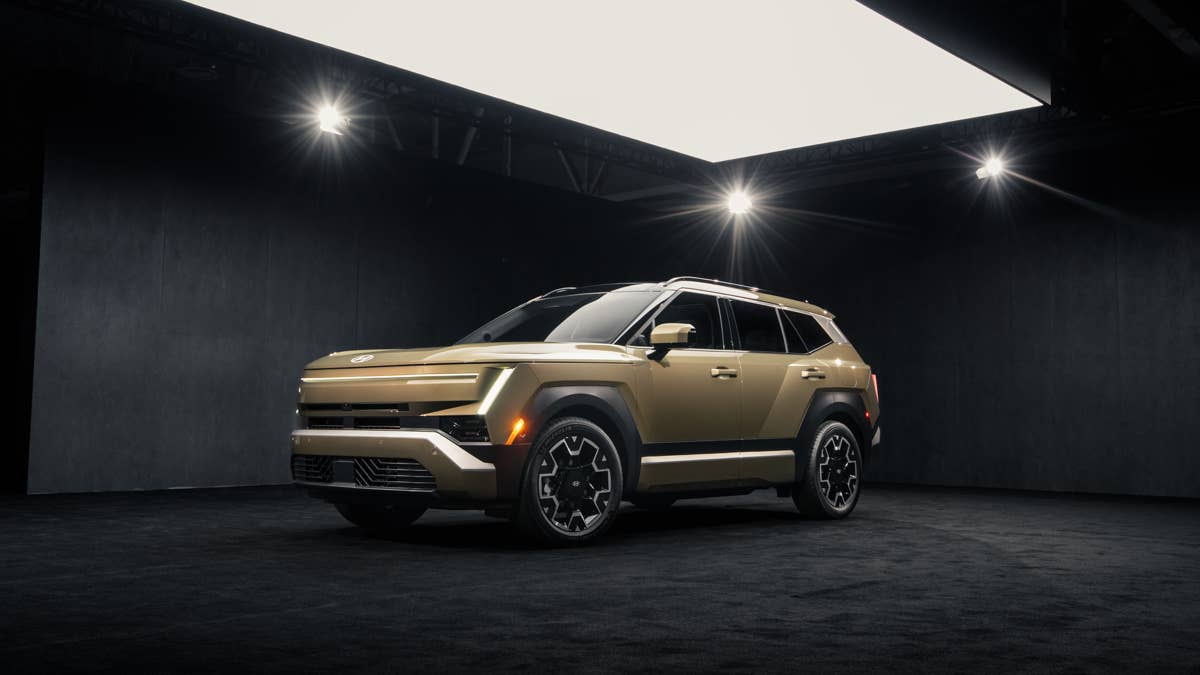
2027 Hyundai Tucson
Hyundai
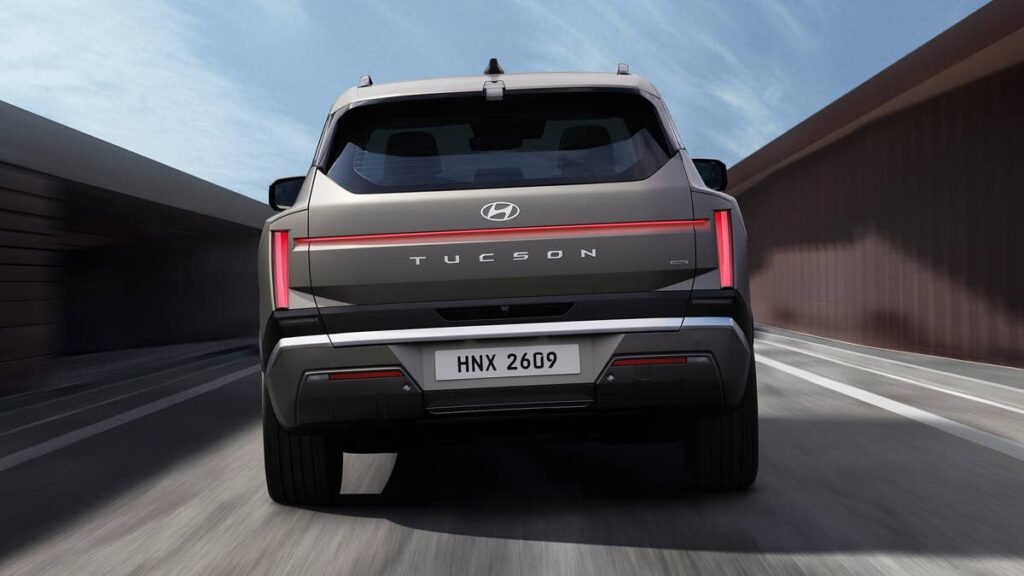
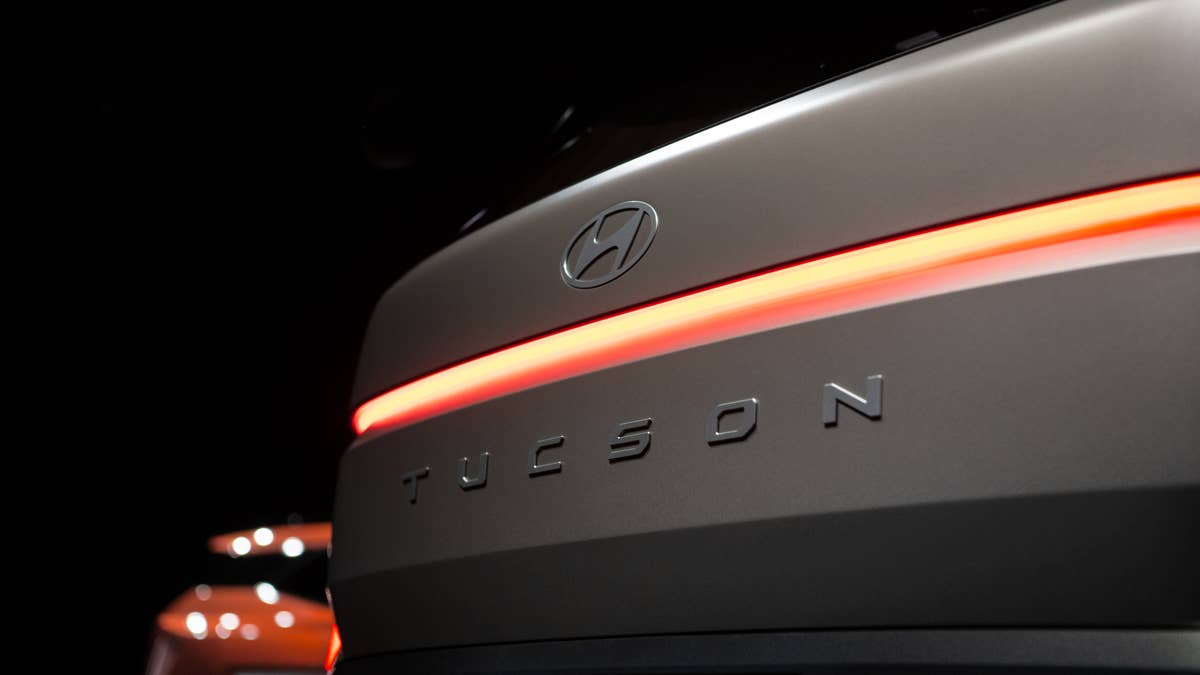
Make of the design what you will, but the 2027 Tucson certainly doesn’t play it safe. Hyundai’s ‘Art of Steel’ design philosophy is characterized by boxy proportions that evoke structural strength. The fenders are muscular and the lighting advanced, with H-Edge front lighting and Prism Rear Lamps. The vehicle will come with distinctive color options like Ranger Green Pearl/Matte, Kodiak Blue Pearl, Driftwood Gray Metallic/Mate, and Red Rock Orange Pearl/Matte, although availability will differ by market.
The U.S. will only receive the long-wheelbase version of the new Tucson, which is larger in all key directions than the outgoing model.
|
2027 Hyundai Tucson |
Difference Vs. 2026 Model |
|
|
Length |
185 inches |
+2.4 inches |
|
Wheelbase |
109.6 inches |
+1.2 inches |
|
Width |
75 inches |
+1.6 inches |
|
Height |
66.3 inches |
+1.2 inches |
Compared to the Honda CR-V—one of the largest compact crossovers and the top-selling model in the segment in 2026—the new Tucson is slightly longer and wider, while the two vehicles are similar in height.
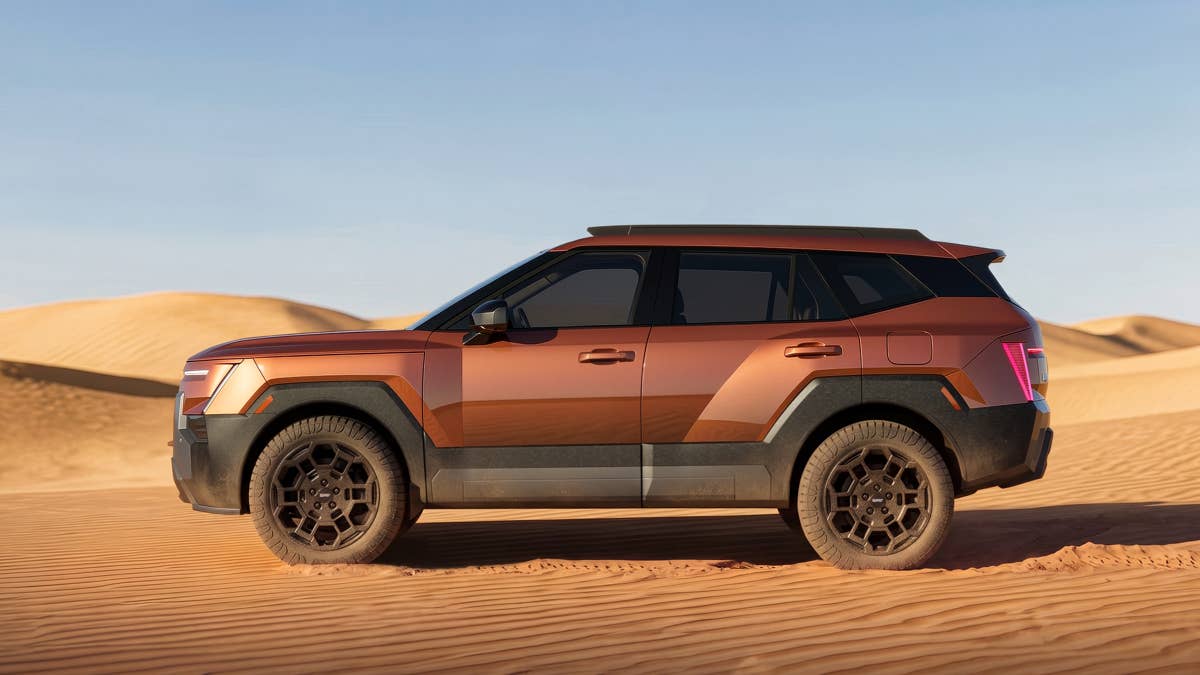
The rugged XRT is Hyundai’s answer to the Honda CR-V TrailSport. It features exclusive frontal cladding, extended black wheel-arch cladding wraps, and trim-specific bumper and skid-plate designs. The even tougher XRT Pro comes with all-terrain tires and more ground clearance, making it the most suitable option for dirt roads.
Powertrains and Performance
Hyundai
The main criticism of the 2026 Hyundai Tucson is its rather lazy standard engine, a naturally aspirated four-cylinder producing 187 horsepower and 178 lb-ft of torque. More than one base engine will be offered for the base 2027 Tucson, with the U.S. option likely being a new 1.6-liter turbocharged four-cylinder with 184 hp and 195 lb-ft. Paired with an eight-speed automatic, it should be a lot more flexible than the current model.
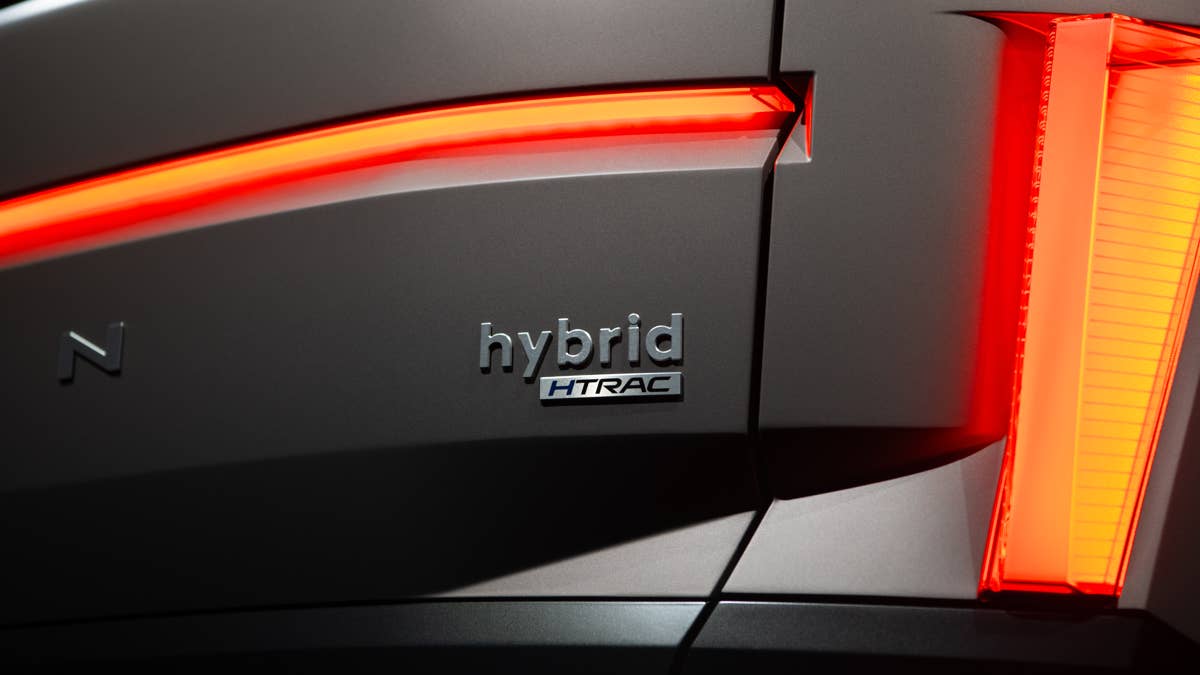
As before, there will be two hybrid powertrains, including a plug-in hybrid. The normal hybrid produces 233 hp combined and will be capable of up to 42 mpg with front-wheel drive. A 0-60 time of 8.5 seconds is claimed for this variant, which has a six-speed automatic. Impressively, this hybrid can now tow up to 3,000 lbs, a 1,000-lb increase over the previous model.
Hyundai
The turbocharged PHEV—available in select markets—is the quickest, with its 288-hp powertrain enabling a 0-60 time of 7.9 seconds. This model has a claimed all-electric range of 50 miles and a 7.2-kW on-board charger for charging at home or public stations.
Hyundai promises enhanced sound insulation and a quieter cabin, along with advanced driver-assist systems like intelligent speed limit assist and navigation-linked smart cruise control. The XRT Pro will also feature the company’s first Smart Terrain Assist system, with real-time assessment of traction and slip conditions and automatic switching between Auto/Snow/Mud/Sand/Rock driving modes.
Whether the Tucson will be more fun to drive or not remains to be seen; the crossover is known for favoring comfort over engaging handling.
The Best Interior Among Mainstream Compact Crossovers?
Hyundai
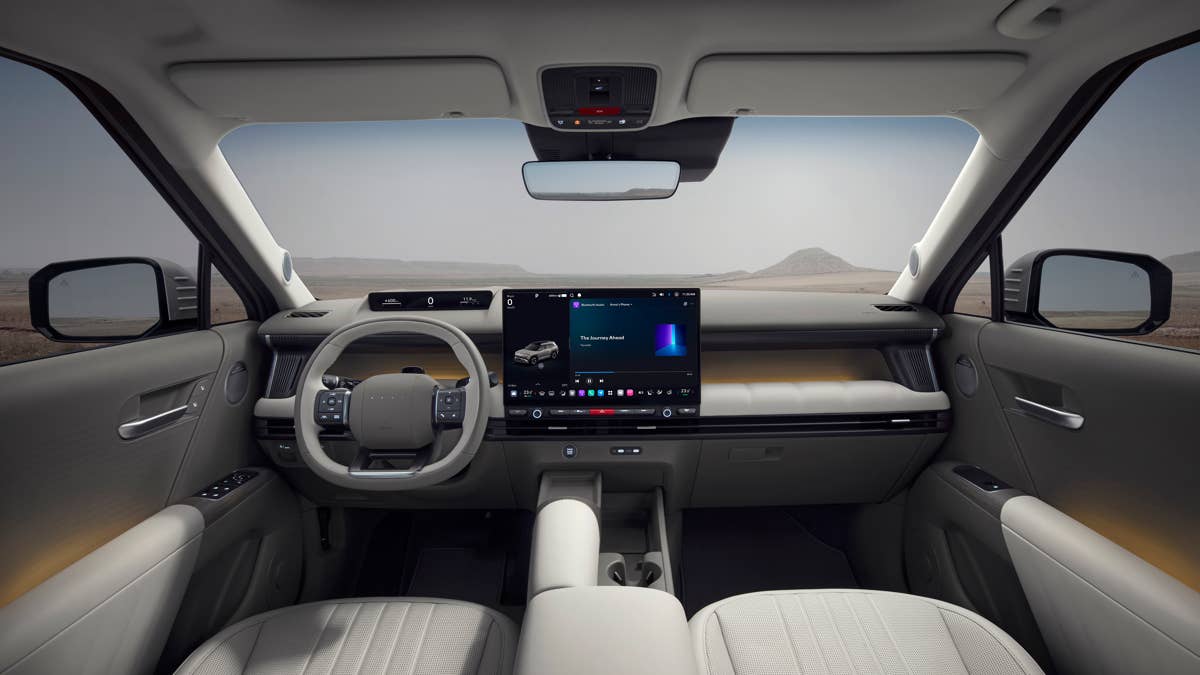
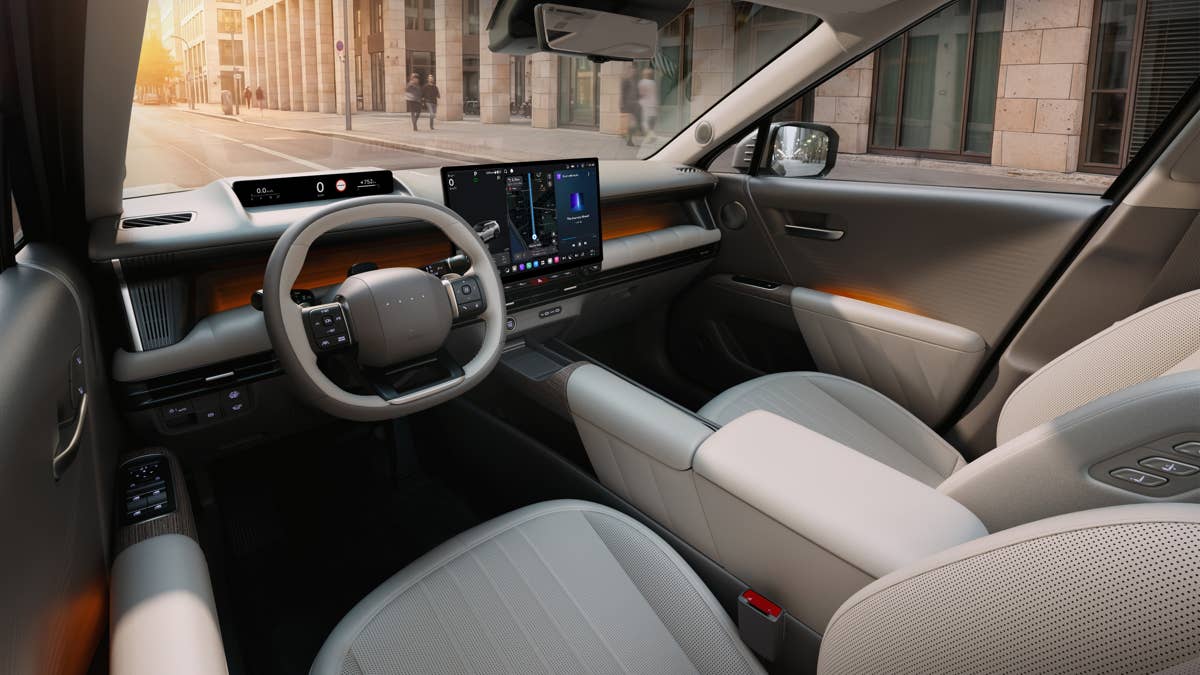
The interior of the 2027 Tucson is truly revolutionary, with few similarities to the current model. A new, high-mounted driver’s display, larger center touchscreen, and a greater focus on occupant comfort immediately stand out.
There’s a two-layered instrument panel, with the upper layer featuring key driver information, not completely unlike the layout in Neue Klasse BMWs. It appears to be much more opulent in the Tucson than the RAV4, with a voluminous cushioning across the instrument panel, doors, and console armrest. Space utilization is a strong point, with 41.9 inches of rear legroom and a larger cargo area measuring 41.7 cubic feet, besting the CR-V’s 39.3 cubic feet.
2027 Hyundai Tucson
Hyundai
A more immersive digital cabin experience is in line with current trends, and the setup is based on Pleos Connect, Hyundai Motor’s Android Automotive OS infotainment system. In addition to the 9.9-inch driver’s display, there are also 12.9- or 17-inch touchscreens. Gleo AI is an in-vehicle AI that can engage in natural conversation with the driver and execute various tasks.
Unlike Mazda with its new CX-5, Hyundai has retained physical, tactile controls for the climate control system and volume knob, while the steering-wheel controls are proper buttons, not the fussier touch-capacitive items. There’s also a new column-mounted Shift-by-Wire lever.
“Millions of families around the world count on the Hyundai Tucson, and this is the best one we have ever built,” said José Muñoz, President and CEO, Hyundai Motor Company. “Its combination of bold design, generous cabin space, seamless infotainment, and available hybrid efficiency sets a new standard for what customers should expect in this segment. Tucson opens the most ambitious product offensive in our history, including more than 100 new and refreshed vehicles globally by 2030 — 58 in North America alone.”
Pricing isn’t available yet, but the 2026 Tucson starts at $29,700, so the new one will likely inch beyond $30K. It launches in Korea later this year before arriving in North America in 2027.
Related: Hyundai’s New Infotainment Goes Big on Screens but Keeps the Buttons
Why It Matters
Hyundai
The compact crossover segment is one of the largest in the U.S., and newer rivals from Toyota and Mazda have surpassed the Tucson over the last year. The 2027 Tucson has very quickly redressed the balance. Improved powertrains, the latest tech, a distinctly premium cabin, and one of the most audacious designs in this segment set up the Tucson for class-best honors, assuming the driving experience matches the rest of the package. The Mazda CX-5, often considered the most premium vehicle in this class, has declined in quality with the latest model, and the latest Tucson looks ready to step in and take its place.
Related: Hyundai Is Spending $500 Million to Build More Hybrids in America