Now that it’s been around for almost a year, it’s safe to say that the sixth-generation Toyota RAV4 has been a success. Supply shortages aside, the 2026 model has picked up where the old one left off. Its standard hybrid powertrain, broad trim selection, and approachable nature make it a favorite in the compact crossover segment.
What wasn’t proven until now were the safety credentials of the new RAV4. However, the Insurance Institute for Highway Safety (IIHS) has just completed a full battery of tests on the Toyota, and the results are in. While most of the news is promising, the RAV4 did not achieve a safety award due to its results in one specific crash test.
2026 Toyota RAV4 Safety Ratings
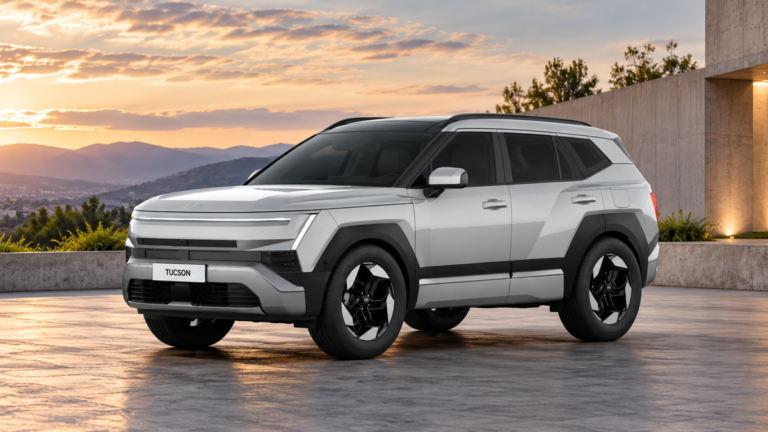
The IIHS tests for crash safety and crash avoidance, which determine whether or not a vehicle qualifies for a coveted Top Safety Pick or Top Safety Pick+ award. Every test is scored as Good, Acceptable, Marginal, or Poor. Below is a look at how the RAV4 and RAV4 Plug-in Hybrid performed. For reference, we included the results of the 2026 Hyundai Tucson, one of the compact crossovers that earned a Top Safety Pick+ award.
|
2026 Toyota RAV4 |
2026 Toyota RAV4 PHEV |
2026 Hyundai Tucson |
|
|
Small Overlap Front |
Good |
Good |
Good |
|
Moderate Overlap Front |
Acceptable |
Marginal |
Good |
|
Side |
Good |
Good |
Good |
|
Headlights |
Good |
Good |
Good or Acceptable |
|
Front Crash Prevention (vehicle-to-vehicle) |
Good |
Good |
Good |
|
Front Crash Prevention (pedestrian) |
Good |
Good |
Good |
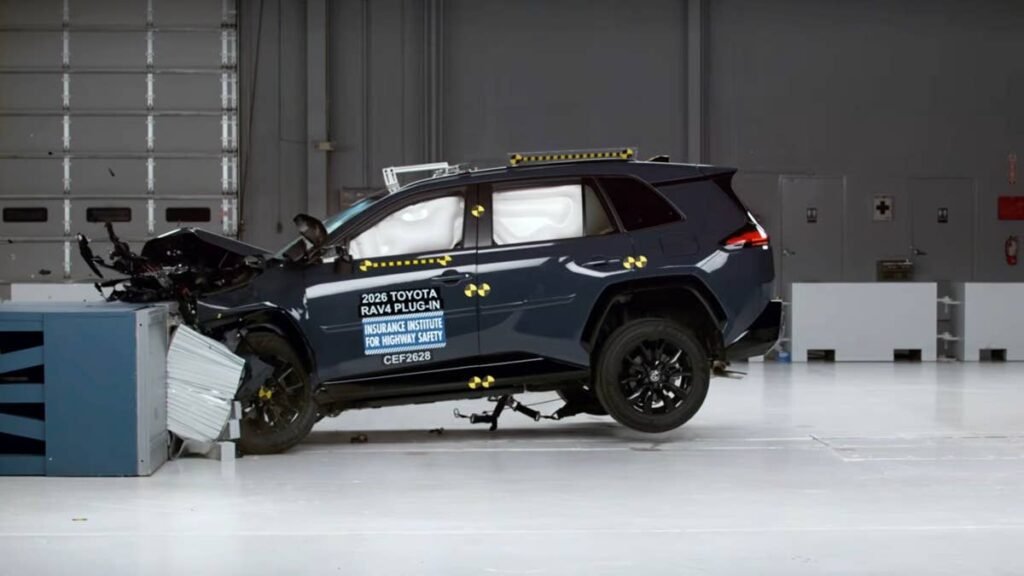
The RAV4 put in an almost flawless performance, with top marks in two of three crash tests and both crash-avoidance tests. However, it fell short in the moderate overlap front crash test. To earn an IIHS safety award, a vehicle needs nothing less than a Good result in this test, which the Hyundai achieved. This particular test is based on a 40-mph crash in which 40% of the vehicle’s width strikes a deformable barrier, as you can see in the videos above and below.
The standard RAV4 hybrid was rated merely Acceptable in injury measures for rear-seat passengers, specifically for head, neck, and chest injuries. The RAV4 PHEV was worse, with an Acceptable rating for rear passenger chest injuries and a Poor result for the rear passenger restraints and dummy kinetics.
While the moderate overlap front test has often tripped up otherwise safe vehicles after being updated a few years ago, it’s still disappointing that a brand-new model like the RAV4 was unable to match the result of an older competitor like the Tucson.
Related: Toyota RAV4 Reliability: The All-New SUV Is Off to a Strong Start
Other Toyotas Struggle In Same Test
Toyota
We dug deeper into IIHS crash data and found that many Toyota models failed to achieve the maximum Good rating in the moderate overlap front test. Here’s a list of them, along with the rating they achieved in this test:
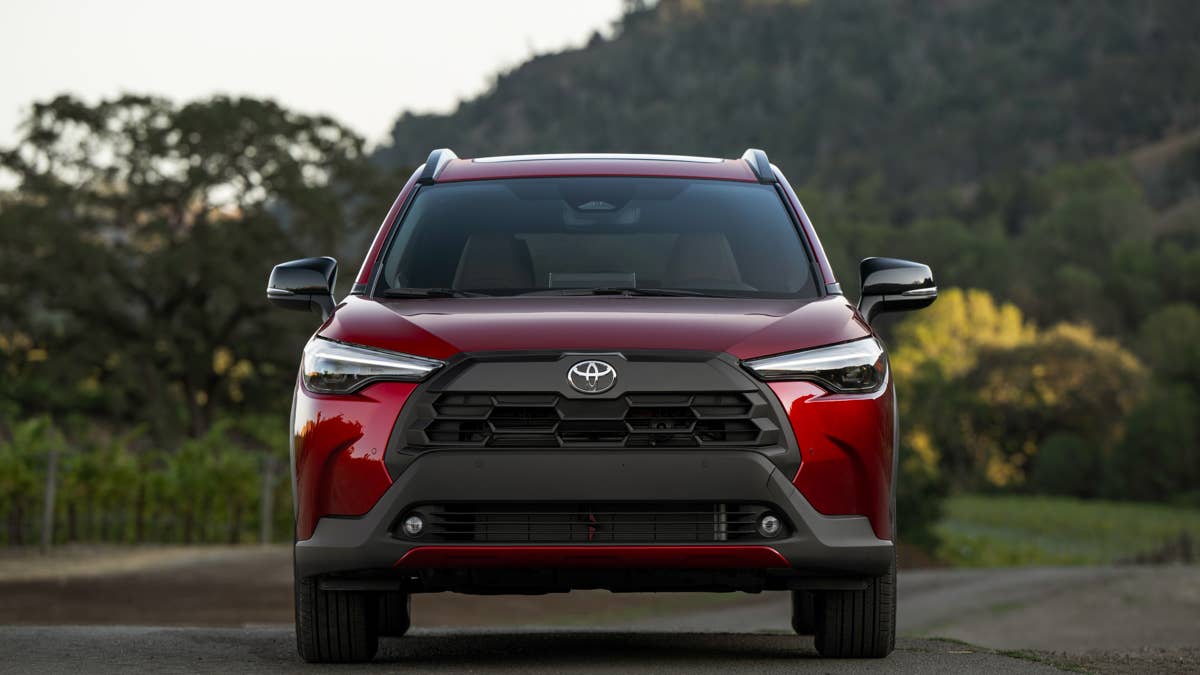
- Toyota Corolla Cross (Acceptable)
- Toyota bZ (Acceptable)
- Toyota bZ Woodland (Acceptable)
- Toyota Corolla Sedan (Marginal)
- Toyota Crown Signia (Marginal)
- Toyota Highlander (Marginal)
- Toyota Land Cruiser (Marginal)
- Toyota 4Runner (Marginal)
All of these vehicles feature some version of the brand’s TNGA platform, suggesting that there’s a common design flaw that’s shown up in IIHS testing. The Prius and Camry are outliers, as both achieved top ratings in the same test, allowing them to earn safety awards.
These results don’t necessarily mean these Toyotas are unsafe or won’t protect occupants adequately in a crash. But when rivals from Kia, Hyundai, and Mazda routinely receive top marks in the same test, one has to wonder when Toyota will introduce the improvements necessary to match them.
Related: Toyota’s New EVs Are Missing Top Safety Awards For A Surprising Reason