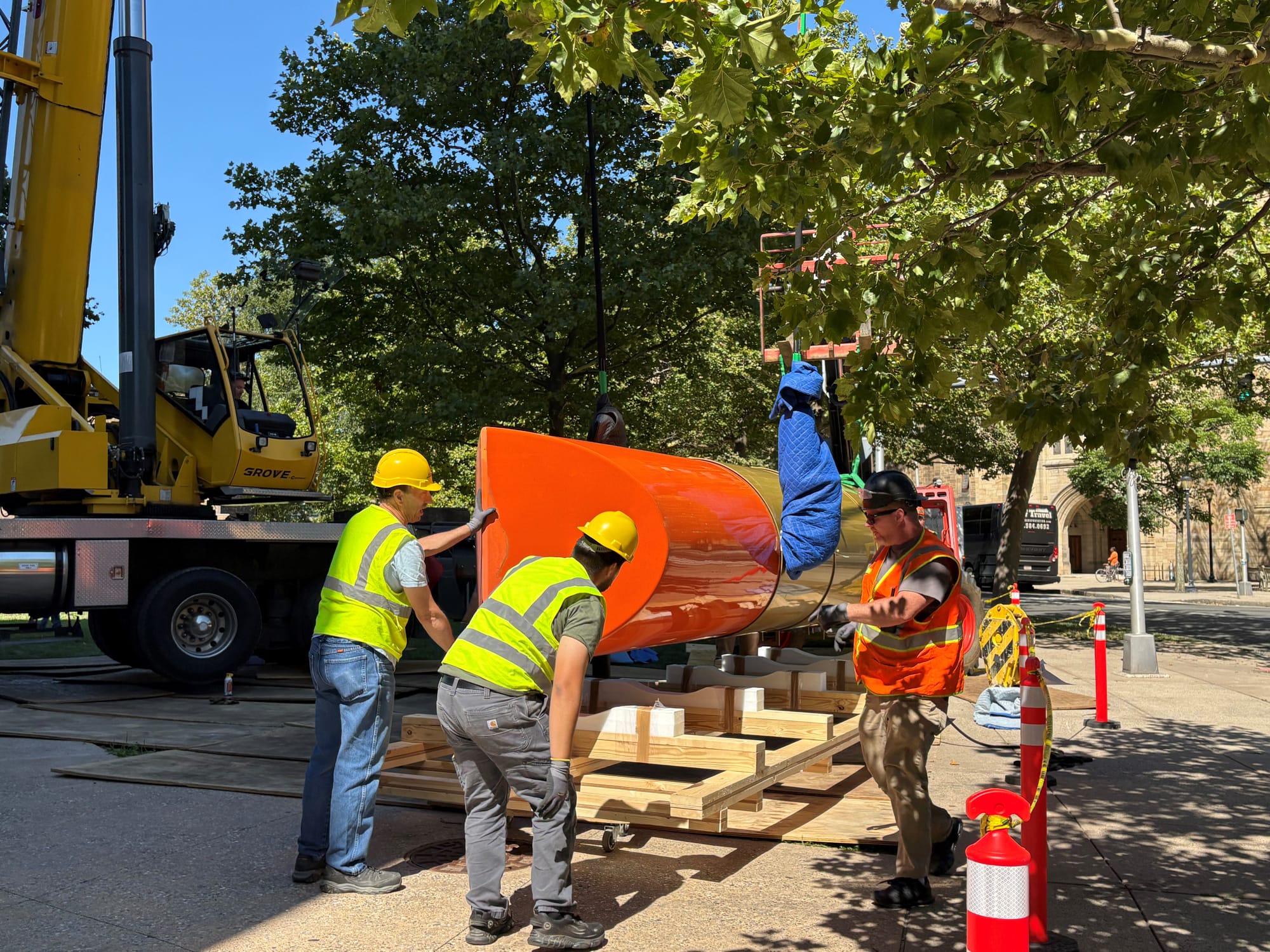
Yale University’s decision to move a beloved Claes Oldenburg sculpture to a different location on campus has sparked a lot of strong feelings about staying true to the late alum artist’s intentions this week. When letters were found etched on the surface of Oldenburg’s “Lipstick (Ascending) on Caterpillar Tracks” (1969) last month, the university announced that after 50 years in the Morse College courtyard, the public work would be moved to the Yale University Art Gallery (YUAG) for “conservation and care,” the Yale Daily News reported.
In an email to Hyperallergic, YUAG spokesperson Roland Coffey confirmed that the piece was deinstalled this week and said that “following additional offsite conservation, the sculpture will be displayed in the Gallery’s outdoor sculpture garden in March 2026.”
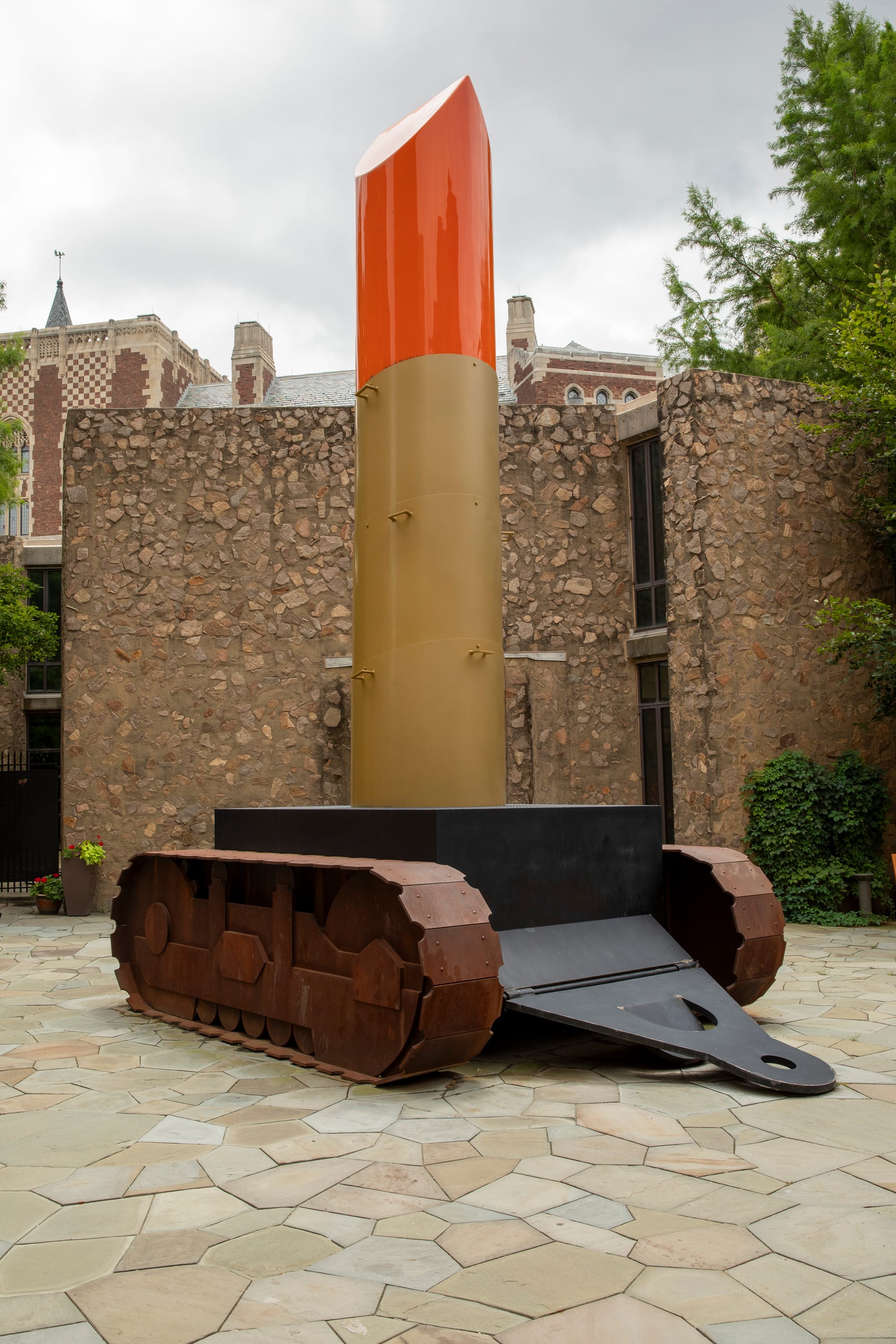
Oldenburg, who graduated from Yale in 1950, created the 24-foot steel sculpture in collaboration with a group of the university’s architecture students as a surprise gift to the school in 1969 — the same year the school began accepting women to study. It was originally installed with an inflatable lipstick crayon at the university’s Beinecke Plaza to serve as a speaking platform during a series of anti-Vietnam War protests, but after severe vandalism, Oldenburg and the students removed and refabricated it for durability before giving it back to Yale.
The school shifted the work’s ownership to YUAG and re-installed it at the Morse College courtyard in 1974, where it became the campus residential community’s emblem for the last half-century. Per an update from Yale Daily News, University President Maurie McInnis clarified that the Lipstick sculpture will be moved to the “back courtyard of YUAG,” to keep it safe from sun damage and vandalism.
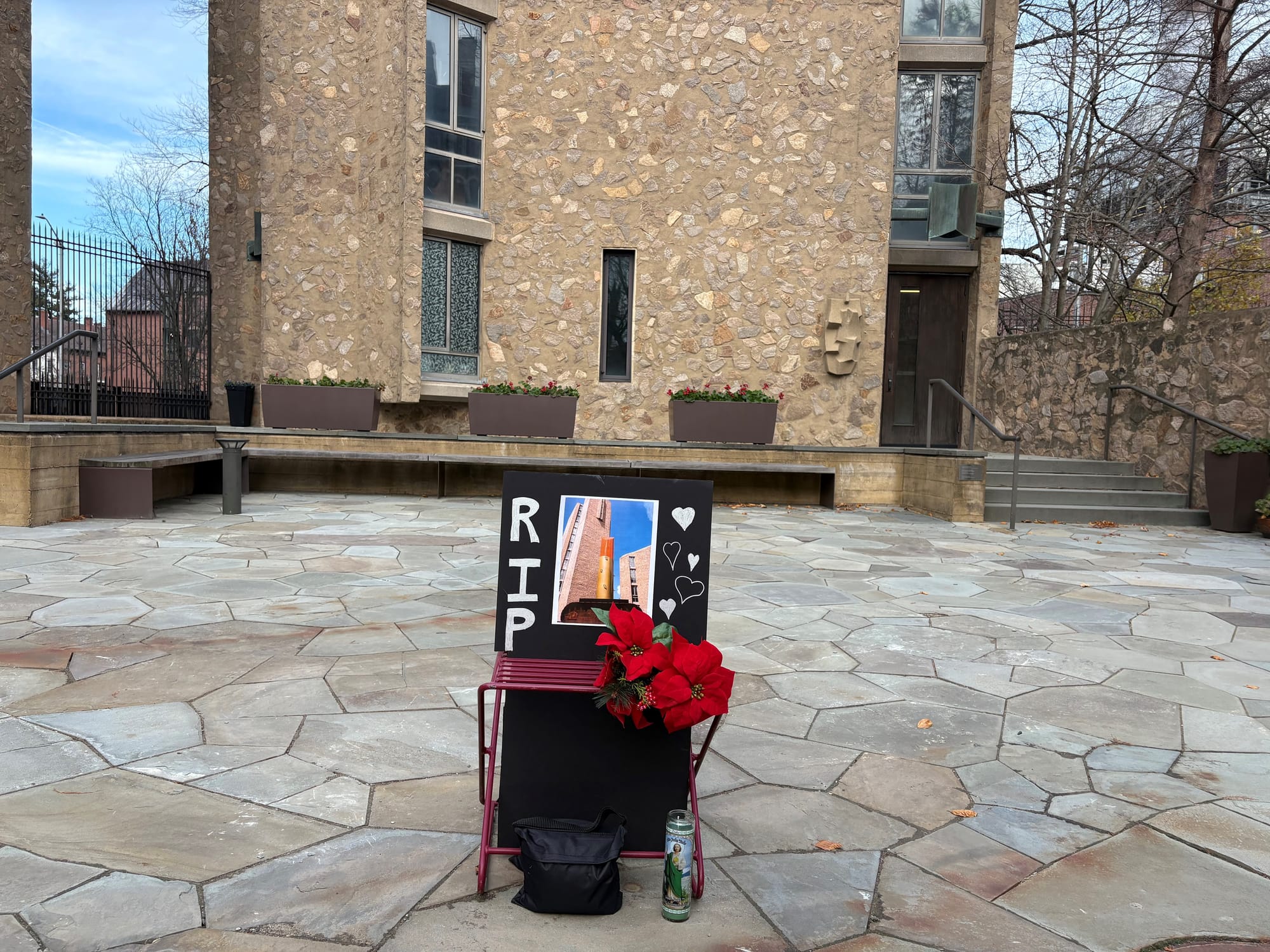
While the Morse College community mourns the beloved Lipstick sculpture, Architecture alumni Stuart Wrede and Sam Callaway, who were part of the group that commissioned Oldenburg for the project, have long argued that the sculpture was designed specifically as a public protest work for Beinecke Plaza, and it should be returned there.
“I’m sorry, but I find this hilarious as a reason,” Wrede told the college newspaper in response to McInnis citing sun protection among the reasons to move the work.
The Lipstick sculpture was selected for a funded restoration over the summer through the Bank of America Art Conservation Project, during which it had been repainted and recoated after years of environmental exposure.
A representative for Morse College did not immediately respond to Hyperallergic‘s request for comment.