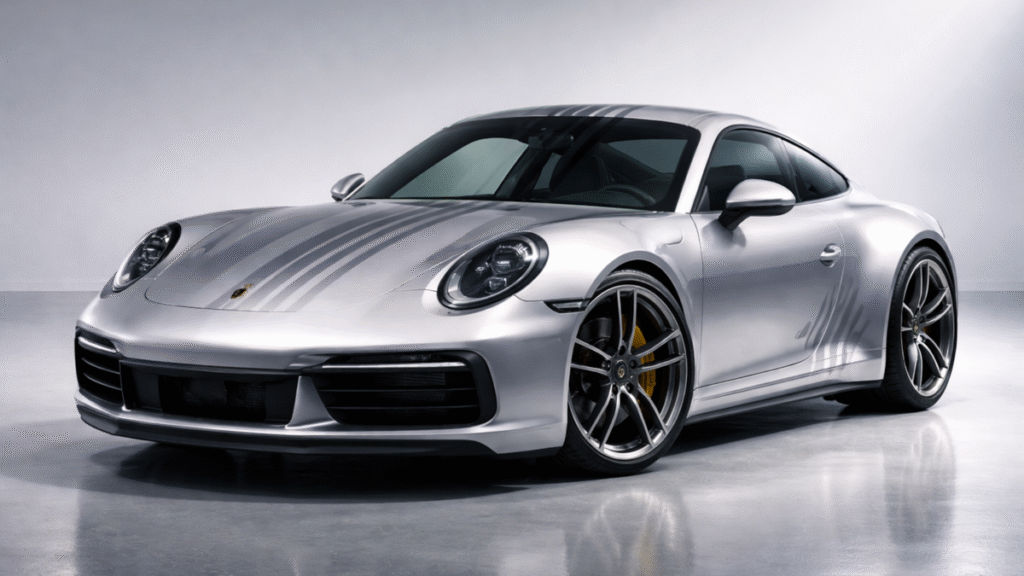
On a Nevera hypercar, Rimac has elegantly integrated a charge status indicator into the bodywork with a trio of lights on each rear fender, just behind the side intakes. But Porsche may have found an even better way, according to a new patent filed in Germany, reports Motor1. Instead of light fixtures, the patent proposes integrating a technology that would allow racing stripes to appear and fade to indicate various things, like the charge status or even the drive mode of the vehicle. To achieve this, Porsche proposes using an electronic paper or paramagnetic coating, calling to mind BMW’s use of color-changing E Ink.
Porsche Has Many Potential Uses for Its New Tech
Porsche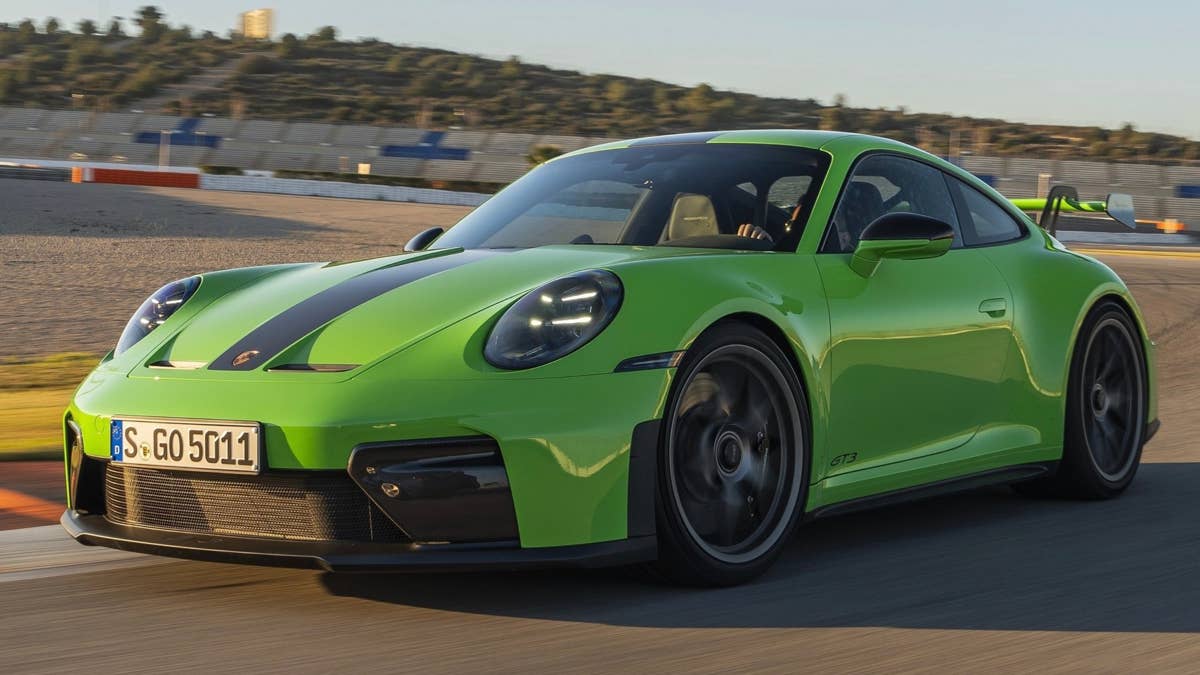
Much like electrochromic glass that can change opacity depending on the electrical current applied to it, so these stripes could instantly change color depending on Porsche’s requirements for the technology, and since a film or coating would be relatively easy to apply, there are plenty of potential uses. For example, a racecar could have entirely different liveries depending on the competition or country in which it is racing, a road-going EV could show different colors while recharging to show how much the battery has been replenished, or something like a GT3 RS could show different colors to indicate whether it’s accelerating, braking, or heading for the pits on a track day. We could also see Porsche using such a technology to allow the wealthiest customers of the Sonderwunsch department to have multiple themes for their cars, allowing them to change the look of their 911s on a whim.
Related: Porsche Is Developing a Shifter That Acts Like a Manual or Automatic
It may also have a safety benefit on the road, with a car potentially capable of changing its color or displaying messages when the driver encounters a hazard, like an accident or ice on the asphalt. And using a smartphone app, a customer may be able to see which tire has lower pressure or which wheel is misaligned through a change in color on that corner of the car. Finally, law enforcement could use such a system on unmarked cars, changing what looks like a normal car into a police car at the touch of a button.
Potential Drawbacks to Porsche’s New Patent
Porsche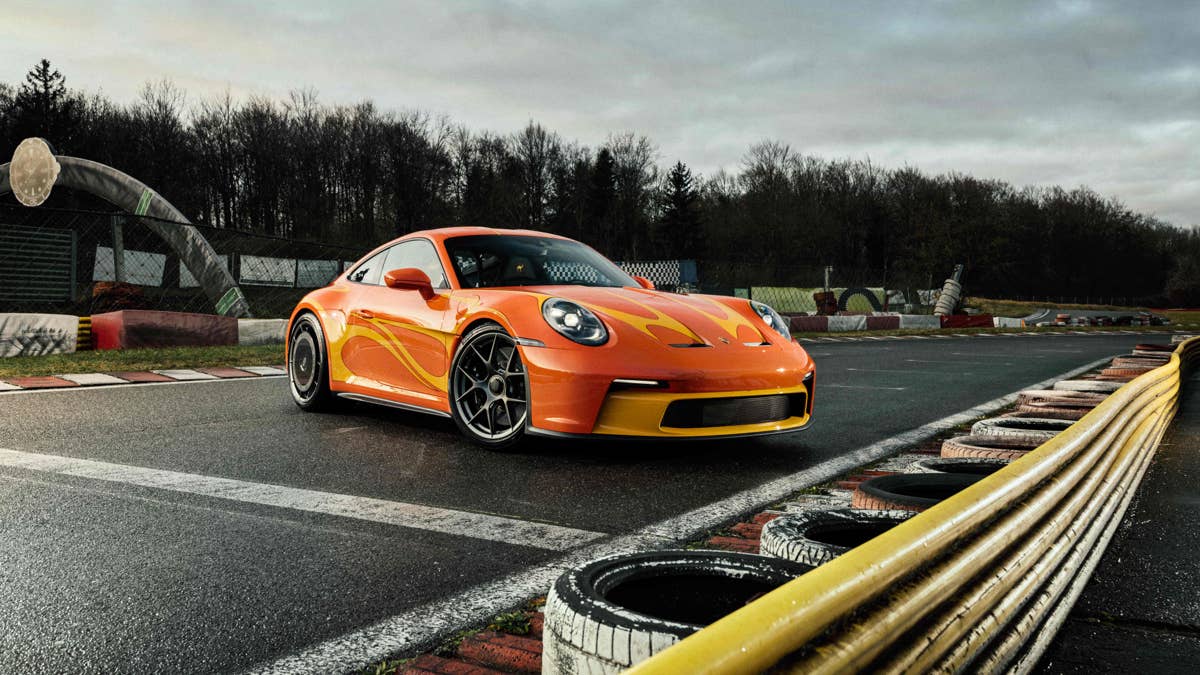
There are several issues with this idea, not least of which is the added cost and complexity of integrating such a technology into the production process. There’s also the question of whether such a system could safely be ceramic-coated or otherwise protected from the elements, and how it might be repaired if damage were sustained. Also, if this system is not automatically controlled, we can see criminals using instantly changeable aesthetics nefariously, perhaps to evade law enforcement. But as always, a patent is not evidence of production intent, and automakers often file to protect clever innovations without any use therefore being planned. Then again, Rolls-Royce seems to be readying a new kind of hood opening that was patented late last year for its production electric SUV, so sometimes, these ideas are a glimpse into the future.