The Legend Forged in Sand: Porsche 959 Paris-Dakar
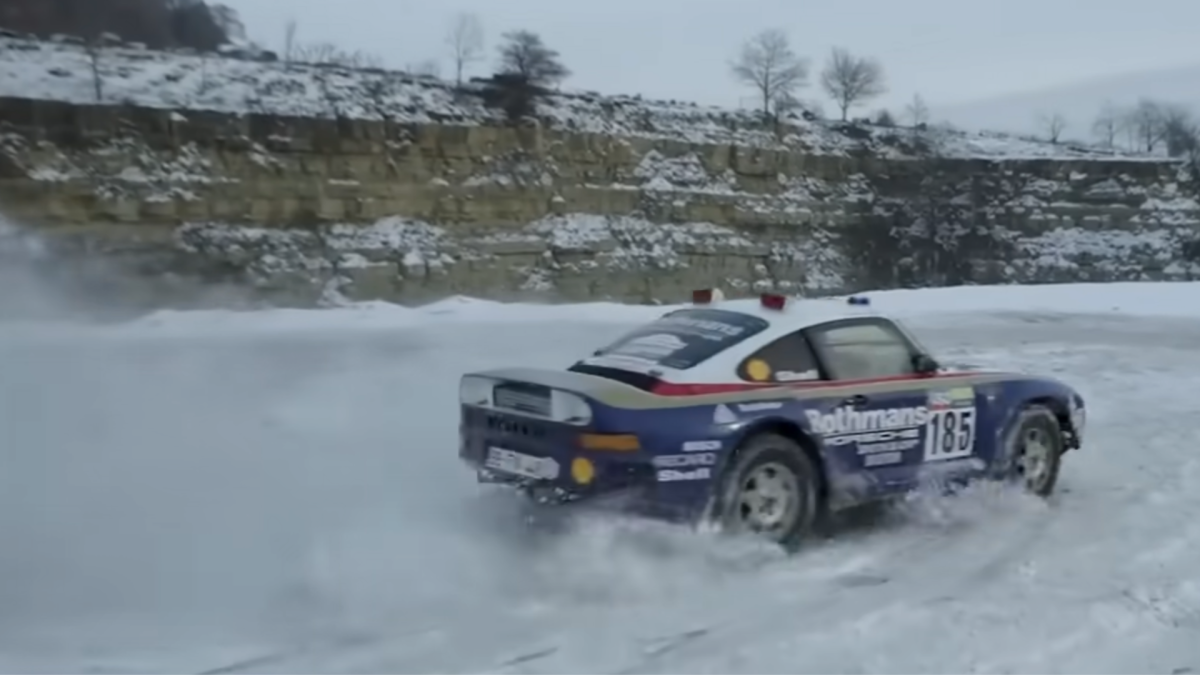
The Porsche 959 Paris-Dakar is not just another homologation special. It is one of the most ambitious off-road experiments ever undertaken by Porsche. Built to conquer the Paris-Dakar Rally, the 959 redefined what a supercar could be. Twin turbocharging, advanced all-wheel drive, and adjustable ride height made it a technological leap. When it won in 1986, it validated years of engineering risk.
That influence still echoes today. The Porsche 911 Dakar draws directly from this lineage. It proves that Porsche still values off-road capability in unexpected forms. Yet the original 959 Paris-Dakar remains unmatched. It combined durability and innovation in a way few vehicles have since. That dual identity makes its preservation far more complex than a typical restoration.
Preservation Over Reinvention
The work was led by Porsche Heritage and Museum with support from Porsche Classic and documented in the video above. The goal was preservation, not reinvention. Every step followed a strict philosophy. Maintain originality wherever possible. This was not a cosmetic rebuild. It was a controlled recommissioning rooted in historical accuracy.
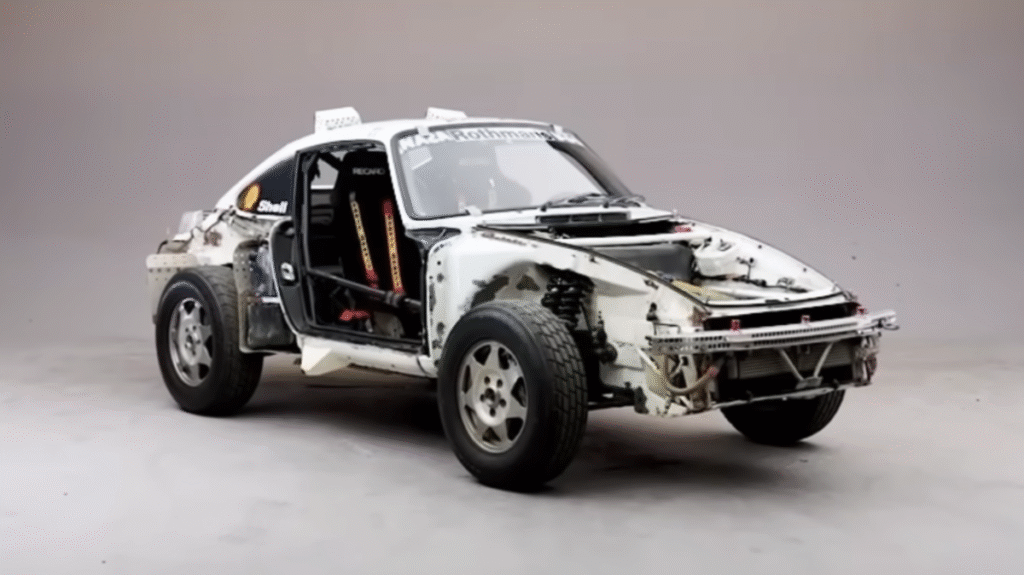
Initial inspections revealed strong structural integrity. The fiberglass-reinforced underbody protection remained intact. Axles and suspension components showed minimal wear. Even after extreme rally use, the core structure held up. Surface rust was present in uncoated areas, but it was stabilized rather than removed to preserve authenticity.
YouTube/@TheFrame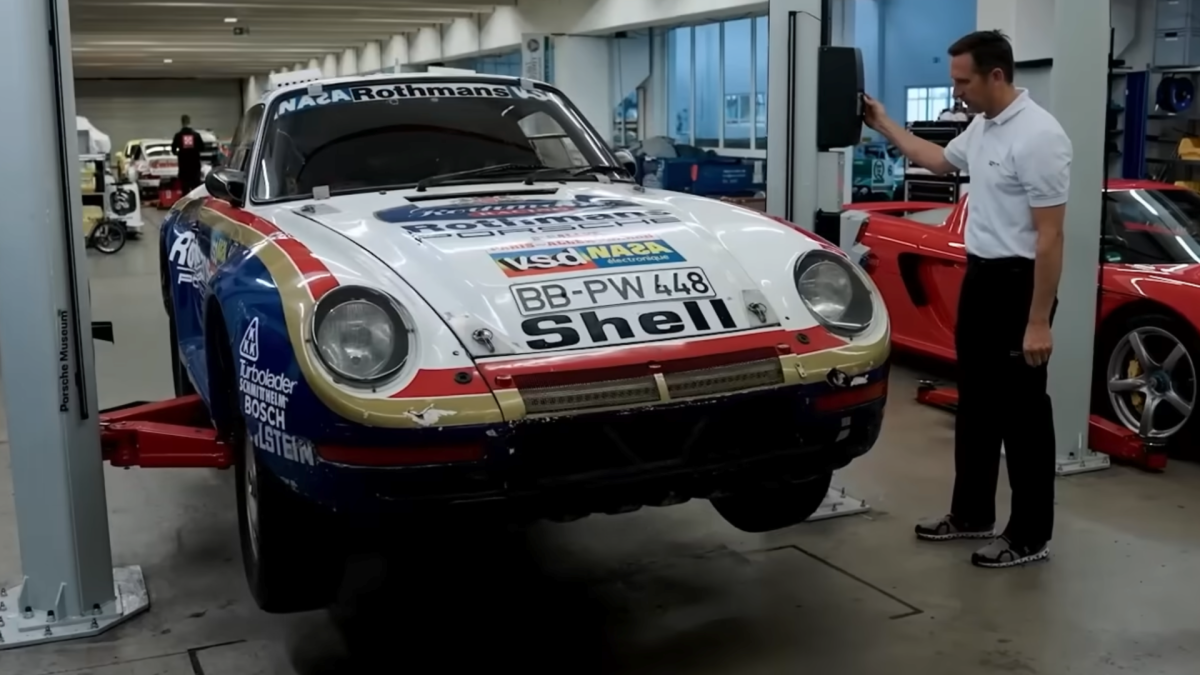
Engineering Under the Skin: Mechanical Resurrection
The drivetrain required the most intensive work. The 2.85-liter (174 cubic-inch) twin-turbo flat-six was removed with the gearbox for a full overhaul. Despite roughly 11,200 miles of hard use, internal components remained in excellent condition. The crankshaft showed no significant damage. This level of durability highlights the over-engineering behind the 959 program.
Worn items were replaced with care. Bearings, seals, and piston rings were updated using improved materials. Molybdenum-coated rings enhanced durability without changing the engine’s character. The rear axle assembly was disassembled and refurbished. Its fixed driveshaft layout contrasts with the electronically controlled front differential. Wiring, cooling systems, and braking components were restored to full functionality.
YouTube/@TheFrame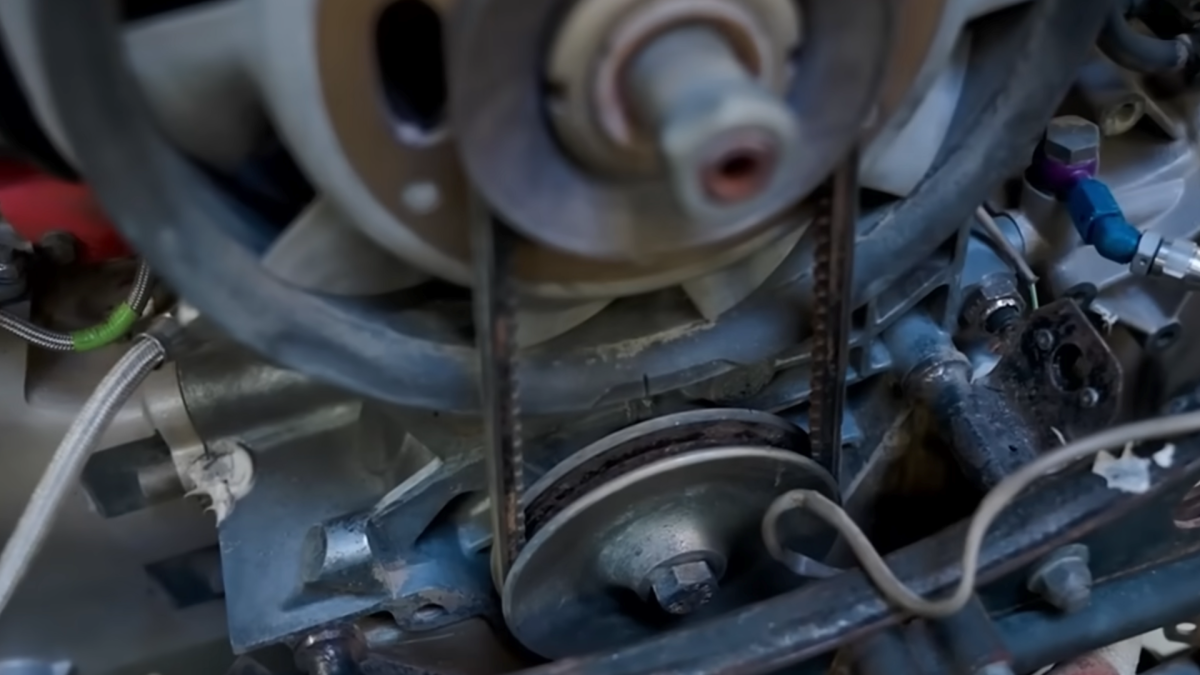
Restoration at its Purest
This project succeeds because of restraint. Porsche avoided over-restoration. Patina was preserved. Even traces of rally dust remained on select components. These details matter. They connect the car directly to its competition history and lend it the credibility a fully refinished example would lack.
From my standpoint, this is the correct approach. Mechanical reliability was restored without erasing identity. The balance is precise and deliberate. The result feels authentic and usable. The 959 Paris-Dakar stands as more than a restored vehicle. It remains a living piece of motorsport history, ready to tell its story without filters.
YouTube/@TheFrame