Volvo’s Road to Electrification
Like many automakers, Volvo dabbled with a few electrification experiments back in the day. There was the 1976 Elbil prototype, a boxy, smaller-than-subcompact city car that served more as a test bed than an actual consumer product. Ten years after that, the company built the 480 Electric Prototype, which was a far more usable vehicle than the Elbil.
In 1992, Volvo rolled out the ECC Concept, which featured a gas turbine and an electric motor, effectively making it a hybrid. After that, there was the HEV 98 from, er, 1995, and it was an 850 with a plug-in hybrid system. Yes, folks, as far back as the mid-’90s, the Swedes were already working on it.
Volvo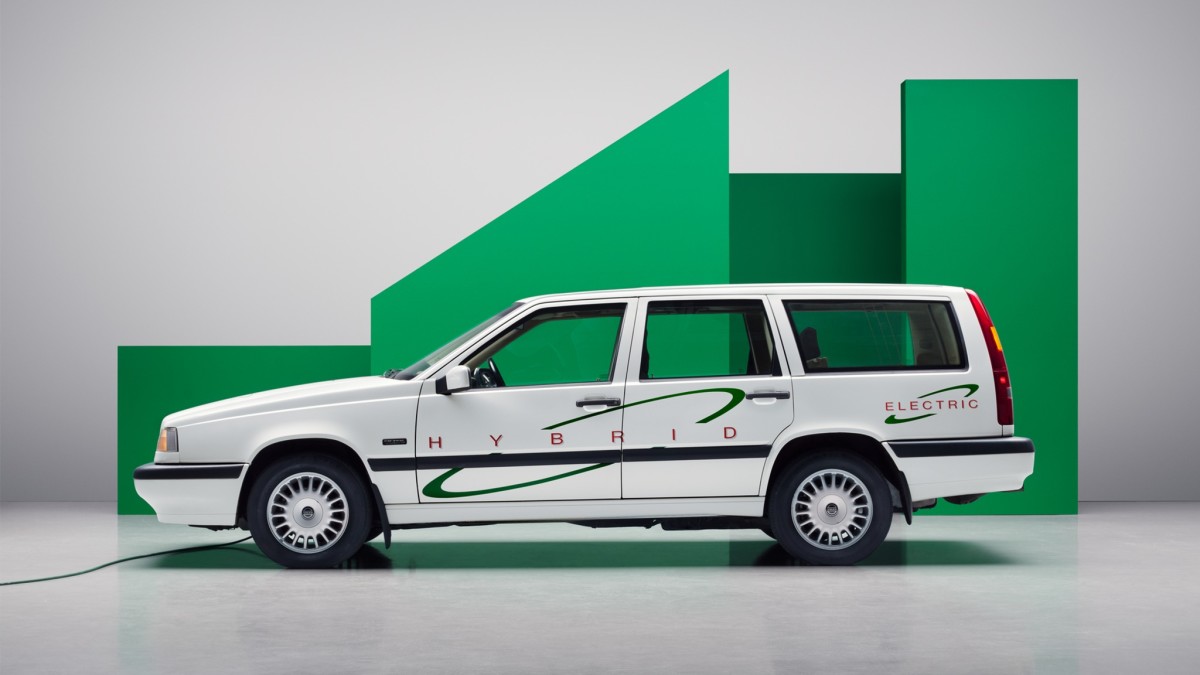
The First Official EV
Come the 2010s, EVs were slowly trickling into the market. Tesla was just about ready to roll out the Model S, while Nissan began its mass production of the first-generation Leaf. As for Volvo, it was taking relatively small steps, but it, too, had an EV ready for the market.
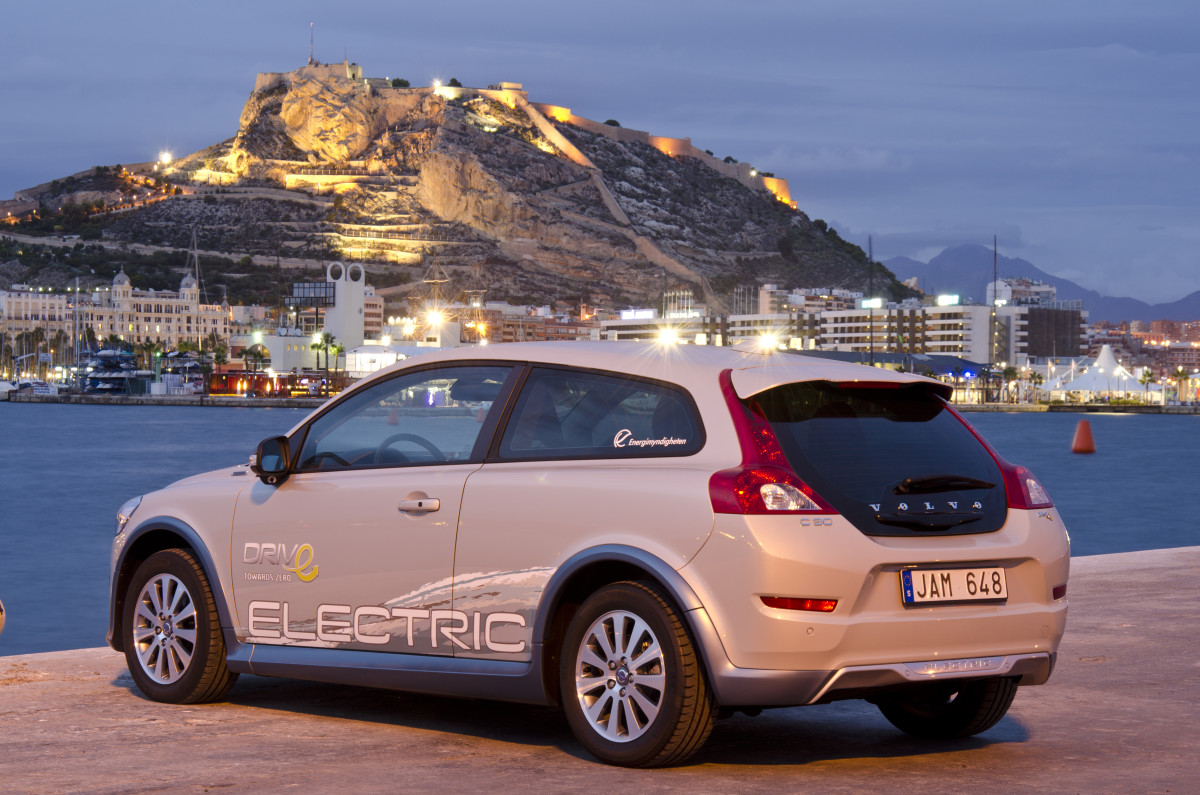
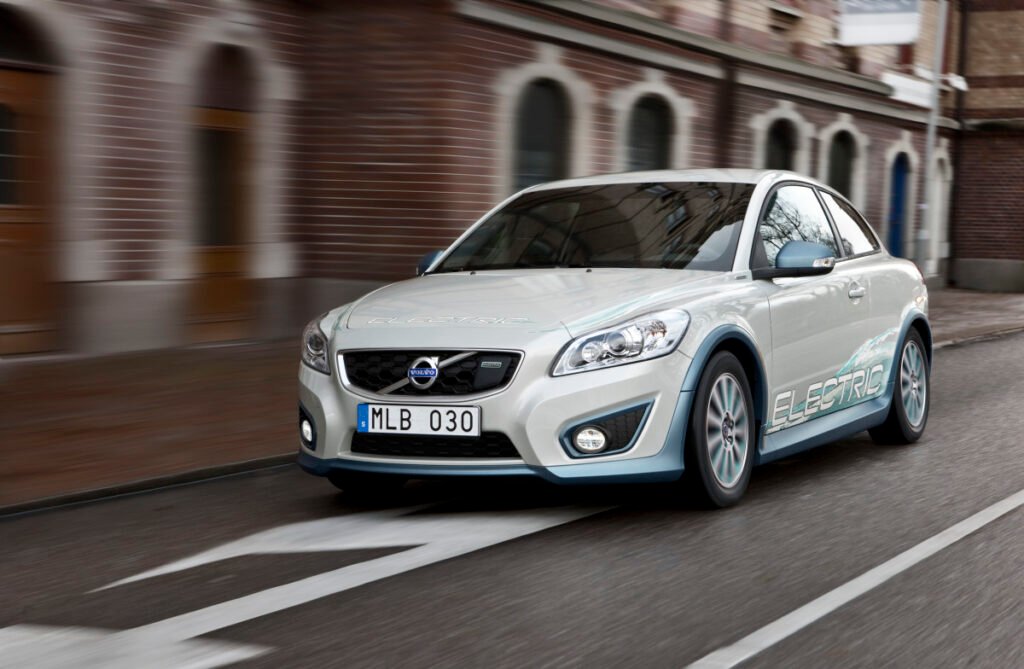
That came in the form of the 2011 C30 Electric, a limited-run model made specifically for fleet customers and not necessarily for the public. Okay, it’s not like the mass rollout of Nissan and Tesla, and it was simply a C30 hatchback with its engine swapped out for an electric motor. About 250 of these were made, and Volvo claimed they were made for harsh winters. Well, they are Swedish, after all.
Volvo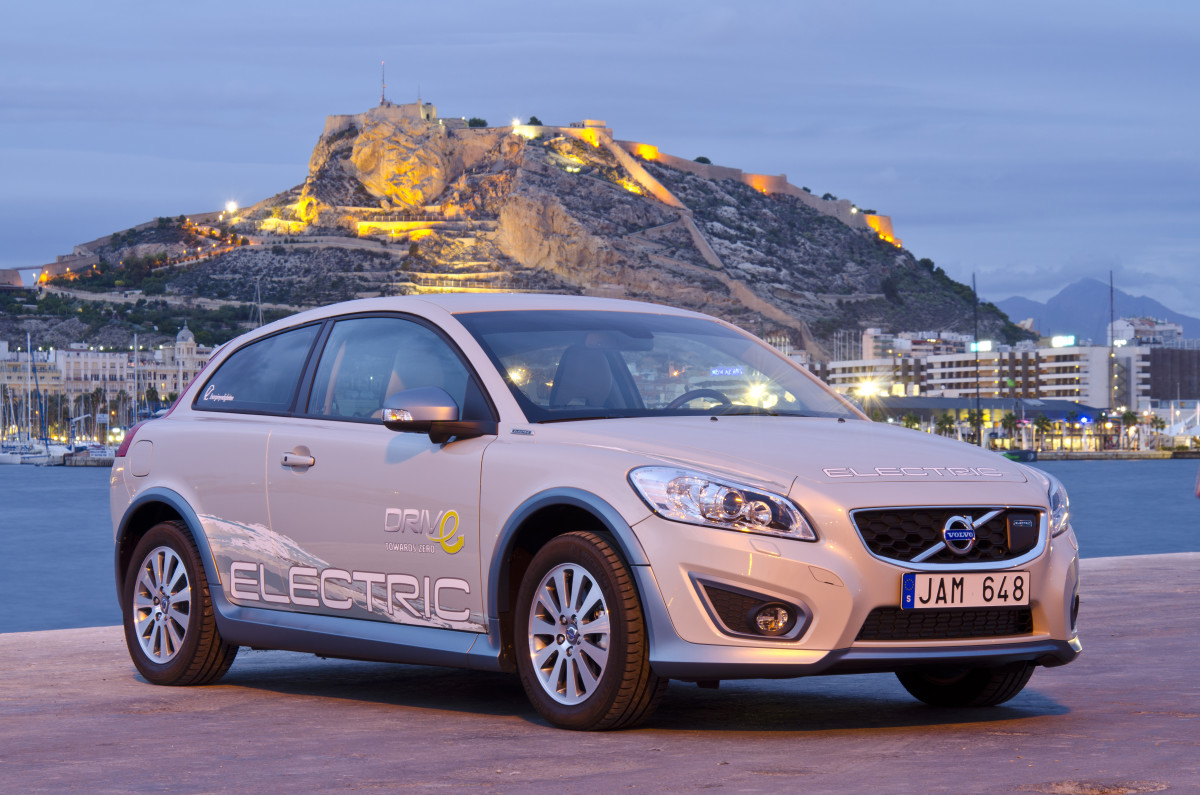
Specs, Anyone?
Obviously, it’s no Tesla fighter and a pretty docile car by all means. If anything, it shows just how far EVs have come since the C30 Electric was first introduced. Its battery capacity was a mere 24kWh, and modern plug-in hybrids have larger capacities than that these days. The car uses lithium-ion batteries that are recharged via a regular 230-volt power socket. No fast charging here, folks.
Of course, fast chargers and superchargers weren’t really a thing in 2011. The world’s charging infrastructure back then was nothing like today. In that case, you needed to take 6 to 10 hours to fully charge it from empty. Fully topped up, you got 101 miles of range according to official paperwork, but Volvo’s own estimates are a more conservative 93 miles.
Performance-wise, it’s obviously no hot hatch. The single electric motor churns out 111 hp and 162 lb-ft of torque. Volvo didn’t bother publishing its 0 to 60 mph time, but they did say that its EV hatchback could do 0 to 43 mph in 6 seconds. Meanwhile, its top speed was capped at 80 mph.
Volvo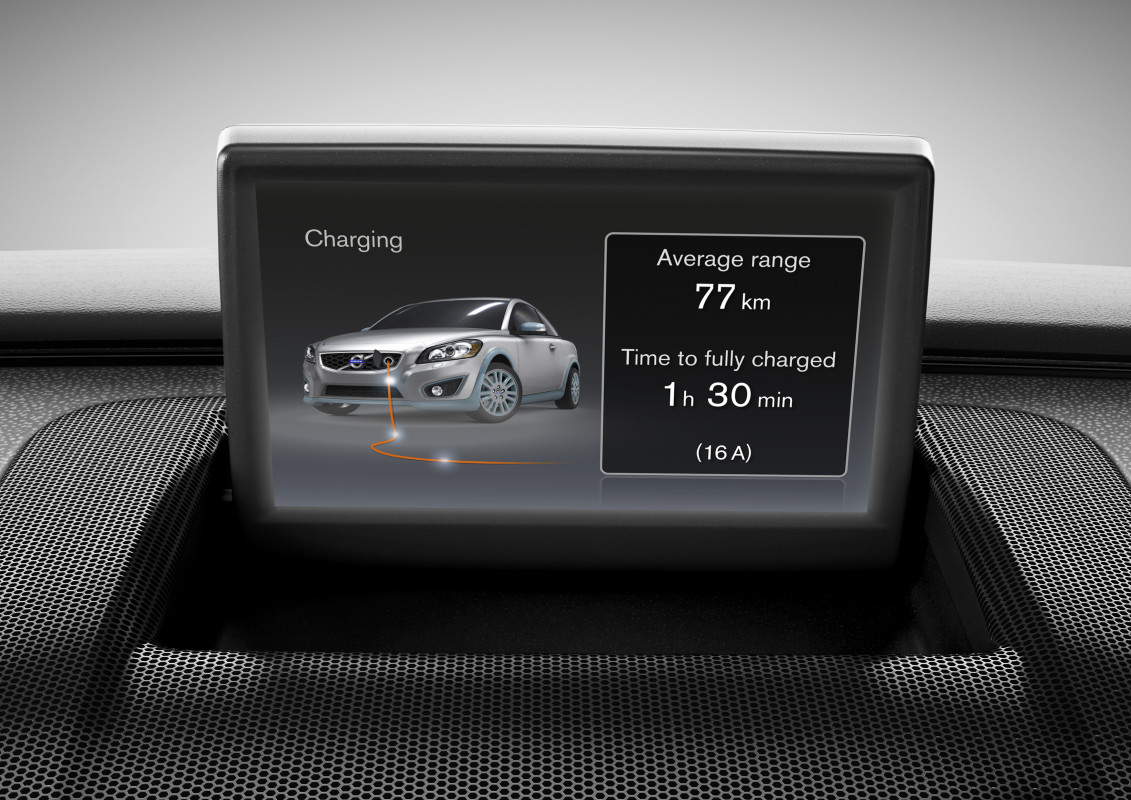
Electrified Volvos Today
Looking at the Volvo lineup now, all its products have some form of electrification. Standard models are equipped with mild-hybrid systems, while plug-in hybrids remain a popular choice in Europe. Of course, the company now has a barrage of EVs with the XC40 Recharge (now called EX40) being its first mass-market electric model.
Today, Volvo has four mild-hybrid models, four plug-in hybrids, and six full-electric vehicles. Its most recent model is the EX60, which slots in between the flagship EX90 and EX40 and completes the company’s range of EV crossovers.
When the C30 Electric was launched, Volvo reckoned that EVs would capture 5 to 10 percent of the EU market by 2025. Last year, EVs accounted for 19.5 percent of all new-car purchases on the continent, twice what the company had initially predicted. Throw in hybrid and plug-in hybrid sales, and it’s well past 50 percent in Europe.
Volvo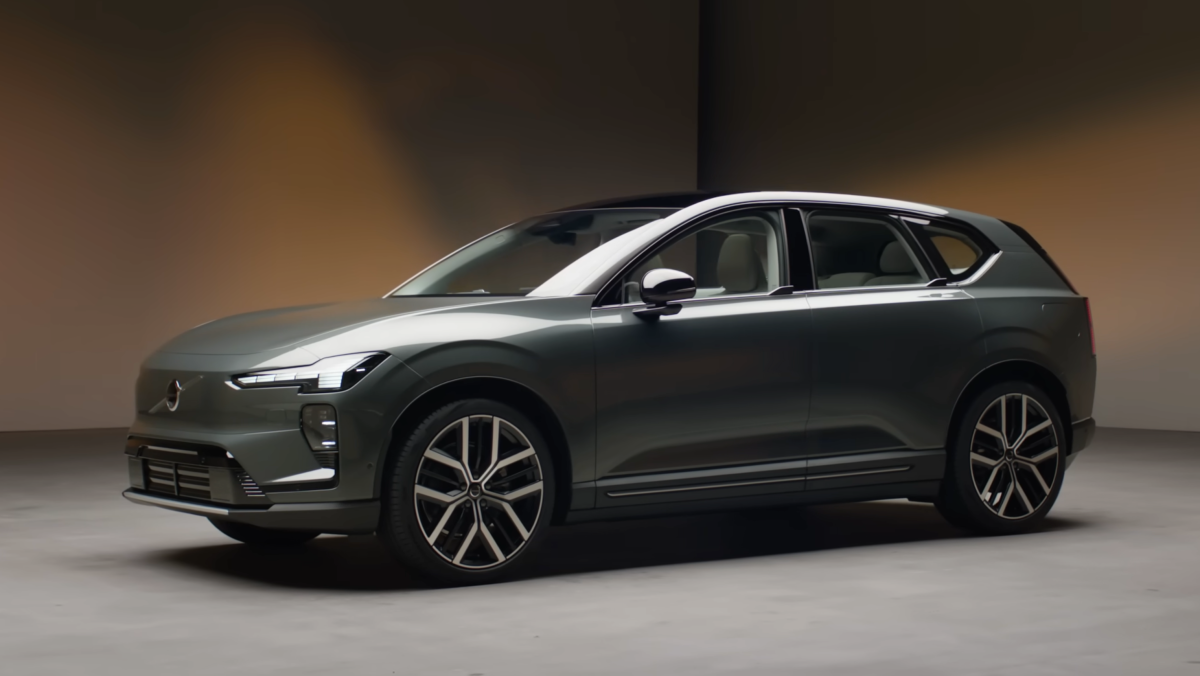
Volvo