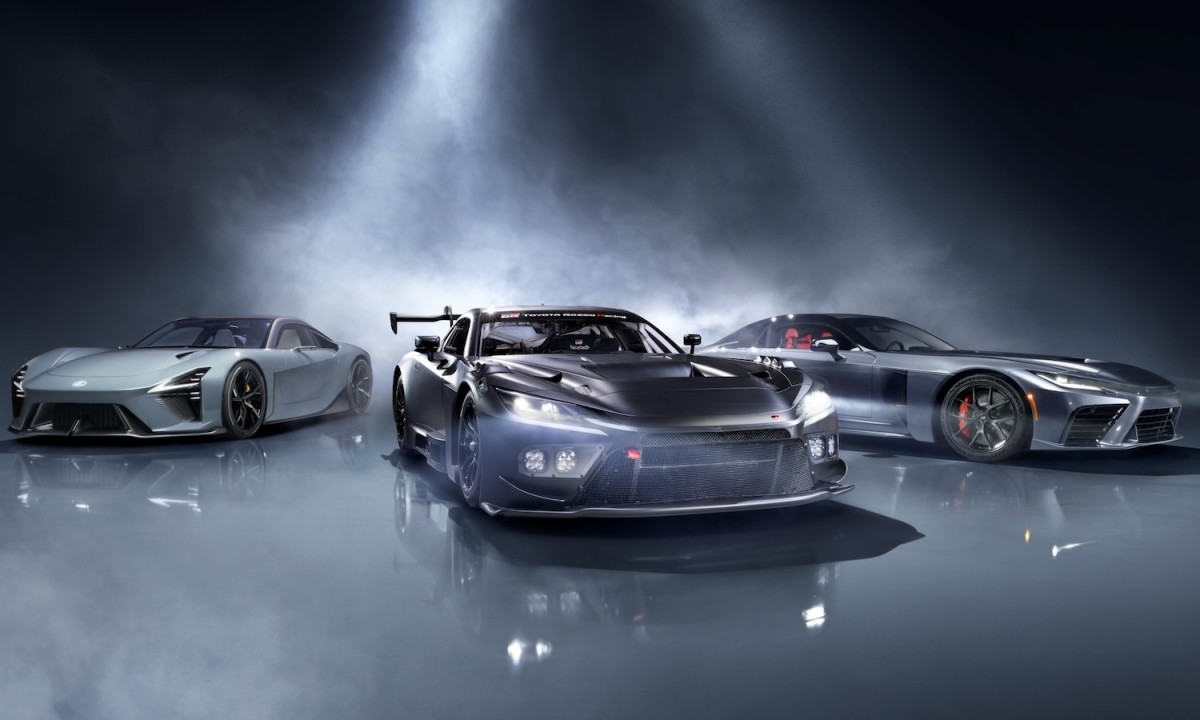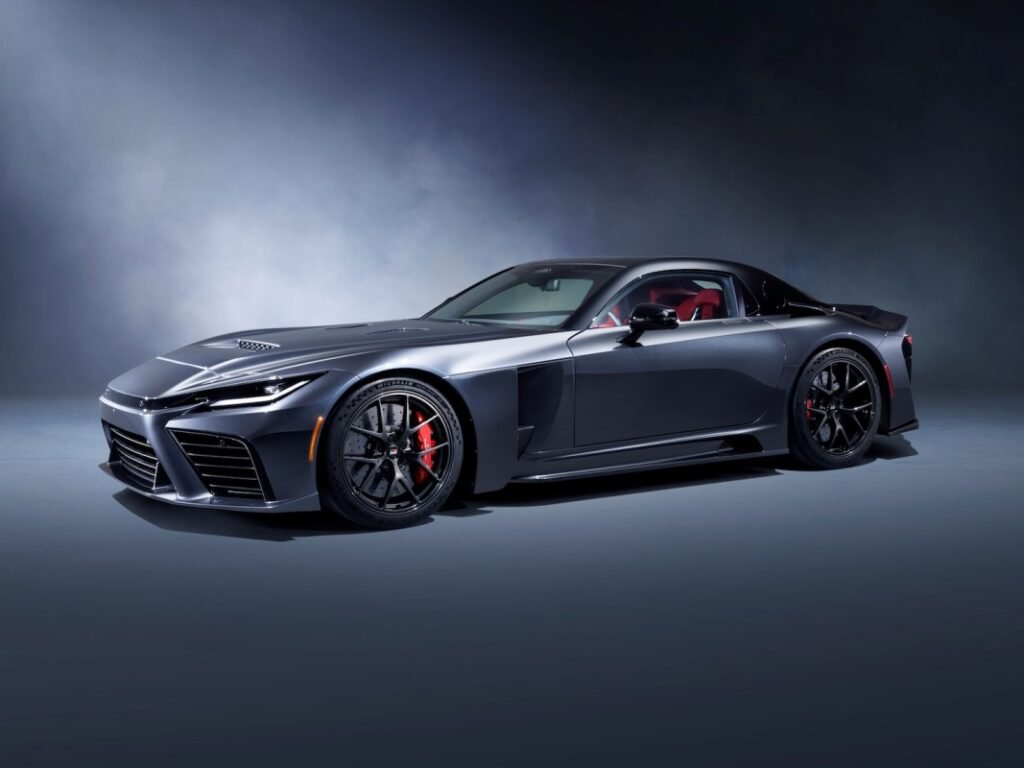
One of the most anticipated reveals of the year has finally happened, and it doesn’t disappoint. Toyota has unveiled the GR GT, built around three key criteria of a low center of gravity, low weight with high rigidity, and strong aerodynamic performance. And it’s got plenty of power, too. A dry-sumped twin-turbo V8 with a Porsche 911 Turbo S-beating 641 hp and 627 lb-ft feeds an eight-speed transaxle on the rear axle, ahead of which sits an electric motor to fill torque and minimize lag. Top speed is rated at more than 199 mph, and here’s the real kicker: everything you read below is only preliminary. While the dimensions and fundamental components won’t change, Toyota says the GR GT’s horsepower, torque, top speed, and weight figures could improve before the production car arrives sometime “around 2027.”
An All-New Powertrain for the GR GT
The twin-turbo V8 under that long hood is a hot-vee engine (Toyota’s first such design), with the turbochargers nestled between the two cylinder banks, and it sends power to the rear wheels and a mechanical limited-slip differential through a carbon fiber torque tube. Between the engine and wheels lies that new eight-speed automatic transaxle, and it uses a wet-start clutch instead of a torque converter. Ahead of this transmission is an electric motor, so this is a hybrid, but it’s there only for performance. That said, Toyota has developed the car to meet more stringent emissions regulations.
|
Length |
189.8 inches |
|
Width |
78.7 inches |
|
Height |
47 inches |
|
Wheelbase |
107.3 inches |
|
Weight |
3,858 lbs or less |
Peek through the 20-inch wheels, wrapped in bespoke Michelin Pilot Sport Cup 2 rubber (265/35 at the front, 325/30 at the rear), and you’ll find Brembo carbon-ceramic discs that promise immense and repeatable stopping power. Should one wish to turn the tires into smoke, a multi-stage stability control system will allow novices and pros to exploit the deft handling of the sports car, which comes, in part, courtesy of double wishbone suspension at either end of the chassis with forged aluminum arms.
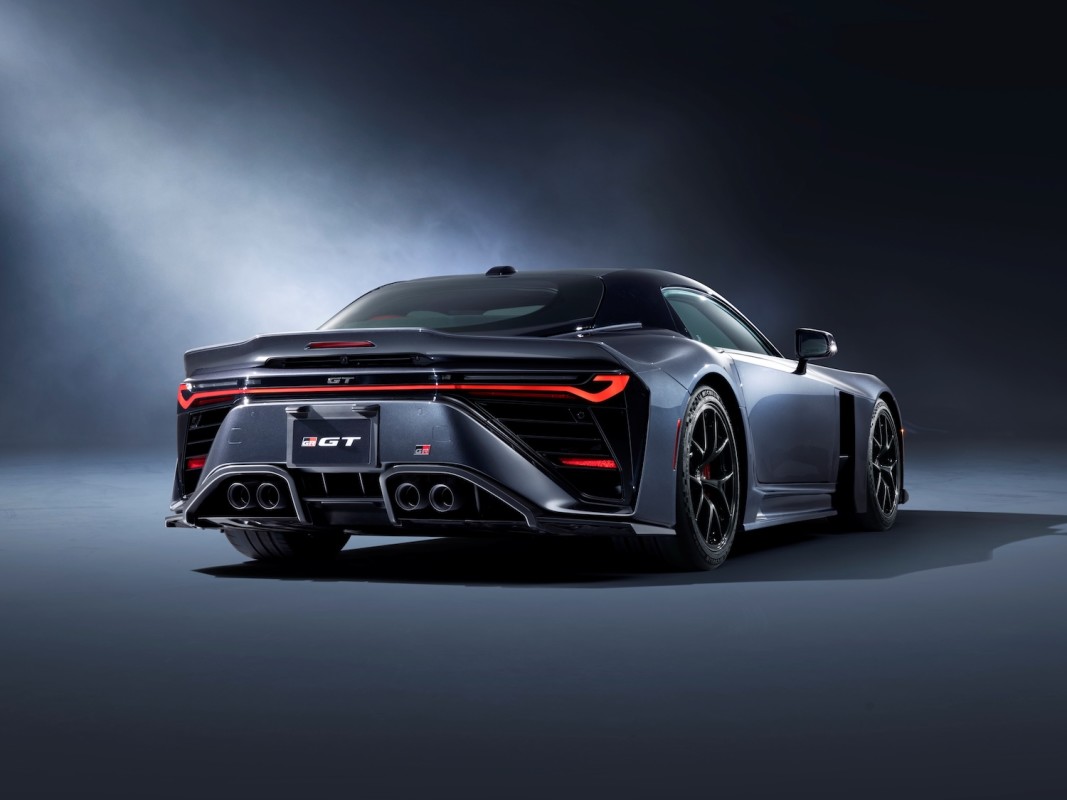
Styling, Interior, and Chassis Sculpted by Performance
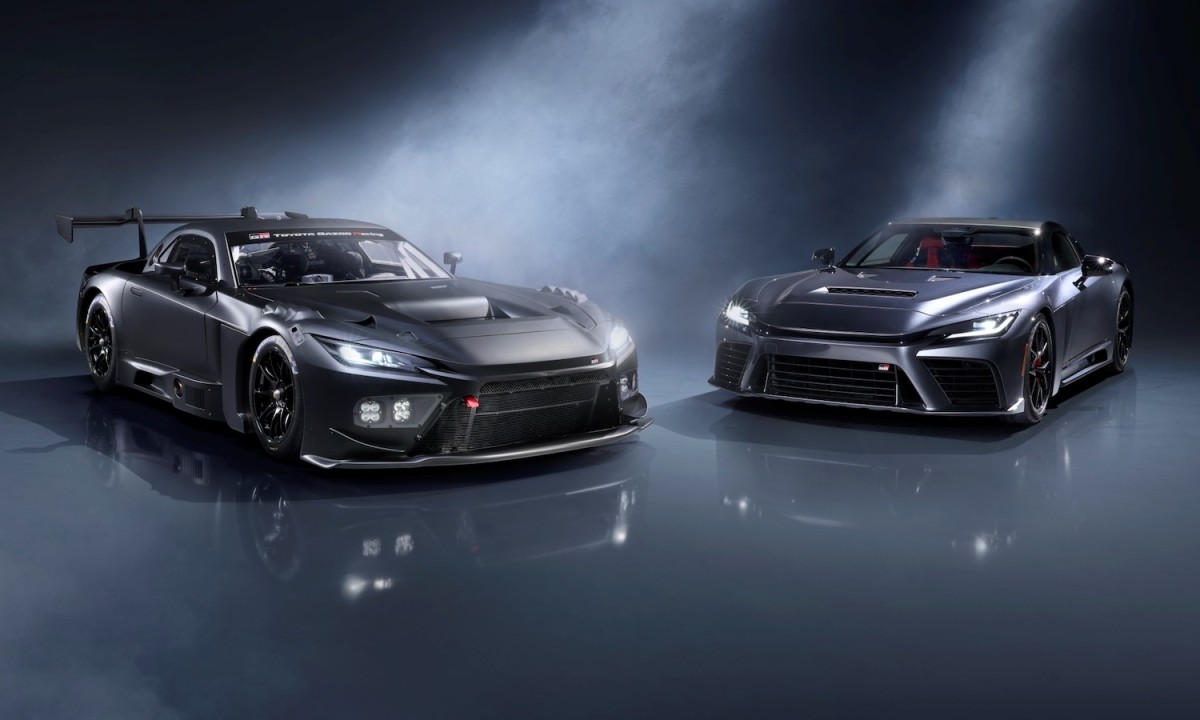
We’ll let you make your own judgments about the styling from the images, but before you make up your mind, know this. Unlike many sports cars, which start from a sketch and then evolve based on engineering requirements, the packaging of the car was decided on in consultation with aerodynamicists and World Endurance Championship engineers first, with the team deciding on an ideal layout for the all-new, all-aluminum frame and the CFRP-and-aluminum body long before stylists could have their say. Simulators were also used early in development to validate decision-making. Lexus LFA service technicians know how troublesome such an obsession with packaging and performance can be, but Toyota says serviceability was an important criterion in the GR GT’s creation, too.
Related: Toyota’s “GR MR2” Trademark Reignites Hopes for a Mid-Engine Revival
A similarly performance-focused approach was taken in the cabin, which promises exceptional outward visibility. Toyota says it obsessed over gauge width and height, as well as the positioning of displays like the upshift and gear selection indicators. Moreover, the occupants sit low, having a “roughly identical” center of gravity to the car itself. It seems the GR GT and its racing counterpart will be exceptional driving machines and fine halos for the brand, as the 2000GT once was. And because Toyota crafted components and the car in the virtual world first, this won’t be a car that is nearly finished and then redeveloped all over again, like the LFA famously was. That should mean a relatively palatable asking price, and although it’s much too soon to speculate on the MSRP, Toyota’s philosophy of building motorsports-bred road cars seems in this instance to have the Porsche 911 firmly in its sights, both on the GT3 circuit and the road.
Toyota