Toyota’s Flagship of Performance
Anyone who still thinks Toyota is a plain vanilla brand, sacrificing performance and styling for mileage and reliability, might be in for a shock after checking out the three new models that made their debut in Tokyo on Friday morning.
The Japanese giant had signaled it had some serious performance news coming in a series of recent teaser news releases. And, as many suspected, one of those three new products is a “concept” version of what’s certain to become the long-awaited replacement for the old Lexus LFA supercar.
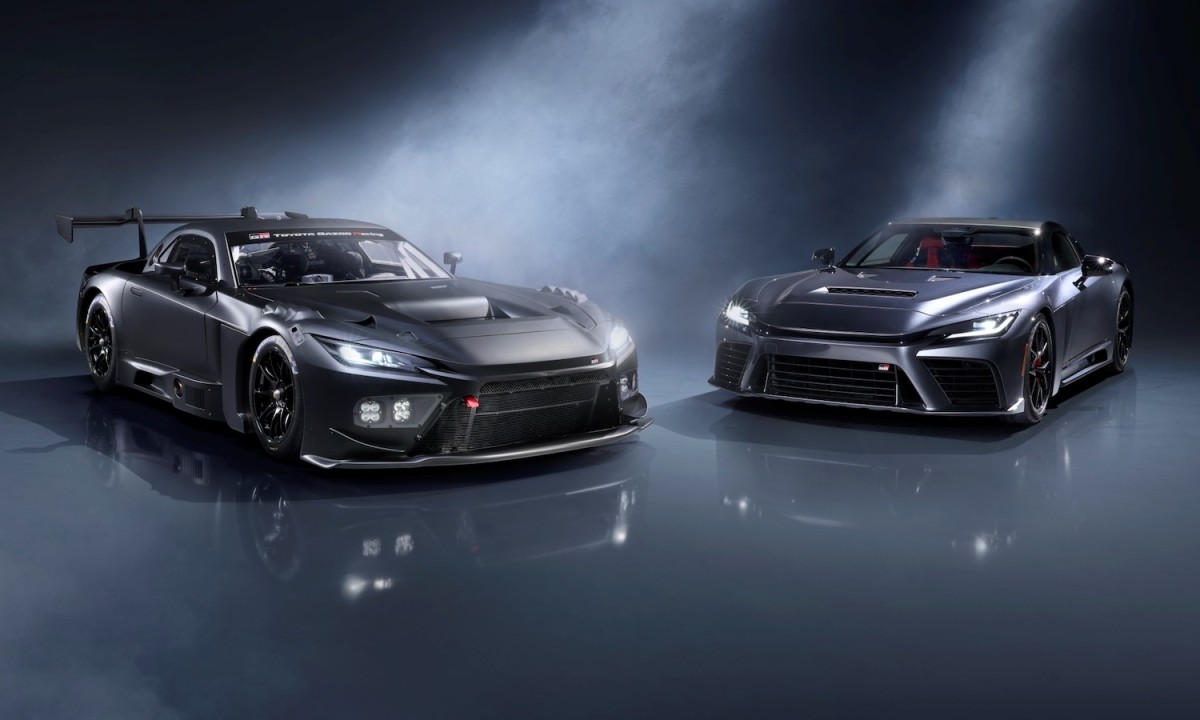
But there were plenty of surprises to come, starting with the fact that the LFA Concept goes all-electric. The other two models – the street-legal GR GT and track-focused GT GT3 spec – stick with internal combustion power and will be marketed wearing the badge of Toyota’s motorsports arm, Gazoo Racing.
Toyota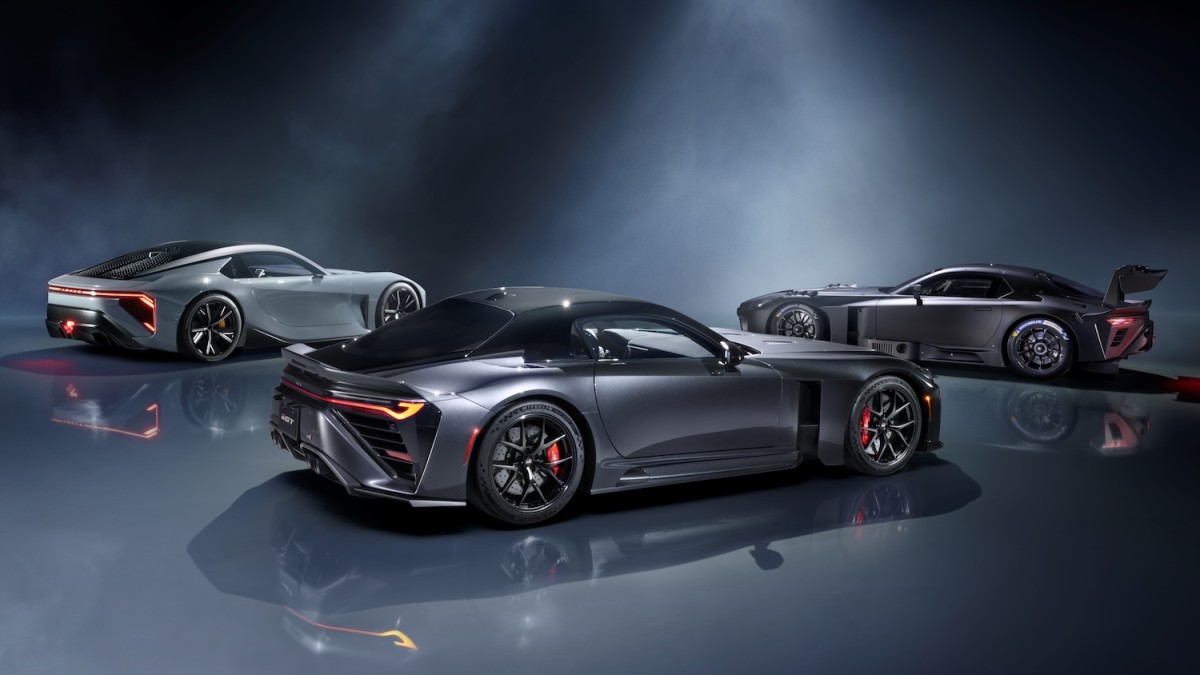
Lexus Gets a New Supercar
Lexus fans have been waiting a long time for a replacement for the vaunted LFA – the last of that generation supercar rolling off the line in December 2012. We’ve seen a number of concepts and prototypes since then, with one most recently put on display at this year’s Japan Mobility Show. Expectations clearly heated up when, late last month, Toyota sent out its latest teaser, this one signaling the imminent arrival of what it called the “GR GT.” Well, that’s also created plenty of confusion as it turns out the GT is one of three new high-performance models now taking a bow.
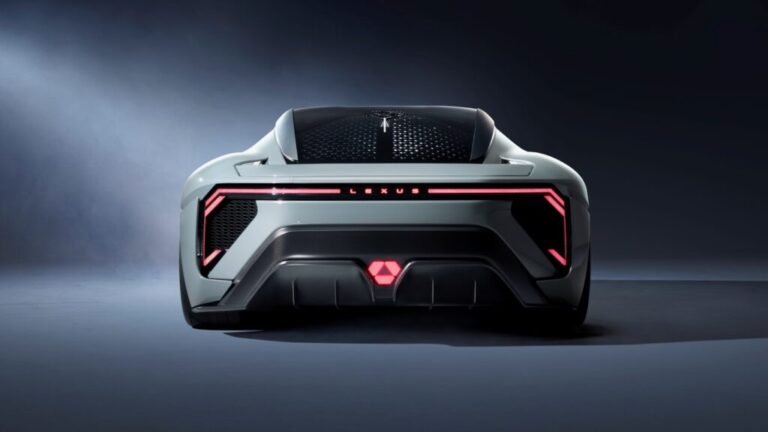
Officially, the Lexus LFA is just another “concept,” but all indications are that this time the automaker is serious about finally giving the luxury brand the halo sports car it needs and, say fans, that it deserves — likely around 2027. All three models “share aspirations,” but the Lexus is based on a drivetrain that is meant, says the automaker, to “demonstrate the potential of BEV sports cars.” It is, of course, by no means the only luxury brand sharing that goal, with battery-powered models also coming from brands like Ferrari and Lamborghini.
Battery drive systems do have significant performance advantages, starting with their instant-on torque and mind-boggling horsepower numbers. Lucid and Tesla have both delivered products making over 1,000 horsepower, enough to launch from 0-60 in barely 2 seconds. Unfortunately, we’ll have to wait to hear more from Lexus officials. For the moment, they’re declining to provide hard specs.
Lexus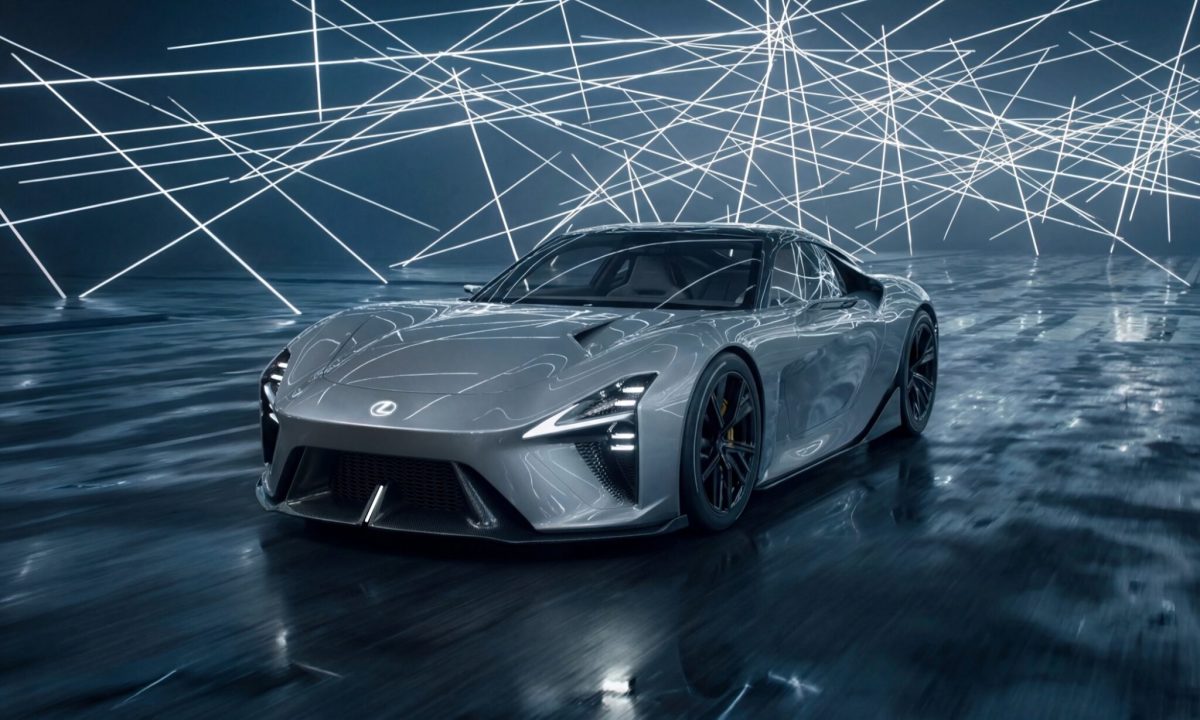
By the Numbers
There are, of course, downsides to going all-electric, especially when it comes to a sports car. Weight is one challenge, though by mounting a battery pack underneath the load floor, manufacturers have learned they can compensate by lowering the center of gravity below what even the sleekest ICE-powered sports cars can manage.
Range is another challenge, and another detail Toyota isn’t ready to talk about. Vehicle dimensions would largely determine how many kilowatt-hours could be packed onboard. Sports cars typically don’t provide much space. The Lexus LFA Concept has a total length of 184.6 inches, with a width of 80.3 inches and a height of 47.0 inches. The wheelbase, at 107.3 inches, actually means the sports car could squeeze in a reasonably sized pack.
Significantly, Toyota has repeatedly promised to be one of – if not the first – automaker to go into production with next-generation solid-state batteries which would be smaller, lighter and much more energy-dense than today’s lithium-ion cells.. And it has been suggested several times that these would go into a low-volume performance vehicle. A production LFA certainly seems to fit that bill.
Lexus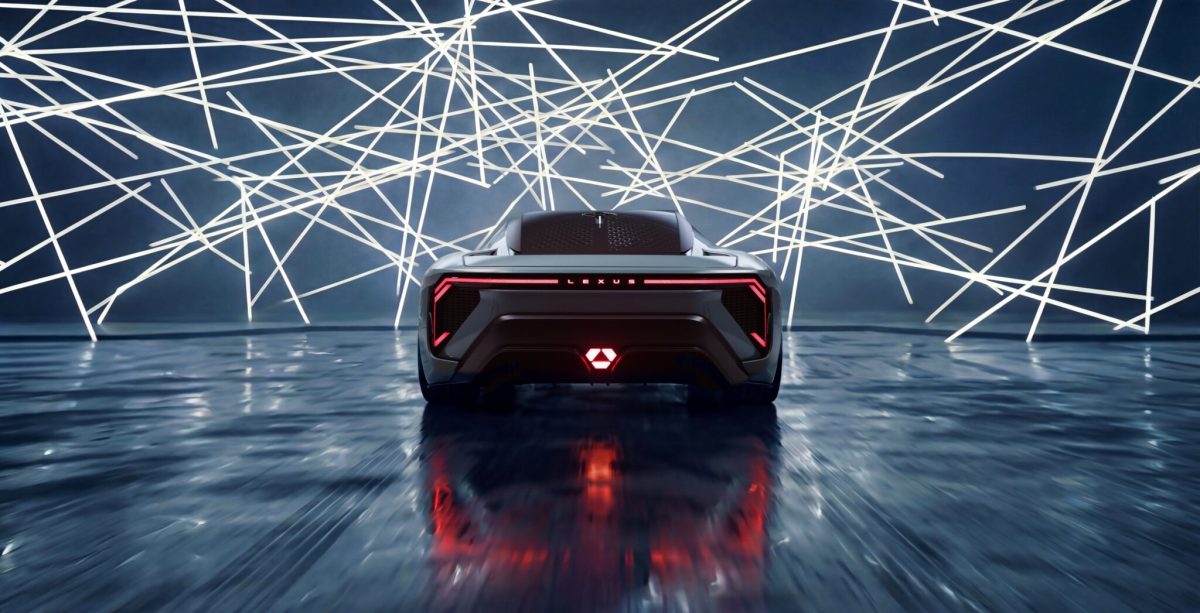
“Sculptural Beauty”
The LFA Concept shares the same basic all-aluminum body frame as the GR GT and GT3-spec. But using an all-electric drivetrain gives more flexibility than designers had with those gas-powered models. It features a long, flowing nose that picks up on what Toyota described as the “sculptural beauty” of the original LFA.
Inside, the carmaker suggests, the cabin “has been crafted with simplicity, with refined functional components concentrated around the driver’s seat, awakening a sense of elation once inside. The steering wheel was discerningly and suitably designed for use in a sports car, while steering operation that eliminates the need for regripping with a different hand, together with a switch layout that makes blind touch operation possible, enables intuitive vehicle control. Overall, a minimalist worldview that weaves together the appeal of mechanical design and a simple interior space creates a uniquely immersive environment.”
Lexus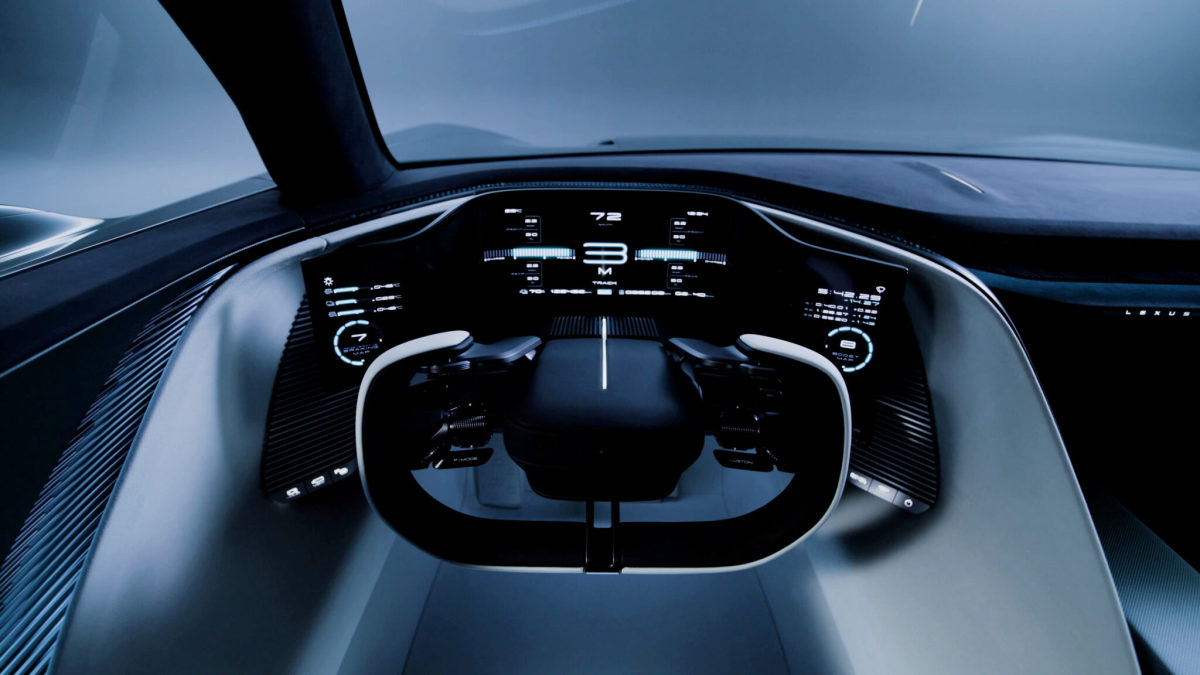
GR GT
That “driver-first” approach carries over to the two new performance models developed directly by the Gazoo Racing team. “The two models are the result of veterans of development of the Lexus LFA transferring skills and techniques to younger members, the active adoption of new, Toyota-first technologies for enhanced vehicle performance, and the taking on of numerous unprecedented challenges,” the automaker explained.
Not surprisingly, the company that now produces more hybrids than any other manufacturer is electrifying the Toyota GR GT, pairing a single-motor hybrid system with a 4.0-liter twin-turbo V-8. The combined package is rated at 641 hp “or greater,” a phrase used for the 627 lb-ft torque rating, as well. Muscle isn’t everything, however, and the Gazoo team also targeted a low center of gravity, mass reduction, a rigid body and chassis, and wind-cheating aerodynamics. Along with the all-aluminum platform, the GR GT uses plenty of carbon fiber reinforced plastics and other lightweight materials.
Lexus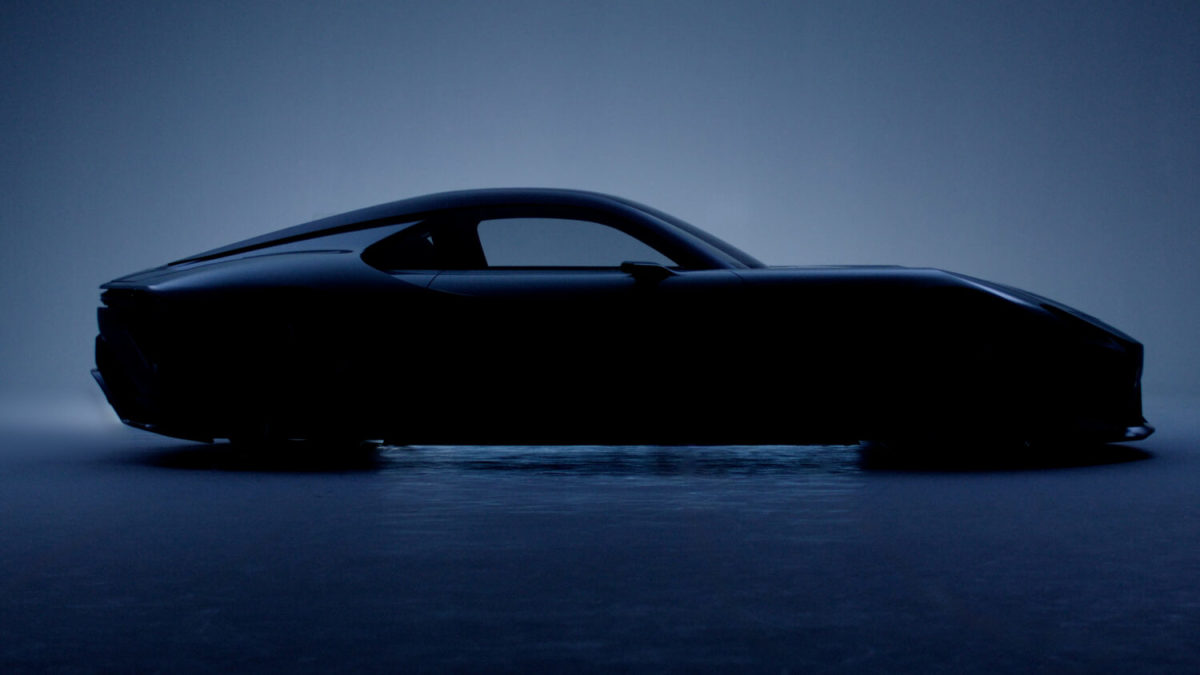
GT3-Spec
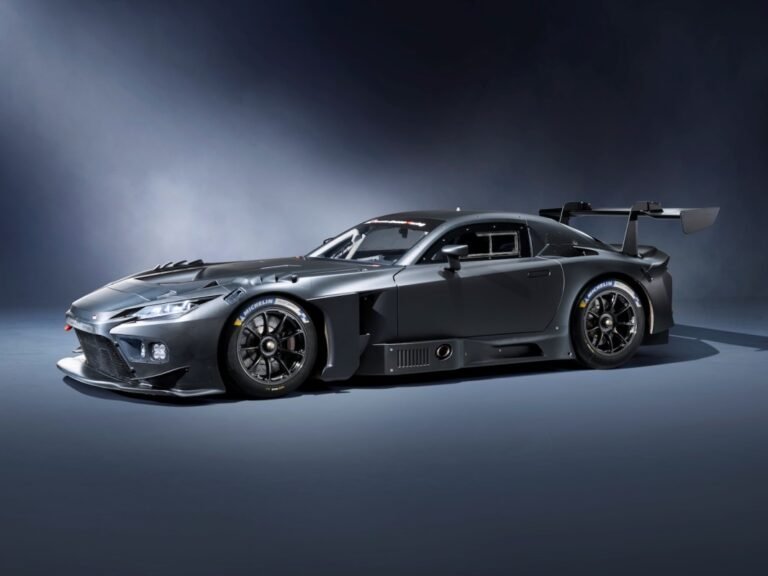
As for the Toyota GR GT3, it’s designed to meet the specifications of the Federation Internationale d’Automobile (FIA) GT3. That’s the governing body overseeing the top category of customer motorsports. And the track model “aims to be a car that is chosen by people who want to win yet be easy to drive for anyone.”
The track model uses a non-hybridized version of the new V8; Toyota has not yet released power and performance specs. Along with the lightened body, it features a newly developed low-mounted double-wishbone system with forged aluminum arms at both the front and rear. The sports car rides on unique versions of Michelin’s Pilot Sport Cup 2 tires. Brembo carbon disc brakes are standard. The GT3, meanwhile, borrows the Vehicle Stability Control system developed by Gazoo Racing for its Nurburgring 24-hour endurance race vehicles. That “allows multi-stage adjustment of driving force and braking control, enabling driver selection of the vehicle control difficulty level based on driving skill and encountered weather conditions to help facilitate an enjoyable and secure driving experience.
While Toyota has clear production plans for both GT models, it cautioned that both are “still under development,” with no release dates yet available.
Toyota