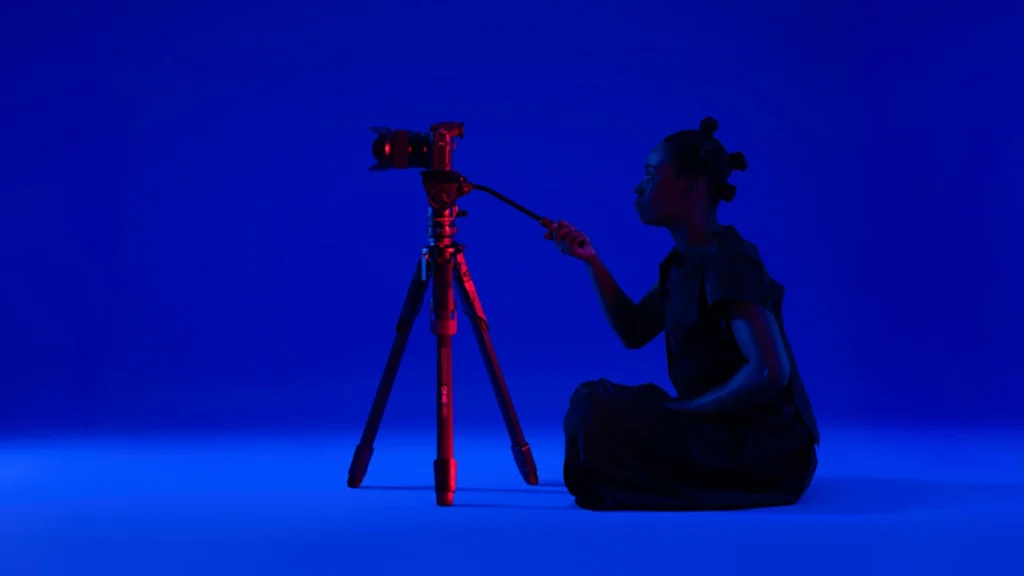
The humble tripod is an unheralded but essential part of any film or photo shoot. It’s the key to making shots level and pans smooth, and as a piece of equipment it’s seemingly about as simple as can be, with three legs and a mount at the top. But as any photographer or filmmaker knows, setting up a tripod properly can involve dozens of moving parts, clamps, pivots, and adjustments.
A new tripod system from Italian camera equipment maker Manfrotto turns this setup into a single fluid motion.
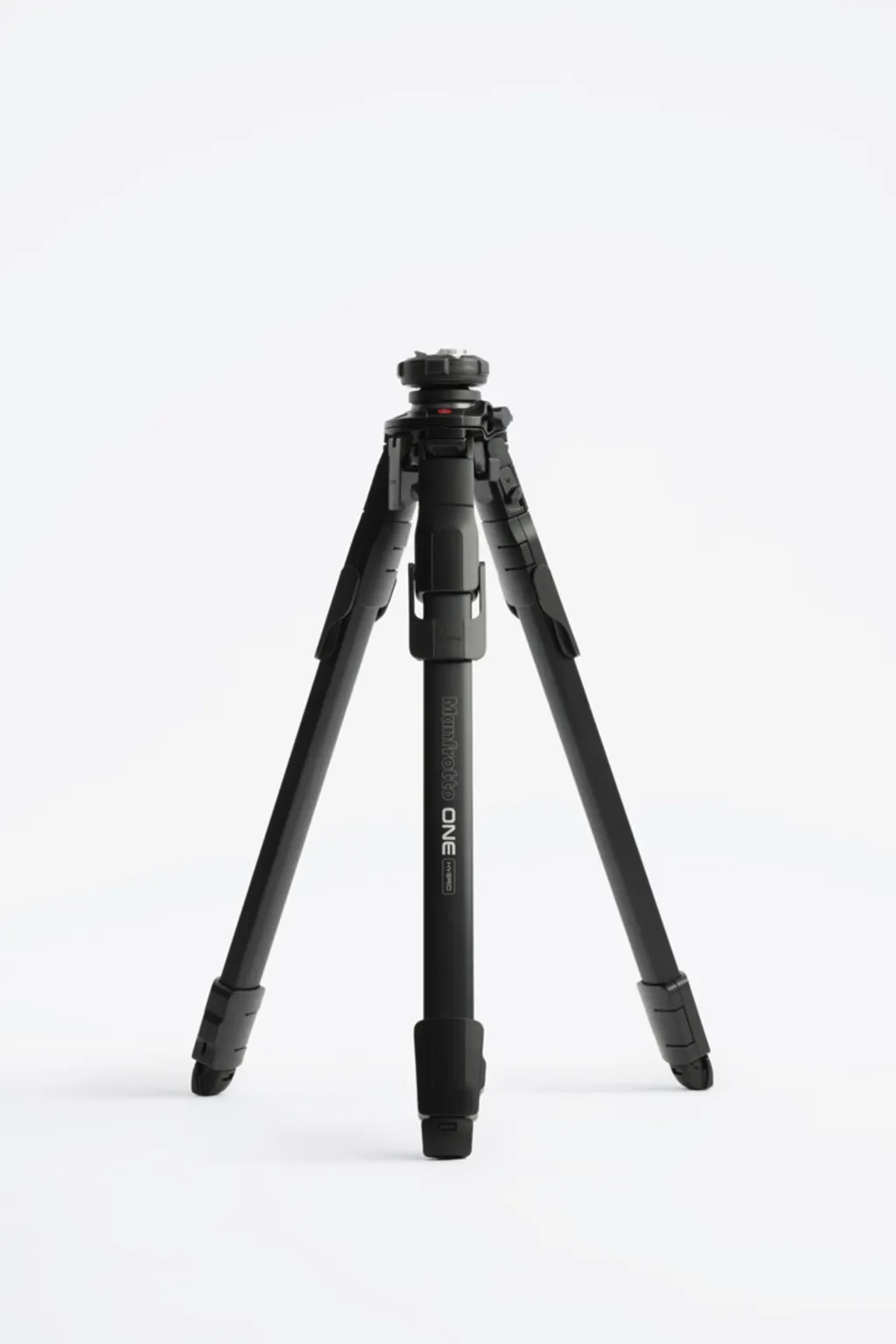
The Manfrotto One’s unique design allows for all three of its legs to be deployed simultaneously, extending out to the desired length in concert, each locking in place with a single lever. Thanks to a ball-based hub at the top of the tripod, the camera can be leveled in another single motion. And a custom-designed mount makes it possible to swap out cameras within seconds.
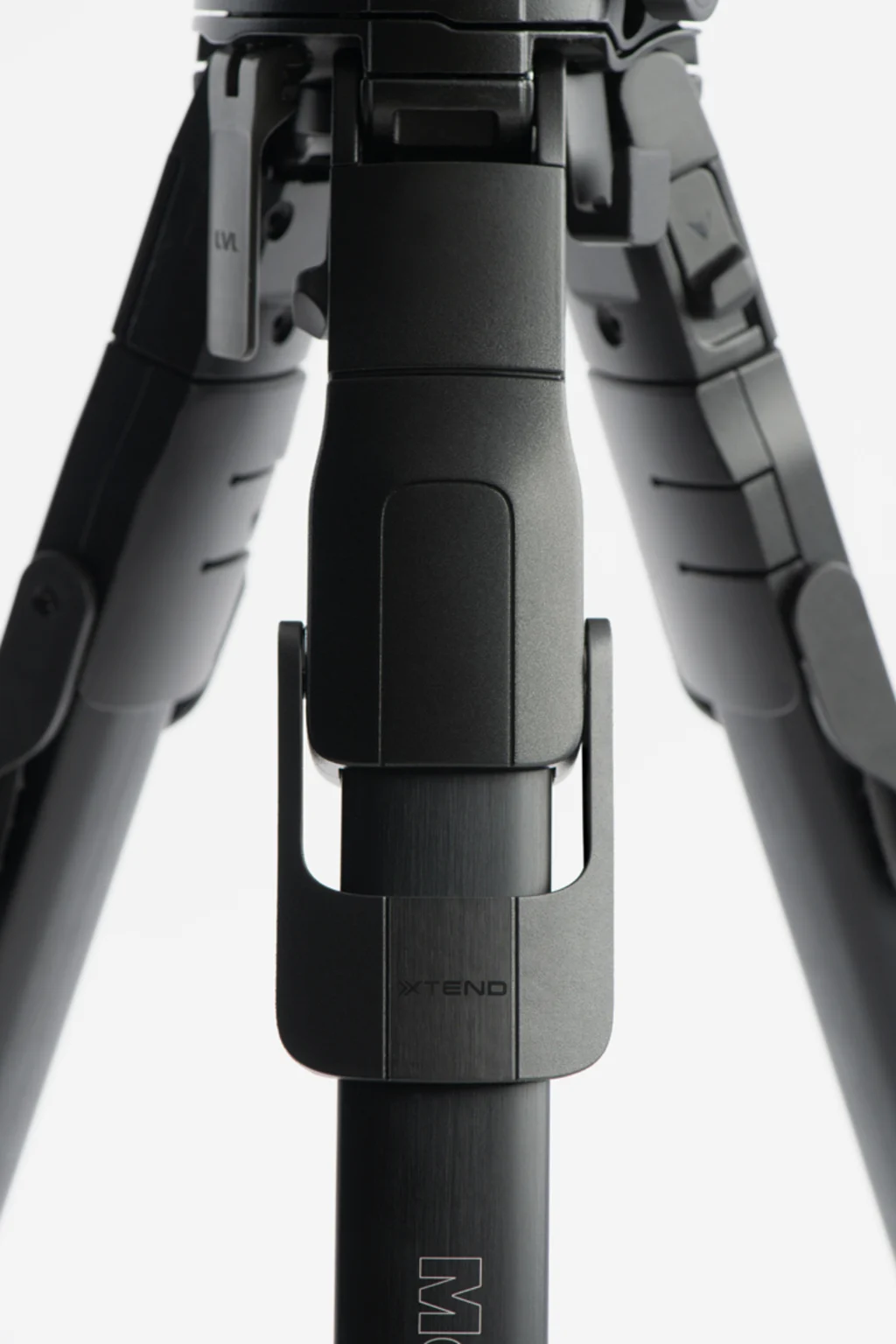
The idea was to adapt this essential piece of gear to the way content creators are blending their media types. It’s increasingly common for content producers—from social media amateurs to film and photography pros—to quickly move from still cameras to mobile phones, toggle between photo and film, and alternate between horizontal and vertical frames.
Designed by the London industrial design studio Layer, the Manfrotto One tripod was reconsidered from every angle to be easier to use and more adaptable to dynamic conditions. “Much of the brief was around quickness,” says industrial designer Benjamin Hubert, founder of Layer. “You’re quickly moving or panning a camera, then you’re able to snap it off and do some handheld shots, and then [you can put the camera] back on and quickly reset the height or the angle of the setup. It’s those transitional elements that allow for speed of use and as frictionless interaction as possible.”
Seeing the One as a once-in-a-decade flagship product, Manfrotto has made an eight-figure investment in this new platform. It’s partly an effort to meet changing user needs, but also to stay ahead of the competition. “They’re seeing a lot of people enter the space, a lot of inexpensive products, a lot of commodity, a lot of things out of China and other parts of the world,” Hubert says. “They needed to move the needle and create something that was a big step forward.”
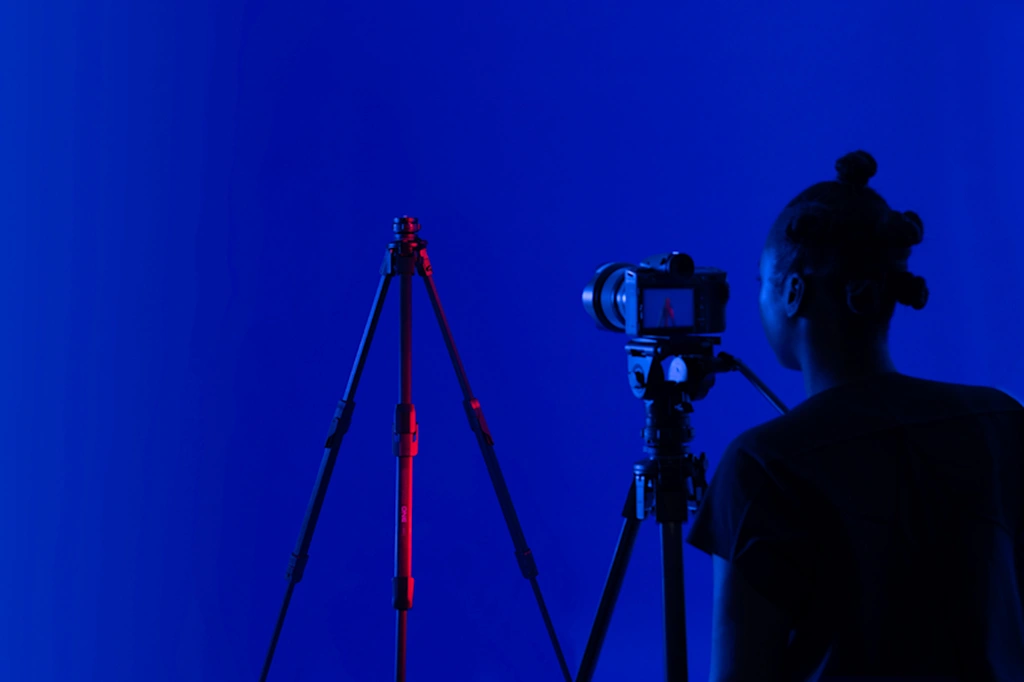
Designing a new tripod
Despite the seemingly simple makeup of a tripod, it’s a highly complex piece of equipment, and redesigning it to function quickly was far from straightforward. Manfrotto reached out about two years ago to Layer, known for its conceptual and product work ranging from airplane seats to wheelchairs to cryptocurrency wallets to dog toys. Hubert and his team broke the tripod down to what ended up being hundreds of individual components and reconsidered what made them work smoothly.
“All the adjustment levers, all the attachment points, all the joints, everything is there because it has to be there from a functional point of view,” Hubert says. “Managing all of that noise and that amount of elements became one of the biggest challenges.”
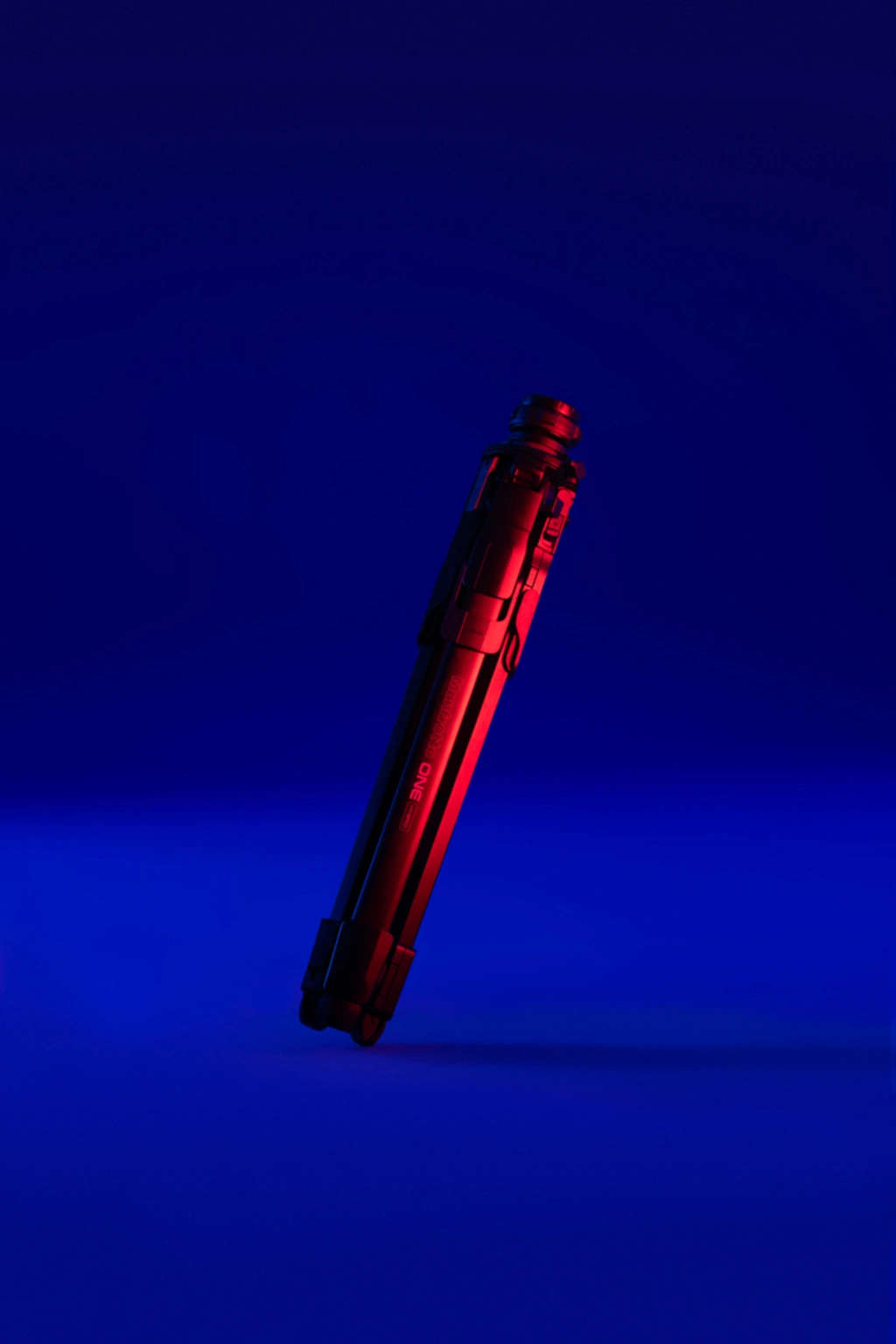
After churning through hundreds of prototyped components and narrowing them down to a series of viable options, Layer presented its designs as a kit of parts, with interchangeable elements and a shared logic. Combining the best bits, they dialed in on what became the One.
Prioritizing how quickly the tripod could unfurl and how easily users could swap cameras on and off, Layer’s design focused on the size and placement of its key levers, making sure they could be manipulated almost effortlessly. The designers rethought the tripod’s conventional telescoping legs and created a system for the legs to extend both up and down from a central shaft, allowing the length to be controlled by a single lever. And rather than hiding parts or masking the functional elements of the tripod, Layer opted to accentuate the most critical moving parts in its overall form factor. “It’s like a skeleton constantly on display,” Hubert says.
With the Manfrotto One tripod system’s retail price starting at $499, this may not be the gear for the average TikTok user. But the One’s clever design and adaptable use may even have amateurs looking at their old tripods with an unexpected level of scorn.