The most infinitesimal elements of our interiors are getting noticed these days. With nothing being left to chance in the outfit of our homes, workspaces, restaurants, stores, and shared civic environments, hardware is finally gaining the attention it deserves. These small—heavily used—components are central to our everyday lives; essential to the function of our kitchens, wardrobes, and the doors that separate these spaces but are ultimately taken for granted. Why shouldn’t our handles, knobs, and pulls be celebrated as a vital home design typology; treated with the same formal and aesthetic rigor as a chair.

A growing crop of boutique producers and design practices foraying into product development have begun to take hold of the application and push the limits of what can be considered functional; the extent of which the human hand can grab, lift, and tug a sculptural form. The possibilities seem endless and experimenting in this small format is less risky. But as with any fresh proposition, a degree of recognition remains critical for viability and wide-spread adoption. A handful of intrepid brands, a number of which hail from Australia, have picked up the mantle.

Take Lo & Co Interiors’ recent collaboration with celebrated Melbourne-based interiors practice Studio Tali Roth: a cleverly conceptualized collection harnessing the surprisingly conducive formal qualities of myriad traditional Italian pasta forms.

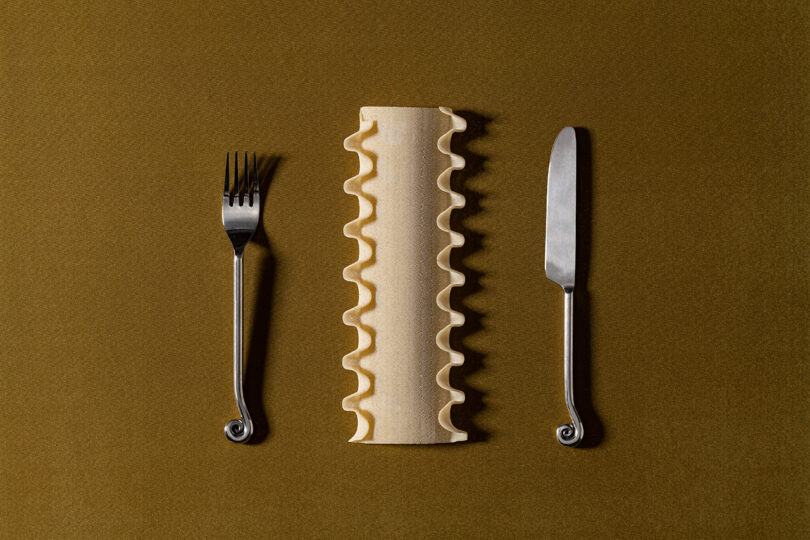
Hand-forged in pewter, oil-rubbed bronze, polished nickel, and polished brass, the aptly named Al Dente Collection turns star-shaped pastina into a knob; lasagna into a lateral handle; orecchiette into a thumb-print pull; and the olive—a complementary ingredient central to pasta—into yet another knob.

This ingenious yet playful, whimsical yet sophisticated offering stems from an unexpected adjacency—when too unlikely ideas or things are thrown together. What would happen if an inherently sculptural food like pasta were turned into a furnishing. It’s been done before but often with a gimmicky, far less resolute, outcome.

It makes particular sense in the context of the kitchen, where this collection could take on a semiotic quality, indicating where the foodstuff is stored. Move over Michael Graves and your whistling bird-topped 9093 Tea Kettle.

“For me, the kitchen has always been the most intimate space—where life happens, and memories simmer…and pasta is shared with family,” says studio principal Tali Roth. “I wanted to create whimsical accessories—sophisticated but not too serious. Sculptural pieces that echo the folds of handmade pasta, each offering its own personality.”


To stay in the know regarding Al Dente’s launch, visit loandcointeriors.com.
Photography courtesy of Liam West.