
At long last, design nerds everywhere can build an outfit that’s (almost) entirely composed of apparel inspired by the works of the legendary architect Frank Lloyd Wright.
Since his passing in 1959, Wright’s portfolio of iconic buildings and homes has become the inspiration for homeware, building block sets for budding designers, and even a Hollywood documentary that’s currently underway. But he’s also become the muse for a more unexpected segment of the American population: Gen Z fashion heads.
In 2023, the Frank Lloyd Wright Foundation expanded its collaboration repertoire to include a colorful sneaker partnership with New Balance and two T-shirts with Kith. Now, the foundation is teaming up with the Chicago-based brand The Tie Bar on a series of ties and accessories that encapsulate Wright’s signature style in a variety of custom patterns. The collection debuted in late March with prices ranging from $18 to $58.
Compared to past collaborations with New Balance and Kith, which embraced a more laid-back approach for Gen Z FLW fans on the go, the foundation’s collection with The Tie Bar feels like it’s making a direct play at young professionals. It’s a series of designs that says, I’m cool and stylish—and, yeah, I know a thing or two about design history.
A second life for Midway Gardens
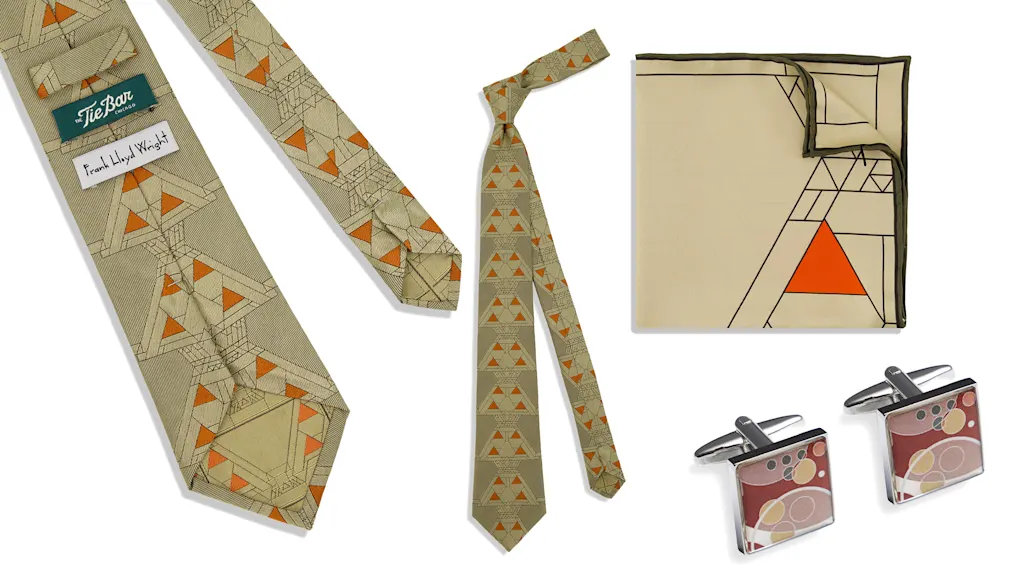
The whole Frank Lloyd Wright x Tie Bar collection—including ties, tie bars, cufflinks, and pocket squares—pulls inspiration from a building that stood for only 15 years and was demolished nearly a century ago.
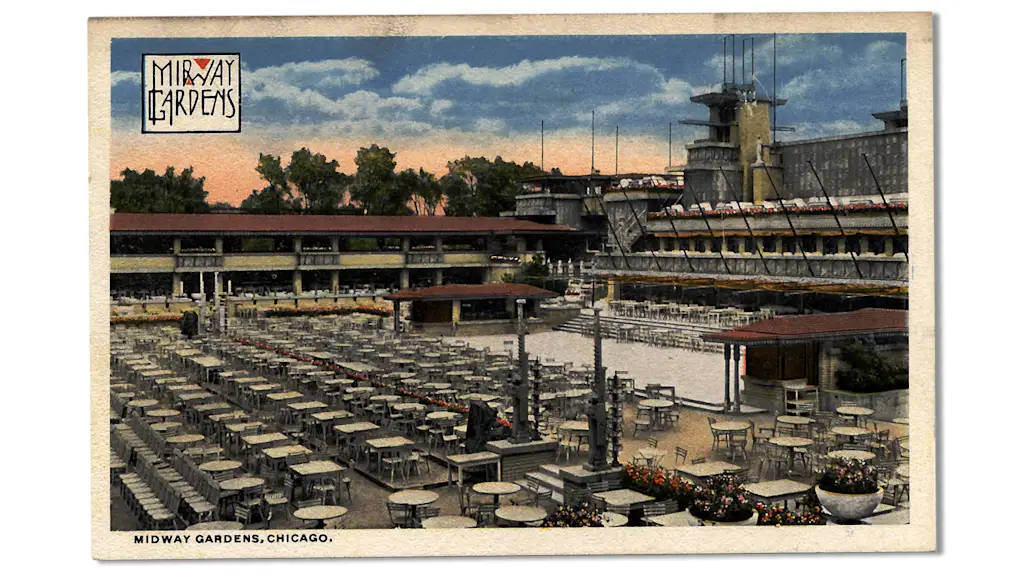
Each print is modeled off of a detail pulled from Midway Gardens, a development on the south side of Chicago’s Hyde Park. It was commissioned by Ed Waller, a Chicago developer who, according to Wright’s autobiography, pitched the idea thusly: “Frank, in all this black old town there’s no place to go but out, nor any place to come but back, that isn’t bare and ugly unless it’s cheap and nasty. I want to put a garden in this wilderness of smoky dens, car-tracks, and saloons.”
Waller got that wish. Wright’s Midway Gardens included a garden pavilion with outdoor concert space, a dance floor, a casino, a bar for eating and drinking, and a series of terraces, walkways, and promenades overflowing with plants. Every detail was designed by Wright, down to the bar’s napkin rings. However, the venue’s glory days were cut short by Prohibition: after first opening to the public in 1914, it was torn down and repurposed in 1929 due to severe financial struggles.
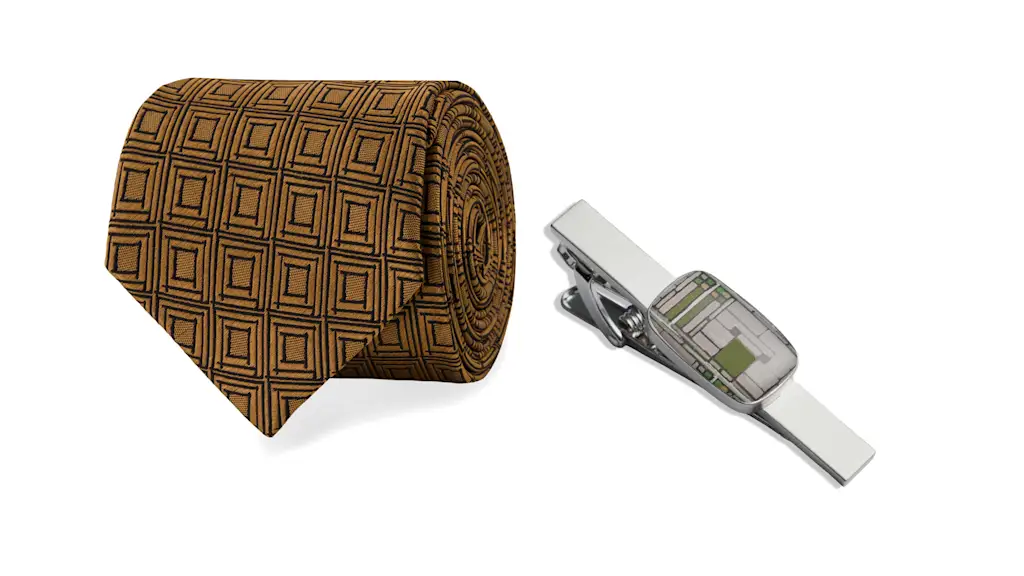
Despite its brief existence, Midway Gardens remains a stunning example of Wright’s signature Prairie style. For the Tie Bar collection, the rectangular, geometric exterior of the winter pavilion has been reinterpreted into a pocket square; the building’s rows of green and red ornamental art glass have been converted into tiny cufflinks; and the stone fascia patterns incorporated throughout the design have been turned into a custom tie print.
Allusions to the Garden Sprites, a series of statutes that Wright commissioned from Alfonso Iannelli (and some of the only remaining relics of the site) appear in multiple places throughout the collection. One tie bar is even rendered as a tiny replica of the original reinforced concrete statuettes.
This new collection shows that the Frank Lloyd Wright foundation is continuing to broaden the horizons of its collaboration strategy—and, for buyers, each small piece functions as a subtle nod to a more niche moment in FLW history.
.jpg)