Purchasing a satisfying car is one thing, but a bad dealer experience can quickly turn owners off a specific brand. To see which automakers deliver the best dealer service, the results of the JD Power 2026 U.S. Customer Service Index (CSI) Study have just been released. Overall dealer satisfaction increased in this year’s study, which is based on responses from 51,228 verified registered owners and lessees of vehicles between 1 to 3 years of age.
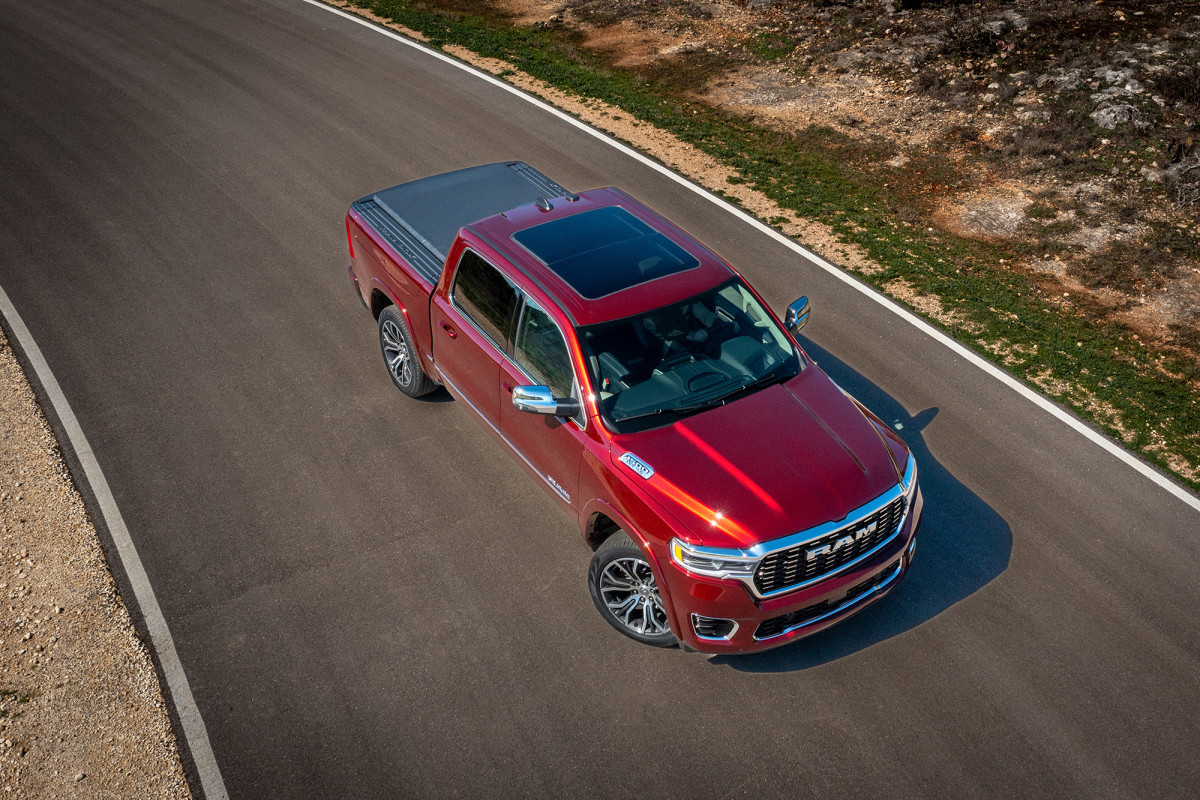
Porsche and Mini topped the premium and mass-market segments, respectively, while all three brands with the lowest scores (Chrysler, Ram, and Maserati) were from the Stellantis stable. In the popular truck segment, Ram finished far behind all rivals.
2026 CSI Study: Main Insights
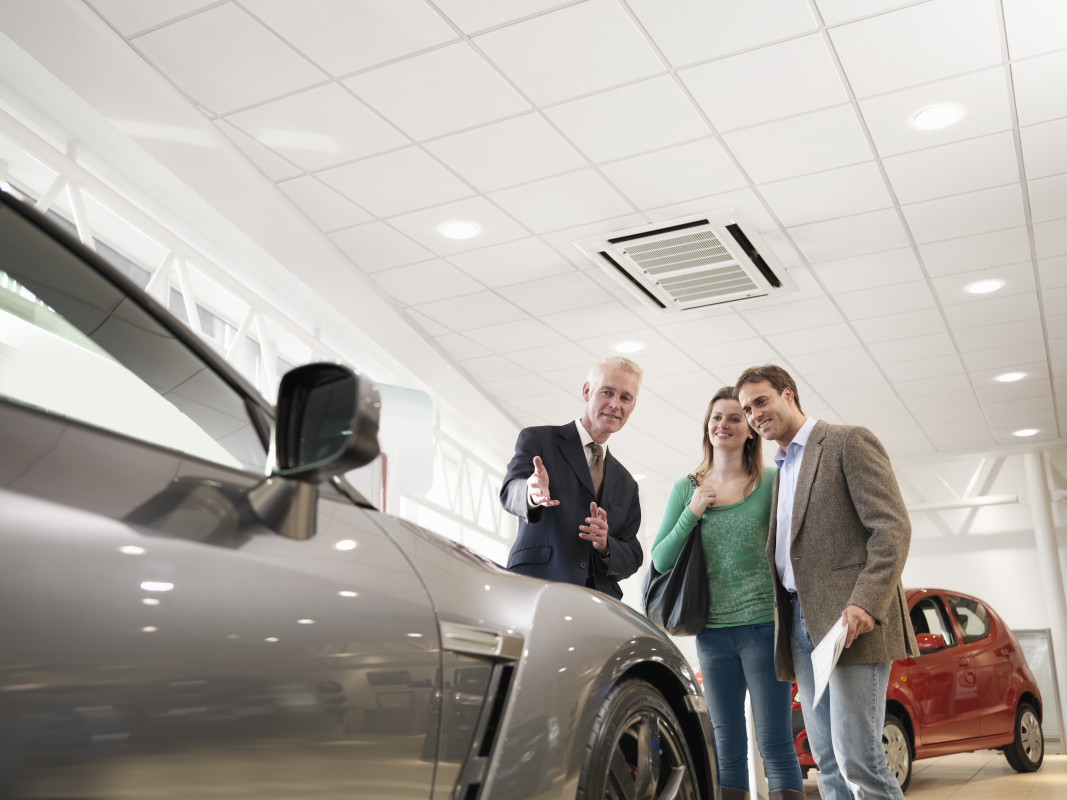
Getty Images
Overall customer satisfaction with auto dealer service increased by three points on a 1,000-point scale. The premium segment was up by eight points to 886, while the mass market segment increased by three points to 868. A high CSI score increases the chances of customers remaining loyal to the same brand; when the satisfaction score is 950 points or higher, 88% of premium customers say they’ll return to the same dealer.
Here are a few other insights from this year’s study:
- Mass-market customers wait an average of 1.61 hours for maintenance work at dealers; premium customers wait 2.46 hours
- 64% of customers want photo/video evidence of work being done, but only 26% of mass-market customers are getting it
- Only 26% of customers experience 9 or 10 of the top CSI Key Performance Indicators
Although overall satisfaction increased, dealers face intense competition from aftermarket providers that can often get the same job done in less time. For instance, 62% of aftermarket service visits take under an hour, versus 1.61/2.46 hours for mass-market/premium customers visiting dealers.
Getty Images
Customers coming from direct-to-consumer (DTC) brands like Tesla and Rivian are typically less satisfied with conventional dealers, as they are accustomed to DTC conveniences like mobile services and valets.
“Dealers can more readily add value, for example, by returning the vehicle cleaner than when it arrived and completing a thorough multi-point inspection with digital documentation. CSI results show those efforts yield higher satisfaction and, in turn, boost retention,” said Stewart Stropp, vice president of customer success at JD Power. “Another opportunity is to more consistently deliver on top key performance indicators (KPIs) like keeping customers informed of service status and explaining the work performed. These elements, among others, meaningfully lift satisfaction.”
Related: Dealers Take Another Hit in the Direct-to-Consumer Sales Fight
CSI Study Brand Rankings
Porsche
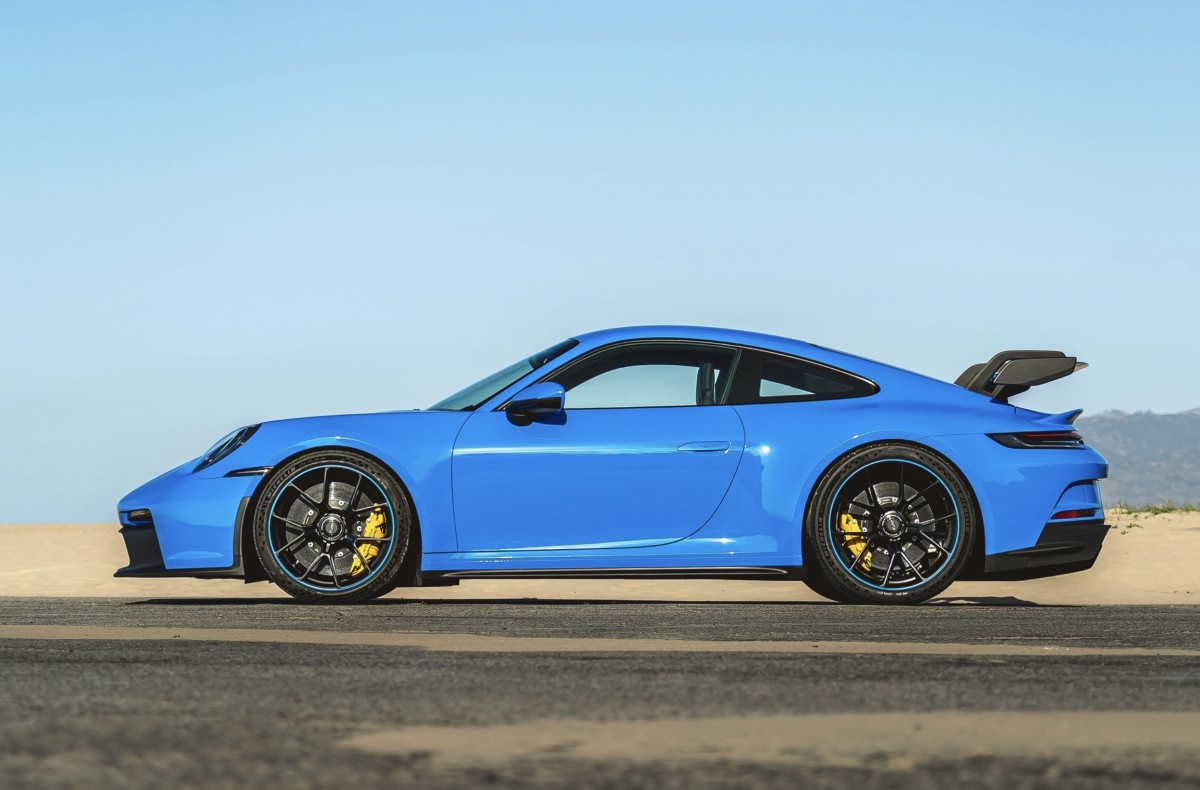
For the second consecutive year, Porsche ranked number 1 among premium brands, this time with a score of 915. Porsche was closely followed by Infiniti (912) and Lexus (900). For mass-market brands, Mini topped the rankings with 887 points, barely ahead of Subaru (886) and Buick (882). Ford, which has worked hard to improve vehicle quality in recent months, will also be happy with its dealer satisfaction score of 875.
Premium brand ratings: JD Power 2026 U.S. Customer Service Index (CSI) Study JD Power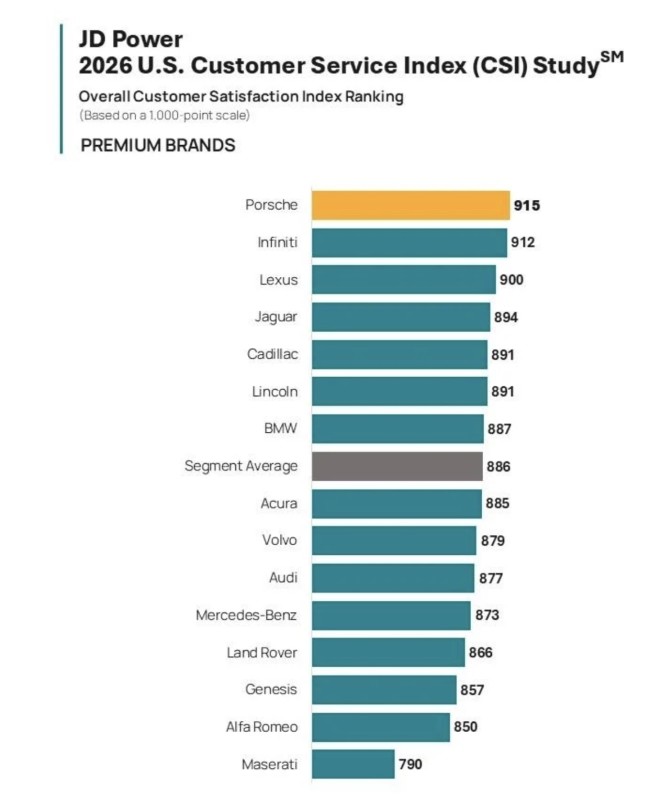
On the other end of the spectrum, Stellantis has significant work to do. It’s responsible for the three brands with the lowest scores in the study, including Maserati (790), Chrysler (841), and Ram (824). Stellantis recently appointed 2,000 engineers in a major effort to improve vehicle quality, and the next step for the company should be to improve the dealership experience.
JD Power
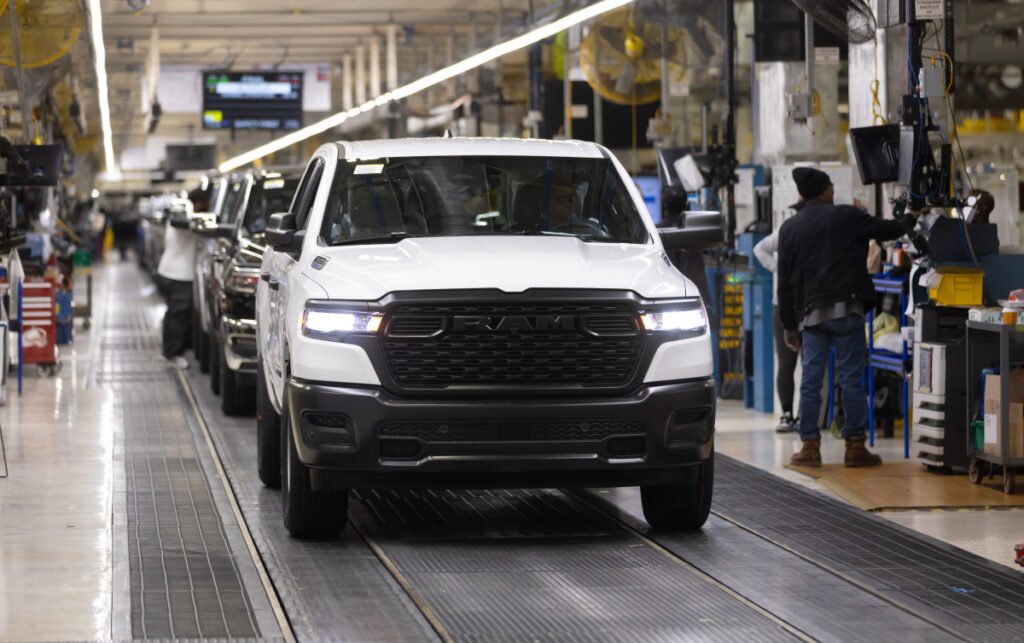
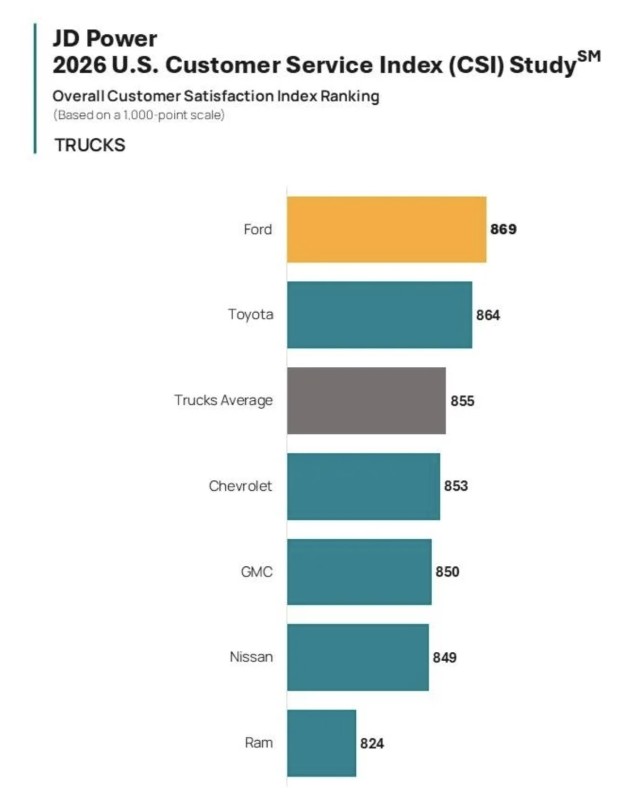
In the truck segment, Ram is way behind all other brands on 824, with Ford and Toyota leading the pack. This is significant considering the high number of trucks sold in the U.S., with Ford selling almost 830,000 F-Series models alone last year.
Related: 3 Surprises From J.D. Power’s New Initial Quality Survey
What It Means
RAM
Car brand loyalty dropped below 50% last year as customers chased better deals, amid rapidly rising vehicle prices. This emphasizes the need for a positive dealership experience to keep customers happy and retain their business. A poor service visit can quickly send customers to alternative repair shops or, even worse, another car brand.
One fascinating insight is the challenge traditional dealers face in keeping customers satisfied when they come from direct-to-consumer (DTC) brands. If dealers can modernize and incorporate aspects of the DTC model in their operations—such as app-based bookings or digital progress updates—they could dramatically increase customer satisfaction.
This could become especially important as cars become more software-focused and customers grow increasingly accustomed to digital services.