More Details Apart Beyond the Green Light
Last month, Hameedi Venturo quietly gave the green light to Project Origine. The plan: build the world’s first all-terrain hypercar, with more than €150 million (about $178 million) already committed and development set in Italy. At the time, that was about all the company was willing to share.
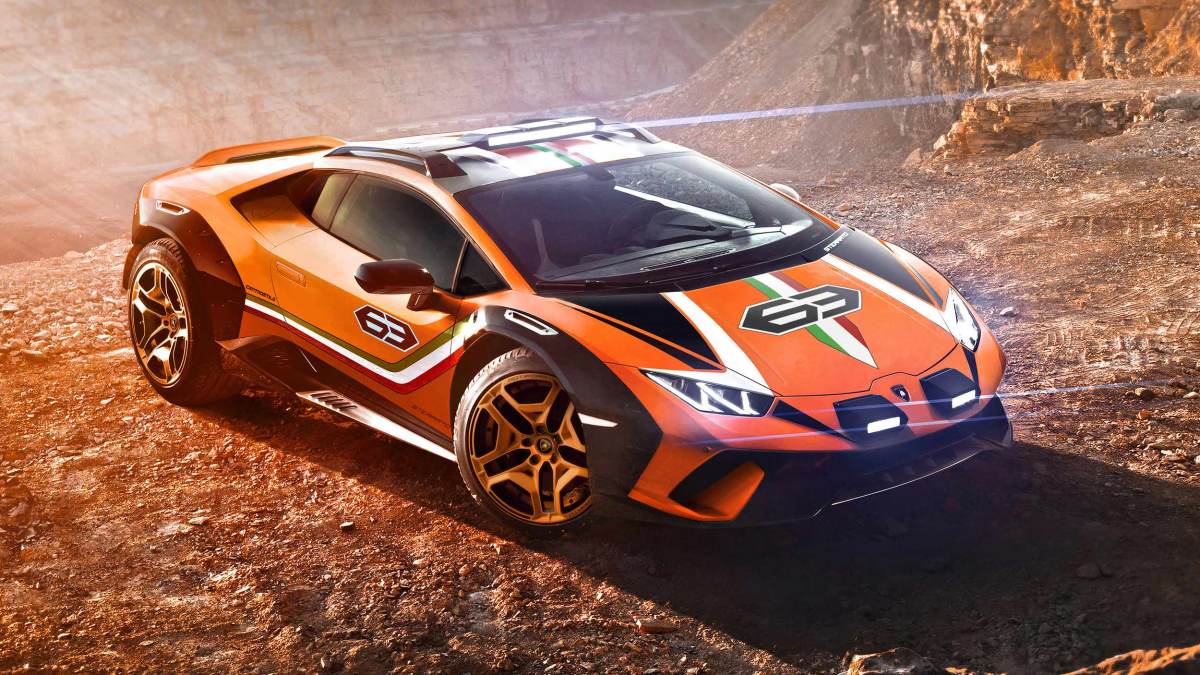
And that makes sense. Hameedi Venturo wanted to nail down what the car actually is – and what it isn’t. Project Origine isn’t an SUV, a crossover, or a jacked-up supercar like the recent rally-inspired specials. It’s a low, wide, purpose-built performance car that just happens to work in places most hypercars wouldn’t dare go. Think of it as a road-going Audi RS Q e-tron, not the Lamborghini Huracan Sterrato.
Now that the project is officially moving forward, the company is outlining how it intends to achieve those goals beyond a vague image of various landscapes.
Hameedi Venturo
Suspension First, Everything Else Follows
The most notable detail in the latest press release is the approach to building Project Origine. Rather than starting with a chassis and adapting it for rough terrain, Hameedi Venturo began with the suspension. Structure, packaging, and driveline are all developed around that foundation.
This method allows for significant ride-height adjustment while maintaining the proportions, steering feel, and dynamics expected of a performance car. The aim is not to create a car whose character changes with the terrain, but to broaden its capabilities without losing its identity.
Of note, Project Origine’s main structure is a mix of carbon and aluminum, said to be built to handle stress. The suspension and other parts are designed to absorb damage first, protecting the carbon core underneath during hardcore off-pavement use. This way, the chassis stays safe, and repairs stay manageable.
Another important detail: the hypercar is powered by a new naturally aspirated V12. The origin of the 12-pot mill remains undisclosed for now, as well as the target power figures. What we know is that the engine is designed to deliver smooth, predictable power and a distinct mechanical sound without electrification.
Luxury is approached differently, too. Rather than isolating occupants from noise and vibration, the materials and controls are chosen to enhance feedback and driver control, while still making long journeys comfortable.
Hameedi Venturo
Still a Few Years Before First Customer Delivery
At this point, it won’t hurt to bring up the team behind Hameedi Venturo. Jamal Hameedi is one of the co-founders, with a resume that spans from the Ford GT to the Defender OCTA. He’s joined by Dr. Andreas Baenziger, whose background in automotive luxury and motorsport ownership shapes the brand’s client-facing philosophy. Maximilian Szwaj is the chief technology officer, with engineering experience on the LaFerrari, Valhalla, and other modern halo cars.
Hameedi Venturo also introduces I Venticinque, a group of twenty-five people who get to be part of the development journey. Instead of just getting early access to the finished car, they’ll spend time with prototypes, help with validation, and see how the design evolves in tough conditions.
Project Origine is still several years from production, with first deliveries expected in 2030. More technical information, images, and other updates (hopefully including price and planned production units) will be shared as development progresses.