As my friend Anthony Elms pointed out to me recently, the Whitney Biennial is a kind of neither-here-nor-there entity: too big for a tight thesis to be legible, too small to provide a true scope of what’s happening in the United States art world. (He should know: He curated a floor of the 2014 edition.) The two most recent editions — 2024’s Even Better Than the Real Thing and 2022’s Quiet as It’s Kept — opted for a strong theme to guide curatorial choices. This time, we have a show, curated by in-house curators Drew Sawyer and Marcela Guerrero, that wants to revert to an older model of taking the temperature of the art world, come what may.
And what is that temperature? In the few days since art critics got their first peek, one descriptor seems to have bobbed to the surface: Weird. And why not? It’s the perfect word for our time; even football dad Tim Walz embraced it to describe the unimaginability of Trump and his obsessions. Everything around us is weird: AI and its hallucinations; our deer-in-headlights paralysis in the face of environmental devastation and fascism and a new world war; having to live life and pay rent despite all this. Weird.
OK, but: I don’t find the work in this year’s biennial all that weird. It’s beautiful, often, and smart, and visually astute. Sometimes it’s charming and joyful, sometimes it’s mournful. But weird? I dunno.
The show features 56 artists, duos, and collectives. While curators of recent editions have quietly expanded the definition of “American artist” to include expats and part-time residents in a fairly haphazard way, Guerrero and Sawyer have quite deliberately looked to places where the US has made its presence felt via military interference or occupation — Afghanistan, Chile, Iraq, Japan (specifically Okinawa), the Philippines, Puerto Rico, Vietnam, and elsewhere. This was a smart move, especially given what’s happened even in the last few weeks — a chance to face the history of this country’s interventionism as we embark on a new campaign of chaotic violence.
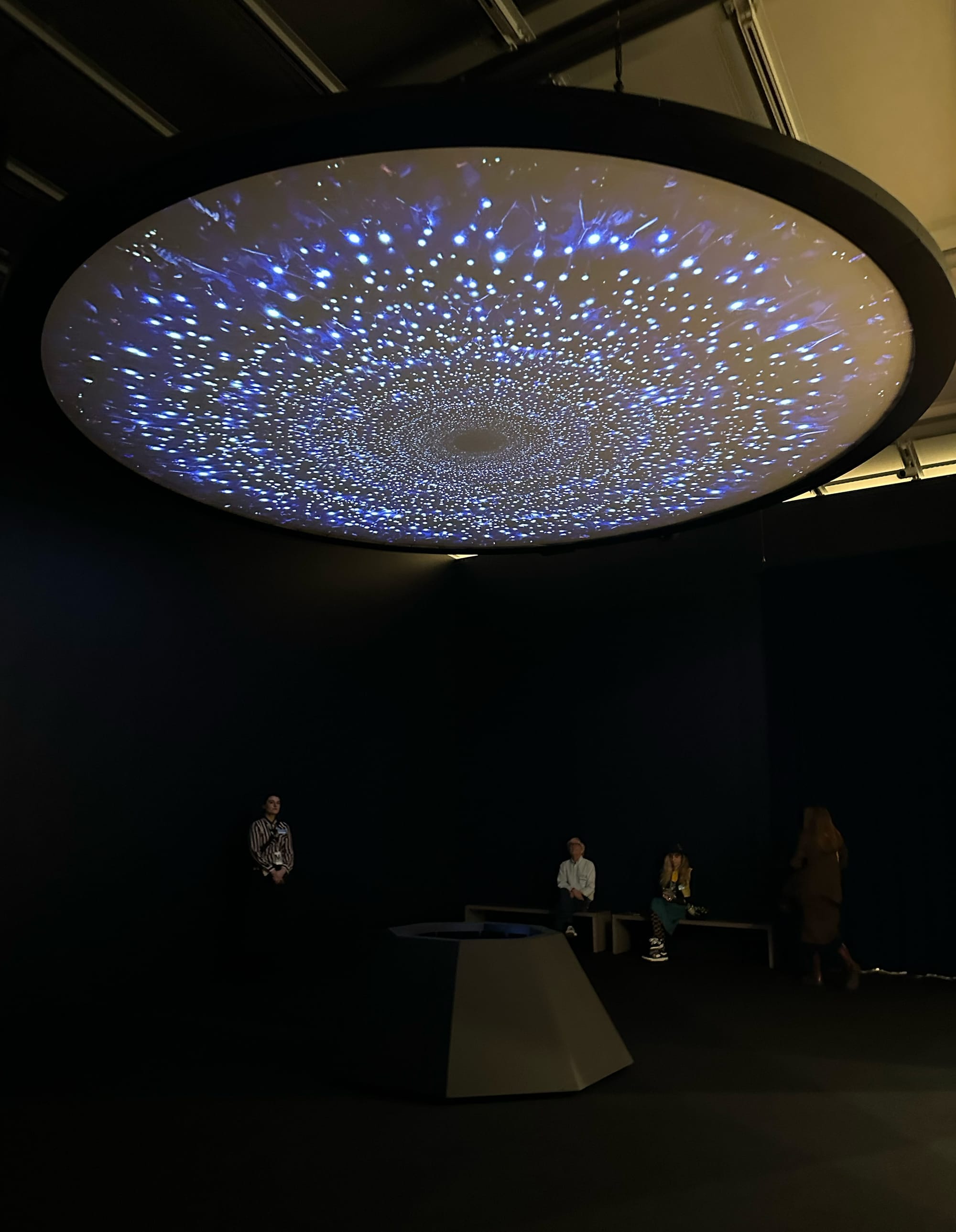
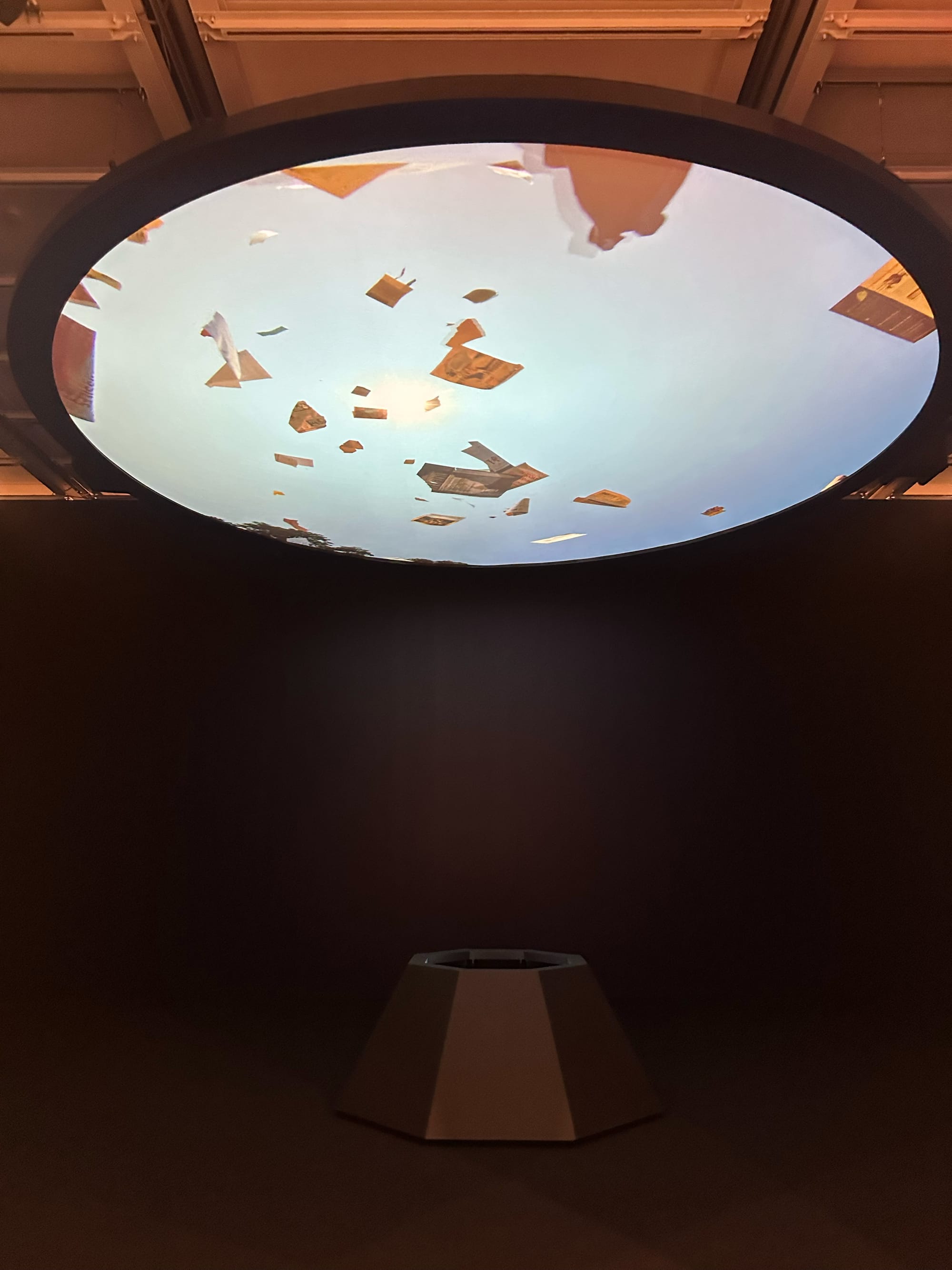
Michelle Lopez, “Pandemonium” (2025), high-definition digital video, color, and sound (photo Lakshmi Rivera Amin/Hyperallergic)
To say that the exhibition opted out of a strong thesis is not to say that it lacks a curatorial logic, however. It feels like an exhibition. (I say this as a form of praise, not as an indication that I’m lowering the bar, nor as a critique of past, more densely theorized iterations.) In the exhibition texts, the curators mention ideas like relationality and infrastructure, entanglements and kinships — forms of coexisting in this world. These ideas emerge quite clearly in the hanging without becoming overbearing, and without forcing the artwork to stretch to fit the frame.
I started on the sixth floor, which takes up the idea of infrastructures. Michelle Lopez’s “Pandemonium” (2025) feels like a fitting introduction: on a ceiling-mounted circular screen, a tornado of detritus — including newspaper clippings, tattered American flags, police tape, plastic waste, and more — swirls overhead. It’s not subtle, but it’s effective, mesmerizing — call it the polycrisis sublime.
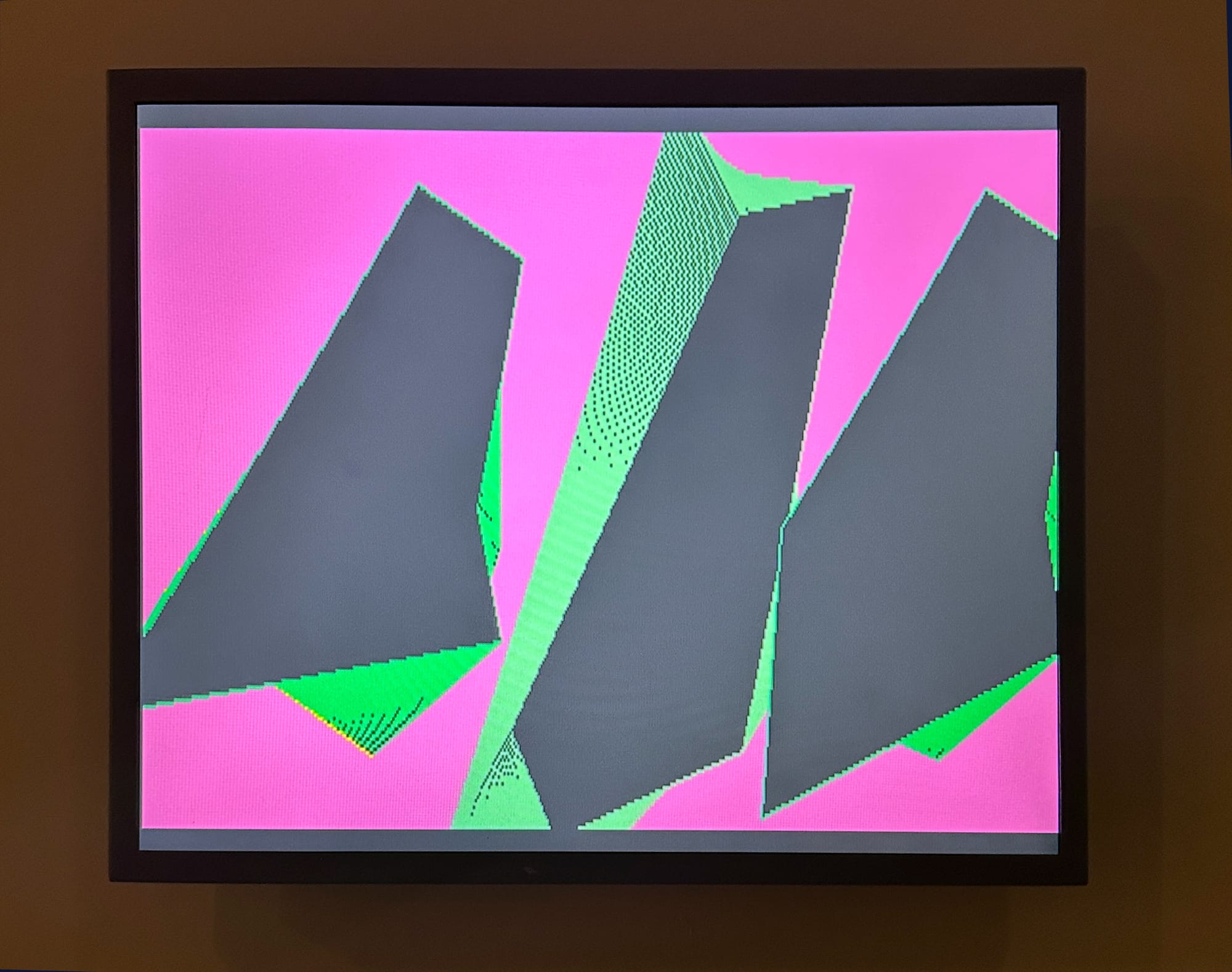
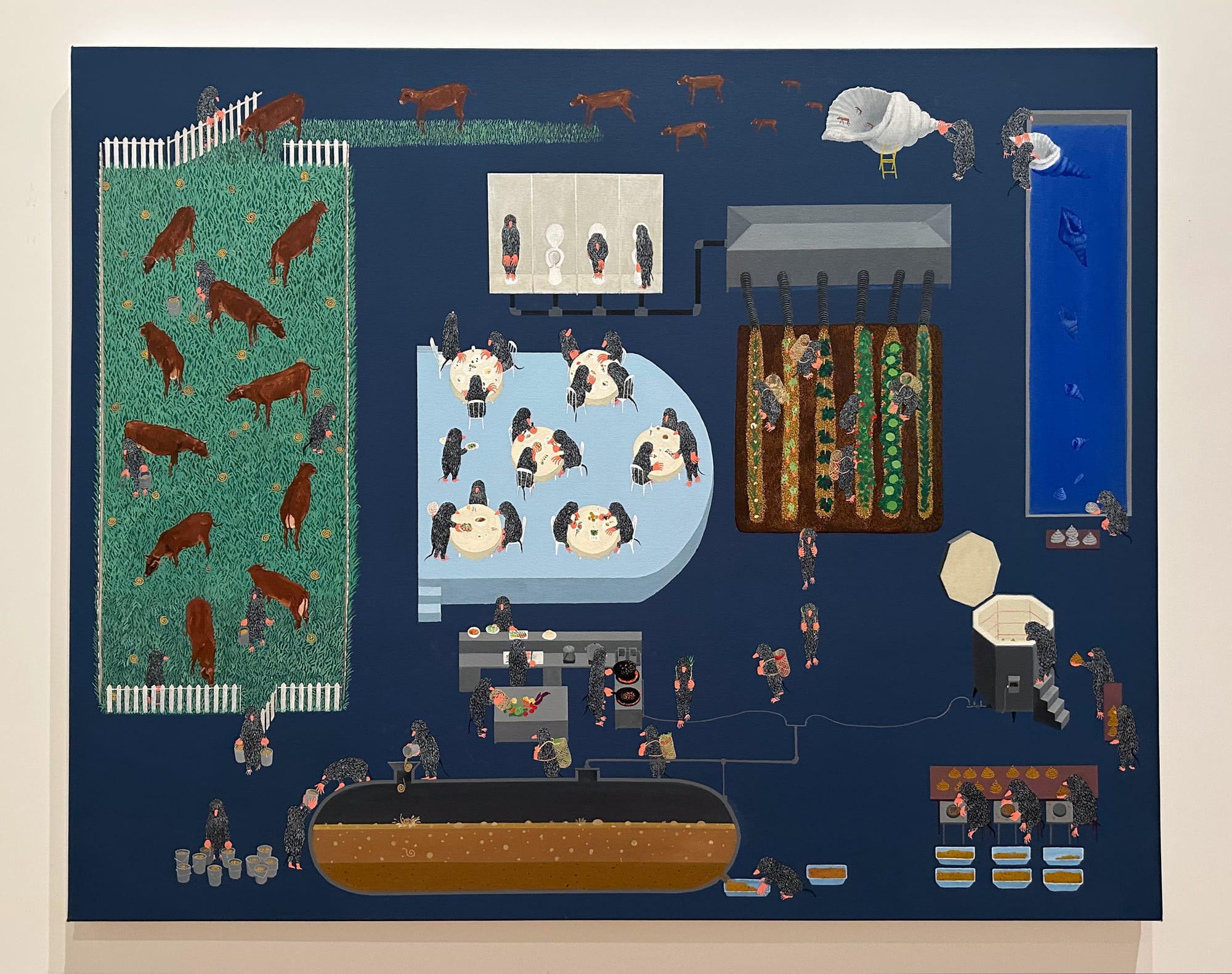
Infrastructure shows up in overt and covert ways: On one hand, Emilio Martínez Poppe’s photographs out of the windows of Philadelphia civil servants with testimonials on the back and Nani Chacon’s steel sculptures that fuse electrical towers and Diné (Navajo) sand paintings of gods. On the other, adorable paintings by Akira Ikezoe, in which cute animals and robots interact in compositions that resemble circuit diagrams, powered, in the artist’s imagination, by the sun, nuclear power, and methane gas. “Moon Sightings” (2024), by the Afghanistan-born, Berlin-based Aziz Hazara, consists of prints — abstract, atmospheric, in beautiful greens and purples — of the data left behind in discarded military night vision goggles; it is installed across from the Palestinian-born Samia Halaby’s “kinetic paintings,” which she created in the 1980s on a Commodore computer. Close by, in the next gallery, are sculptures by Cooper Jacolby embedded with functional surveillance cameras. On the fifth floor, Leo Casteñada fuses his grandmother’s paintings and Latin American Surrealism to create a video game in which players solve environmental puzzles and resolve conflicts, and Gabriela Ruiz constructs a self-portrait in the form of a digital console. These works offer up a full sweep of technology’s potential: wonder, war, entertainment, dystopia.
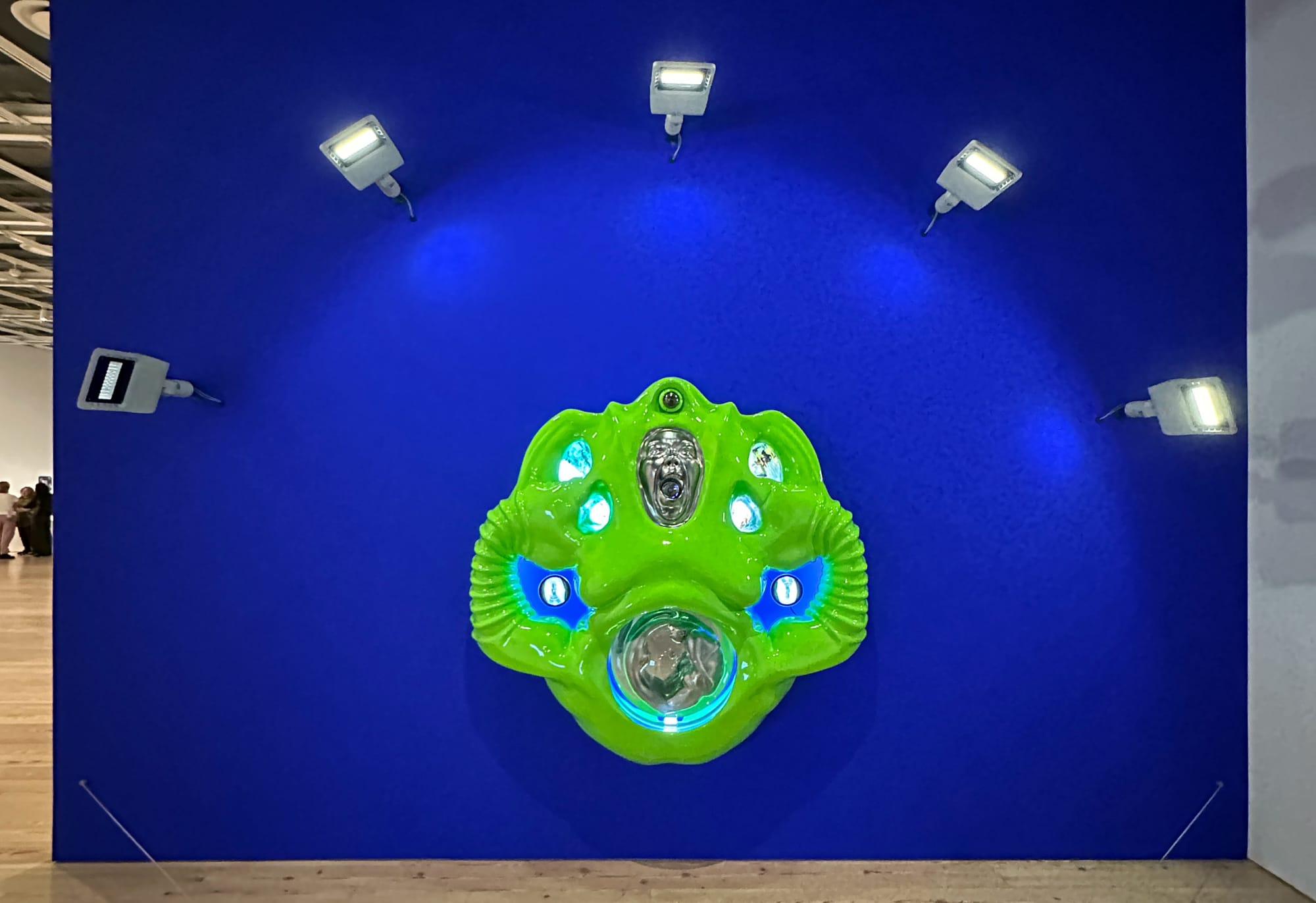
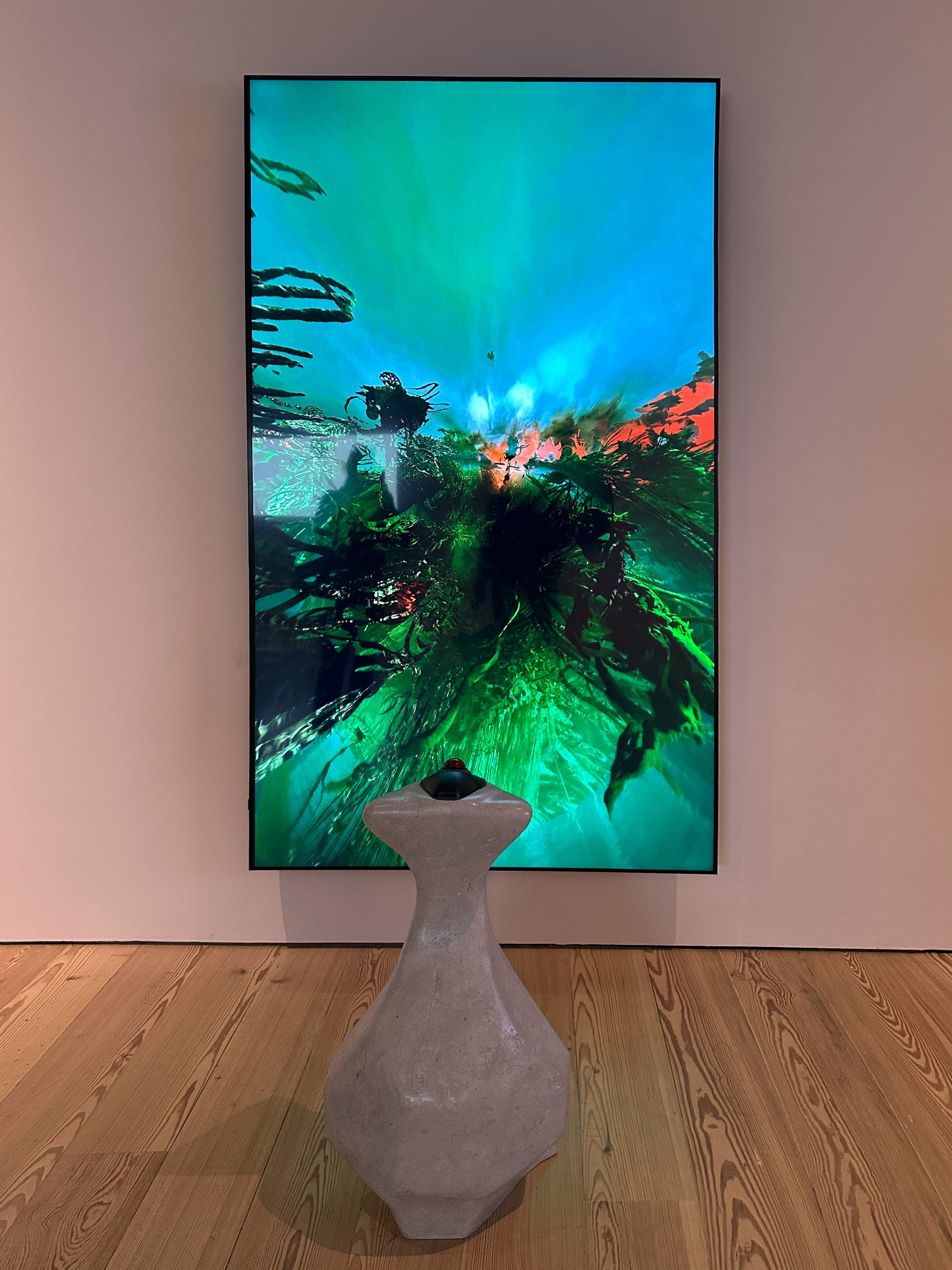
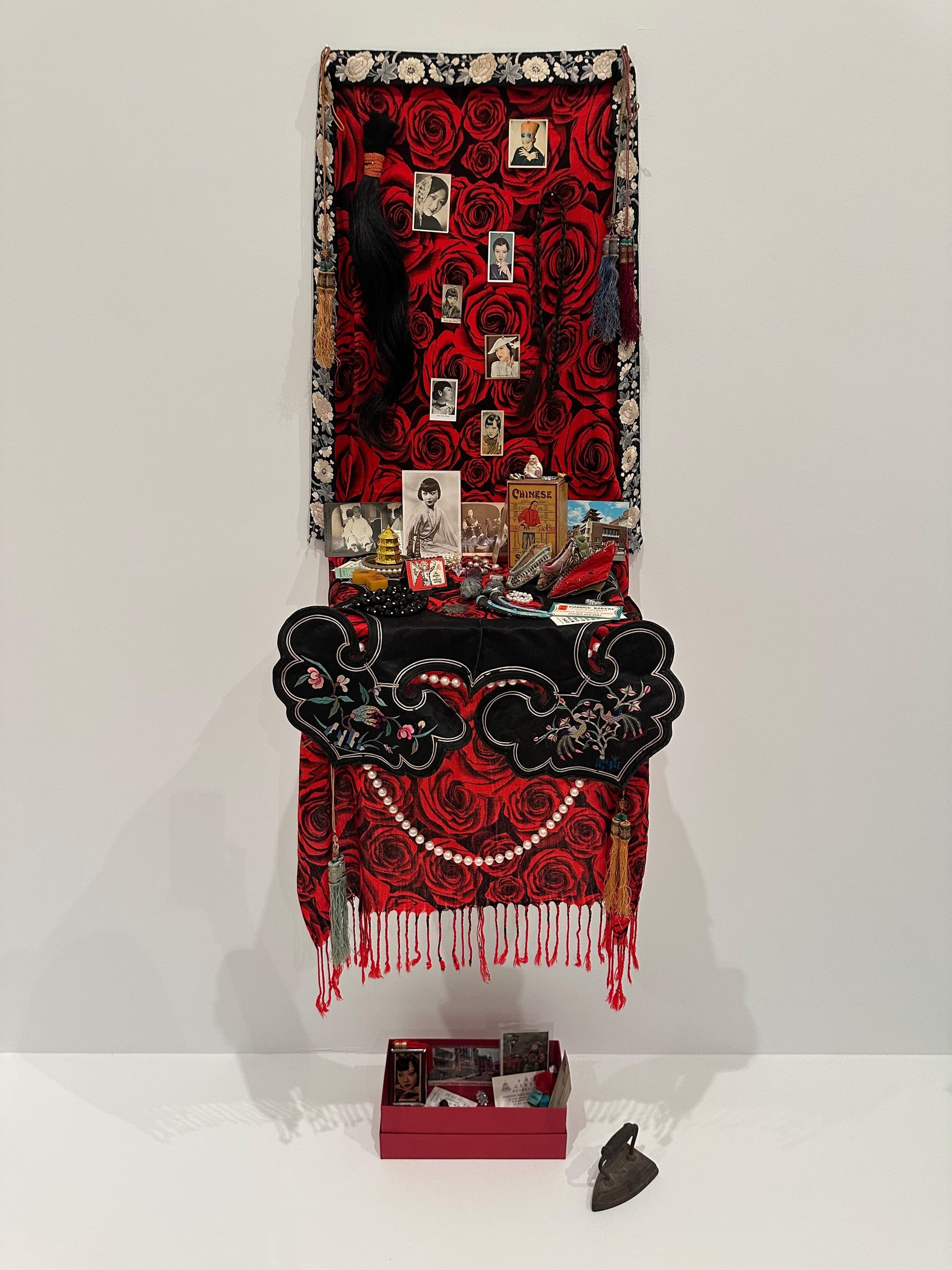
Left: Leo Castañeda, “Camoflux: Levels & Bosses Video Game Installation Incendio Igapó” (2026), ultra-high-definition video game, color, sound; fiberglass furniture and vinyl (photo Aruna D’Souza/Hyperallergic); right: Agosto Machado, “Anna May Wong (Altar)” (2025) (photo Lakshmi Rivera Amin/Hyperallergic)
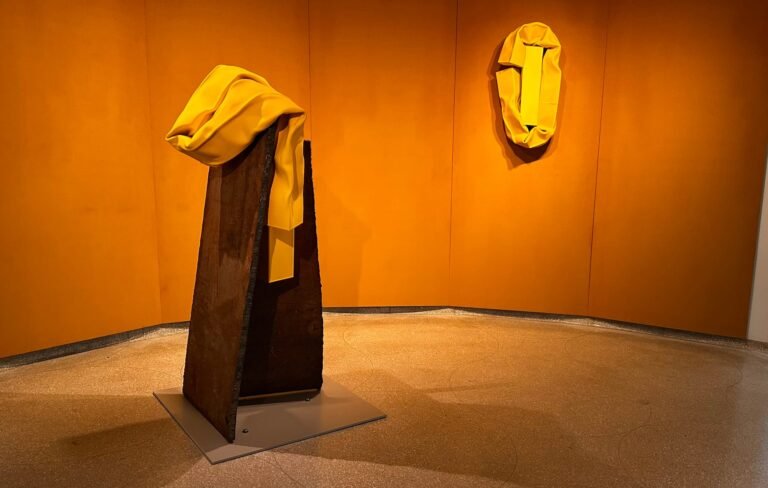
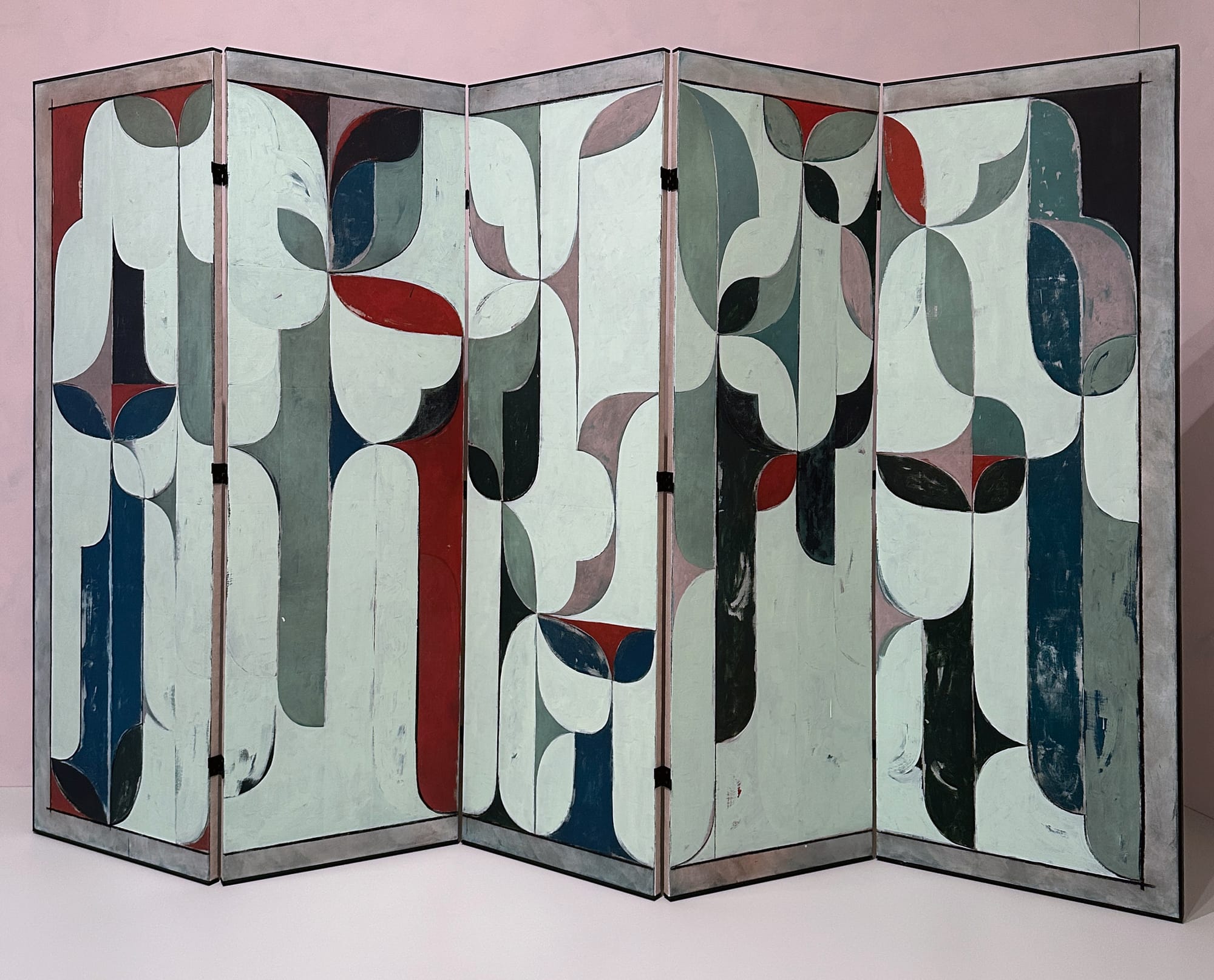
Interestingly, art shows up as its own form of infrastructure — one that a number of artists set out to dismantle. Anna Tsouhlarakis’s “She Must Be a Matriarch” (2020) is a reimagining of James Earle Fraser’s 1919 monument “End of the Trail” that replaces the broken and exhausted Native warrior with a charging horse festooned with outstretched arms, spears, menstrual cups, and inflated condoms. Works by Kamrooz Aram — a solo show within the show — take on histories of Western modernism. His painting has always (under)mined the modernist grid, taking it back to one of its origin points in Islamic painting, but here, he also interrogates how certain forms (the folding screen, the objet d’art) subordinated non-Western art in Western art history.
One of my favorite pairings on this floor were two works that dealt with the way systems impose themselves on our bodies. For David L. Johnson’s “Rule” (2024–ongoing), the artist removed signs from the city’s private-public spaces, including Zuccotti Park — a so-called public space built by a private developer. Each lists an array of prohibitions that far exceeds those that are imposed in actual public parks: No-nos include camping and/or the erection of tents, lying on the ground or public seating areas, the use of bicycles, skateboards, and roller blades, the removal of objects from trash cans, and smoking. In order to enforce the rules, landowners have to post them; Johnson’s vandalism makes us a little freer, at least momentarily. Nearby, Maia Chao’s “Scores for the Museum Visitor” (2026) — an empty rectangle painting on the wall next to text — invites us to unburden ourselves from the rules imposed by museums. “Touch the rectangle as if you are touching an artwork that you aren’t allowed to touch. Imagine getting away with it.”
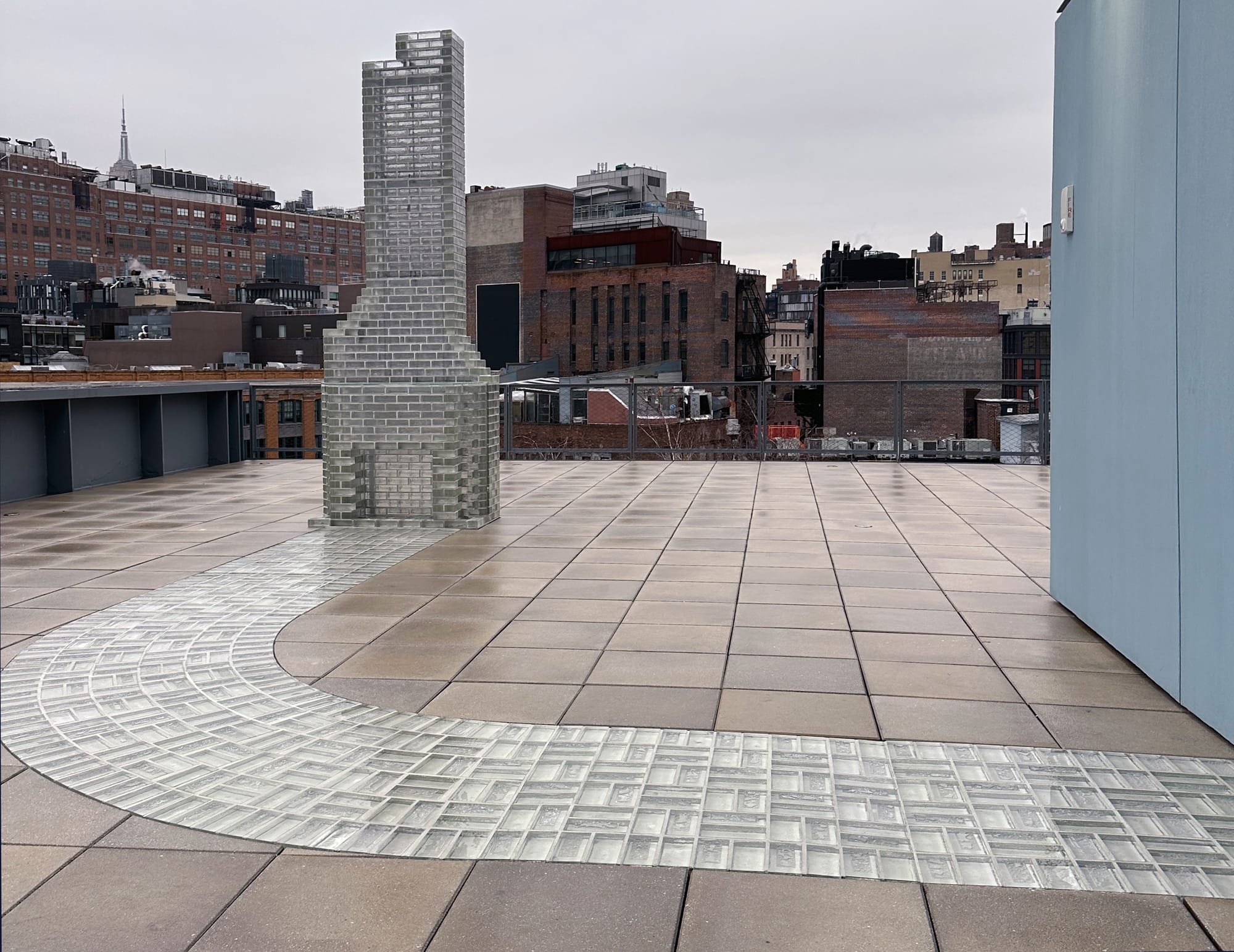
Mourning, shrines, grief — they run through both floors of the show. Rightly so — not a day goes by when I’m not gripped by the thought that our failure to grieve for those lost to the pandemic, to our endless wars, to our infrastructural violences, is the source of so much of the weirdness around us. Kelly Akashi’s “Monument (Altadena)” (2026), a ghostly, glass-brick reconstruction of the chimney of her home, razed by the Eaton fires, is just as much a monument to grief as Agosto Machado’s altars to members of his queer community. And Enzo Camacho and Ami Lien’s sculptures — their forms drawn from Catholic altarpieces and their subjects from histories of US colonization and resistance in the Philippines — propose grieving as a logical response to history’s injustices.
“Relationality” is a weird word, because it is so squishy. (It is an organizing principle in the current show at CARA on Édouard Glissant, it was central to the recent São Paulo Bienale, and is an important framing device for the upcoming Venice Biennale — in short, it’s everywhere). On the fifth floor, it encompasses an installation of work by institutional critique artist Andrea Fraser, who shows wax sculptures (!!) of sleeping toddlers alongside paintings by her mother, Carmen de Monteflores. The pairing speaks not only to family ties but also its structures — Monteflores gave up art at the moment Fraser, her youngest child, was born, in part because the art world does little to support artist mothers.
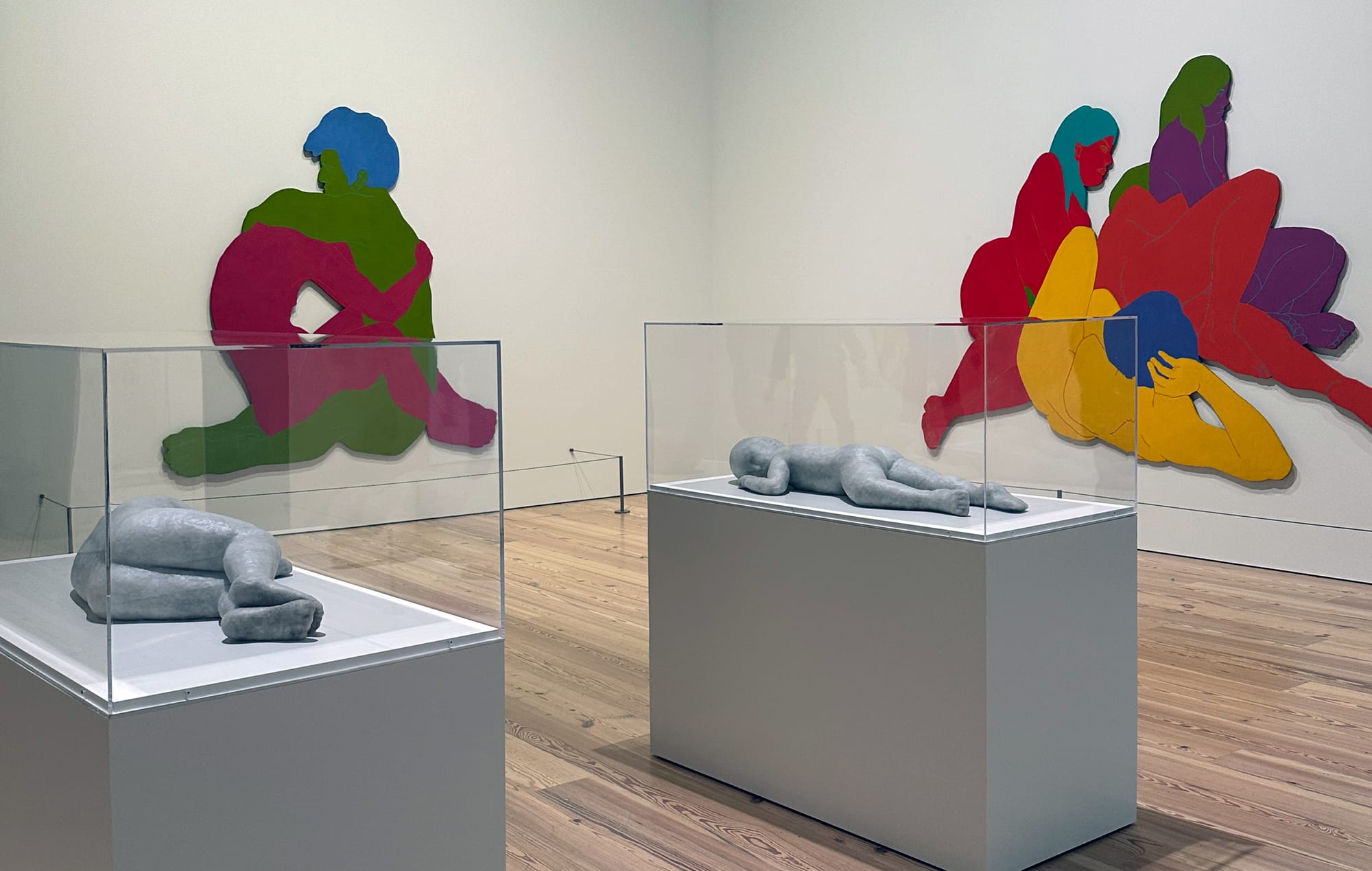
Kinship shows up, too, in Young Joon Kwak’s “Divine Dance of Soft Revolt (Anna, Travis, and Me)” (2024) — another tornado-like form, this time of glitter-covered casts of fragments of her friends’ forms, constituting a collective body. And then there are relationships to animals and the earth — non-human entities — including the entirely relatable tribute by Emilie Louise Gossiaux to the death of their guide dog, London. It consists of a hundred hand-sculpted Kongs (the platonic ideal of dog toys) and a series of drawings commemorating their interdependent relationship. Oswaldo Maciá’s “Requiem for the Insects” (2026) underlines our relationship to less anthropomorphizable species, in this case bugs, in an installation that includes sound emanating from glass megaphones, scent, and paintings. Theresa Baker’s terrific paintings — created by embellishing synthetic turf with yarn, buckskin, and other natural materials to evoke Native American forms of mapping — also fit the theme, if you squint a little.
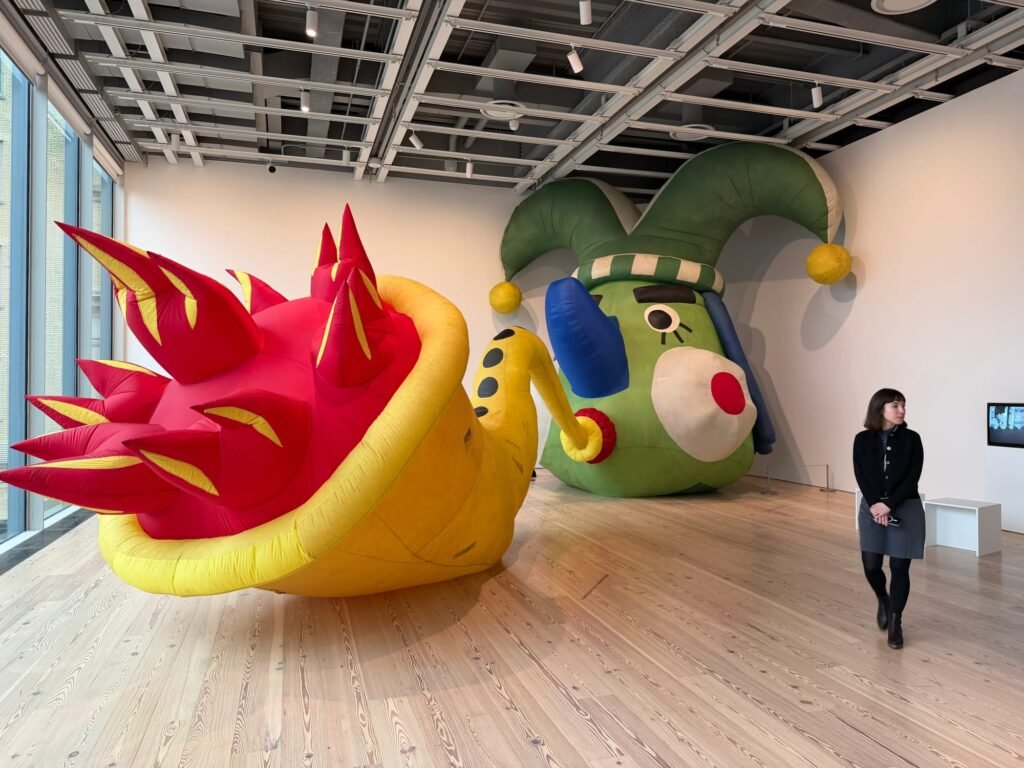
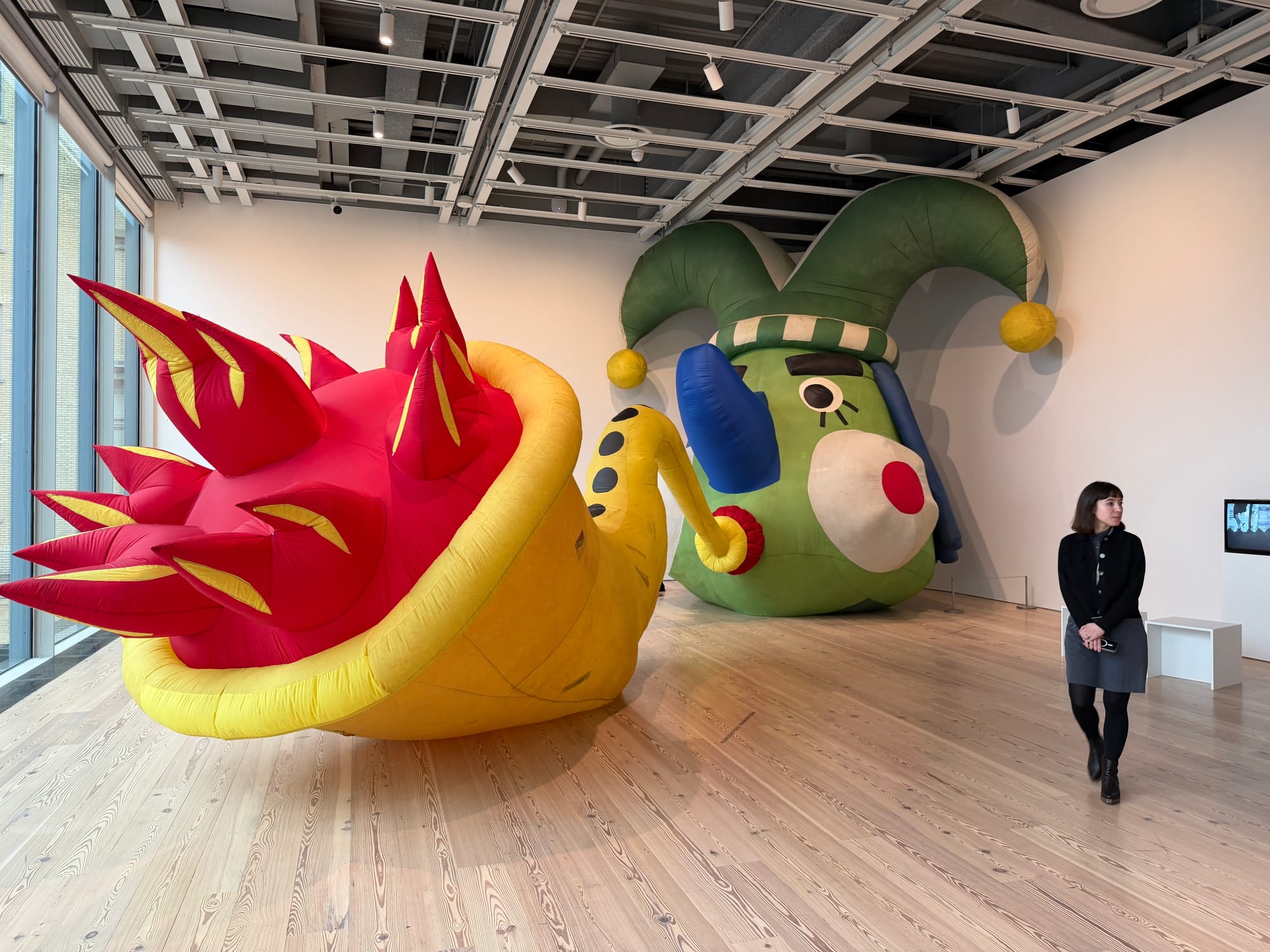
There was one grouping of actually weird work, in fact: Isabelle Frances McGuire’s series Satan in America and Other Invisible Evils (2026), with sculpted witches and villagers concocted out of open-source CT scans of anonymous bodies (weird that such things are available online); “Dark Brown Birkin Bag” (2026) by Nile Harris, a Hermès bag that the artist claims to have made with his own skin (weird, and weirder that all we see is a green shipping crate); and Pat Oleszko’s “Blowhard” (1995), an inflatable sculpture of the Statue of Liberty blowing her torch like a giant sax (weird and wacky in the best possible way).
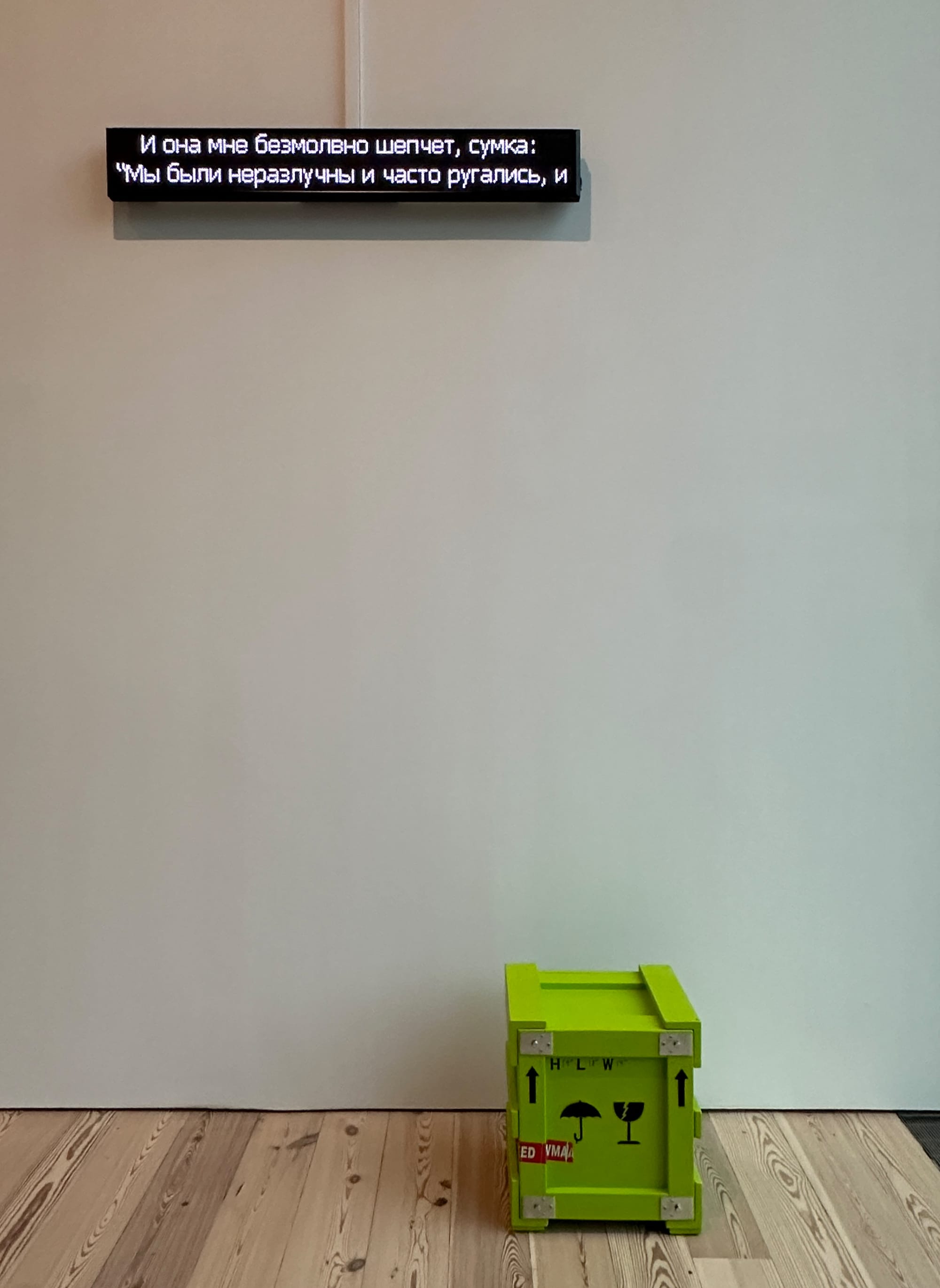
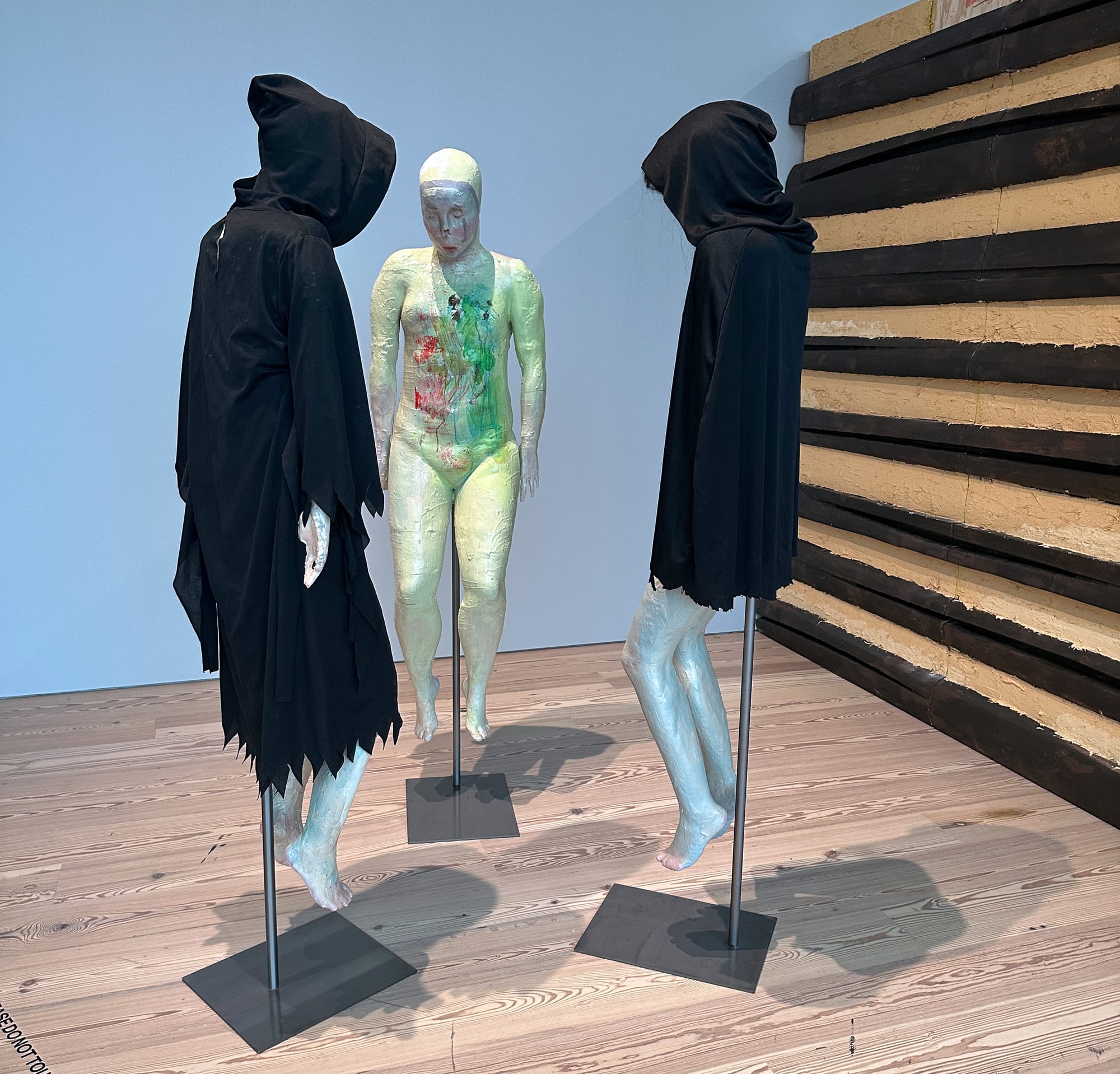
Left: installation view of works by Nile Harris with Dyer Rhoads; right: installation view of works by Isabelle Frances McGuire (photos Aruna D’Souza/Hyperallergic)
But perhaps the weirdest thing about the show was its lack of overt politics — every single work in the show was political, but that politics was filtered through art, always. That will not sit well with people who want answers to our current overlapping crises — and believe art can provide them.
My bottom line here: terrific installation — works felt uncrowded, despite the fact that there were 10 more included in the galleries than in the 2024 edition. The wall labels are excellent, and there are enough curatorial throughlines that there felt like a structure, without that structure becoming too heavy. And it very much felt like the world as I experience it these days: no clear path in front of me, but enough moments of beauty and joy to convince me to put one foot in front of the other despite a backdrop of cascading disasters.
Whitney Biennial 2026 opens March 8 at the Whitney Museum of American Art (99 Gansevoort Street, West Village, Manhattan) and continues through August 23. The exhibition was curated by Marcela Guerrero and Drew Sawyer.