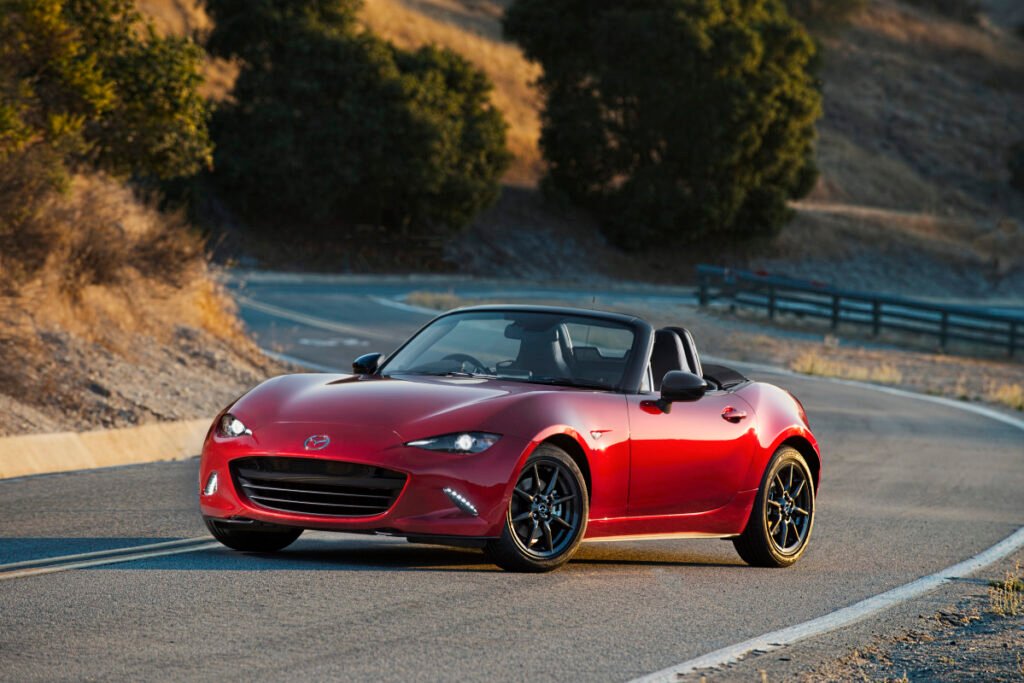
Incessant car bloat is an enemy that every new car battles and typically loses to, with additional safety equipment and the advent of electrification adding hundreds or even thousands of pounds to the curb weight with each new generation—just look at the new Audi RS 5, which now tips the scales at almost 5,200 pounds in sedan form, compared to under 4,100 lbs for its B9 Sportback non-hybrid predecessor. A notable exception to this trend is the Mazda MX-5 Miata, which is lighter in current ND form (2,182-2,341 lbs, depending on global spec) than its NC predecessor (up to 2,498 lbs), and the car that replaces it could be just as much of a featherweight—or even more so compared to today’s U.S. model.
Mazda Promises New MX-5 Will Weigh Less Than 2,200 Pounds
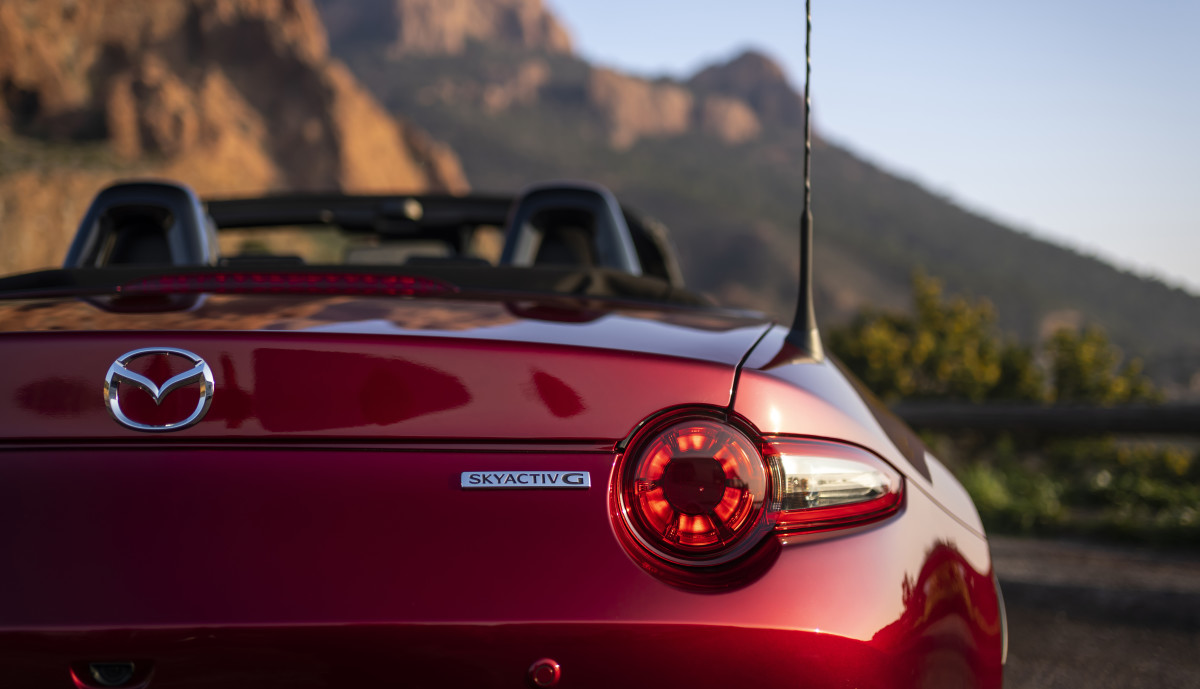
Manabu Osuga, Mazda‘s General Manager of Global Sales and Marketing, told Australian publication GoAuto that the Japanese automaker is already working on the new MX-5, adding an exciting promise: “I can tell you that we are sticking with a car that will be under one tonne of weight … employing our ‘gram strategy’ as we did with the current series.” 1,000 kilograms translates to 2,204 lbs, and a new Miata under that threshold would be even lighter than the ND3 currently on sale in the U.S. This isn’t without its challenges.
Related: I Drove the Slowest Mazda MX-5, Here’s My Honest Review
“Global environmental regulations are getting tougher, as are safety protocols, which don’t [necessarily correlate] to a car that is designed for pure fun,” said Osuga. Crash structures, driver assistance tech, and emissions standards all pile on the pounds, but Mazda is adamant that the next MX-5 can at least avoid electrification a little longer.
Next Mazda MX-5 Won’t Be a Hybrid; Turbo Maybe?
Mazda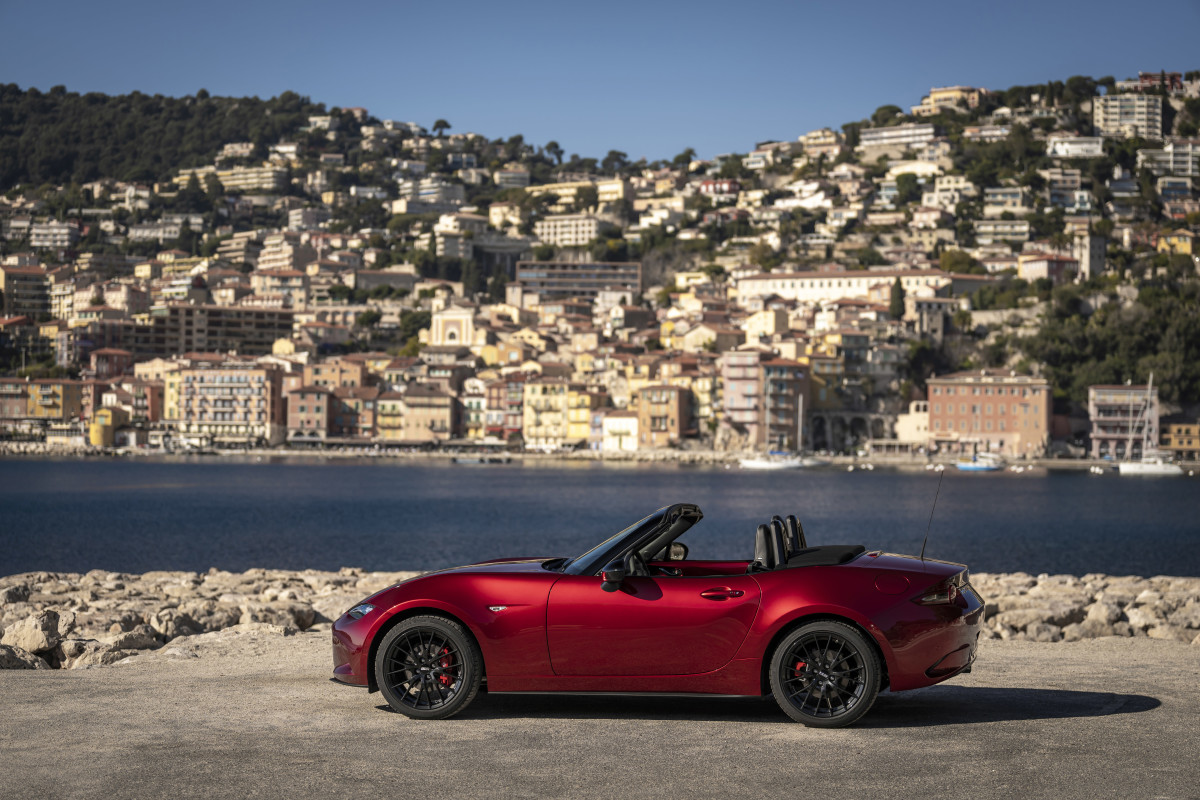
The executive went on to say that Mazda is continually evaluating electrification technology and may “think about it” in the future if it suits the ethos of the MX-5—”I’m not going to say there isn’t any possibility [that electrification could be offered in the future]”— but at the present moment, “that technology is very heavy, and if we apply that to the MX-5, we will not satisfy our fans.” The Miata is a cult car beloved for its deft handling, and while solid-state batteries are showing promise, no hybrid or all-electric tech is yet light enough for the sports car. Therefore, “at this moment, the internal combustion engine is the way,” said Osuga. But what sort of combustion engine?
If Mazda intends to offer MX-5 buyers the same or even less weight while still making the car compliant for another decade (the ND was revealed way back in 2014, so it’s had a long life cycle that its successor will no doubt try to emulate), one can’t help but wonder if Mazda will be forced to dilute the MX-5 recipe with forced induction. That may be just as offensive to die-hard Miata fans, but it would doubtless be better than a battery pack, and if the turbo is tuned well enough, power delivery may feel linear enough. Synthetic fuel is another idea that has been floated by Mazda execs. When we will find out what’s next for the world’s best-selling two-seat sports car, however, is a mystery, as Osuga said, “I can’t share with you exactly when the new MX-5 will arrive, [only] that we are working on it.” Stay tuned.