- The Honda Civic will enter a new generation in 2027.
- Hybrid will bring sharper looks and better handling.
- New platform cuts weight while increasing body rigidity.
The Civic has long been one of the strongest players in the compact segment. Even so, Honda is already refining the formula for what comes next. The 12th-generation model is expected to arrive next year, and a mix of early official details and speculative renderings already offers a reasonable preview of what the next model might look like.
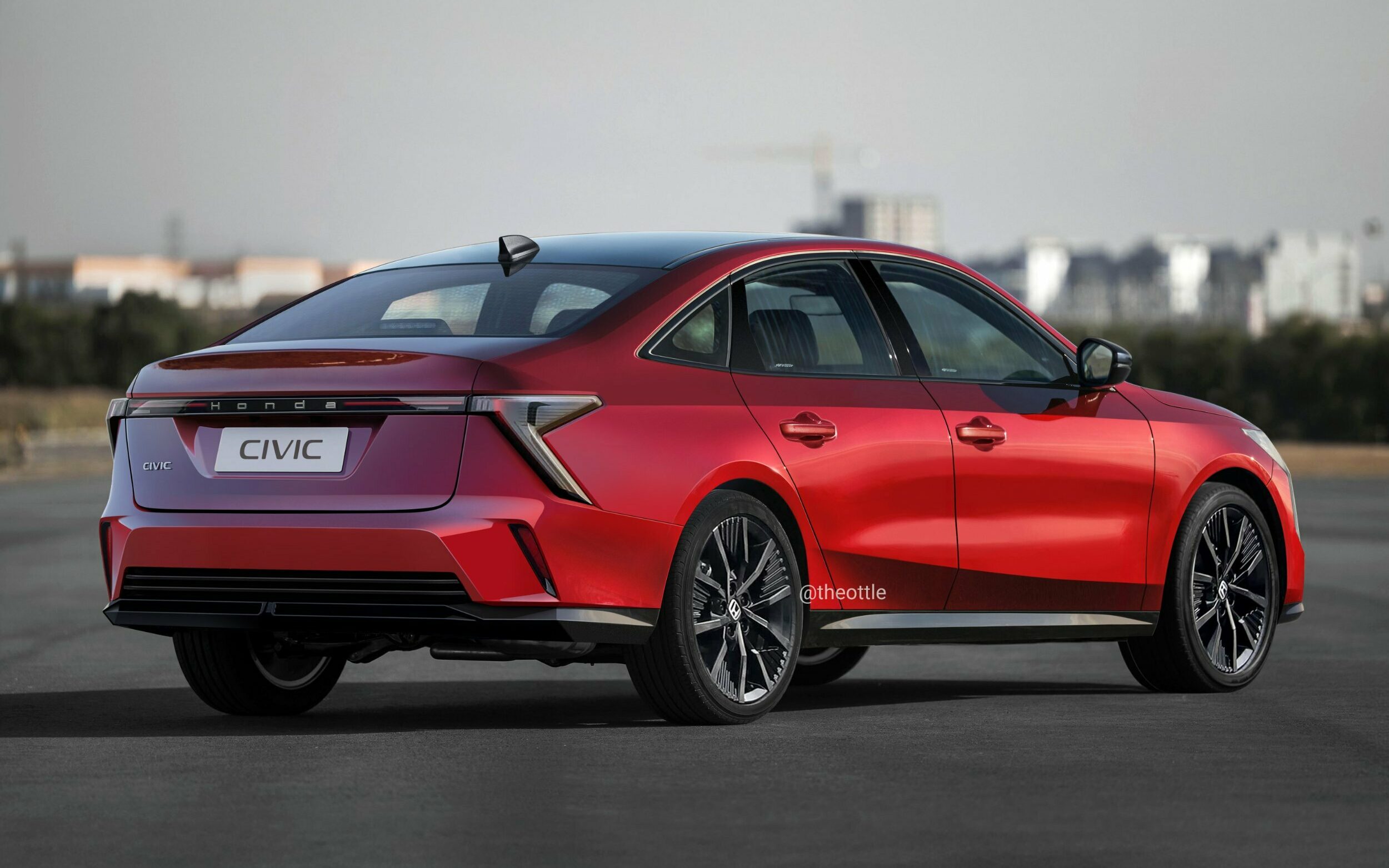
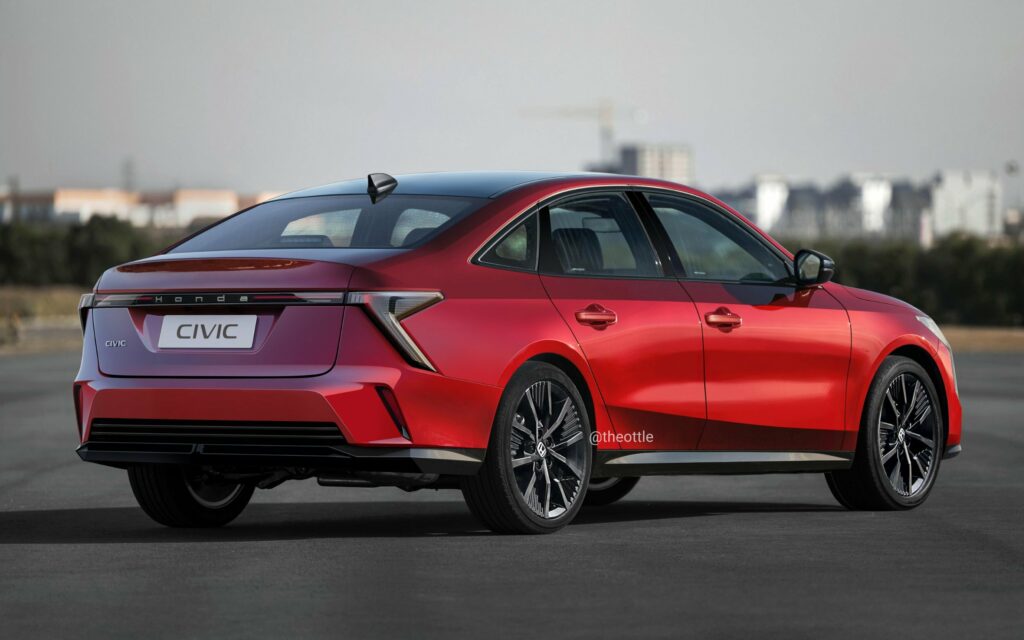
Not long ago, Honda released photos of a development mule for the upcoming Civic. The prototype wore the current generation’s bodywork under thick camouflage, revealing little about the final design. That did not stop independent digital artist Theophilus Chin from attempting to strip away the disguise and imagine the finished product using Honda’s latest design language.
More: Honda Cancels 0 Sedan, 0 SUV, And Acura RSX EVs
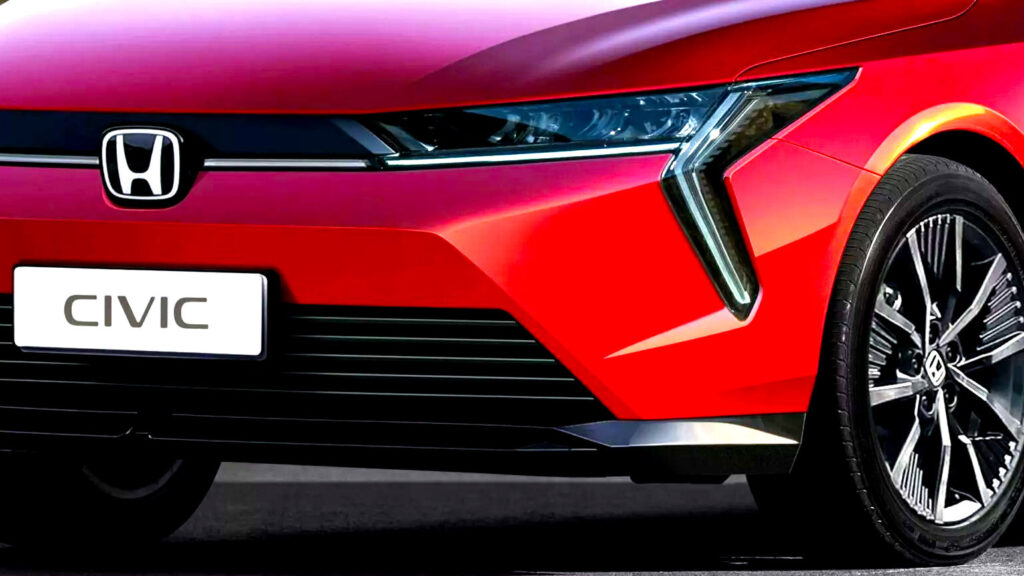
Theottle began with the existing Civic as a starting point, then layered in styling cues from the Chinese-spec Honda e:NS2. That electric crossover recently appeared in Japan wearing the Insight name, and its design elements translate surprisingly well.
Illustrations Theophilus Chin
In the render, the sharp LED lighting signature and revised bumper shapes migrate over to the sedan, giving the imagined hybrid a sleeker, arguably more attractive set of proportions.
More: Honda’s Hottest Hatch May Be Preparing One Last Surprise
Along the sides, Chin took an unexpected detour. The body surfacing echoes the current BMW 5-Series sedan, a reference point you probably would not associate with a Civic. Even so, the result still reads convincingly as a Honda. The only slightly off note is at the rear, where the taillights would not feel out of place on something wearing a General Motors badge.
Next Civic Architecture
Step away from the speculative styling for a moment and Honda has already revealed a few meaningful details about what sits underneath. The next Civic will ride on a revised architecture that trims 188 lbs (90 kg) compared with today’s model. Less mass is only part of the story. Honda also promises greater structural rigidity, along with sharper steering response and more composed handling.
Honda
Alongside the stiffer structure and wider tracks, the next Civic will introduce a new Motion Management System paired with an upgraded version of Agile Handling Assist. The setup now incorporates pitch control, helping the car stay more settled and balanced when pushed through corners.
Updated Hybrid Powertrain
As for the powertrain, Honda is preparing the next evolution of its e:HEV self-charging hybrid system. The layout combines a 2.0-liter four-cylinder engine with a pair of electric motors, and the company expects roughly a 30 percent improvement in fuel efficiency, along with stronger overall performance.
More: Honda’s Super-One Wants To Be A Hot Hatch So Bad It Pretends To Shift Gears
The Civic will also adopt the “Honda S+ Shift” system first introduced on the Prelude coupe. It relies on software rather than hardware, simulating gear changes through carefully managed sound and torque modulation even though the drivetrain lacks a traditional gearbox.
Honda is also leaning heavily on parts sharing. Roughly 60 percent of the Civic’s components will be common with other upcoming models, including the HR-V, CR-V, and Accord. The idea is straightforward: cut research and development costs while speeding up the time it takes to bring new models to market.
The 12th generation Honda Civic is expected to arrive in late 2026 or early 2027, either as a 2027MY or a 2028MY. When it does, it will face a familiar group of rivals, led by the Toyota Corolla as it prepares for its own generational change, along with the Hyundai Elantra, Kia K4, and the increasingly long-in-the-tooth Mazda3.