
Editors’ Vox is a blog from AGU’s Publications Department.
One of the most rewarding aspects of my role as Editor-in-Chief of Earth’s Future is the perspective I have gained on the range of submissions our journal receives. In a single week we might handle manuscripts on permafrost carbon feedbacks, urban heat and public health, critical mineral supply chains, coastal flood risk under sea-level rise, and drought impacts on crop resilience. What unifies these diverse contributions is their shared conviction that advancing the science of our planet’s dynamic future requires intellectual efforts and collaborations that work across disciplinary boundaries. No other journal in the AGU family occupies this space, and the research community has noticed. Submissions have nearly quadrupled in five years, and the work keeps getting more ambitious and integrative.
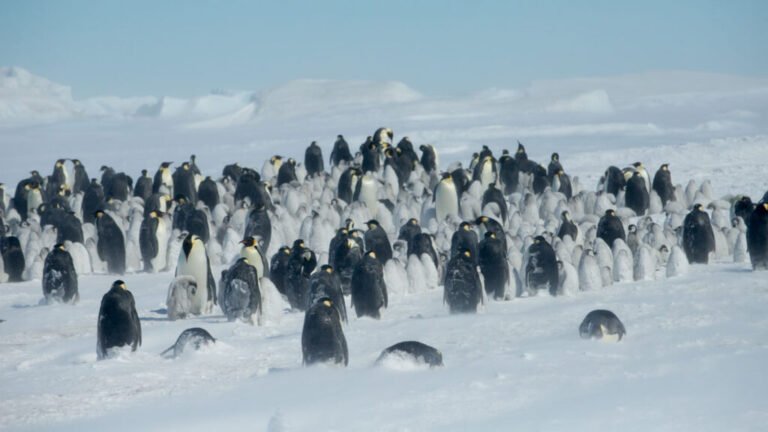
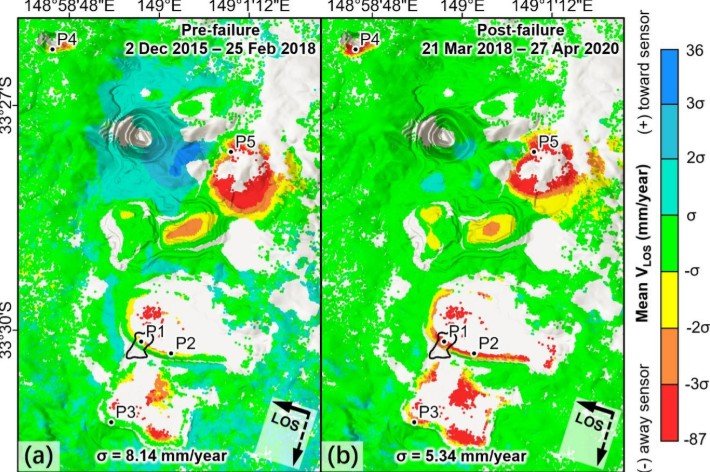
Such growth is exciting, but it also raises several practical questions: how can we maintain editorial depth, communicate our findings clearly, and foster intellectual communities within a broadly scoped journal that is rapidly growing in submissions? Our answer is the introduction of three Thematic Areas: Climate Impacts, Communities and Resilience, and Sustainable Resource Systems. Each of these themes will be led by a Deputy Editor.
These thematic areas are not new sub-journals or rigid categories. Instead, they are named frontiers: areas where we see particular opportunity for transdisciplinary research to make a meaningful contribution, and where we’re investing in focused editorial leadership. Authors whose work aligns with a thematic area will be handled by a deputy editor and an editorial team with deep expertise across the theme-specific topics. And, of course, authors whose work spans these areas or falls outside them entirely are just as welcome as ever!
These thematic areas also respond to something we’ve heard clearly from our community: more than a statement of what Earth’s Future covers, they want to know where it’s headed. In that respect, climate impacts, community resilience, and resource sustainability represent three areas where we believe our contributions have established intellectual leadership and where the complex social-environmental issues of our time are converging. We want to be the place where the science at those intersections finds its audience.
I’m thrilled to introduce the three Deputy Editors who will lead these areas. Each brings a distinctive perspective and genuine enthusiasm for the work ahead.
Justin Mankin, Deputy Editor – Climate Impacts
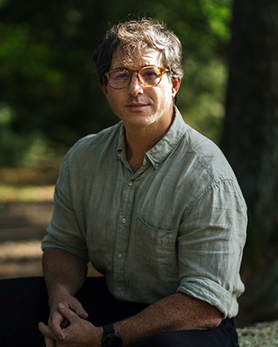
What is your research focus, and what drew you to this role?
I study the origins and consequences of climate change, addressing fundamental questions about hydroclimate, methodological questions about model experimental design, and applied questions about human well-being. The effort to bring physical climate science insights to other domains, including societal outcomes, is what first drew me to Earth’s Future as an author, and has shaped my work as an Associate Editor (2022), Editor (2024), and now, Deputy Editor of Climate Impacts (2026).
What kinds of papers excite you for Climate Impacts? What’s the gap you want to fill?
The papers I find most exciting link climate to ecological, economic, or social systems in ways that no single-discipline journal can fully evaluate. Too much climate impacts work falls between disciplinary cracks. That’s the gap I see Earth’s Future as helping to fill.
What would you say to a climate scientist who isn’t sure if their work fits in Earth’s Future vs. a disciplinary journal?
If you’re a climate scientist wondering whether your work fits Earth’s Future, ask yourself: does your paper connect climate processes to outcomes that matter for people, policy, or ecosystems? Or does it use impacts evidence to inform climate science? If it tells a story beyond the scope of any one discipline, we want to be the home for that work.
Maria Cristina Rulli, Deputy Editor – Communities and Resilience

What is your research focus, and what drew you to this role?
My research explores how hydrological processes interact with human systems through a Food–Energy–Water (FEW) nexus lens. I study how global change affects water and food security, human conflicts, and mobility, as well as how these dynamics impact rural livelihoods, resource management, and governance. My recent work explores the links between health and the environment, focusing on how unsustainable food systems may contribute to the emergence of nutrition-related, zoonotic, and uncommunicable diseases.
This editor role offers me a unique chance to support high‑quality, interdisciplinary research that can inform better policies, innovative solutions, and more equitable outcomes for communities worldwide
Where do you see the frontier? What kinds of papers excite you for Communities and Resilience?
I see the frontier in interdisciplinary research that integrates global change impacts on resource dynamics, livelihood, human mobility, and health. The most valuable papers combine empirical evidence, innovative modeling, community‑based approaches, and policy relevance. The strongest contributions will not only identify vulnerabilities but also offer concrete pathways toward more equitable, resilient, and sustainable communities.
What would you say to researchers working on hazards, infrastructure, or adaptation who might not think of Earth’s Future first?
Earth’s Future is an ideal venue for research on hazards, infrastructure, and adaptation because it highlights interdisciplinary research with strong empirical, modeling, community, and policy dimensions. It places such studies in a broader systems context, emphasizing not only risks but also actionable pathways toward more resilient and equitable communities.
Dabo Guan, Deputy Editor – Sustainable Resource Systems
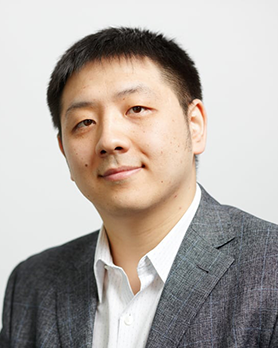
What is your research focus, and what drew you to this role?
My research develops greenhouse gas emissions inventories and global supply-chain models to understand how energy, industry, and trade drive climate and environmental change, and how we can accelerate low-carbon transitions. I was drawn to this Deputy Editor role because resource sustainability problems are inherently cross-system: energy, materials, food, water, and climate policy are coupled, and Earth’s Future is one of the platforms designed to assess that integrative evidence.
What kinds of papers excite you for Sustainable Resource Systems? What’s the question you most want the community to tackle?
For Sustainable Resource Systems, I’m most excited by papers that link resource flows and infrastructure choices to real-world outcomes, from greenhouse gas emissions and pollution, to biodiversity and equity along supply chains, and then turn that evidence into actionable mitigation. I especially value studies that move beyond foot printing to test solutions and quantify trade-offs. The question I most want the community to tackle is how we can meet decarbonization goals while improving resource efficiency and security, without shifting burdens through global trade.
What would you say to researchers working on energy, water, food, or minerals who are choosing where to submit?
If you work on energy, water, food, or critical minerals and are deciding where to submit, ask whether your study connects resource systems to the Earth and society in a way that helps people make real decisions, including what actions can cut emissions and what trade-offs they involve. If so, Earth’s Future is a great place for it.
—Kelly Caylor (caylor@ucsb.edu,  0000-0002-6466-6448), Editor-in-Chief; Justin Mankin (0000-0003-2520-4555), Deputy Editor – Climate Impacts; Maria Cristina Rulli (0000-0002-9694-4262), Deputy Editor – Communities and Resilience; and Dabo Guan (0000-0003-3773-3403), Deputy Editor – Sustainable Resource Systems, Earth’s Future
Read the Editorial by the Earth’s Future editors to learn more about the aims and scope changes.
Citation: Caylor, K., J. Mankin, M. C. Rulli, and D. Guan Cristina (2026), The future of Earth’s Future, Eos, 107, https://doi.org/10.1029/2026EO265013. Published on 24 March 2026.
This article does not represent the opinion of AGU, Eos, or any of its affiliates. It is solely the opinion of the author(s).
Text © 2026. The authors. CC BY-NC-ND 3.0
Except where otherwise noted, images are subject to copyright. Any reuse without express permission from the copyright owner is prohibited.