On the Verge of Bankruptcy
Ford wasn’t in a good place in the early ’80s. As soon as it entered the decade, the company suffered $1.5 billion in losses and proceeded to lose billions more in the following years. By 1982, those losses amounted to around $3 billion — and we’re talking in ’80s dollars here. Adjust that for inflation, and that’s about $11 billion in today’s money. Ouch.
The product line wasn’t the strongest, either. Sure, the Ford F-Series was doing its part, but one model alone can’t do all the heavy lifting. There were also the likes of the Escort and LTD Crown Victoria that were selling decently, but not in the numbers Ford needed to curb the losses. Something had to be done, and Ford reckoned the answer was with something revolutionary.
Ford
Enter, Team Taurus
It didn’t help that foreign competition, particularly the Japanese, made their mark in the ’70s and made waves in the ’80s. Simply put, the cars from abroad were better built, more efficient, and more appropriate for those shifting times. “Build it and they will buy it” simply wasn’t going to cut it anymore.
Building a new car wasn’t enough. The culture within the company had to change, too. Turns out, development departments worked in isolation from each other back in the day. For its new midsize sedan, Ford took the lessons it learned from the development of the Escort and applied them here. That way, exterior and interior designs would be more cohesive, as well as the engineering.
At the same time, management was shaken up to put quality as a priority. That was a result of Ford’s newly appointed Corporate Quality Director, Larry Moore, hiring W. Edwards Deming to see where the company’s quality problems lie. Deming’s findings concluded that management actions were responsible for 85% of all problems. With that, new production methods were applied with the then-current models, and a quality-first approach was imbued in the development of what would later become the Taurus.
Ford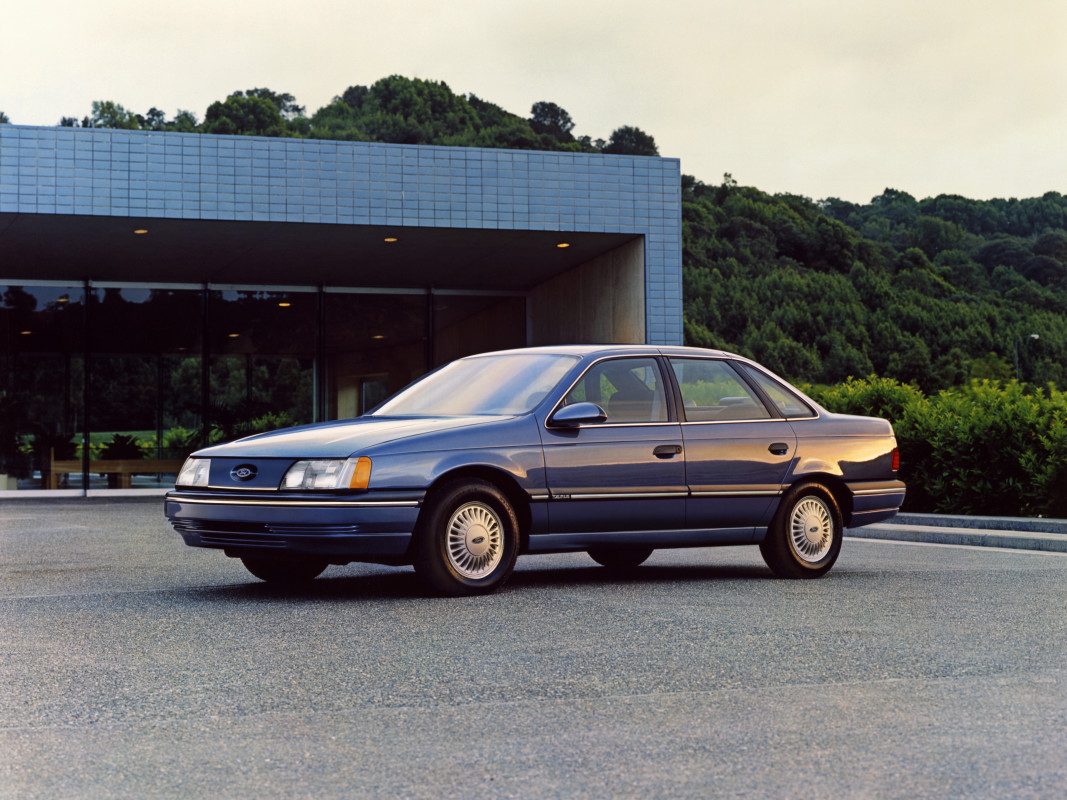
A Big Gamble
These are the names you should remember in Team Taurus: Lewis Veraldi, Jack Telnak, Ray Everts, and Jeff Teague. Veraldi was often referred to as the father of the Taurus, leading the team and the ambitious project along the way. Telnak was the vice president of Design at Ford during that time, with Everts and Teague under his wing. Everts designed the sedan, while Teague did the wagon.
The direction for the Taurus was to go futuristic instead of evolving from American design trends at the time. Of course, the risk of that is the strong possibility of alienating current customers and turning prospective ones away. Ford already experienced that in England with the introduction of the Sierra in 1982. It replaced the boxy, conservative, and familiar Cortina with the forward-looking model, and sales started off with a whimper. Granted, sales of the Sierra picked up later on, but Ford needed to hit the ground running with the Taurus.
Ford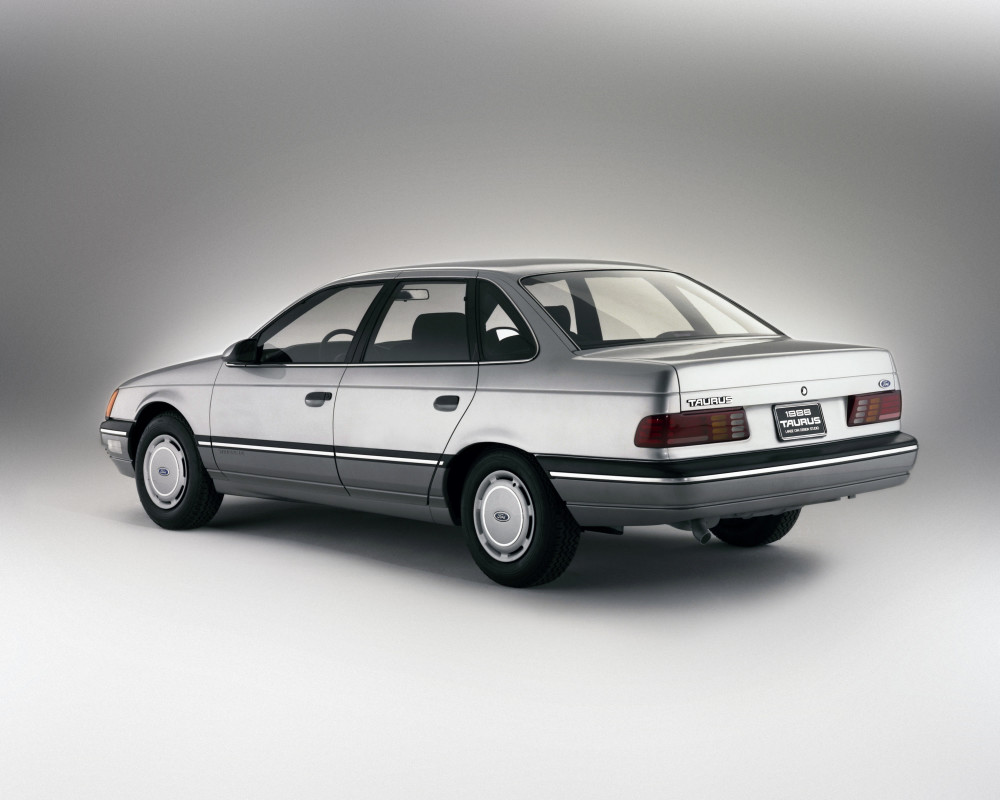
Failure was Not an Option
Development work started in 1980 with several radical proposals put forward. Ford also studied its competitors by disassembling Accords and Camrys in the early ’80s, and even picked a 5 Series apart at some point. Not wanting a repeat of the Edsel disaster, Ford took customer clinics much more seriously with the Taurus, and loads of test mules were made to ensure quality, durability, and reliability. Ford worked on the car for about five years, and developing a brand-new model from the ground up while shaking up corporate culture and production costs money — whole shiploads of it.
By the end of development, Ford had spent about $3 billion styling, developing, testing, and fine-tuning the Taurus. Now, bear in mind that Ford was hemorrhaging money at this point. Had the car failed, it would’ve forced the company to file for Chapter 11 bankruptcy. The stakes were high, and the brand’s future hung in the balance.
Ford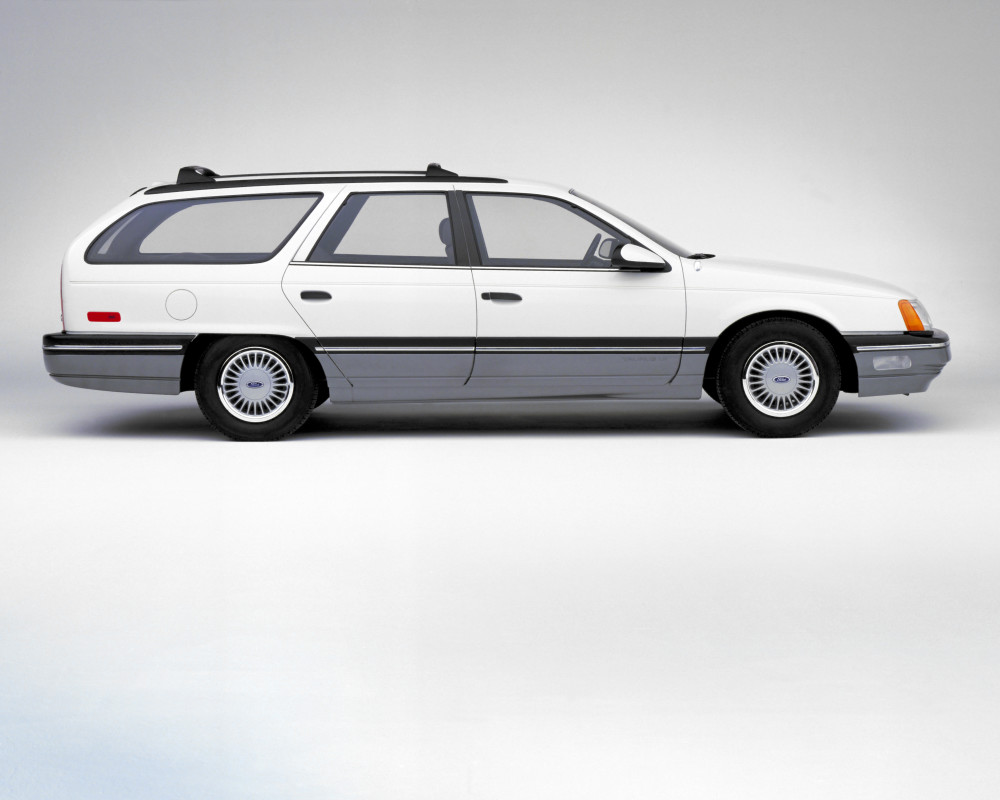
Post-Christmas Gift
The first-generation Taurus made its premiere on December 26, 1985, for the 1986 model year. Based on contemporary reports, the launch event was a grand one. Held at MGM Studios Soundstage 85, the studio featured a futuristic decor to reflect the car’s forward-thinking design. Thematic, yes, but there were already murmurs in the background.
Competitors General Motors and Chrysler thought the car would flop. Its futuristic and aerodynamic look wouldn’t resonate with the buying public, they said. Remember, this was the replacement for the staid, Fairmont-based LTD, and the car was a radical departure from that. Of course, everyone knows that the Taurus proved GM and Chrysler wrong. Very, very wrong.
Ford
The Specs
In terms of size, it was a fair bit bigger than the midsize offerings from Japan. It measured 188.4 inches long, 70.8 inches wide, 54.3 inches tall, and rode on a 106-inch wheelbase. The wagons were a little bit longer (191.9 inches) and taller (55.1 inches) than the sedan.
For engines, it started off with an asthmatic 2.5-liter four-cylinder that didn’t even make 100 hp. Above that was a 3.0-liter V6 with 140 hp and 160 lb-ft, but in 1988, Ford rolled out the 3.8-liter V6. It made the same amount of horsepower as the 3.0-liter, but had far more torque at 215 lb-ft.
But in 1989, the star of the Taurus lineup showed up, or should we say…SHO’d up? The Taurus SHO offered Mustang-levels of performance thanks to that Yamaha-built 3.0 V6. Power rose to 220 hp and 200 lb-ft, and the chassis benefited from upgrades to make it a proper sports sedan.
Ford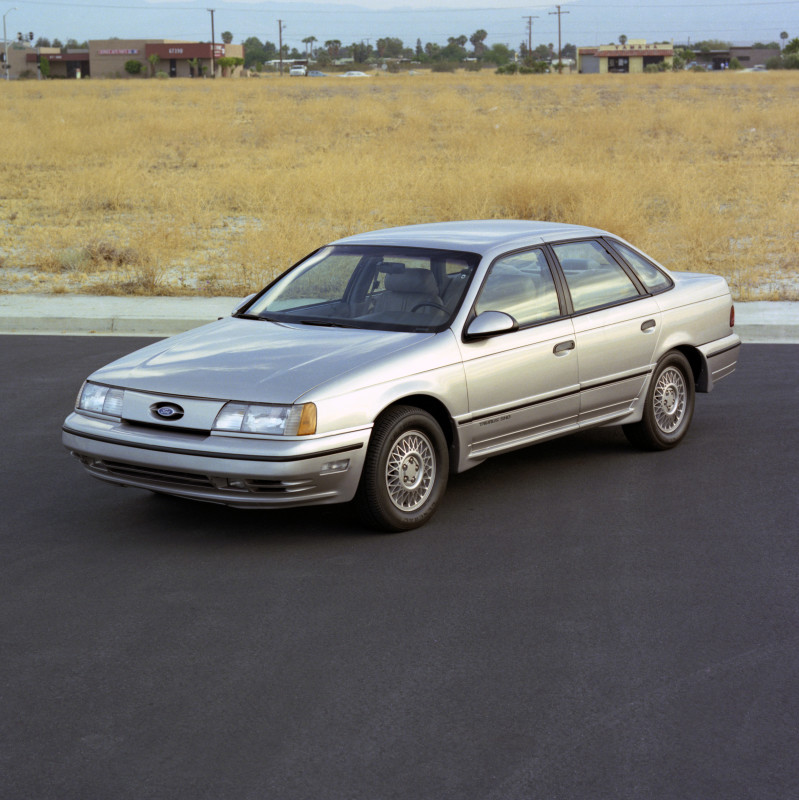
A New Era
1986 was the first full model year of the Taurus, and silenced the naysayers. Turns out, American buyers were more than ready to embrace this new aero era of Ford, and they did so by buying over 200,000 of them in ’86. ’87 was even better with well over 300,000 finding new homes.
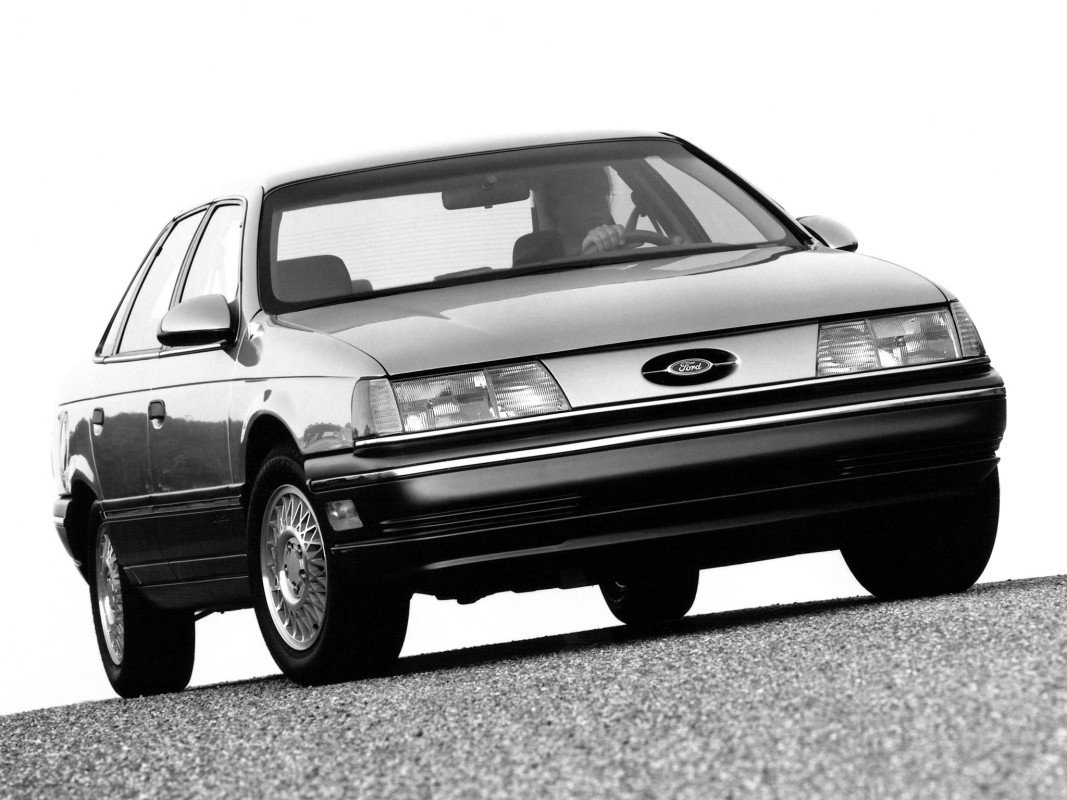
The car was a smash hit and also a revolution. The ‘melted soap bar’ look was good enough to give it a drag coefficient of just 0.32, only beaten by the car that inspired it, the Audi 100/5000, and matched that of the Mercedes-Benz W124. The cabin was a massive leap ahead of the LTD, and the front-wheel drive layout meant a generous amount of room inside.
Ford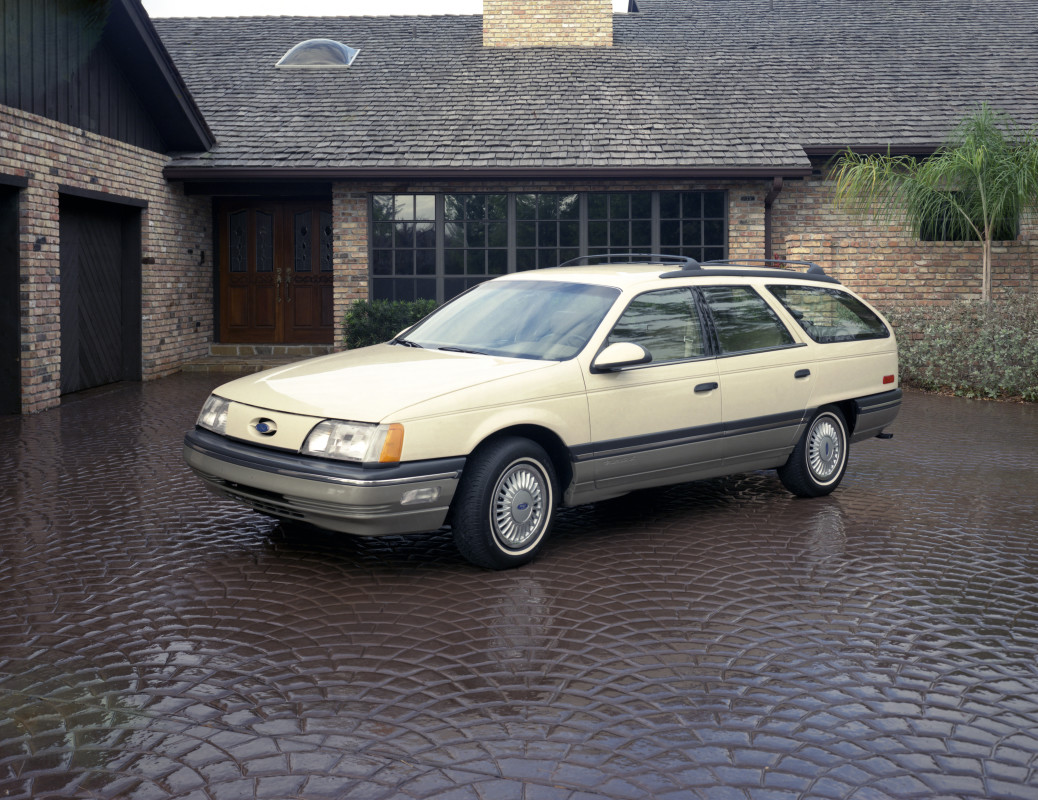
A Proud Legacy
By the time Ford wrapped up production of the first-gen Taurus in 1991, the company had built nearly two million units. The exact number is 1,959,671, with 1,487,514 sedans and 472,157 wagons. It had starred in movies, became a staple in everyone’s driveway, and the SHO did its part in further lifting its image.
Such was the impact of the first-generation Taurus that it forced its rivals, who initially dismissed it, to go back to the drawing board. One can even say it revolutionized the American midsize sedan for the better. Chevrolet responded with the Lumina in 1989, and it would take Chrysler a little bit longer to counter the Taurus with the Dodge Intrepid in 1992…just as Ford rolled out the second-generation Taurus.
The Taurus lost its edge in 1996 with the oviod redesign of the third generation, recovered somewhat in 2000, but eventually discontinued in 2006. It was brought back in 2008 as a hastily renamed Ford Five Hundred (itself largely forgotten today), until it was finally properly revived in 2010. That generation lasted until 2019, and Ford hasn’t offered a similar model since.
These days, the Taurus is no more in America, but it’s still around in the Middle East. That said, that model is more of a Fusion successor than an actual Taurus. Kids today probably won’t appreciate the impact of this model, but it’s a story that’s always worth revisiting. It was the time Ford bet billions on black, came back black, and helped change the American automotive landscape.
Ford