Cracking the Flagship Sedan Market
By the mid-’80s, BMW and Mercedes-Benz were butting heads in the flagship sedan segment with the 7 Series and S-Class, respectively. Missing from the picture was Audi, which was still trying to gain its footing. At the time, the brand from Ingolstadt wasn’t quite at the level of the other two mentioned, but management wanted to change that.
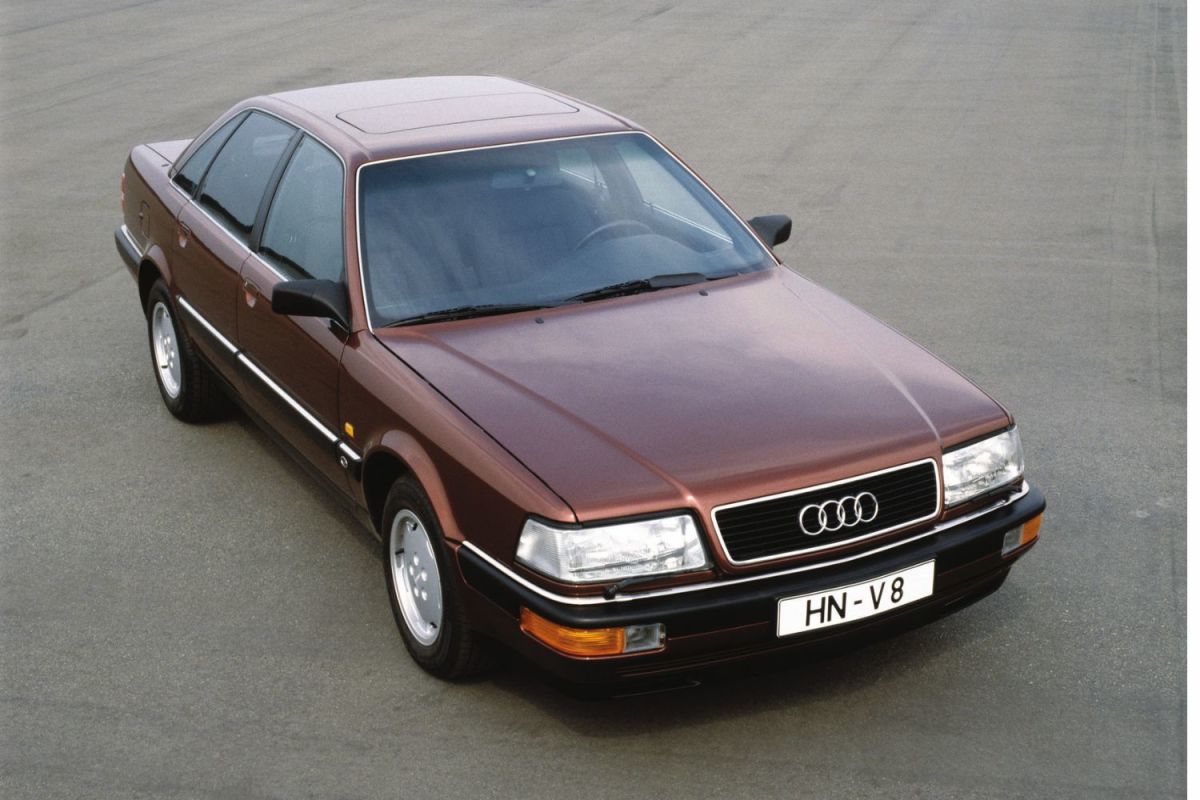
Enter the Audi V8 – the car that was supposed to threaten the 7 Series and S-Class, but ultimately fell short. While far from a sales success, its story is always worth telling and retelling, mainly because it gave rise to one of Audi’s most-loved models.
Audi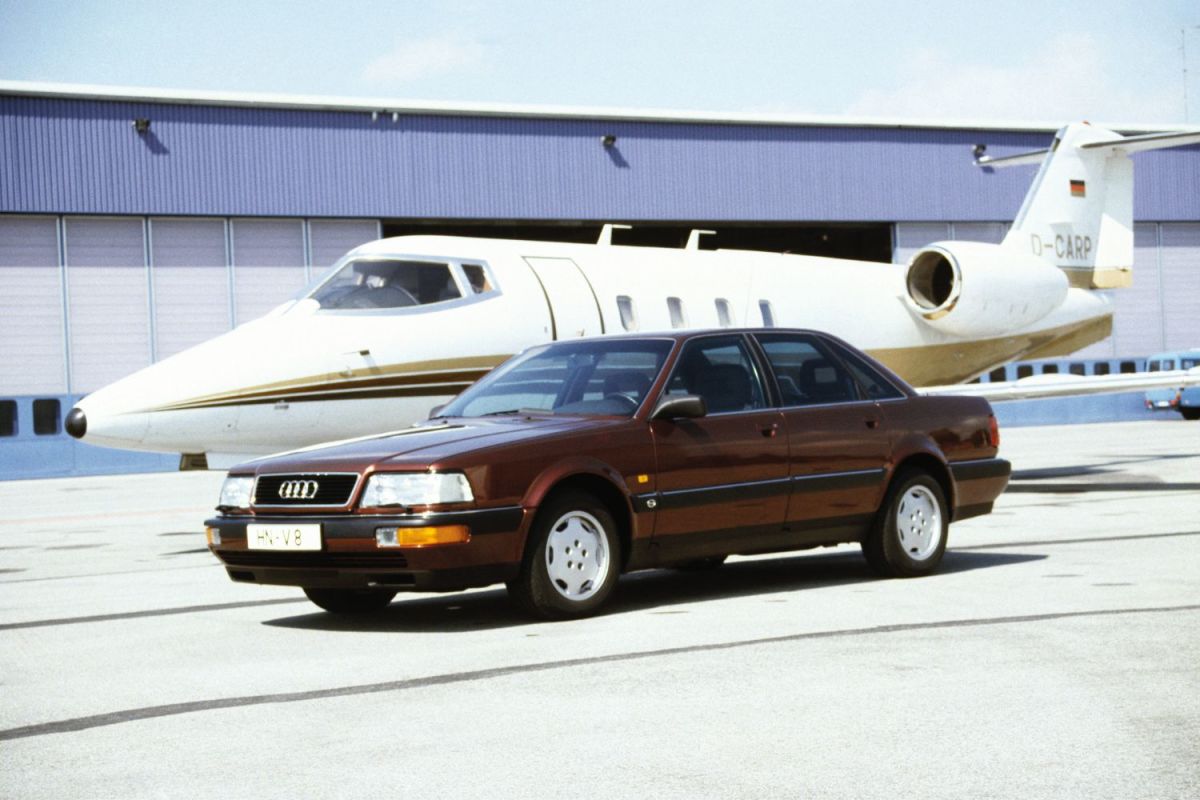
Brought to You by Ferdinand Piëch
Perhaps it’s no surprise that the Audi V8 was heavily overseen by Ferdinand Piëch. After all, he was leading the brand’s charge upmarket. The V8 represented Audi’s aspirations and was a serious effort.
To build the V8, Audi took the 200/5000 platform, stretched it out, widened the track, and developed its first-ever V8 engine. Granted, that oversimplifies the effort and engineering that was put into the car, but it was revolutionary for the brand in so many ways.
For instance, it was the first luxury sedan to mate V8 power to all-wheel drive. Also, it was the first among its peers to offer a multi-valve eight-cylinder engine with quad cams. The V8 even had an unusual brake arrangement that resembled UFOs, designed to dissipate heat more quickly. Like other Audi models at the time, the body was galvanized and featured the novel Procon Ten system that pulled the steering column away from the driver in an accident via high-strength steel cables.
Audi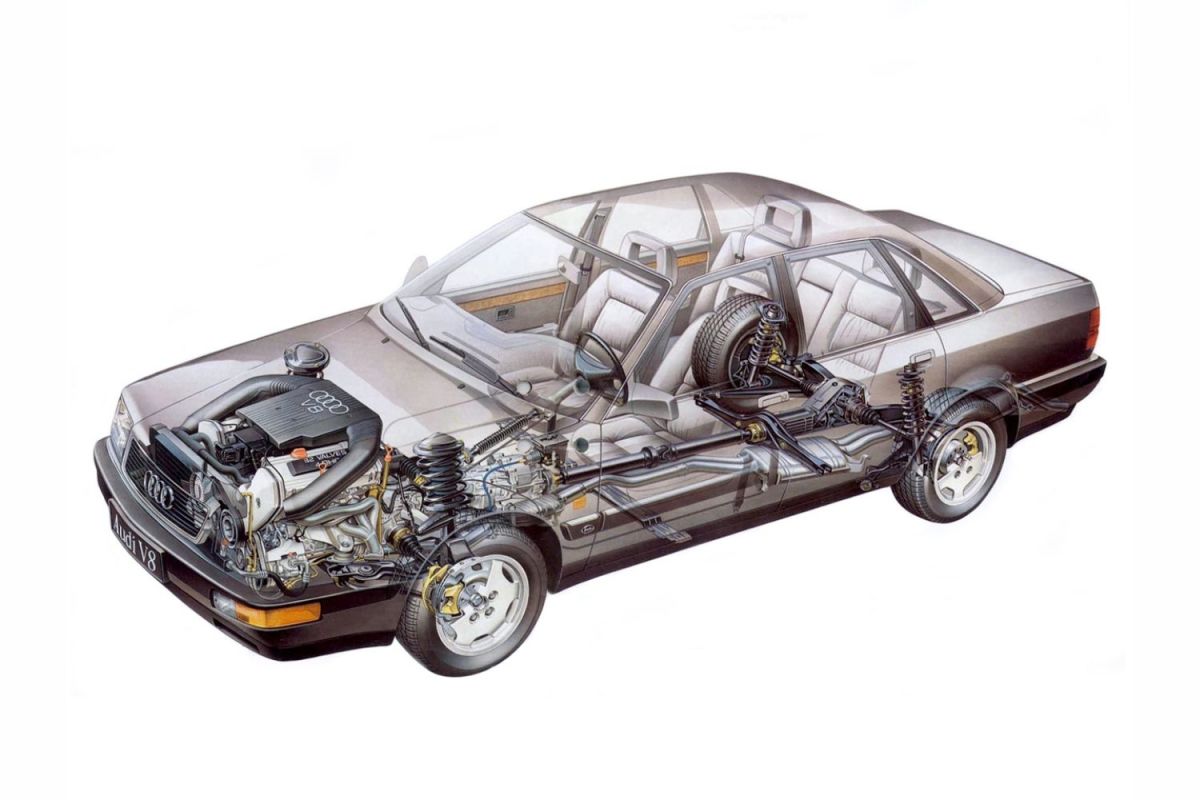
That Engine
When it premiered in 1988, the V8 was offered with a 3.6-liter mill that featured 32 valves and four overhead camshafts. All those advances meant it was good for 247 hp and 251 lb-ft of torque, which was more than in a same-era 735i and 420 SEL. Most were saddled with a four-speed automatic, which was par for the course at the time. However, a five-speed manual was also offered.
Then, in 1991, the V8 got an upgrade, boring the engine to 4.2 liters to give it more shove. The larger displacement pushed power up to 276 hp and 295 lb-ft of torque. The four-speed automatic remained, but there was now an option of a six-speed manual.
Audi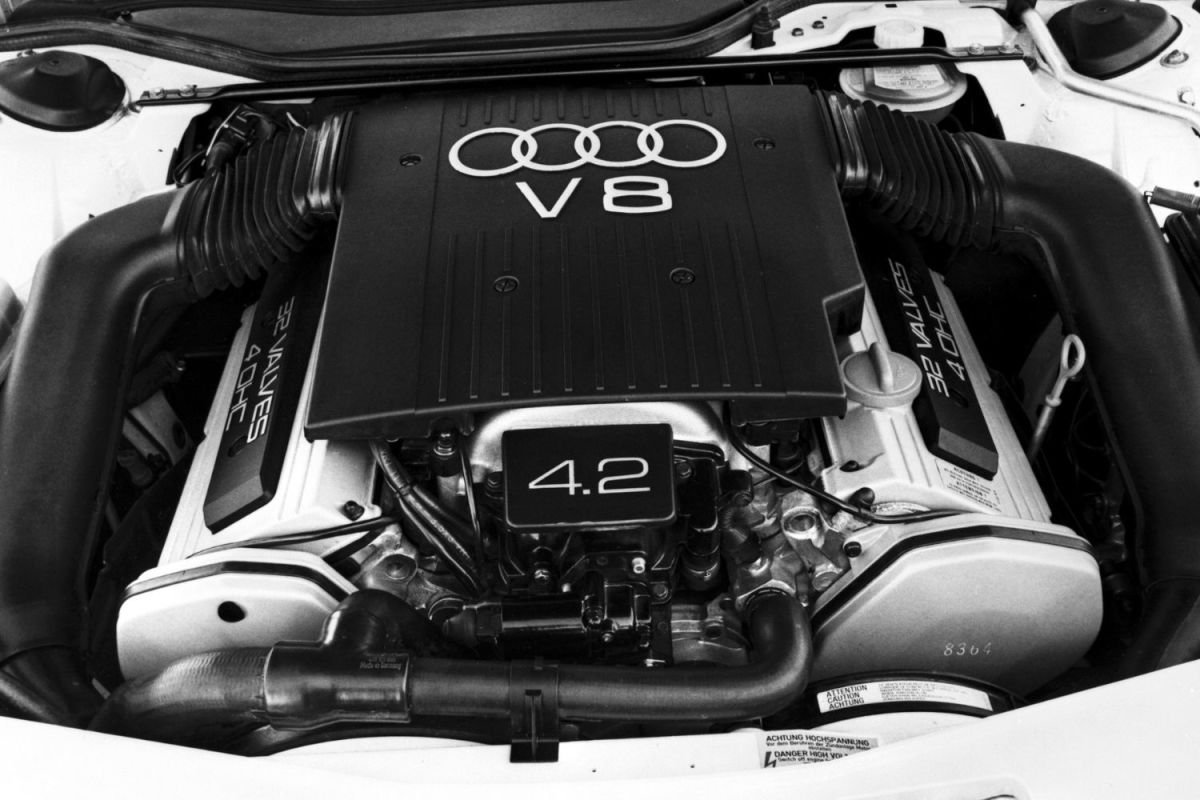
Surprise Success on the Track
Keen to show off the V8’s abilities, Audi entered its flagship sedan in DTM. Yes, it shared the same space as much smaller cars like the E30 BMW M3 and the Mercedes-Benz 190E 2.3-16. In terms of size, it was laughably mismatched as it was an ocean liner in a sea of speedboats, but jokes stopped when the car started winning.
Sure, it was heavier than the M3 and 190E, but its 414 hp V8 and all-wheel drive made up the difference. In its first year of competition in 1990, Audi won eight of the 22 races. The following year, it clinched 10 wins from 22 rounds.
Audi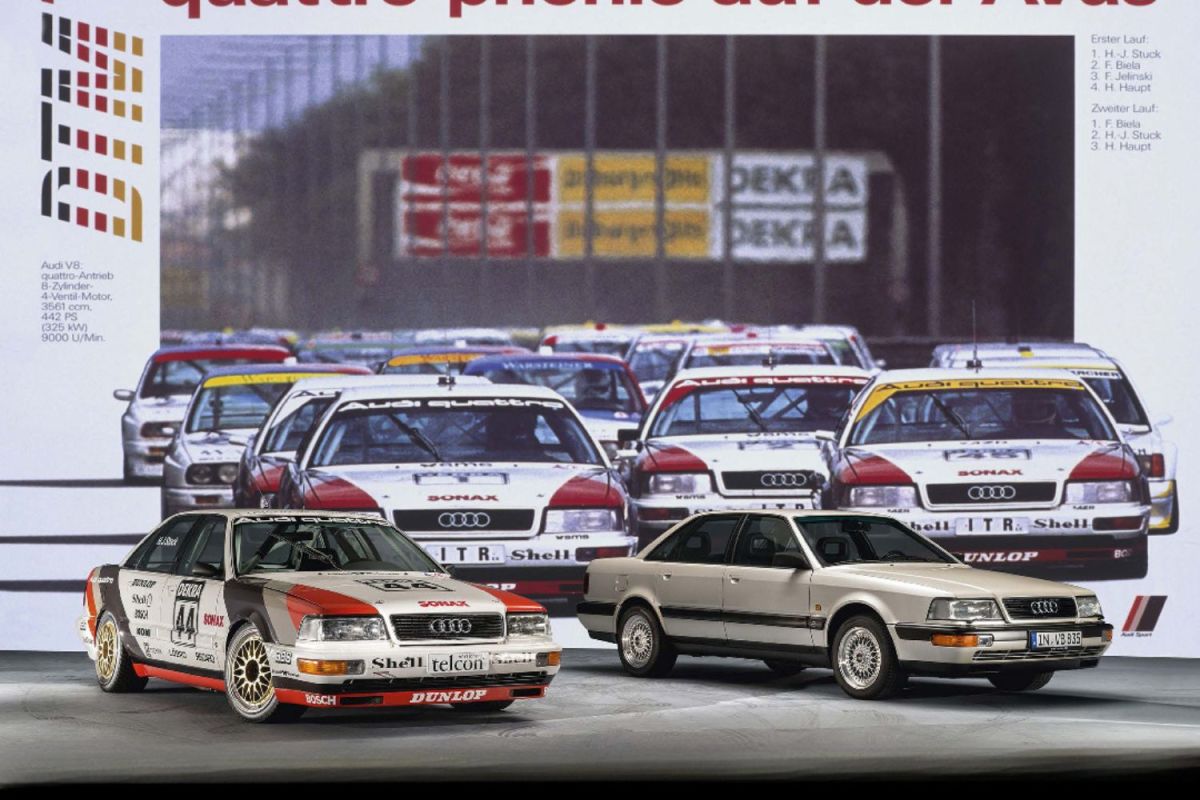
A Good Car, But Why Did It Fail?
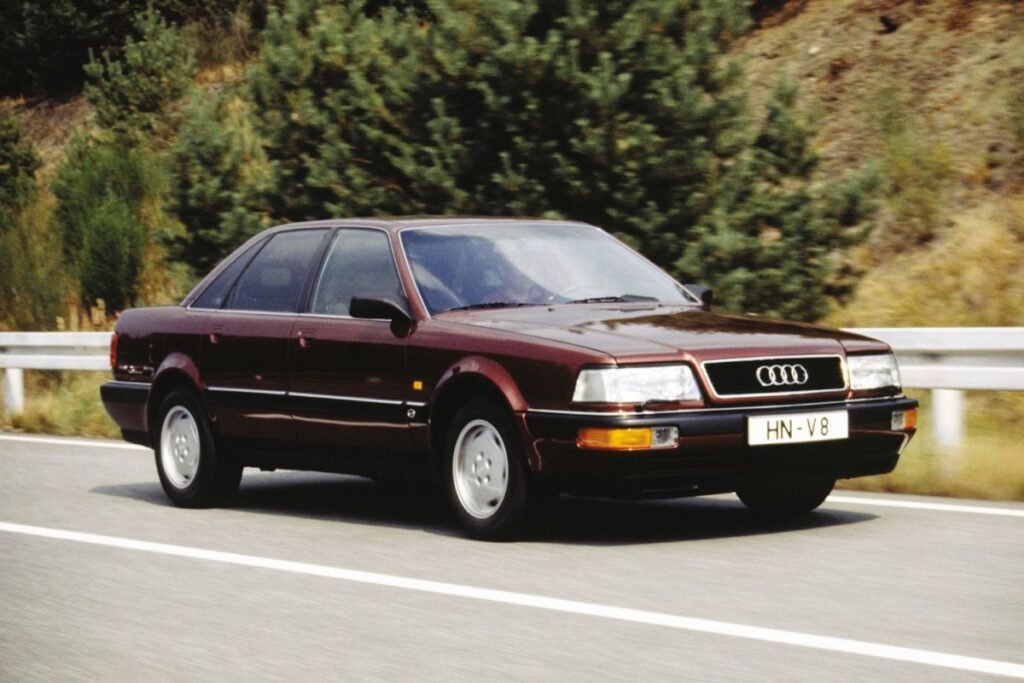
For all the innovations that the Audi V8 offered, it was ultimately betrayed by its looks. To the average person, it looked no different from the 200/5000 that it was based upon. It was also heaps more expensive than its smaller sibling, and Audi simply didn’t have the cachet in the market at the time. Yes, it was less expensive than a 7 Series and S-Class, but the V8’s case wasn’t helped by the arrival of the Lexus LS.
Produced from October 1988 to November 1993, fewer than 22,000 Audi V8s were built, with about 4,000 going to America. It’s an incredibly rare car, and you’ll spot one either by going to Audi’s museum in Ingolstadt, or find one randomly once in a blue moon.
Audi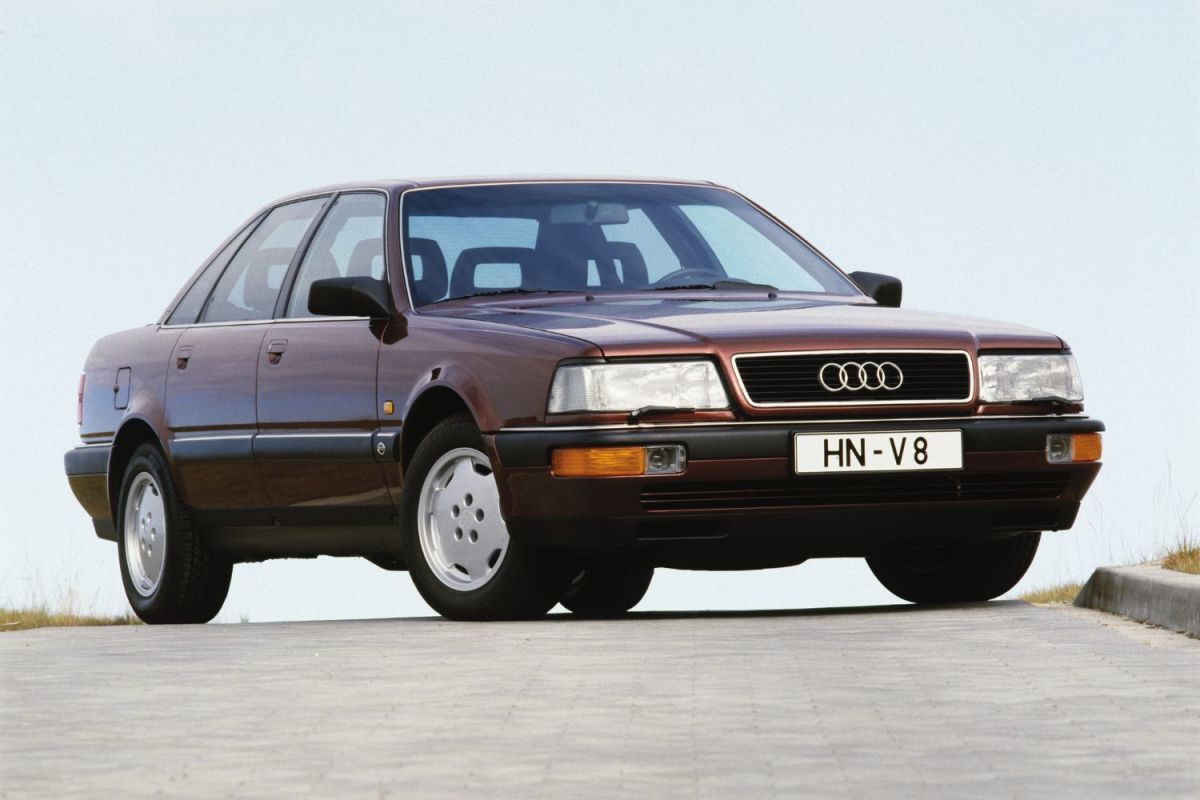
From V8 to A8
With such dismal sales numbers, one would think that Audi would put any plans for a successor on hold. The thing is, the exact opposite thing happened, andit was quickly replaced by the A8 in 1994. The first-generation A8 took a while to reach America (1997), but it was far more successful than its predecessor from the get-go.
The A8 arrived at the same time as the much-loved E38 BMW 7 Series, and the W140 S-Class had been around for a few years by then. The difference was that the A8 didn’t flounder despite its massively impressive rivals, as it corrected all the misgivings of its predecessor. It was roomier, looked more distinct, and had multiple engine options to expand its appeal. Ultimately, 105,092 first-generation A8s were built, nearly five times more than the V8.
The V8 walked so the A8 could fly. Had Audi given up on the idea of a flagship sedan, the world probably wouldn’t have seen the creation of the S8. Without the S8, the high-performance flagship sedan niche probably wouldn’t have existed, either.
Audi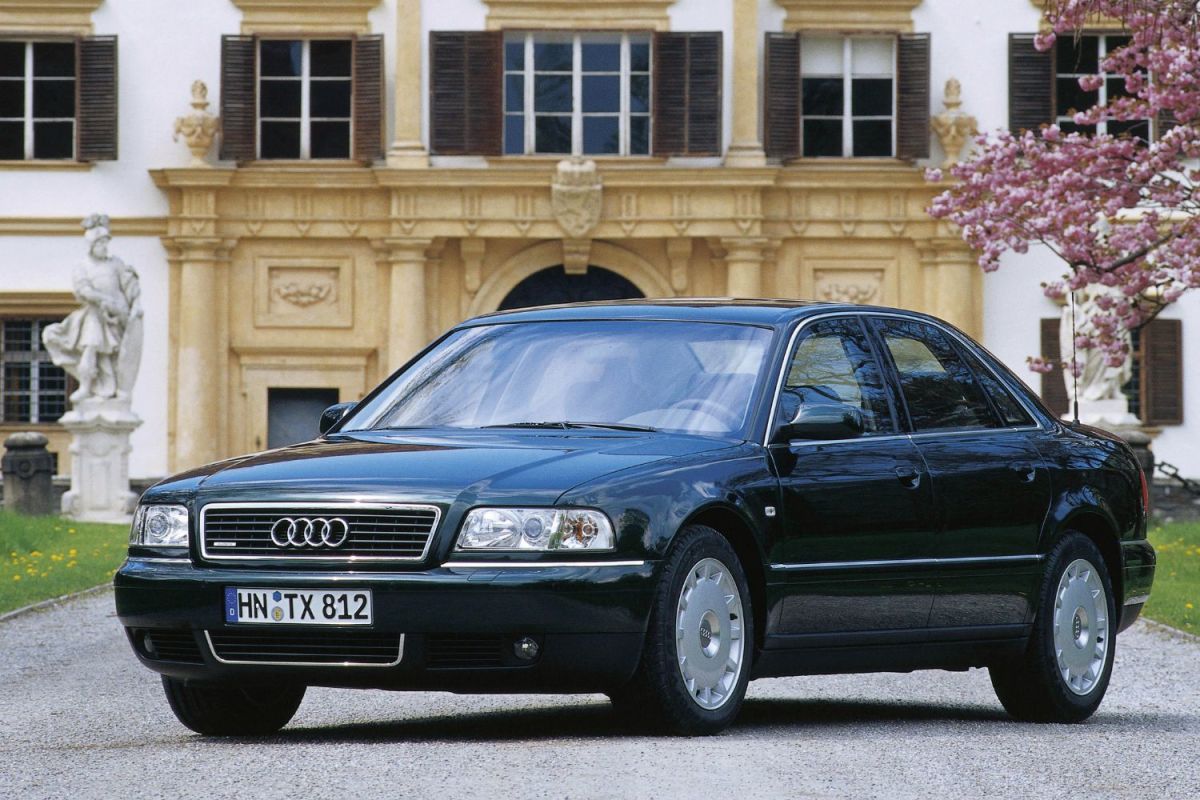
Audi