Tesla‘s Cybercab has just been certified at 165 Watt-hours per mile (Wh/mi). To put that figure into perspective, the Lucid Air Pure—widely considered the benchmark for production efficiency—consumes 230 Wh/mi. The Cybercab undercuts the rest of the industry by a massive 28 percent – at least, making it by far the most efficient EV ever made.
Tesla’s Vice President of Vehicle Engineering, Lars Moravy, confirmed the official rating, proving this is a hard certification rather than a marketing department target. Operating at roughly six miles per kilowatt-hour, it is the most efficient production electric vehicle on the market.

How Tesla Did It
Before we hand Tesla the crown for powertrain engineering, we need to examine exactly how they achieved this number. The Cybercab didn’t cheat the physics of a traditional passenger sedan; it simply abandoned them.
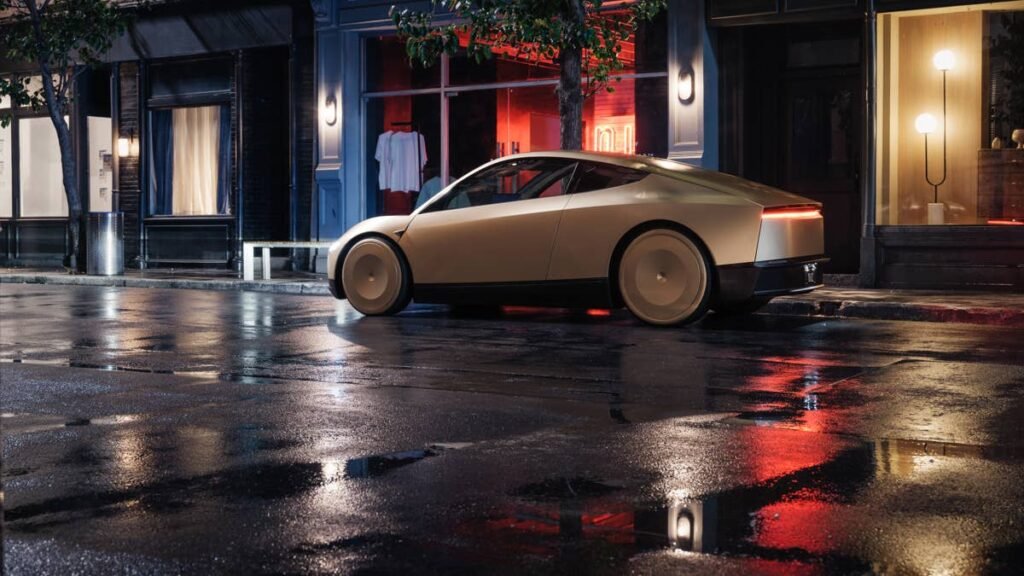
This vehicle achieves its staggering efficiency by stripping away almost everything that defines a modern car. There is no steering column. There are no pedals. It seats only two passengers and utilizes an aggressive teardrop profile optimized strictly for aerodynamic drag, ignoring rear cargo utility entirely. By cutting out the crash structures and dead weight associated with human controls and family-sized cabins, Tesla equipped the Cybercab with a sub-50 kWh battery pack that still manages to deliver nearly 300 miles of real-world range.
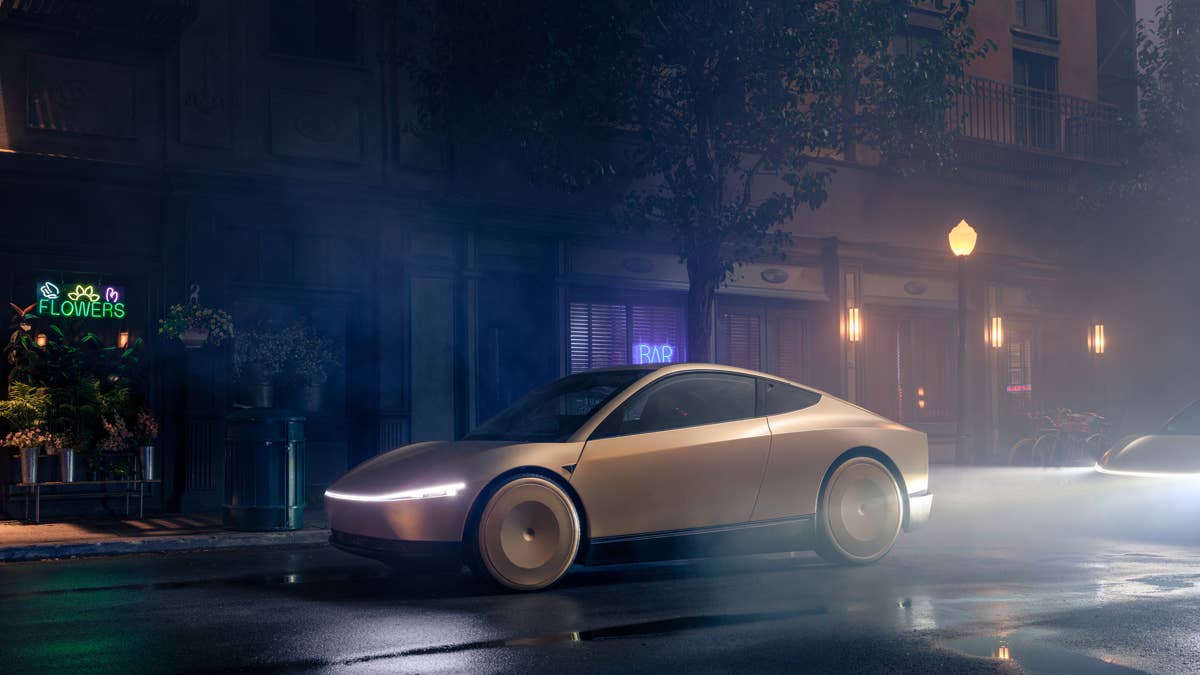
It’s an exercise in extreme subtraction, and for a commercial robotaxi fleet, it translates to a structural superpower. Operating cost per mile is the lifeblood of ride-hailing economics. At the national average of $0.16 per kWh, the Cybercab costs approximately 2.6 cents per mile in energy. The Cybercab has a significant advantage over other efficient EVs; a standard Tesla Model 3 requires 3.8 cents, and rivals like the Hyundai Ioniq 5 push closer to 4.8 cents. Over a commercial fleet running hundreds of thousands of miles, those fractions of a penny dictate survival. Furthermore, the small battery pack directly enables the vehicle’s heavily marketed $30,000 price point by slashing base manufacturing costs and reducing turnaround times at the charging stall.
Next Steps for the Cybercab
Production is already spooling up at Gigafactory Texas following an initial ramp in April. However, the stark reality remains: a 165 Wh/mi rating is functionally useless if the vehicle cannot safely navigate itself. With the unsupervised driving program currently crashing at a documented rate higher than human drivers, Tesla’s engineering triumph is effectively parked. The Cybercab is an absolute masterclass in purpose-built efficiency. Now, Tesla just has to prove it can actually operate on public roads.