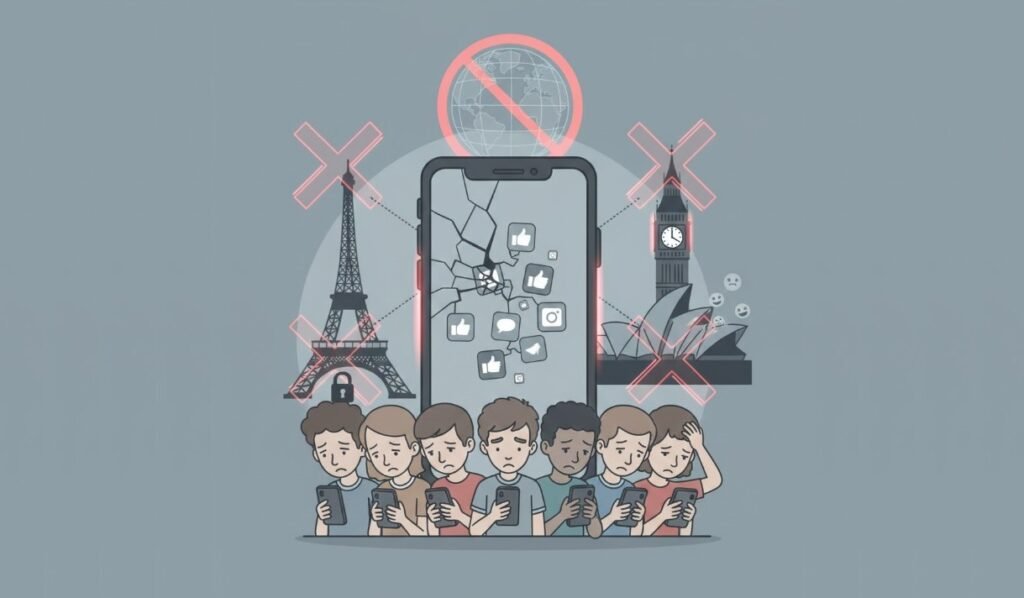

The digital playground is becoming a restricted zone. Following Australia’s landmark decision in late 2025 to ban social media for under-16s, a growing list of European nations is considering similar “digital boundaries,” with France and the United Kingdom leading the charge. In those countries, there seems to be a rising consensus that the current “free-for-all” on platforms like TikTok, Instagram, and Snapchat is harming a generation of young minds.
Macron’s war on algorithms: France moves to ban social media for under-15s
In France, the momentum is moving at an accelerated pace. President Emmanuel Macron has made the protection of minors from “American platforms and Chinese algorithms” a personal mission. The French National Assembly recently passed a bill with an overwhelming majority to ban social media use for teens. In this case, the restriction would apply to young people under 15.
The French approach is particularly strict. Not only does the legislation target social media accounts, but it also extends a ban on mobile phones into high schools. Macron’s government aims to have these measures in effect by September 2026 for new users. There’s a year-end deadline for deactivating existing non-compliant accounts. Centrist lawmakers describe the move as a “battle for free minds,” arguing that excessive screen time is directly linked to a decline in reading, sleep, and self-esteem among adolescents.
UK Lords back under-16 social media ban
The argument is just as strong across the Channel. Prime Minister Keir Starmer has always preferred a careful “evidence-based” approach through government consultations. However, the House of Lords recently surprised everyone by supporting an amendment to the Children’s Wellbeing and Schools Bill. This amendment calls for a ban on social media for under-16s and mandates “highly effective” age-verification checks.
The pressure on the UK government is coming from all sides. There’s the political momentum with conservative leaders and dozens of Labor MPs urging the Prime Minister to “just get on with it.” They cite a “societal catastrophe” in children’s mental health. Then there is the Gen Z perspective where, interestingly, even teenagers seem to support the change. Recent polling suggests that three-quarters of 16-to-24-year-olds want tougher regulations. Many young people even wish they had spent less time on their phones during their formative years.
Plus, there are the safety concerns fueled by high-profile cases of online harassment and the tragic links between self-harm content and youth suicide. This last factor turned the conversation from a matter of “screen time” to a matter of life and death.
The enforcement challenge
While the political will be there, the technical execution remains the elephant in the room. Critics argue that bans are “digital paternalism” and warn that teenagers will simply find workarounds. After all, they are already doing something similar with fake IDs for alcohol.
For countries to be successful, they will need to set up strong systems for checking people’s ages. This is where the discussion gets tricky because it has to do with finding a balance between protecting kids and protecting users’ privacy. But supporters say that even an imperfect ban sends a message to parents and the industry that social media is not a safe toy for kids.
There is a clear backlash against Big Tech, but experts say that a ban is not a “panacea” or a cure-all. People in both France and the UK are saying that this should be part of a bigger mission. This means better-funded mental health services, more youth clubs that focus on physical activity, and dealing with the things that make teens anxious, like school stress and poverty.
For now, we just have to wait to see the path these bills follow as they move through the various chambers of parliament. However, the message from Europe is clear: the days of tech companies “colonizing” the minds of minors without restriction might be numbered. The “Australian summer” of bike rides and board games might soon become a year-round reality in Paris and London.
The post Teen Social Media Ban Goes Global: France & the UK are Following Australia appeared first on Android Headlines.